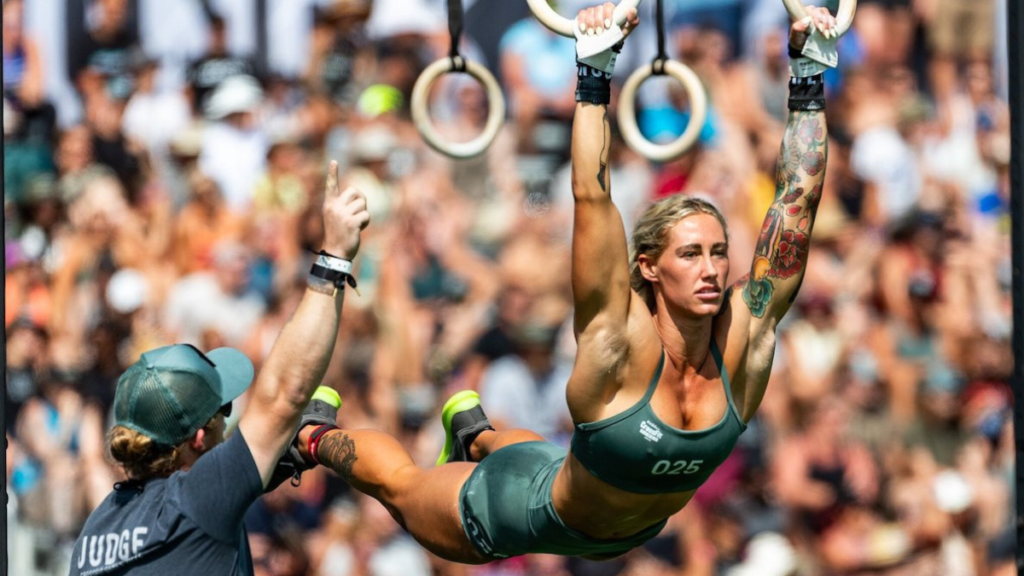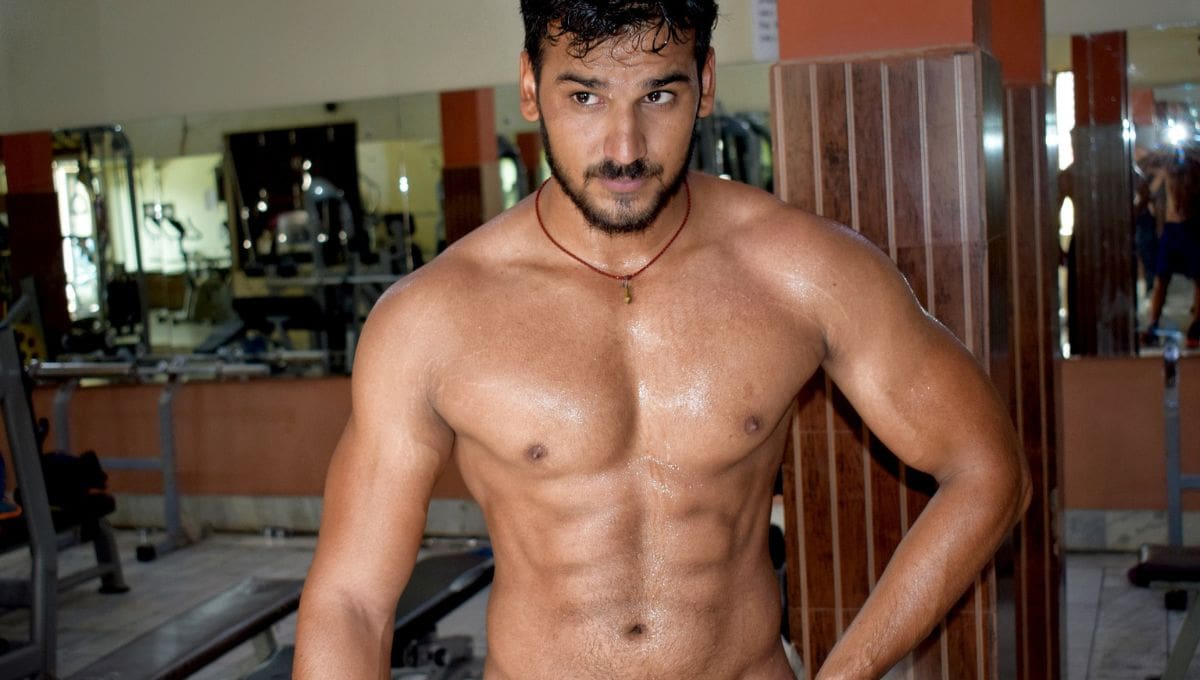


A more attractive upper body is not built by chasing isolated exercises or changing your routine every week. It comes from developing the major muscles that create shape, proportion, and a stronger posture: your chest, shoulders, upper back, lats, and arms.
For beginners, the most effective approach is to focus on a small number of movements that train several muscles at once. These exercises give you more return for your effort, make it easier to learn good technique, and help you build a balanced physique without spending hours in the gym.


The goal is not to train until you are exhausted every session. It is to perform quality repetitions, gradually make exercises more challenging, and give your body enough food, sleep, and recovery to adapt. Research consistently shows that resistance training increases muscle size and strength, while training volume and progressive overload are important factors in continued progress.
These five exercises are excellent starting points because together they cover the foundations of upper body development.
What Makes an Upper Body Look More Athletic?
An attractive upper body usually has a combination of visible muscle, balanced proportions, and good posture. A stronger chest and shoulders can create a broader upper frame. Well developed lats and upper back muscles can make the waist appear narrower. Building the arms adds detail and proportion, while training the back helps support the shoulder joints and can improve the way you hold yourself.
You do not need to train every muscle with a separate exercise from day one. Compound exercises recruit multiple muscle groups and allow beginners to develop strength efficiently. A pressing movement can train the chest, shoulders, and triceps at once. A pulling movement can train the lats, upper back, biceps, and forearms in the same set.
Start with a weight or variation that allows you to control each repetition. You should feel challenged near the end of a set, but your technique should remain steady. As you become stronger, add a repetition, use a slightly harder variation, or increase the weight when possible.
1. Push Ups
Why Push Ups Build an Attractive Chest and Upper Body
The push up is one of the best beginner exercises because it develops the chest, front of the shoulders, triceps, and muscles that stabilize the torso. It is also easy to scale. You can begin with your hands on a bench or sturdy raised surface, progress to floor push ups, and eventually make the movement harder by elevating your feet or adding resistance.
Push ups train the chest through a meaningful range of motion when performed with control. They also require your body to stay in a straight line, which means your abs, glutes, and shoulders must work together. This makes them more than a simple chest exercise.
3 Best Barbell Exercises for Ripped and Strong Lower Abs
Research comparing push ups with bench press training has found that push ups performed at similar relative loads can produce comparable improvements in upper body strength and chest muscle thickness. For a beginner, this means push ups are a legitimate muscle building exercise, not merely a warm up.
How to Do Them
Place your hands slightly wider than shoulder width and create a straight line from your head to your heels. Brace your abs and squeeze your glutes. Lower your chest toward the floor by bending your elbows, keeping them angled slightly away from your torso rather than flared directly to the sides.
Press the floor away and return to the starting position without letting your hips sag. If full push ups are too difficult, place your hands on a bench, box, or kitchen counter. This reduces the amount of body weight you need to lift while allowing you to practice the same movement pattern.
Aim for two or three sets of six to 15 controlled repetitions.
2. Dumbbell Bench Press
Why It Is Great for Chest, Shoulders, and Triceps
The dumbbell bench press is a highly effective choice for beginners who have access to a bench and a pair of dumbbells. It trains the chest, front deltoids, and triceps while allowing each arm to work independently. This can help reveal and reduce meaningful strength differences between sides over time.
Dumbbells often feel more comfortable than a barbell for new lifters because they allow the hands and shoulders to move through a more natural path. You can also start with relatively light weights and make gradual increases as your confidence and strength improve.
The chest is a major contributor to upper body size and shape, but it should not be trained in isolation. The dumbbell bench press also strengthens the triceps and shoulders, making it a useful foundation for future pressing exercises.
How to Do It
Sit on the end of a flat bench with a dumbbell in each hand. Carefully lean back and bring the weights to either side of your chest. Keep your feet planted firmly on the floor and your upper back lightly pressed into the bench.
Press the dumbbells upward until your arms are straight but not aggressively locked. Lower them slowly until your upper arms are close to parallel with the floor or until you reach a comfortable depth that does not irritate your shoulders. Keep your wrists straight and avoid bouncing the weights at the bottom.
Perform two or three sets of eight to 12 repetitions. When you can complete all sets with clean form, increase the weight slightly.
3. Lat Pulldown
Why a Strong Back Improves Your Shape
The lat pulldown is one of the best beginner exercises for building the muscles on the sides of the back. These muscles, called the latissimus dorsi, contribute to the wider upper body appearance many people want. A stronger upper back can also help balance the pressing exercises that train the chest and front of the shoulders.
The pulldown also trains the biceps, forearms, and muscles around the shoulder blades. This makes it an efficient movement for building both strength and visible upper body mass. Learning to pull with control is particularly useful for beginners who are not yet able to perform full pull ups.
Different grip styles can be effective, but beginners should use the grip that feels strongest and most comfortable. A medium overhand grip is a simple place to start.
How to Do It
Sit securely at a lat pulldown machine and adjust the thigh pad so your legs stay in place. Hold the bar with your hands just outside shoulder width. Start with your arms straight and your chest lifted.
Pull the bar toward the top of your chest by driving your elbows down toward your sides. Think about bringing your shoulders away from your ears as you pull. Pause briefly when the bar reaches the upper chest area, then return it slowly to the starting position.
Avoid leaning far backward or turning the movement into a swinging row. Use a weight that lets you control both the pull and the return.
Perform two or three sets of eight to 12 repetitions.
4. Seated Dumbbell Shoulder Press
Why Shoulders Matter for Upper Body Proportion
Well developed shoulders can make the upper body look broader and more athletic. The deltoid muscles sit over the shoulder joint and contribute strongly to upper body width. The seated dumbbell shoulder press primarily trains the front and middle portions of the shoulders while also working the triceps.
A seated position is useful for beginners because it reduces the temptation to use momentum from the legs and lower back. It lets you focus on learning the pressing pattern and keeping the rib cage under control.
Shoulder training should be balanced with pulling exercises for the back. This is why the shoulder press works best as part of a routine that includes rows or pulldowns rather than as the only upper body movement.
How to Do It
Sit upright on a bench with back support if available. Hold the dumbbells at shoulder height with your palms facing forward or slightly inward. Keep your feet flat on the floor and gently brace your abs.
Press the dumbbells overhead until your arms are straight. Lower them under control until they return to around shoulder level. Keep the movement smooth and avoid forcing the weights into a painful range of motion.
Start with lighter dumbbells than you think you need. The shoulders are smaller muscles than the chest and back, so progress can be slower. Two or three sets of eight to 12 repetitions is enough for most beginners.
5. One Arm Dumbbell Row
Why Rows Build a Stronger Looking Back and Arms
The one arm dumbbell row is a simple and effective exercise for the lats, upper back, rear shoulders, biceps, and forearms. While the lat pulldown trains a vertical pulling pattern, the row trains a horizontal pull. Including both can help you develop a more complete back.
Rows are important for visual balance. Many beginners naturally prioritize chest and arm training because these muscles are easy to see in the mirror. However, a developed back makes a major difference to overall upper body shape and supports stronger posture.
Training one side at a time also gives you the chance to focus on your body position and control the dumbbell. It can help prevent the stronger arm from doing more than its share of the work.
How to Do It
Place one hand and the same side knee on a flat bench. Keep the other foot on the floor and hold a dumbbell in your free hand. Let the dumbbell hang directly below your shoulder while keeping your back flat.
Pull the dumbbell toward your hip, leading with your elbow. Your upper arm should travel close to your torso. Pause briefly at the top, then lower the weight slowly until your arm is straight again.
Do not twist your whole body to lift the weight. Your torso should remain mostly still while the shoulder blade and arm do the work. Complete all repetitions on one side before changing sides.
Perform two or three sets of eight to 15 repetitions per side.
How to Turn These Exercises Into a Beginner Routine
You can perform these exercises two or three times per week, leaving at least one day between sessions when possible. Start with two working sets per exercise. Once you feel comfortable and recover well, progress to three sets.
A useful order is to begin with push ups or the dumbbell bench press, then move to lat pulldowns, shoulder presses, and dumbbell rows. This structure lets you train the largest muscle groups first while you are fresh.

You do not need to take every set to complete failure. Ending most sets with roughly one to three repetitions still possible is a practical way to train hard while maintaining technique. Over time, muscle growth is supported by accumulating enough challenging sets and progressively increasing the demands placed on the muscles.
Keep a simple record of your workouts. Write down the weight you used and the number of repetitions you completed. If you perform more repetitions with the same weight, that is progress. If you can use a heavier dumbbell with equally good form, that is progress too.
The Habits That Make Your Training Work
Exercise is the stimulus, but recovery is where adaptation happens. Your body needs sufficient energy and protein to build muscle tissue after resistance training. Adequate daily protein intake supports increases in lean mass and strength when combined with regular resistance exercise.
Sleep also matters. Consistently poor sleep can impair recovery and may make it harder to train with energy and focus. You do not need a perfect lifestyle to make progress, but regular training, enough food, and a dependable sleep routine will make your work in the gym far more productive.
Be patient with the process. Beginners often improve quickly because the body is adapting to a new training stimulus. Focus on performing the basics well for several months before chasing complicated variations. A stronger chest, wider back, fuller shoulders, and more developed arms are built through repeated quality sessions.
References
- American College of Sports Medicine (2009) ‘Progression models in resistance training for healthy adults’, Medicine and Science in Sports and Exercise, 41(3), pp. 687–708.
- Grgic, J., Schoenfeld, B.J., Davies, T.B., Lazinica, B., Krieger, J.W. and Pedisic, Z. (2018) ‘Effect of resistance training frequency on gains in muscular strength: A systematic review and meta analysis’, Sports Medicine, 48(5), pp. 1207–1220.
- Kikuchi, N. and Nakazato, K. (2017) ‘Low load bench press and push up induce similar muscle hypertrophy and strength gain’, Journal of Exercise Science and Fitness, 15(1), pp. 37–42.
- Morton, R.W., Oikawa, S.Y., Wavell, C.G., Mazara, N., McGlory, C., Quadrilatero, J., Phillips, S.M. and others (2016) ‘Neither load nor systemic hormones determine resistance training mediated hypertrophy or strength gains in resistance trained young men’, Journal of Applied Physiology, 121(1), pp. 129–138.
- Schoenfeld, B.J., Ogborn, D. and Krieger, J.W. (2017) ‘Dose response relationship between weekly resistance training volume and increases in muscle mass: A systematic review and meta analysis’, Journal of Sports Sciences, 35(11), pp. 1073–1082.
- Schoenfeld, B.J., Grgic, J., Ogborn, D. and Krieger, J.W. (2017) ‘Strength and hypertrophy adaptations between low versus high load resistance training: A systematic review and meta analysis’, Journal of Strength and Conditioning Research, 31(12), pp. 3508–3523.
- Tagliaferri, S., Porcelli, S., Ramaglia, L., Pavei, G., Pugliese, L., Montorsi, M., Rasica, L. and others (2020) ‘No effects of short term sleep restriction on strength performance and muscle protein synthesis in trained men’, Medicine and Science in Sports and Exercise, 52(11), pp. 2490–2500.
- Wirth, K., Hartmann, H., Mickel, C., Szilvas, E., Keiner, M. and Sander, A. (2016) ‘Core stability in athletes: A critical analysis of current guidelines’, Sports Medicine, 47(3), pp. 401–414.
Key Takeaways
| Exercise | Main muscles trained | Beginner focus |
|---|---|---|
| Push up | Chest, shoulders, triceps, core | Start elevated if floor push ups are too difficult |
| Dumbbell bench press | Chest, front shoulders, triceps | Use controlled repetitions and increase weight gradually |
| Lat pulldown | Lats, upper back, biceps | Pull elbows down and avoid swinging backward |
| Seated dumbbell shoulder press | Shoulders and triceps | Use light weights and keep the torso steady |
| One arm dumbbell row | Lats, upper back, rear shoulders, biceps | Pull toward the hip without twisting the torso |