

Building an impressive upper body after 30 does not require a complicated training plan or a gym full of machines. It requires consistent resistance training, enough hard sets, and exercises that let you progressively add load while training a large amount of muscle. Barbell lifts are exceptionally useful because they are stable, scalable, and efficient. They also make it easy to measure progress from week to week.
The three movements in this article cover the major muscle groups that create a jacked upper body: the chest, shoulders, triceps, lats, upper back, and biceps. Together, they give you a strong base for size and strength while allowing you to train hard without relying on endless exercise variation.


Training after 30 is not fundamentally different from training at 20. However, more people in this age group have demanding jobs, less sleep, old aches, and less time to waste. That makes smart exercise selection even more important. You want movements that deliver a large training stimulus, can be loaded progressively, and can be adjusted to your current mobility and recovery.
Why Barbell Exercises Still Matter After 30
Muscle growth is driven largely by applying sufficient mechanical tension to muscle fibers over time. Resistance training with a broad range of loads can build muscle when sets are performed with a high level of effort. Heavier loads tend to be especially effective for improving maximal strength, which can make it easier to use challenging weights for productive repetitions in future training.
A barbell is ideal for this purpose because it allows you to use meaningful loads and make small, measurable increases. Adding five pounds to a bar over several months may not seem dramatic, but those small increases can create a major difference in the long term. Progression is more valuable than constantly searching for a new exercise.

The best approach is not to chase personal records every week. A heavy single is not required for hypertrophy, and repeated maximum efforts can create unnecessary fatigue. Instead, use loads you can control for multiple repetitions, maintain clean technique, and gradually increase either the weight, repetitions, or total high quality sets over time.
For most men over 30, training each major upper body muscle group at least twice per week is a practical and effective target. Weekly training volume is a major driver of hypertrophy, although the amount you can recover from depends on your training experience, nutrition, sleep, and lifestyle stress. Spreading your work across two or more sessions can help you keep the quality of each set high.
1. Barbell Bench Press
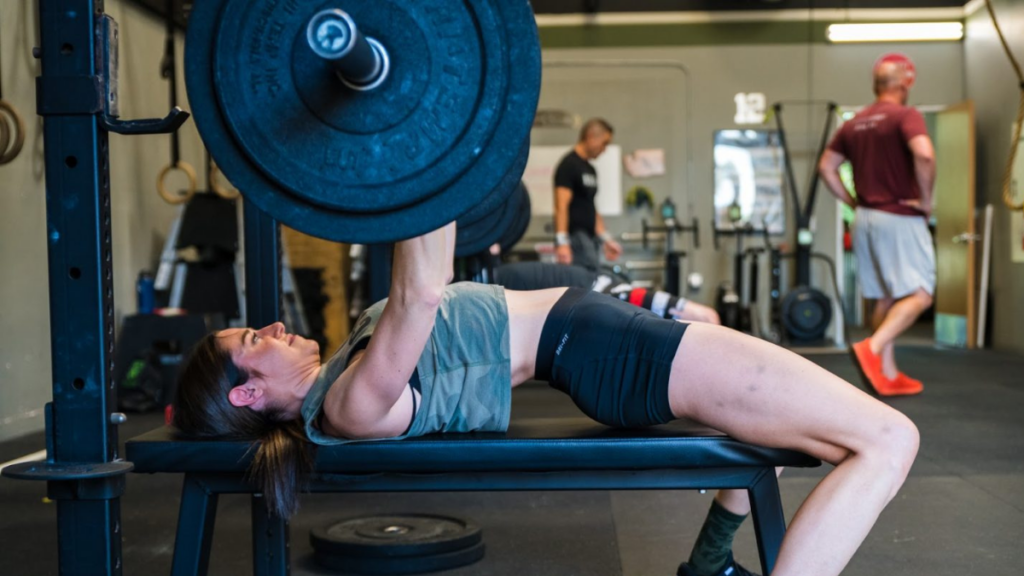
The barbell bench press is the most useful barbell exercise for building the chest, triceps, and front of the shoulders. It is also one of the easiest lifts to track, which makes it a reliable long term muscle building tool. A stronger bench press is not automatically a bigger chest, but getting stronger through well controlled sets is a very good sign that your training is moving in the right direction.
Why the Bench Press Builds a Bigger Upper Body
The bench press trains the pectoralis major through horizontal pressing while demanding substantial contribution from the triceps and anterior deltoids. It gives you a combination of load, stability, and range of motion that is difficult to replicate with many other exercises. Research examining muscle activity during the bench press consistently shows substantial involvement from the chest, triceps, and front deltoids.
It is particularly valuable for men over 30 because it can be progressed in small increments. You can use the same movement for years while changing the repetition range, grip width, tempo, and weekly volume as needed. That continuity makes it easier to improve your technique and add load without guessing whether a new exercise is actually working.
The bench press also lets you train the chest hard without requiring your lower back to stabilize a standing position. This can be useful when you want a demanding upper body exercise but need to manage accumulated fatigue from squats, deadlifts, running, or physically active work.
How to Perform It Well
Lie with your eyes underneath the bar and set your feet firmly on the floor. Pull your shoulder blades back and down against the bench to create a stable upper back. Grip the bar firmly with your hands slightly wider than shoulder width, although the exact width should be comfortable for your shoulders and wrists.
Lower the bar with control toward the lower portion of your chest. Keep your elbows at an angle that feels strong and comfortable rather than flaring them directly out to the sides. Press the bar upward while keeping your upper back tight and your feet planted.
The bar path does not need to be perfectly vertical. For many lifters, the bar lowers slightly forward of the shoulders and returns toward the rack as it is pressed. What matters most is a controlled path that allows you to keep your shoulders stable and your wrists stacked over your forearms.
Want More Muscular Shoulders? Do These 3 Barbell Exercises
Programming the Bench Press
A good starting point is three to five sets of six to ten repetitions once or twice per week. Finish most sets with one to three repetitions still possible with good form. This is hard enough to stimulate muscle growth while reducing the need to grind through sloppy repetitions.
If your shoulders feel irritated, first check your setup and total pressing volume. A slightly narrower grip, a longer warm up, or reducing the range of motion temporarily can help some lifters train comfortably. Persistent pain, particularly pain that worsens or affects daily life, deserves assessment from a qualified clinician.
2. Barbell Bent Over Row
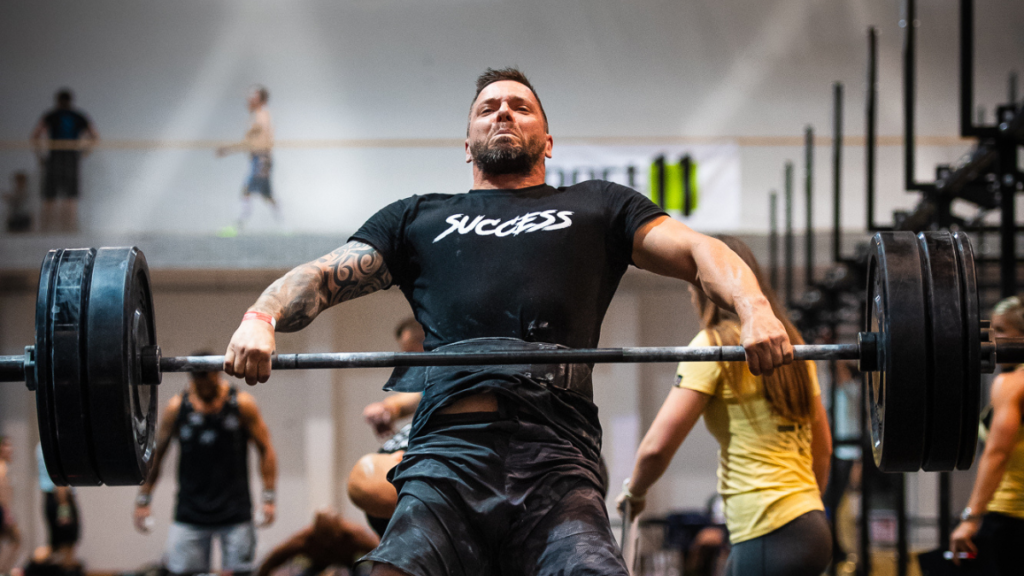
If the bench press builds the front of your upper body, the barbell bent over row builds the thickness and density that makes the whole physique look powerful. It trains the lats, middle back, rear shoulders, upper traps, forearms, and elbow flexors while also demanding isometric work from the trunk and hips.
A strong back does more than improve your appearance. Balanced pulling volume can support good shoulder function and improve your ability to stay stable during pressing exercises. The row is not a cure for shoulder pain, but training the upper back with sensible technique and volume is an important part of a balanced program.
Why the Barbell Row Is So Effective
The barbell row lets you load a pulling pattern heavily while training the muscles that retract and control the shoulder blades. These muscles contribute to the broad and thick upper back that creates more visual contrast with the waist. The lats are especially important for creating the wide upper body shape that many men want when they say they want to get jacked.
Rows also train the biceps, brachialis, and forearms through elbow flexion and gripping. This does not mean you never need curls, but it means a hard rowing program gives your arms more productive work than many people realize.
The limitation is that the bent over row challenges your lower back and hamstrings to hold position. That is useful when managed well, but it can become the limiting factor if you turn every set into a loose, explosive movement. The goal is to train your back, not simply move the heaviest possible bar.
How to Perform It Well
Stand with your feet about hip width apart and hold the bar with an overhand grip just outside your legs. Push your hips back and bend your knees slightly until your torso is inclined forward. Keep your spine neutral and brace your abdominal muscles as if preparing to take a light punch.
Begin each repetition with the bar hanging underneath your shoulders. Pull it toward your lower chest or upper abdomen while driving your elbows back. Pause briefly when the bar reaches your torso, then lower it under control until your arms are straight again.
Your torso angle can vary slightly according to your proportions and comfort. A more upright position usually places more emphasis on the upper back, while a lower torso angle can create a stronger lat focused pull. In either case, avoid repeatedly jerking the bar from the bottom with your lower back. If your torso rises dramatically each repetition, reduce the load or repetitions.
Programming the Barbell Row
Use three to four sets of six to twelve repetitions once or twice weekly. Rows generally work well with moderate repetitions because they allow you to use challenging loads while maintaining control. Rest long enough to repeat quality efforts, typically around two minutes or more after demanding sets.
A useful progression method is to choose a rep range, such as eight to ten repetitions. Once you can complete ten clean repetitions on every working set, add a small amount of weight and build back up again. This approach creates progress without demanding that you force an increase before you have earned it.
3. Standing Barbell Overhead Press
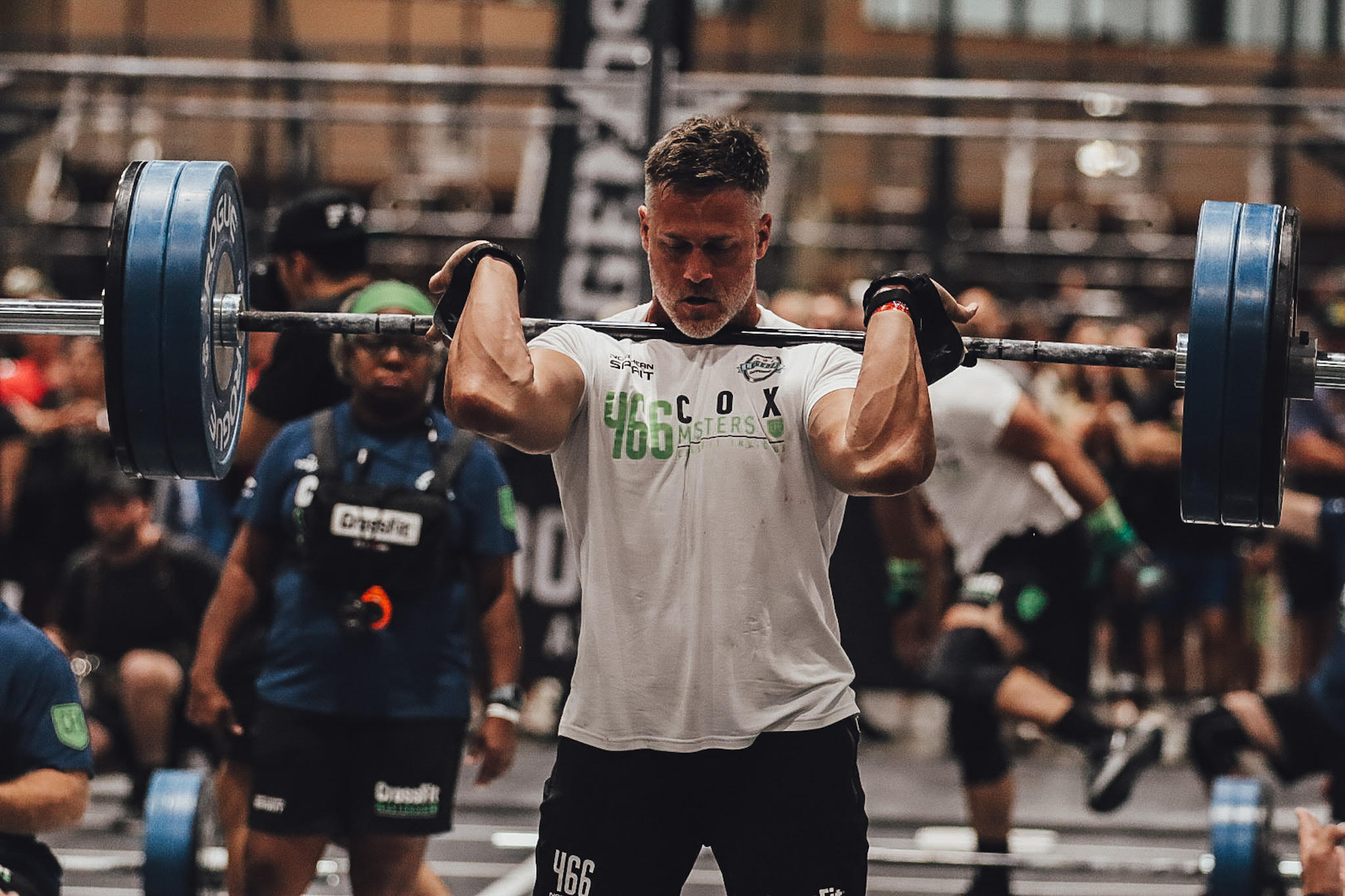
The standing barbell overhead press develops the shoulders, triceps, upper chest, and trunk. It is one of the most honest upper body lifts because it requires full body tension and does not give you much room to hide poor positioning. Done well, it can add meaningful size to the deltoids while building the strength to press objects overhead with control.
Broad, muscular shoulders change the look of the entire upper body. They make the waist appear narrower and create a more athletic silhouette, especially when combined with a developed upper back. The overhead press directly trains the front and side portions of the deltoids while placing significant demands on the triceps.
Why the Overhead Press Deserves a Place in Your Program
The overhead press is a compound movement that involves several upper body muscles at once. Because you press from a standing position, your trunk, glutes, and legs must create a stable platform. This does not replace direct core training, but it teaches you to maintain whole body tension while producing force through the shoulders and arms.
For men over 30, the lift can be a useful test of whether training is balanced. If you cannot hold your ribs and pelvis in a controlled position while pressing, or if the bar path is wildly inconsistent, the answer is usually not more weight. Better setup, appropriate load selection, and patient practice will build a more durable press.
The standing press should not be treated as a competition with your bench press. It normally uses far less weight, and that is completely normal. The goal is not to impress anyone with the number on the bar. The goal is to build strong shoulders and triceps through consistent, pain free training.
How to Perform It Well
Set the bar in a rack at upper chest height. Grip it just outside shoulder width with your wrists stacked over your forearms. Before lifting the bar from the rack, squeeze your glutes and brace your abdomen. This helps prevent excessive lower back extension during the press.
Start with the bar at the top of your chest. Press it upward while moving your head slightly back to give the bar a clear path. Once the bar passes your forehead, bring your head through so the bar finishes over the middle of your body. At the top, your elbows should be straight and your body should remain controlled.
Avoid leaning back aggressively to turn the lift into an inclined press. A slight backward movement of the head is normal, but the ribs should not flare dramatically and the lower back should not take over. If this happens, reduce the weight and focus on stronger bracing.
Programming the Overhead Press
Perform three to five sets of five to ten repetitions one or two times per week. The overhead press can be demanding, so it often works well after the bench press on one session or as the first pressing exercise on another session.
Use a smaller load increase than you might use for the bench press. Adding two and a half pounds can be enough to create meaningful progress. Small plates are valuable because shoulder pressing strength usually improves more gradually than lower body strength.
How to Combine These Exercises
A simple upper body session could begin with the barbell bench press, move to the barbell bent over row, and finish with the standing barbell overhead press. If your shoulders are a priority, start with the overhead press on one of your weekly sessions and bench press first on the other.
Give yourself adequate rest between hard sets. Longer rest periods often help preserve repetition performance, which can help you accumulate more productive training volume. For heavy compound barbell exercises, resting two to three minutes is a sensible starting point. You do not need to rush simply because a workout feels more difficult when you are tired.
Use controlled repetitions and stop sets when your technique changes substantially. Training close to muscular failure can be effective, but going to failure on every set is not necessary for muscle growth and can make recovery harder. Leave a small margin on most compound barbell sets, especially when you are building a long term routine.
Nutrition and sleep also matter. Resistance training provides the signal for adaptation, but adequate energy intake and protein support the process of building and retaining lean mass. Protein intakes around 1.6 grams per kilogram of body weight per day appear sufficient for maximizing average resistance training related gains in fat free mass for many adults, although individual needs can vary.
Final Thoughts
The barbell bench press, bent over row, and standing overhead press are three of the best upper body exercises for men over 30 because they are efficient, measurable, and capable of producing years of progress. The bench press builds the chest and triceps, the row builds the back and arms, and the overhead press develops strong, muscular shoulders.
You do not need to train with reckless intensity to get jacked. Train these lifts consistently, use a full range of motion you can control, add weight or repetitions gradually, and recover well enough to repeat the process week after week. That is how an upper body becomes bigger, stronger, and more resilient over time.
Key Takeaways
| Exercise | Main muscles trained | Effective starting prescription | Key coaching focus |
|---|---|---|---|
| Barbell bench press | Chest, triceps, front deltoids | Three to five sets of six to ten repetitions | Keep the upper back tight and lower the bar with control |
| Barbell bent over row | Lats, upper back, rear deltoids, biceps | Three to four sets of six to twelve repetitions | Keep the torso stable and pull with the elbows |
| Standing barbell overhead press | Deltoids, triceps, upper chest, trunk | Three to five sets of five to ten repetitions | Brace the trunk and finish with the bar over the middle of the body |
| Weekly approach | Entire upper body | Train each movement one or two times per week | Progress gradually and keep most sets one to three repetitions from failure |
References
- Grgic, J., Schoenfeld, B.J., Skrepnik, M. and Davies, T.B. (2018) ‘Effects of rest interval duration in resistance training on measures of muscular strength: A systematic review’, Sports Medicine, 48(1), pp. 137–151.
- Schoenfeld, B.J., Grgic, J., Ogborn, D. and Krieger, J.W. (2017) ‘Strength and hypertrophy adaptations between low versus high load resistance training: A systematic review and meta analysis’, Journal of Strength and Conditioning Research, 31(12), pp. 3508–3523.
- Schoenfeld, B.J., Ogborn, D. and Krieger, J.W. (2017) ‘Dose response relationship between weekly resistance training volume and increases in muscle mass: A systematic review and meta analysis’, Journal of Sports Sciences, 35(11), pp. 1073–1082.
- Schoenfeld, B.J., Grgic, J. and Krieger, J. (2019) ‘How many times per week should a muscle be trained to maximize muscle hypertrophy? A systematic review and meta analysis of studies examining the effects of resistance training frequency’, Journal of Sports Sciences, 37(11), pp. 1286–1295.
- Simao, R., De Salles, B.F., Figueiredo, T., Dias, I. and Willardson, J.M. (2012) ‘Exercise order in resistance training’, Sports Medicine, 42(3), pp. 251–265.
- Steele, J., Fisher, J., Giessing, J. and Gentil, P. (2017) ‘Clarity in reporting terminology and definitions of set endpoints in resistance training’, Muscle and Nerve, 56(3), pp. 368–374.
- van den Tillaar, R. and Saeterbakken, A.H. (2013) ‘Fatigue effects upon muscle activation in isotonic and isokinetic bench press exercise’, Journal of Sports Sciences, 31(11), pp. 1247–1254.
- Wernbom, M., Augustsson, J. and Thomee, R. (2007) ‘The influence of frequency, intensity, volume and mode of strength training on whole muscle cross sectional area in humans’, Sports Medicine, 37(3), pp. 225–264.
- Wilson, J.M., Marin, P.J., Rhea, M.R., Wilson, S.M., Loenneke, J.P. and Anderson, J.C. (2012) ‘Concurrent training: A meta analysis examining interference of aerobic and resistance exercises’, Journal of Strength and Conditioning Research, 26(8), pp. 2293–2307.
- Morton, R.W., Murphy, K.T., McKellar, S.R., Schoenfeld, B.J., Henselmans, M., Helms, E., Aragon, A.A., Devries, M.C., Banfield, L., Krieger, J.W. and Phillips, S.M. (2018) ‘A systematic review, meta analysis and meta regression of the effect of protein supplementation on resistance training induced gains in muscle mass and strength in healthy adults’, British Journal of Sports Medicine, 52(6), pp. 376–384.