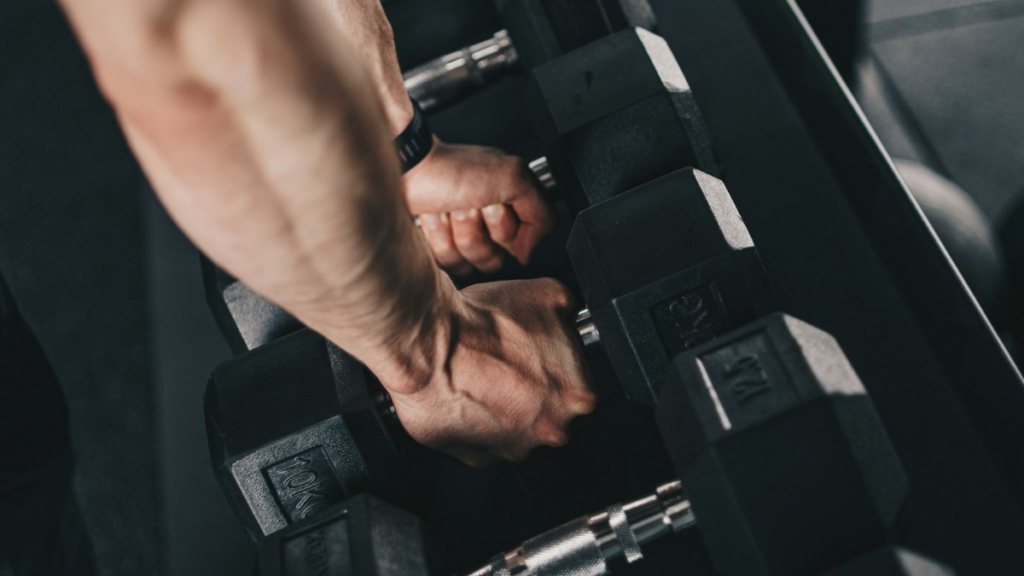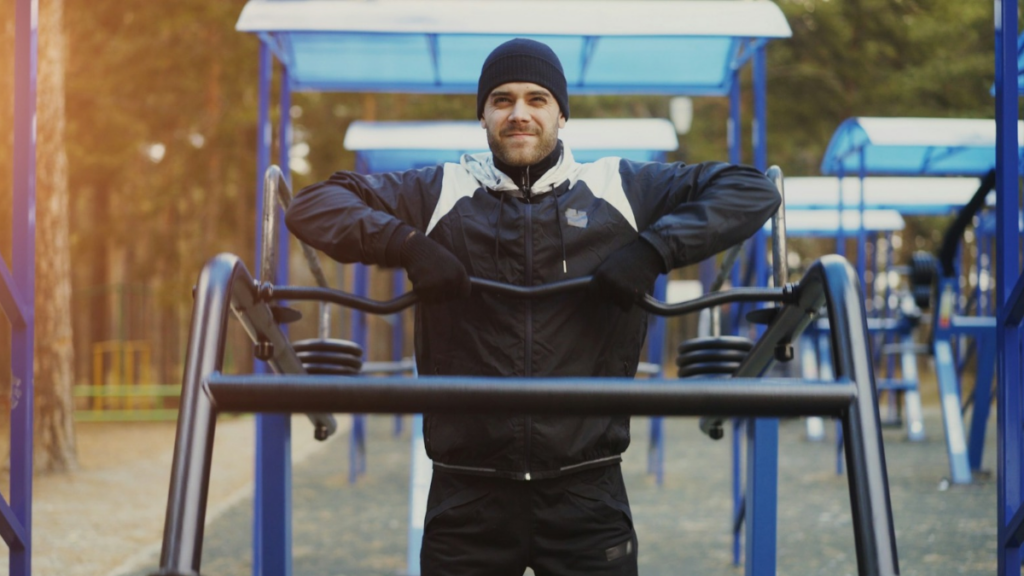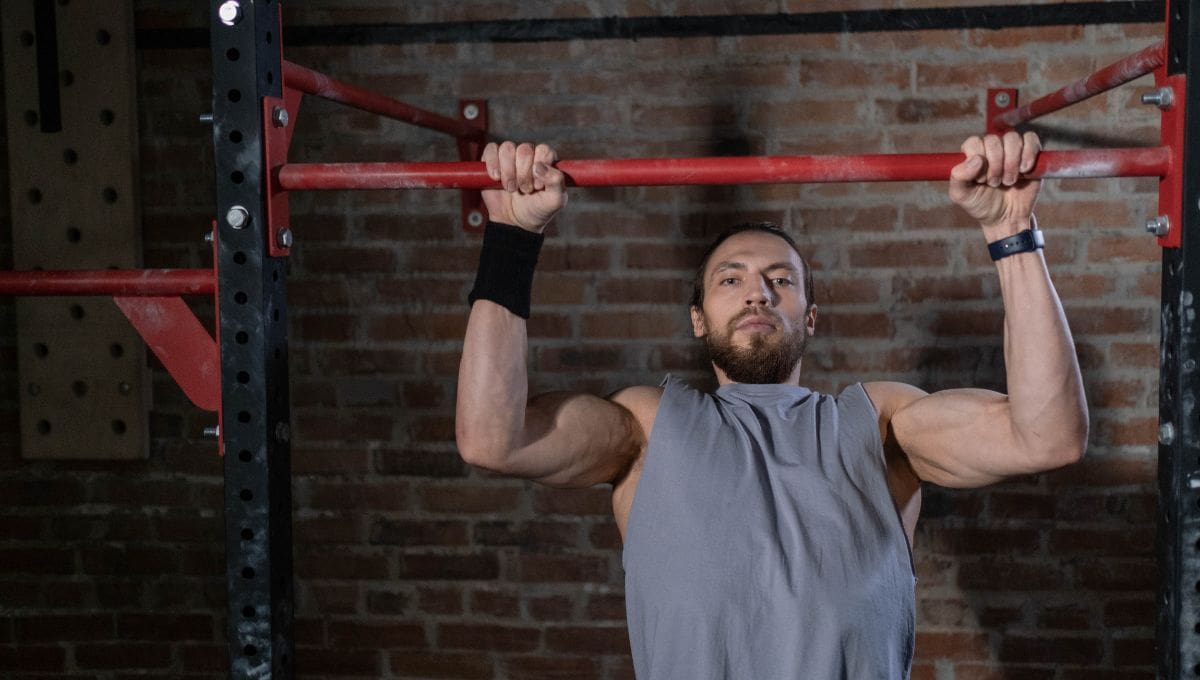


A thick upper back changes how your whole physique looks. It gives your torso more depth from the side, makes your shoulders appear broader, and provides the dense look between the shoulder blades that many beginners are missing. While wide grip pull movements are useful for developing the latissimus dorsi, upper back thickness comes primarily from building the trapezius, rhomboids, rear deltoids, and the smaller muscles that control the shoulder blades.
The good news is that you do not need advanced barbell rows, heavy deadlifts, or complicated techniques to start building this area. Beginners usually make faster progress with exercises that are stable, easy to repeat, and simple to load gradually. The aim is to train hard enough to challenge the upper back while keeping the movement controlled enough that the lower back and arms do not take over.


Research consistently shows that resistance training increases muscle size and strength when it is performed regularly and progressed over time. The exact exercise matters, but long term growth depends even more on using an appropriate range of motion, applying enough effort, and gradually making the work more challenging as you become stronger. For a beginner, that means selecting movements you can perform confidently and improve week after week.
These three exercises are excellent starting points for building a thicker upper back. Together, they train horizontal pulling strength, shoulder blade control, and the upper traps and rear delts that give the back its dense, muscular appearance.
What Creates a Thick Upper Back?
The upper back is not one muscle. It is a group of muscles that work together to control your shoulder blades and pull your upper arms behind your body. The middle trapezius and rhomboids sit between the shoulder blades and help pull them toward the spine. The lower trapezius helps control the shoulder blades as the arms move. The upper trapezius contributes to shoulder blade elevation and supports loaded carrying and pulling tasks.
The rear deltoids also matter. Although they sit on the back of the shoulders rather than the torso, developed rear delts blend into the upper back and make the area look fuller. The latissimus dorsi contributes to overall back size as well, particularly when you pull your elbows down and back.
Many people trying to build a thick back focus only on lifting a heavy weight. Load is important, but the direction of the pull matters too. Horizontal pulling movements, where you draw a handle or your body toward your torso, are especially useful because they require shoulder blade retraction. In plain language, this means pulling the shoulder blades back toward each other with control.
A beginner should not try to squeeze the shoulder blades together as hard as possible before every repetition. Instead, allow the shoulders to move forward naturally at the start of the exercise, then pull the elbows back and let the shoulder blades come together as the weight approaches the body. This creates a comfortable, repeatable movement rather than a stiff and forced one.
1. Chest Supported Dumbbell Row
The chest supported dumbbell row is one of the best beginner exercises for a thicker upper back because it reduces the demand on the lower back. When your chest is supported by an incline bench, you can focus on pulling with the upper back instead of spending most of the set trying to hold your torso in place.
This makes the exercise particularly useful for beginners who are still learning how to hinge at the hips and brace their trunk. It also makes it easier to keep the repetitions consistent. A stable exercise setup can help you concentrate on the muscles you are trying to train and make progressive overload simpler.
How to Perform the Chest Supported Dumbbell Row
Set an adjustable bench to a low or moderate incline. Lie face down with your chest supported and your feet firmly on the floor. Hold a dumbbell in each hand with your arms hanging toward the floor.
Start each repetition by allowing your shoulder blades to move slightly apart. Then pull the dumbbells upward by driving your elbows back and slightly out to the sides. Aim to bring the dumbbells toward the lower part of your chest or upper ribs. Pause briefly when your elbows are behind your torso, then lower the weights slowly until your arms are straight again.
Keep your neck relaxed and avoid looking excessively upward. Your head should stay in a neutral position, roughly in line with your spine. If you feel the movement mainly in your biceps, reduce the weight and think about moving your elbows rather than curling the dumbbells.
Why It Builds Upper Back Thickness
A chest supported row trains the middle back through a large, stable range of motion. Rowing exercises require the muscles around the shoulder blade to contribute to pulling and controlling the load. Research using electromyography has found meaningful activation of the middle trapezius, posterior deltoid, latissimus dorsi, and related shoulder muscles during rowing variations.
The support from the bench is valuable because it reduces momentum. You cannot easily swing the dumbbells with your hips or turn the exercise into a partial lower back movement. That creates a cleaner stimulus for the upper back and helps a beginner learn what a proper row feels like.
Sets, Reps, and Progression
Start with three sets of eight to 12 repetitions. Choose a weight that lets you complete every repetition with your chest on the bench and without jerking the dumbbells upward. The final two or three repetitions should feel challenging, but your technique should stay stable.
When you can perform 12 controlled repetitions on all three sets, increase the dumbbells by the smallest available amount. Small, steady increases are more useful than jumping to a weight that forces you to cut the range of motion short.
2. Seated Cable Row
The seated cable row is a reliable beginner exercise because the cable provides smooth resistance throughout the movement. It is easy to adjust the weight, simple to set up in most gyms, and effective for practicing the horizontal pulling pattern that helps develop the middle back.
Unlike a dumbbell row, a cable row allows both hands to work together on a single handle. This can make the movement feel more coordinated for beginners. A close neutral grip attachment is a strong starting choice because it usually allows a comfortable elbow path and a substantial range of motion.
How to Perform the Seated Cable Row
Sit upright at the cable row station and place your feet securely on the platform. Hold the handle with your arms extended, keeping a slight bend in your knees. Begin with your shoulders reaching forward naturally rather than sitting rigidly upright.
Pull the handle toward your lower ribs or upper abdomen by driving your elbows back. Keep your torso mostly still. A small amount of natural movement is acceptable, but do not rock your body backward to move a weight that is too heavy. Finish with your elbows close to your sides and your shoulder blades pulled back comfortably.
Return the handle slowly until your arms are straight and your shoulders have moved forward again. The controlled return is important. Muscles produce force while lengthening during the lowering phase, and this part of the repetition contributes to the total training stimulus.
Why It Builds Upper Back Thickness
The seated cable row trains several muscles at once, including the middle trapezius, rhomboids, rear deltoids, latissimus dorsi, and elbow flexors. It is a practical movement for accumulating quality pulling volume without needing high levels of balance or trunk strength.
Research comparing resistance training programs shows that muscle growth can be achieved across a wide range of loading schemes, provided the sets are challenging and sufficient training volume is completed. That makes the cable row especially useful for beginners because you can start light, learn the pattern, and slowly build the load without changing the exercise.
The seated cable row also offers a useful contrast to the chest supported dumbbell row. The dumbbell version allows each arm to work independently, while the cable row makes it easy to focus on a smooth and repeatable bilateral pull. Using both can help you build a more complete foundation.
Sets, Reps, and Progression
Perform three sets of 10 to 15 repetitions. Start conservatively and prioritize a full stretch at the front of each repetition. If you need to lean far back or pull the handle to your chest to complete the set, the weight is too heavy.
Once you can perform 15 repetitions with the same controlled form for each set, increase the weight slightly. Keep a record of your load and repetitions. Tracking your training makes it easier to see whether you are progressing instead of relying on memory.
3. Rope Face Pull
The rope face pull is often treated as a shoulder health exercise, but it can also be a useful builder of upper back and rear shoulder muscle when performed with enough control and resistance. It trains a higher pulling angle than the other two movements, which helps target the upper and middle trapezius, rear deltoids, and muscles involved in rotating and stabilizing the shoulder.
For beginners, the key is to avoid turning face pulls into a heavy whole body movement. This exercise works best with a moderate load, a deliberate pull, and a clear pause near the end position.
How to Perform the Rope Face Pull
Set a cable pulley around upper chest or face height. Attach a rope handle and take a few steps back until the cable has tension. Use a staggered stance or stand with both feet about shoulder width apart.
Begin with your arms extended in front of you. Pull the rope toward your face while allowing your elbows to travel outward and back. As the rope approaches your face, separate the ends of the rope so your hands finish near the sides of your head. Your upper arms should be roughly level with your shoulders, although you should use a slightly lower angle if the higher position feels uncomfortable.
Pause briefly, then return the rope slowly to the starting position. Keep your ribs down and avoid leaning backward. The movement should come from the shoulders and upper back, not from swinging your torso.
Why It Builds Upper Back Thickness
High row and horizontal abduction rowing patterns can produce substantial activation in the upper, middle, and lower trapezius as well as the posterior deltoid. The face pull uses a similar high pulling direction and can complement lower rowing patterns by training the upper back from another angle.
This does not mean that face pulls should replace heavy rows. The chest supported dumbbell row and seated cable row should remain the foundation of your upper back work because they are easier to progressively load. Face pulls work well as an additional movement that builds rear shoulder size, reinforces upper back training volume, and teaches you to control the shoulder blades through a higher range of motion.
Sets, Reps, and Progression
Use two or three sets of 12 to 20 repetitions. This exercise responds well to higher repetitions because lighter loads make it easier to maintain the correct position. Select a weight that allows you to pause at the end of each repetition without shrugging your shoulders toward your ears.
Progress by improving control first. Add a brief pause at the contracted position, use a slower return, or add repetitions before increasing the load. Once you can complete 20 clean repetitions, make a small weight increase and work back toward 12 repetitions.
How to Put These Exercises Into a Beginner Workout
You can train these three exercises twice per week on nonconsecutive days. This gives you repeated practice without making any single workout excessively long. Performing multiple weekly sets for a muscle group is a practical way to build training volume, and higher weekly volumes are generally associated with greater muscle growth when recovery is adequate.
A simple approach is to perform the chest supported dumbbell row first, followed by the seated cable row, then finish with the rope face pull. Start with two sets per exercise if you are completely new to lifting. After two or three weeks, move to three sets if you are recovering well and can keep your technique sharp.
Do not take every set to absolute muscular failure. Research indicates that sets performed close to failure can produce muscle growth, but beginners do not need to grind through ugly repetitions to make progress. Stop when you feel you could complete one or two more repetitions with good form. This gives you a hard enough training stimulus while reducing the chance that technique breaks down.
Nutrition and recovery also matter. Resistance training provides the signal for muscle growth, while adequate dietary protein and total energy intake support the process of repair and adaptation. Sleep, rest days, and consistent training matter more than chasing a new exercise every week.
Common Mistakes That Limit Upper Back Growth
The most common mistake is using too much weight. A heavier stack or larger dumbbells can feel productive, but the upper back only benefits when it is doing the work. If you need to swing, jerk, shorten the range of motion, or lean your body backward aggressively, reduce the load.
Another mistake is rushing the return phase. Letting the weight pull your arms forward quickly removes control from an important part of the repetition. Lower the weight with purpose, feel the shoulder blades move forward, and then begin the next pull.
Finally, do not expect immediate visual changes. Muscle growth takes time, especially when you are building a new training habit. Focus on performing more controlled repetitions, using slightly more resistance over time, and maintaining your routine. If you do that consistently, your upper back will become stronger and thicker.
Key Takeaways
| Exercise or principle | What to do | Why it matters |
|---|---|---|
| Chest supported dumbbell row | Perform three sets of eight to 12 controlled repetitions | The bench support reduces lower back involvement and lets you focus on the middle and upper back |
| Seated cable row | Perform three sets of 10 to 15 repetitions with a full stretch | It provides a stable, adjustable horizontal pulling pattern for building training volume |
| Rope face pull | Perform two or three sets of 12 to 20 repetitions | It adds higher angle pulling work for the trapezius, rear deltoids, and shoulder blade control |
| Progressive overload | Add repetitions or small amounts of weight when form remains strong | Gradual increases in training challenge support continued strength and muscle gains |
| Exercise effort | Finish most sets with about one or two good repetitions left | Hard sets are useful, but leaving a small margin helps beginners preserve technique |
References
- American College of Sports Medicine (2009) ‘American College of Sports Medicine position stand: Progression models in resistance training for healthy adults’, Medicine & Science in Sports & Exercise, 41(3), pp. 687–708.
- Grgic, J., Schoenfeld, B.J., Orazem, J., Sabol, F., Bjornsen, T., Pedisic, Z. and Mikulic, P. (2022) ‘Effects of resistance training performed to repetition failure or nonfailure on muscular strength and hypertrophy: A systematic review and meta analysis’, Journal of Sport and Health Science, 11(2), pp. 202–211.
- Morton, R.W., Murphy, K.T., McKellar, S.R., Schoch, Z., Henselmans, M., Helms, E., Aragon, A.A., Devries, M.C., Banfield, L., Krieger, J.W. and Phillips, S.M. (2018) ‘A systematic review, meta analysis and meta regression of the effect of protein supplementation on resistance training induced gains in muscle mass and strength in healthy adults’, British Journal of Sports Medicine, 52(6), pp. 376–384.
- Schoenfeld, B.J., Ogborn, D. and Krieger, J.W. (2017) ‘Dose response relationship between weekly resistance training volume and increases in muscle mass: A systematic review and meta analysis’, Journal of Sports Sciences, 35(11), pp. 1073–1082.
- Schoenfeld, B.J., Grgic, J., Van Every, D.W. and Plotkin, D.L. (2021) ‘Loading recommendations for muscle strength, hypertrophy, and local endurance: A re examination of the repetition continuum’, Sports, 9(2), 32.
- Youdas, J.W., Kleis, M., Krueger, E.T., Thompson, S., Walker, W.A. and Hollman, J.H. (2021) ‘Recruitment of shoulder complex and torso stabilizer muscles with rowing exercises using a suspension strap training system’, Sports Health, 13(1), pp. 85–90.