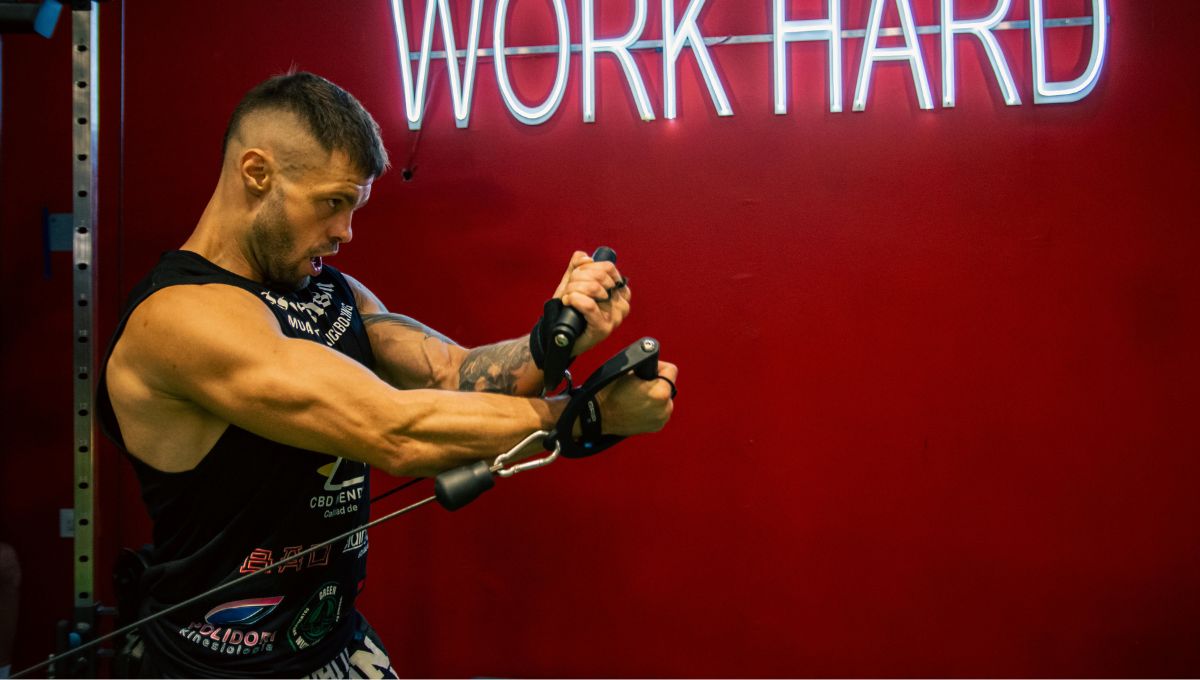


Broad shoulders create one of the most noticeable changes you can make to your physique. They make the upper body look more athletic, improve the visual contrast with your waist, and help your chest and arms look more developed. The lateral deltoid is especially important here because it adds width when viewed from the front and back.
Most lifters rely on dumbbell lateral raises, overhead presses, and perhaps a reverse pec deck. These are useful exercises, but cable training offers a valuable advantage: the resistance can remain meaningful through a larger part of the movement. With dumbbells, the load becomes light near the bottom of a lateral raise because gravity pulls straight down. A cable can create tension from the beginning of the repetition, provided you set it up well.


Cables are not magic, and they do not replace consistent training, progressive overload, enough protein, and adequate recovery. However, they can help you train the deltoids with more control and less momentum. Research also shows that cable and dumbbell lateral raises can both increase lateral deltoid thickness effectively when training volume and effort are matched. The best choice is often the one you can perform safely, consistently, and close enough to muscular failure with solid technique.
Here are three unusual cable exercises that can add productive variety to your shoulder training and help build a wider, more complete set of delts.
Why Cable Work Can Help Build Wider Shoulders
The deltoid has three primary sections. The anterior deltoid sits on the front of the shoulder and contributes strongly to pressing movements. The posterior deltoid sits at the rear and helps move the upper arm backward and outward. The lateral deltoid runs over the outside of the shoulder and is the muscle most responsible for the appearance of shoulder width.
Overhead pressing develops the deltoids, but it also asks a great deal of the triceps and upper chest. This means pressing alone may not provide enough direct stimulus for the lateral deltoids, particularly if your goal is to create a noticeably wider upper body. Isolation work gives you a more direct way to add weekly training volume to the side delts without turning every session into a heavy pressing workout.
Jeremy Ethier Tests a “World’s Most Filling Diet” for 30 Days and the Results Are Surprising
Muscle growth is strongly related to sufficient training volume. Research has found a dose response relationship between the number of challenging resistance training sets performed and muscle hypertrophy. This does not mean that endlessly adding sets is productive. It means your shoulders need repeated, demanding work over time if you want them to grow.
Cable exercises can be especially useful because the direction of resistance is easy to adjust. A slight change in pulley height, body position, or arm path can alter where the exercise feels most difficult. That makes cables a practical tool for finding shoulder movements that challenge the target muscle while staying comfortable for your joints.
Exercise One: Behind the Back Cable Lateral Raise
The behind the back cable lateral raise looks strange at first, but it is one of the most useful ways to train the lateral deltoid with a cable. Instead of standing beside the pulley and lifting the handle from your side, you hold the cable behind your body. This changes the line of pull and can create tension while your arm is still close to your torso.
How to Perform It
Set a single cable pulley to its lowest setting. Stand with your left side facing the cable stack and take the handle in your right hand behind your back. Step far enough away from the machine that there is light tension on the cable when your right arm is resting by your side.
Keep a soft bend in your elbow and lift your arm out to the side in a smooth arc. Stop around shoulder height or slightly below if going higher causes discomfort. Pause briefly, then lower the handle under control. Complete all repetitions on one side before switching.
Your torso should stay mostly still. Do not twist toward the cable stack or use a sharp knee drive to force the weight upward. A modest forward torso angle is fine if it helps you keep the movement controlled, but the shoulder should still be doing the work.
Why It Works
This exercise gives the lateral deltoid a more demanding start position than a conventional dumbbell lateral raise. The cable pulls from behind your body, so the muscle may have to work earlier in the lift instead of waiting until the arm is farther from the torso.
The goal is not to chase a special exercise because it feels unusual. The goal is to use a variation that lets you accumulate hard, controlled repetitions without excessive cheating. If standard lateral raises irritate your shoulders or feel awkward at the bottom, this setup may be worth trying.
Start with a light load and use a controlled repetition speed. Sets of 10 to 20 repetitions work very well because the lateral deltoid is small and easy to overwhelm with momentum when the weight is too heavy. Finish each set with one or two repetitions still possible, or take the final set closer to technical failure if your form remains clean.
Exercise Two: Single Arm Cross Body Cable Y Raise
The cable Y raise is a less common shoulder exercise that trains the upper arm in a diagonal path rather than directly out to the side. It can be a smart choice for lifters who want shoulder work that involves the lateral deltoid while also asking the upper back and scapular muscles to control the movement.
How to Perform It
Set a cable pulley to its lowest setting. Stand sideways to the stack and hold the handle with the hand farthest from the pulley, so the cable crosses in front of your body. Start with your working hand near the opposite front pocket.
Raise the handle diagonally upward and outward. Your arm should travel in a path that resembles the upper half of a Y shape. Keep your elbow softly bent and stop when your upper arm reaches roughly shoulder height. You do not need to pull the handle far overhead.
Keep your ribs down and avoid leaning backward as you raise the cable. Think about reaching long through the arm rather than shrugging your shoulder toward your ear. Return slowly until your hand reaches the starting position, then repeat.
Why It Works
The diagonal arm path can be more comfortable than a strict lateral raise for some lifters. It allows the shoulder to move in a plane that is slightly forward of the body, which may feel more natural depending on your individual shoulder structure and mobility.
This movement also encourages better control of the shoulder blade. The upper trapezius, lower trapezius, serratus anterior, and rotator cuff all contribute to stable, coordinated shoulder motion. These muscles do not need to be the main target of a hypertrophy workout, but they matter because a stable shoulder gives you a stronger base for pressing, raising, pulling, and training consistently.
Use a load that allows you to keep your shoulder away from your ear. If the exercise turns into a shrug, the weight is too heavy or your range of motion is too ambitious. The Y raise is most effective when it feels smooth and controlled rather than explosive.
Perform two to four sets of 12 to 20 repetitions per side. This is an excellent exercise near the end of an upper body session, when you want quality shoulder volume without the systemic fatigue of another heavy press.
Exercise Three: Cable Rear Delt Sweep
A cable rear delt sweep is a standing single arm reverse fly variation. It trains the posterior deltoid through a wide arc and can help make the shoulders look more complete from the side and back. Although rear delt work will not make your shoulders wider in the same direct way as lateral raises, bigger rear delts can create a fuller shoulder cap and improve upper body balance.
How to Perform It
Set a cable pulley around lower chest height. Stand with the working arm closest to the cable stack and grab the handle with that hand. Take a small step away from the machine so the cable is already under tension.
Hinge forward slightly at the hips, keep your chest open, and let the working arm begin across the front of your body. From there, sweep the arm outward and backward in a wide arc. Your elbow should stay softly bent throughout the movement.
Stop when your upper arm is roughly in line with your torso. Squeeze briefly, then return under control. Avoid rotating your whole body open to make the movement easier. The shoulder should move while the torso remains stable.
Why It Works
The posterior deltoid contributes to horizontal shoulder abduction, which is the action performed as you move the upper arm away from the front of the body and toward the back. This cable variation creates resistance throughout the movement and makes it easier to use one arm at a time.
Single arm work can help you focus on one shoulder without the stronger side dominating the repetition. It also gives you freedom to find a path that feels natural. Some lifters prefer the arm to travel more outward, while others feel the rear deltoid better with a slightly lower and wider sweep.

Do not turn this into a back exercise by pulling the shoulder blade hard toward the spine on every repetition. Your upper back will assist, but the intention should be to move the upper arm by contracting the rear deltoid. A controlled tempo and lighter load will usually produce better results than heavy weight and excessive torso rotation.
Use two to four sets of 12 to 20 repetitions per side. Pairing this exercise with a lateral deltoid movement is an efficient way to train both the width and the fullness of the shoulders in the same session.
How to Program These Exercises for Growth
You do not need to perform all three movements in every workout. Choose one lateral deltoid focused exercise and one rear deltoid focused exercise, then train them consistently for several weeks. A simple approach is to train shoulders two or three times per week, spreading the volume across your upper body sessions.
For example, you could perform behind the back cable lateral raises after pressing on one day, then use cross body cable Y raises and rear delt sweeps later in the week. This gives the deltoids repeated exposure without forcing you to do a large amount of shoulder isolation work in one session.
Research suggests that a wide range of loads can support muscle growth when sets are performed with sufficient effort. Lighter loads are particularly practical for shoulder isolation exercises because they make it easier to maintain control and reduce the temptation to use momentum. The important point is that the final repetitions should feel genuinely challenging while your technique remains stable.
Use a full and pain free range of motion whenever possible. Research comparing resistance training ranges of motion generally supports the use of larger ranges for improving muscular adaptations, although your individual anatomy and comfort should guide the exact endpoint. Do not force your arm into a position that produces pinching, sharp pain, or joint discomfort.
Progress by adding repetitions first. If you can perform 20 clean repetitions with the same load, increase the weight slightly and work back toward the lower end of your target range. This is a simple form of progressive overload that works well for cable isolation exercises.
Common Mistakes That Limit Shoulder Growth
The most common mistake is using too much weight. When the torso begins swinging, the knees start bouncing, or the shoulder rises toward the ear, the lateral deltoid is no longer receiving the focused stimulus you want. Reducing the load often makes the exercise harder in the right way.
Another mistake is lifting too high. The purpose of a lateral raise is to challenge the shoulder, not to see how far above your head you can move the handle. For most people, stopping around shoulder height provides a productive range without turning the movement into a shrug or an awkward overhead position.
Finally, do not change exercises every session. Unusual movements are useful only if you become skilled enough at them to apply progressive overload. Give each variation at least four to eight weeks, track your repetitions and loads, and judge progress by better performance, improved control, and gradual physique changes over time.
The Bottom Line
Cable training gives you more than one way to build wider shoulders. Behind the back cable lateral raises provide an effective side delt focused option with meaningful tension near the bottom of the lift. Cross body cable Y raises add a comfortable diagonal pattern that trains the shoulders with controlled scapular movement. Cable rear delt sweeps build the back of the shoulder, helping create a fuller and more balanced upper body.
Choose movements that feel stable, train them with patience, and make the last few repetitions count. Bigger shoulders are built through months of consistent hard work, not through one perfect exercise.
References
- Larsen, S., Wolf, M., Schoenfeld, B.J., Sandberg, N.Ø., Fredriksen, A.B., Kristiansen, B., van den Tillaar, R., Swinton, P.A. and Falch, H.N. (2025) ‘Dumbbell versus cable lateral raises for lateral deltoid hypertrophy: an experimental study’, Frontiers in Physiology, 16, 1611468.
- Pallarés, J.G., Hernández-Belmonte, A., Martínez-Cava, A., Vetrovský, T., Steffl, M. and Courel-Ibáñez, J. (2021) ‘Effects of range of motion on resistance training adaptations: a systematic review and meta-analysis’, Scandinavian Journal of Medicine & Science in Sports, 31(10), pp. 1866–1881.
- Schoenfeld, B.J., Ogborn, D. and Krieger, J.W. (2017) ‘Dose-response relationship between weekly resistance training volume and increases in muscle mass: a systematic review and meta-analysis’, Journal of Sports Sciences, 35(11), pp. 1073–1082.
- Schoenfeld, B.J., Grgic, J., Ogborn, D. and Krieger, J.W. (2017) ‘Strength and hypertrophy adaptations between low versus high load resistance training: a systematic review and meta-analysis’, Journal of Strength and Conditioning Research, 31(12), pp. 3508–3523.
- Uhl, T.L., Madigan, M.L., Adams, E., Stokes, M. and Borich, M.R. (2009) ‘Scapular muscle activation and movement patterns during shoulder rehabilitation exercises’, Journal of Athletic Training, 44(3), pp. 300–308.
Key Takeaways
| Exercise | Main shoulder emphasis | Best repetition range | Key coaching point |
|---|---|---|---|
| Behind the Back Cable Lateral Raise | Lateral deltoid | 10 to 20 | Keep the torso still and raise the arm smoothly to around shoulder height. |
| Single Arm Cross Body Cable Y Raise | Lateral deltoid, upper back, shoulder stabilizers | 12 to 20 | Lift diagonally without leaning backward or shrugging. |
| Cable Rear Delt Sweep | Posterior deltoid | 12 to 20 | Sweep the arm outward and back while preventing torso rotation. |
| Weekly approach | Complete shoulder development | Two to three sessions | Add challenging sets gradually and prioritize clean, repeatable technique. |