

Grip width changes far more than where your hands sit on the bar. It changes the distance the bar travels, the angles at your shoulders and elbows, the direction of force you apply, and often the amount of weight you can lift.
That does not mean there is one perfect grip for everyone. Your anatomy, training goal, injury history, and technical skill all matter. Still, research gives us a useful starting point: a medium to wide grip tends to support the heaviest one repetition maximum, while a narrower grip increases the range of motion and places more demand on elbow extension. The tradeoff is that wider grips can increase some shoulder loads.


The practical goal is not to copy another lifter’s hand placement. It is to understand what each grip changes so you can choose a position that matches the lift you are trying to improve.
What Counts as Narrow, Medium, and Wide?
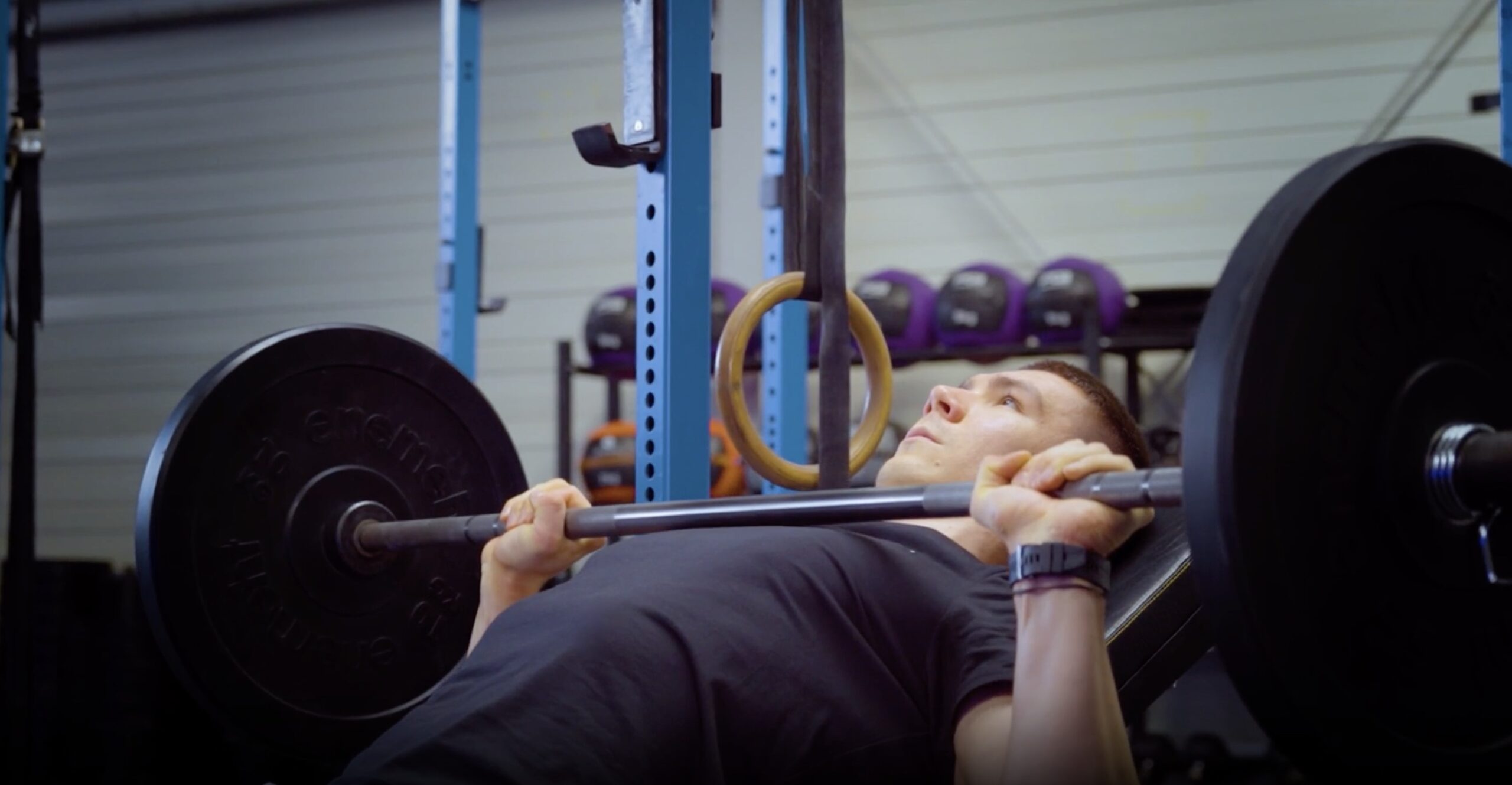
Grip width is best described relative to shoulder width rather than by a fixed number of inches. Researchers often use biacromial width, which is the distance between the bony points at the top of the shoulders.
In one bench press study involving trained men, a narrow grip was set at shoulder width, a medium grip at 1.4 times shoulder width, and a wide grip at 1.7 times shoulder width. These are useful reference points, but they are not strict rules. A lifter with long arms, broad shoulders, or a history of shoulder pain may need a different setup.
A narrow grip does not mean placing your hands together. It simply means bringing them closer than your usual competition or general strength grip. Likewise, a wide grip should not force your shoulders into an uncomfortable position. The point is to create a controlled change that you can compare under the same conditions.
A Wider Grip Usually Lets You Lift More Weight
The clearest performance finding is that a medium or wide grip often produces a higher one repetition maximum than a narrow grip.
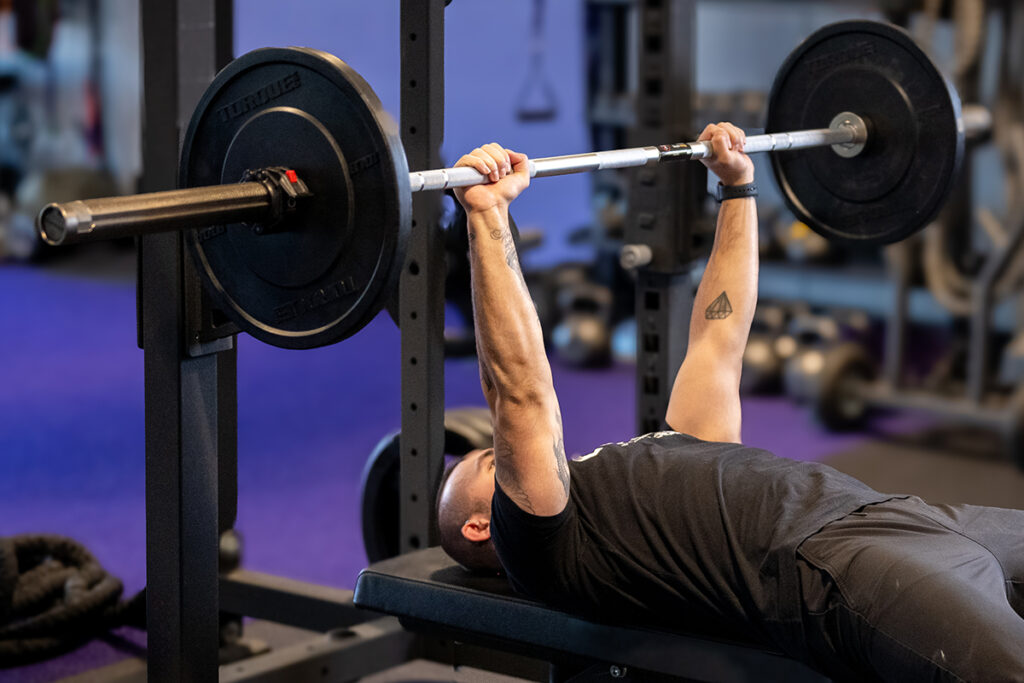
There are two simple reasons for this result. First, a wider grip reduces the vertical distance that the bar must travel. Your elbows begin in a more extended position at the chest, so there is less elbow extension left to complete before lockout. Second, the wider position changes the balance of demands between the shoulder and elbow joints.
The wide grip was not meaningfully stronger than the medium grip in that study. That matters because it suggests that moving your hands as wide as possible is not automatically the best way to increase your bench press. A medium grip may offer nearly the same maximum strength while being more comfortable or better suited to your structure.
The Shorter Range of Motion Matters
A narrow grip increases the bar path because the hands are closer together and the elbows start more flexed. In the same study, vertical bar displacement was greatest with the narrow grip and smallest with the wide grip throughout the press.
More range of motion is not automatically bad. It can be useful when you want to train through a larger movement, practice force production over a longer press, or emphasize the lockout. But a longer lift requires the bar to move farther under load, which can lower the amount you can lift for a single maximal attempt.
For powerlifting, this is one reason many lifters gravitate toward a medium to wide grip within the rules. For general strength training, a slightly narrower grip can still be valuable when it allows consistent technique and pain free training.
Narrow Grips Shift More Work Toward the Elbows
Changing grip width alters joint mechanics. With a narrow grip, the shoulders are less abducted, meaning the upper arms sit closer to the torso. At the same time, the elbows begin more bent and have to extend through a larger range to finish the lift.
In the one repetition maximum study, activity in the medial head of the triceps was greater with medium and narrow grips than with the wide grip. This fits the movement mechanics. A narrower grip gives the elbow extensors a larger role in completing the press, particularly as the bar moves away from the chest and approaches lockout.
However, it is too simplistic to say that a narrow grip turns the bench press into a triceps isolation exercise. Bench pressing still requires coordinated contribution from the chest, front deltoid, triceps, and stabilizing muscles. Research using 10 repetition maximum sets found no meaningful overall difference in the ratio of pectoralis major to triceps brachii muscle activity between a 40 cm narrow grip and an 81 cm wide grip in most tested conditions.
This is an important reality check. Grip width changes the mechanics and can alter particular muscle demands, but it does not neatly assign the exercise to one muscle. Your technique, bar path, load, shoulder position, and individual proportions also influence which muscles work hardest.
A Wider Grip Changes Shoulder Mechanics
A wider grip places the upper arms farther out from the body. This increases shoulder abduction, especially at the bottom of the lift. The wide grip condition in the one repetition maximum study produced greater shoulder abduction than the medium and narrow conditions.
That position can be effective for lifting heavy weight, but it also changes shoulder loading. In a 2024 biomechanics study, ten experienced strength athletes performed bench press variations with grip widths of one, 1.5, and two times shoulder width. The narrowest tested grip reduced acromioclavicular joint compression compared with wider grips. It also reduced posterior shear force at the glenohumeral joint and lowered modeled rotator cuff activity when combined with the tested shoulder positions.
These findings do not prove that a wide grip causes injury or that a narrow grip prevents it. The study measured shoulder forces and modeled muscle activity, not injury rates over years of training. Still, it provides a sensible reason to avoid treating the widest possible grip as the default for every lifter.

If a wide grip consistently creates shoulder discomfort, a modestly narrower position is worth testing. The best adjustment is usually small. Moving each hand inward by one finger width or two can produce a meaningful change without forcing you into a completely unfamiliar pattern.
Shoulder Comfort Is a Performance Variable
Shoulder comfort is not separate from bench press performance. A grip that allows a slightly heavier single but repeatedly irritates your shoulder is unlikely to be the best long term choice. Consistent exposure to productive training matters more than winning a small amount of weight in one session.
The same 2024 study also found that scapular retraction reduced certain modeled shoulder loads. Grip width is therefore only one part of the setup. Your upper back position, elbow angle, touch point, control on the descent, and the direction you push into the bar all influence the forces at the shoulder.
The Bar Does Not Move Straight Up
Many lifters imagine that a bench press is just a vertical push. In reality, you also apply sideways force to the bar. Research shows that the direction of this horizontal force changes with grip width.
During maximal lifting, wide grips produced laterally directed forces, meaning the hands pushed outward against the bar. Medium and narrow grips produced more medially directed forces, meaning the hands pushed inward. In another study using wide and narrow grips at 10 repetition maximum, trained and untrained lifters produced outward force with the wide grip and inward force with the narrow grip.
This does not mean you should consciously try to bend the bar in a dramatic way. Instead, it shows that skilled pressing naturally involves force in more than one direction. Your body organizes force to manage the changing demands at the shoulder and elbow joints.
A useful takeaway is to keep your wrists stacked over your forearms, maintain control of the bar, and use a grip that lets you press without your elbows or shoulders feeling unstable. Let the bar path and force direction develop from sound positioning rather than from exaggerated cues.
Which Grip Should You Use?
For a heavier one repetition maximum, start by testing a medium grip and a moderately wide grip. Current evidence suggests both can outperform a narrow grip for trained male lifters, while the medium position may retain most of the strength benefit without requiring the widest shoulder position.
What Happens If You Do Pull-Ups Every Day for 30 Days in a Row?
For triceps focused work or a longer pressing range, use a narrower grip that still keeps your wrists and elbows comfortable. It can be a productive secondary variation, especially if your lockout is weak or you want more practice with elbow extension under load.
For shoulder comfort, do not assume that wider is better. A narrower grip reduced several modeled shoulder loads in experienced strength athletes. If your shoulder becomes painful, reduce the load, assess your technique, and consider guidance from a qualified clinician or coach rather than repeatedly pushing through symptoms.
The most useful grip is the one you can repeat with stable technique, no meaningful pain, and a clear purpose. Test one variable at a time, keep the bar path controlled, and give each grip enough practice before judging it.
Key Takeaways
| Grip width | What changes | Most useful application |
|---|---|---|
| Narrow, around shoulder width | Longer range of motion, greater elbow extension demand, lower average one repetition maximum in trained men | Triceps focused work, lockout practice, or a potentially more shoulder friendly option |
| Medium, around 1.4 times shoulder width | Strong balance of shoulder and elbow demands, near equal maximum strength to a wide grip in one study | A practical default for many lifters seeking strength and comfort |
| Wide, around 1.7 times shoulder width or more | Shorter bar path, greater shoulder abduction, and often higher maximum strength than a narrow grip | Maximal strength work when it remains comfortable and technically stable |
| Extremely wide | May reduce range of motion further but can increase shoulder demands | Use only if it is legal for your sport, comfortable, and clearly beneficial for your individual technique |
References
- Larsen, S., Gomo, O. and van den Tillaar, R. (2021) ‘A biomechanical analysis of wide, medium, and narrow grip width effects on kinematics, horizontal kinetics, and muscle activity on the sticking region in recreationally trained males during one repetition maximum bench pressing’, Frontiers in Sports and Active Living, 2, 637066.
- Noteboom, L.N., Belli, I., Hoozemans, M.J.M., Seth, A., Veeger, H.E.J. and Van Der Helm, F.C.T. (2024) ‘Effects of bench press technique variations on musculoskeletal shoulder loads and potential injury risk’, Frontiers in Physiology, 15, 1393235.
- Tanimoto, M., Arakawa, H., Sato, M. and Nagano, A. (2023) ‘Lateral force and EMG activity in wide and narrow grip bench press in various conditions’, Sports, 11, 154.