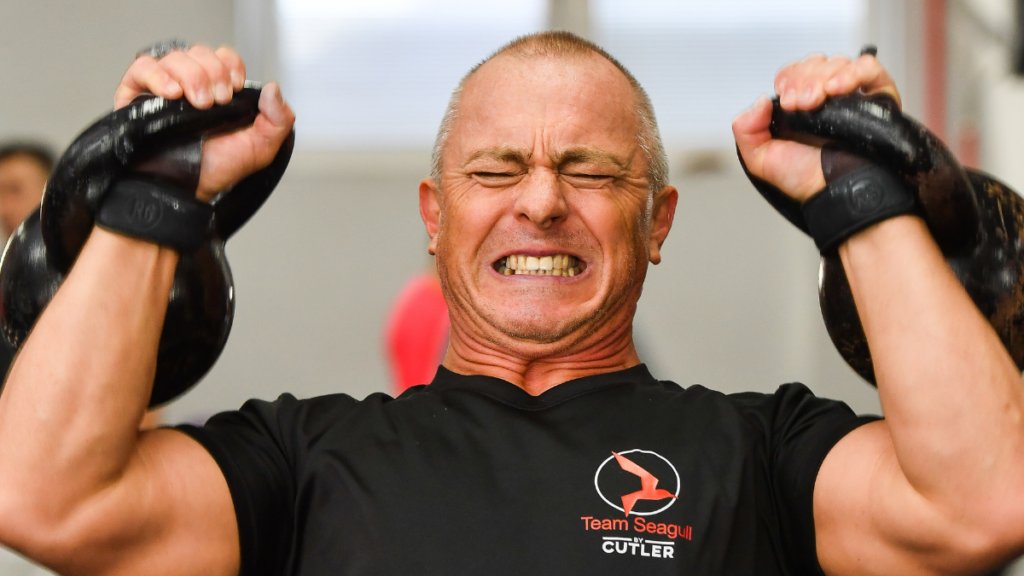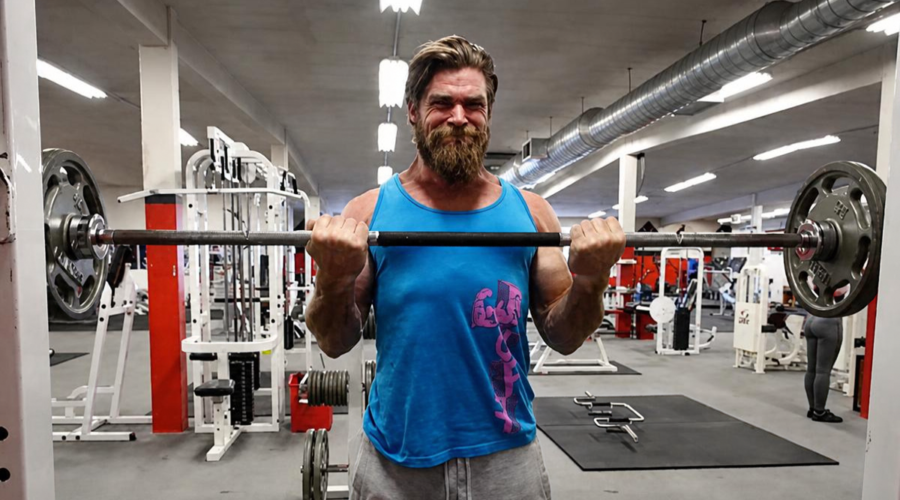


You do not always need a long, complicated workout to make your arms work hard. Sometimes, one empty Olympic barbell, three simple curl variations, and a descending ladder are enough to create a serious test of bicep endurance, grip strength, concentration, and muscular control.
This challenge uses an empty 20kg Olympic barbell for 495 total repetitions. You will perform reverse curls, drag curls, and standard barbell curls, starting with 10 reps of each exercise and gradually working down to one rep. The target is to complete the full workout in five minutes, although that time goal should be viewed as a difficult benchmark rather than a requirement.


The workout is brutally simple. Complete 10 reverse curls, 10 drag curls, and 10 barbell curls. Then repeat the sequence for nine reps each. Continue descending until you complete one repetition of each movement. There are no long rest periods, no complicated setup, and nowhere for poor technique to hide.
A five minute challenge alone will not build huge arms overnight. Muscle growth is driven by consistent resistance training, sufficient hard sets, progressive overload, recovery, and nutrition over time. However, this ladder can be a useful high effort finisher or occasional arm focused conditioning session when it is performed with strong technique and programmed sensibly.
The Bicep Ladder Workout Challenge
Use an empty 20kg Olympic barbell for the entire workout.
A1. Reverse Curl: 10, 9, 8, 7, 6, 5, 4, 3, 2, 1 repetitions
A2. Drag Curl: 10, 9, 8, 7, 6, 5, 4, 3, 2, 1 repetitions
A3. Barbell Curl: 10, 9, 8, 7, 6, 5, 4, 3, 2, 1 repetitions
Start by completing 10 repetitions of all three exercises. Move immediately to nine repetitions of each, then eight, and continue until you finish the final round of one repetition per exercise.
Each movement adds up to 55 repetitions. Across all three exercises, the workout totals 165 repetitions per arm position pattern and 495 total barbell repetitions.

The goal is to finish in five minutes, but quality should come before speed. If your shoulders begin to swing forward, your lower back starts to arch aggressively, or you cannot control the lowering phase, slow down. A slightly slower, cleaner score is far more useful than racing through ugly reps.
Why This Challenge Makes Your Arms Work So Hard
The biceps brachii is best known for bending the elbow, but it also helps turn the palm upward through forearm supination. The brachialis, which sits underneath the biceps brachii, is another powerful elbow flexor. The brachioradialis in the forearm also contributes strongly when you curl with a palms down or neutral grip.
That is why the three exercises in this challenge feel different even though every one involves elbow flexion. The reverse curl puts greater demand on the brachioradialis and challenges the forearms. The drag curl changes the bar path and can reduce the temptation to turn the movement into a front shoulder exercise. The standard barbell curl allows you to load the biceps through a familiar supinated grip.
The descending format makes the session demanding because fatigue accumulates long before the rep numbers become small. The first rounds create a large amount of work, while the later rounds encourage you to keep moving when the forearms are burning and the biceps are already tired.
Research suggests that training volume is an important contributor to hypertrophy, with higher weekly volumes generally producing greater muscle growth when recovery is managed appropriately. This challenge provides a large amount of repetition volume, but it should not replace your entire pulling and arm training plan. Treat it as one tool in a broader program.
Who Should Try the Empty Barbell Bicep Ladder?
This challenge is best suited to intermediate and advanced lifters who can already perform strict curls with an empty Olympic barbell. A 20kg bar may sound light to experienced lifters, but it becomes much heavier after dozens of repetitions and when the forearms are fatigued.
It can work especially well as a short arm finisher after a back workout, an upper body session, or a day when you want a focused challenge without spending an hour on isolation exercises. It is also useful for lifters who enjoy tracking performance. Record your finishing time, then revisit the challenge after several weeks of productive training.
Beginners should be careful. A standard 20kg Olympic barbell is not an empty weight for a novice, particularly on reverse curls. If you cannot maintain strict control with the bar, use a lighter fixed barbell, an EZ curl bar, dumbbells, or cable variations until your elbows, wrists, and grip are ready.
Anyone with current elbow, wrist, shoulder, or tendon pain should avoid forcing through the workout. High repetition curling can irritate already sensitive tissues, especially when fatigue leads to poor positions. Pain is not a sign that the session is working.
How to Perform the Reverse Curl
Set Up Your Grip and Stance
Stand tall with your feet around hip width apart. Hold the barbell with an overhand grip, with your palms facing the floor. Your hands should sit just outside hip width, allowing your wrists to stay straight and your elbows to remain close to your body.
Before the first rep, brace your stomach gently and pull your shoulders down away from your ears. Keep your chest tall, but do not lean backward to create momentum.
Curl With Control
Bend your elbows and lift the bar toward the front of your shoulders. Keep the upper arms mostly still and avoid allowing the elbows to drift far forward. Your forearms and upper arms should do the work, not your hips and lower back.
Pause briefly near the top when you can still keep your wrists stacked and neutral. Then lower the bar under control until your elbows are straight. Do not let the bar crash down or use the bottom position as a chance to bounce into the next repetition.
The reverse curl places the forearms in a pronated position. This makes the biceps less mechanically advantaged than in a standard supinated curl and increases the role of the brachioradialis. It is one reason this variation can make your grip and forearms feel taxed so quickly.
Common Reverse Curl Mistakes
The most common mistake is letting the wrists bend backward as fatigue builds. This can make the exercise uncomfortable and shifts stress away from the target muscles. Keep the knuckles, wrists, and forearms aligned as much as possible.
Another mistake is swinging the bar away from the body. If the bar travels far in front of you, you will usually need to lean backward or use hip drive to keep it moving. Keep it close, controlled, and deliberate.
How to Perform the Drag Curl
Start With a Supinated Grip
Hold the barbell with an underhand grip, palms facing forward. Stand upright with your elbows close to your torso and the bar resting against the front of your thighs. Use a grip width that feels comfortable for your wrists and elbows.
The defining feature of the drag curl is the bar path. Instead of curling the bar in an arc away from your body, you deliberately keep it close and drag it upward along the front of your torso.
Pull the Elbows Behind You
Start the rep by bending your elbows and allowing them to travel slightly backward. Keep the bar close to your body as it moves upward toward your lower chest or upper abdomen. The exact height will vary according to your arm length, mobility, and control.
Avoid turning the movement into a big shoulder extension exercise. The elbows can move behind the torso, but the motion should still come primarily from elbow flexion. Squeeze the biceps at the top without shrugging your shoulders or leaning backward.
Lower the bar slowly, keeping it in contact with or very close to your shirt as it returns to the starting position. This controlled descent is important. The eccentric portion of a curl is a meaningful source of mechanical tension, but only if you resist the weight rather than simply dropping it.
Common Drag Curl Mistakes
The biggest mistake is leaning backward and turning the drag curl into a whole body heave. Keep your ribs down and your knees soft. If you have to throw your chest upward to finish every repetition, your pace is too fast or the load is too heavy.
Do not force the bar excessively high. The aim is not to reach your collarbone. The aim is to keep tension on the elbow flexors while using a close bar path and a controlled range of motion.
How to Perform the Barbell Curl
Establish a Strong Starting Position
Stand with the bar against your thighs and take an underhand grip. Your palms should face forward and your elbows should be close to your sides. Create full body tension by lightly squeezing your glutes, bracing your stomach, and setting your shoulders down and back.
The standard barbell curl is simple, but it is often rushed. The goal is to bend at the elbows while keeping the torso stable.
Curl Up, Then Lower Slowly
Curl the bar toward your shoulders in a smooth arc. Keep your wrists firm and avoid breaking them backward at the top. Your elbows may travel forward slightly as the bar approaches shoulder height, but they should not shoot far in front of your torso at the beginning of every rep.
Squeeze the biceps near the top, then lower the bar slowly until your arms are straight. Reaching a controlled bottom position helps keep the repetition consistent and prevents you from shortening the range as fatigue rises.
Do not chase a perfect textbook position at the expense of comfort. Some natural movement at the shoulder and elbow is normal. The priority is keeping the movement controlled, repeatable, and free from painful joint positions.
Common Barbell Curl Mistakes
Swinging is the classic error. A small amount of body movement may happen late in a high repetition challenge, but repeated hip drive turns the curl into something closer to a cheat curl. Use that only if it is a deliberate choice, not because your technique collapsed without you noticing.
Want Wider and Bigger Biceps? Try Sam Sulek’s ‘Pinky’ Curl Method
Another common problem is rushing the lowering phase. Lowering the bar with control improves consistency, makes every repetition more demanding, and reduces the chance of a sudden tug through the elbow or wrist.
How to Pace the Five Minute Challenge
Your first round should not feel like an all out sprint. The workout begins with 30 consecutive repetitions, and that is where many lifters make the mistake of moving too fast. Start at a controlled pace that you can maintain through the first few rounds.
A useful approach is to take one or two deep breaths between movements, rather than taking long breaks. Transition quickly from reverse curls to drag curls, then to barbell curls. Rest only long enough to reset your grip and preserve clean technique.

The reverse curl will often become the limiting exercise because the pronated grip challenges the forearms and brachioradialis. If your hands feel like they are opening, pause briefly, reset your grip, and continue. Do not let the bar roll into your fingertips.
You may finish in more than five minutes the first time. That is completely normal. Record your time, note where your form began to decline, and use that information to guide future attempts. Progress does not have to mean forcing a faster score every week. It can mean better control, fewer pauses, cleaner lowering phases, or finishing the same time with less discomfort.
Will This Workout Build Bigger Biceps?
It can contribute to bicep development, but only when it fits into a sensible training plan. A single five minute challenge will create a strong pump and a lot of local fatigue, yet visible muscle growth comes from repeated productive training exposures over time.
For hypertrophy, muscles need enough hard work across the week, with sets performed close enough to failure to be challenging while still allowing good technique. The empty barbell ladder may be very demanding for some lifters and relatively easy for others. That is why your own effort level matters more than the fact that the bar weighs 20kg.
If the bar is too light for you to approach meaningful fatigue, use the ladder as a conditioning finisher rather than your main bicep builder. Continue to include heavier curls, chin ups, rows, and pulling work that you can progressively overload over time.
If the bar is heavy enough that strict reps become difficult well before the workout is over, the challenge may provide a useful growth stimulus, but it should be used sparingly. High repetition elbow flexion can create substantial soreness and tendon stress when you are not accustomed to it.
How Often Should You Do It?
Most lifters should perform the challenge no more than once every one or two weeks. That gives your elbows, wrists, forearms, and biceps time to recover while allowing you to keep progressing on your main lifts.
You can use it after back training if your biceps still feel fresh enough to curl with control. Alternatively, make it the centerpiece of a short arm session and pair it with triceps work on another day.
Do not add this challenge on top of an already huge amount of bicep work simply because the bar is empty. The total repetition count is high, and the workout becomes much harder than it looks on paper. More work is only helpful when you can recover from it and repeat it productively.
The Bottom Line
The empty barbell bicep ladder is a simple, uncomfortable, and satisfying arm challenge. Reverse curls train the forearms and elbow flexors from a pronated grip. Drag curls create a close bar path and encourage strict control. Standard barbell curls finish the sequence with a familiar movement that can thoroughly fatigue the biceps.
Complete every round with clean technique before worrying about the clock. The five minute target is a fun test, but the real win is completing 495 controlled repetitions without turning the workout into a lower back swing contest.
Use this session occasionally, track your score, and build the rest of your arm training around progressive overload, adequate recovery, and consistent effort. That is the combination that gives this quick challenge a place in a serious bicep building plan.
Key Takeaways
| Point | What It Means |
|---|---|
| Workout structure | Complete reverse curls, drag curls, and barbell curls for 10 reps each, then descend to one rep each. |
| Equipment | Use an empty 20kg Olympic barbell if you can maintain strict and pain free technique. |
| Total volume | The full challenge includes 495 repetitions across the three exercises. |
| Time target | Five minutes is a difficult benchmark, not a requirement for an effective workout. |
| Main benefit | The ladder challenges the biceps, brachialis, brachioradialis, forearms, grip, and local muscular endurance. |
| Best use | Use it as an occasional arm finisher or short focused challenge, not as your entire bicep program. |
| Technique priority | Keep the torso stable, control the lowering phase, and stop or modify the session if you feel pain. |
References
- American College of Sports Medicine (2009) ‘American College of Sports Medicine position stand. Progression models in resistance training for healthy adults’, Medicine & Science in Sports & Exercise, 41(3), pp. 687–708.
- Grgic, J., Schoenfeld, B.J., Orazem, J. and Sabol, F. (2022) ‘Effects of resistance training performed to repetition failure or non failure on muscular strength and hypertrophy: A systematic review and meta analysis’, Journal of Sport and Health Science, 11(2), pp. 202–211.
- Hisham, N.A., Nazri, N.A., Mad Nor, N.A. and Azhar, N.M. (2018) ‘Differences in electromyographic activity of biceps brachii and brachioradialis while performing three variants of curl’, Journal of Strength and Conditioning Research, 32(3), pp. 677–680.
- Schoenfeld, B.J., Ogborn, D. and Krieger, J.W. (2017) ‘Dose response relationship between weekly resistance training volume and increases in muscle mass: A systematic review and meta analysis’, Journal of Sports Sciences, 35(11), pp. 1073–1082.
- Schoenfeld, B.J., Grgic, J., Ogborn, D. and Krieger, J.W. (2017) ‘Strength and hypertrophy adaptations between low versus high load resistance training: A systematic review and meta analysis’, Journal of Strength and Conditioning Research, 31(12), pp. 3508–3523.