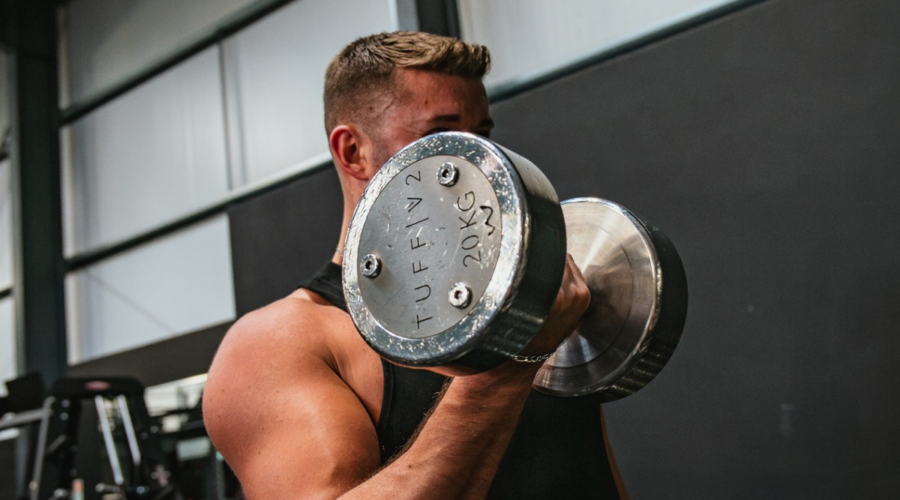


Biceps curls are a simple way to train the muscles that bend your elbow, but changing your grip or arm position changes how the exercise feels and which muscles contribute. A supinated curl, with your palms facing up, emphasizes the biceps brachii. A neutral grip, with your palms facing each other, brings the brachialis and brachioradialis into the work as well. Training these elbow flexors can help build fuller looking upper arms and forearms.
No single curl is proven to make arms wider on its own. Arm size comes from building muscle over time, using a suitable range of motion, and gradually increasing the challenge. Research comparing preacher curls and incline curls has found growth with both exercises, while differences in regional growth and strength depended on the curl and how strength was tested. The findings support using more than one curl position, while avoiding claims that a particular variation guarantees a specific look.


Here are three useful curl variations for developing the biceps and the other elbow flexors that contribute to arm size.
What Makes Arms Look Wider?
The biceps brachii sits on the front of the upper arm and has two heads. It bends the elbow and helps turn the palm upward. The brachialis lies underneath the biceps and also bends the elbow. The brachioradialis runs along the outer forearm and contributes to elbow flexion, particularly when the forearm is in a neutral position.
Training only one curl variation can still build muscle, but different grips and shoulder positions change the demands of the movement. A supinated grip directly trains the biceps while allowing the forearm to rotate. A neutral grip shifts the pattern of muscle activity among the elbow flexors. Moving the upper arm forward or behind the torso also changes the biceps’ position at the shoulder.
These details are useful for exercise selection, but muscle activation studies do not prove that one curl will produce more growth than another. To build bigger arms, choose curls you can perform consistently, use controlled repetitions, and add repetitions or resistance as your strength improves.
1. Incline Dumbbell Curl
The incline dumbbell curl places your upper arms slightly behind your torso. This position lengthens the biceps at the shoulder before you bend the elbow. It also gives each arm room to move independently, which can make it easier to keep your wrists aligned and notice differences between sides.
A training study that compared incline curls with preacher curls found increases in elbow flexor muscle thickness with both variations. The researchers also reported some differences in regional growth and curl specific strength gains. The study involved young women over eight weeks, so its results should not be treated as a guarantee for every lifter. Still, it shows that incline curls can be a productive option for muscle growth.
How to Perform an Incline Dumbbell Curl
Set an adjustable bench to a moderate incline and sit with your back against the pad. Hold a dumbbell in each hand with your arms hanging down and your palms facing forward or slightly inward. Keep your shoulders relaxed and your upper arms close to your sides.
Bend your elbows to curl the dumbbells upward without swinging your torso or letting your elbows drift forward. Squeeze your biceps briefly near the top, then lower the weights under control until your arms are nearly straight. Keep your shoulders against the bench throughout the set.
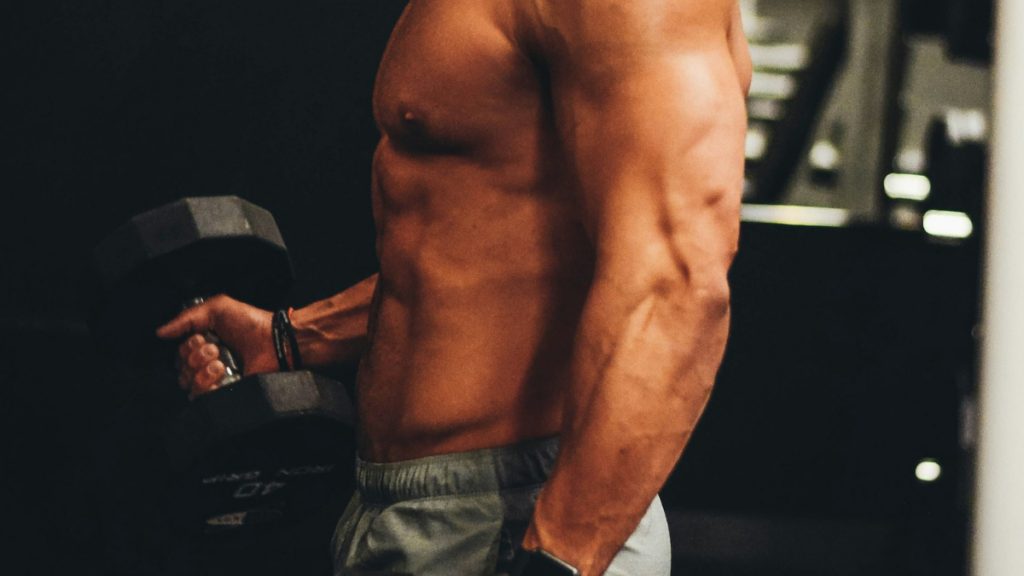
Use a weight that lets you maintain the same position from the first repetition to the last. The stretched position can feel demanding, so avoid forcing the bottom of the movement or bouncing out of it. If you feel discomfort in the front of your shoulder, adjust the bench angle or choose another curl.
The incline curl is a good choice when you want a strict dumbbell curl that challenges the biceps with your arms behind your body. It can be paired with a curl variation performed with the upper arm forward, such as a preacher curl.
2. Preacher Curl
The preacher curl supports your upper arms on a sloped pad while you bend your elbows. This support makes it harder to use momentum from your shoulders and torso. It also provides a different resistance profile from the incline curl, so the two movements do not feel identical even though both train elbow flexion.
A randomized study compared preacher and incline curls in young women who trained twice weekly for eight weeks. Both groups gained elbow flexor muscle thickness. The researchers observed differences in regional muscle growth, and participants tended to improve more on the curl variation they practiced. A separate study comparing preacher curls with Bayesian cable curls found similar increases in muscle thickness and strength between the two shoulder positions. Together, these findings suggest that several curl positions can build the elbow flexors, without showing that one is universally best.
How to Perform a Preacher Curl
Adjust the seat so your upper arms rest comfortably on the pad and your shoulders remain relaxed. Hold an EZ bar, a barbell, or a dumbbell with your palms facing up. Begin with your elbows extended but not forcefully locked.
Curl the weight toward your shoulders while keeping your upper arms in contact with the pad. Pause briefly near the top, then lower the weight under control. Stop before your elbows are forced into a hard lockout, and keep the movement smooth through the range you can control.
The pad reduces opportunities to swing the weight, so choose a load you can handle without lifting your upper arms away from it. If the bottom position feels uncomfortable, do not force a deeper stretch. Adjust your range of motion, grip, or equipment until the exercise feels manageable.
Preacher curls work well as a focused arm exercise because the pad helps limit body movement. They can also provide a useful change from standing curls, where it is easier to use momentum as the set becomes difficult.
3. Hammer Curl
The hammer curl uses a neutral grip, with your palms facing each other. This grip changes the contribution of the elbow flexors compared with a palms up curl. In a study that measured muscle activity during curls with different grips, the biceps showed greater activity during the lifting phase with a supinated grip than with a neutral or pronated grip. The study measured acute muscle activity, not long term muscle growth, so it cannot establish that hammer curls build less or more muscle.
Hammer curls remain useful for training the arm as a whole. They work the biceps alongside the brachialis and brachioradialis, muscles that contribute to elbow flexion and the overall appearance of the upper arm and forearm. Their neutral wrist position can also feel more comfortable for some lifters than a fully supinated grip.
How to Perform a Hammer Curl
Stand tall with a dumbbell in each hand and your palms facing your body. Keep your elbows close to your sides and your wrists straight. Curl the dumbbells toward your shoulders without rotating your hands or leaning backward.
Lower the weights under control until your arms are nearly straight. Keep your shoulders still and avoid letting the dumbbells drift away from your body. If you need to swing your torso to finish the repetitions, reduce the weight.
You can perform hammer curls with both arms at once or alternate sides. Either approach is suitable as long as you can maintain control and use the same range of motion on each repetition. A rope attachment on a cable machine can also provide a neutral grip if you prefer cables to dumbbells.
How to Use These Curls in a Training Plan
You do not need to perform all three variations in every workout. Start with one or two curl variations and perform a few challenging sets. For example, you could use an incline dumbbell curl and a hammer curl in one session, then use a preacher curl in another session later in the week.
Research across resistance training programs shows that many combinations of load, sets, and frequency can increase muscle size. For practical purposes, choose a weight that allows controlled repetitions and gradually increase the number of repetitions or the load when you can complete your target range with good form. Training close to the point where you cannot complete another clean repetition can make a set challenging, but you do not need to force every set to complete failure.
Give your arms time to recover between hard sessions. If your elbows or shoulders become painful, adjust the exercise, reduce the load, or pause the movement that triggers the discomfort. Consistency matters more than finding a supposedly perfect curl. A small group of exercises you can train regularly is a better starting point than constantly switching variations.
References
- Attarieh, P., Nunes, J.P., Khani, S., Negahdar, S., Goli, A., Nazarirad, H., Nazarirad, S., Mojtahedi, S., Nosaka, K. and Soori, R. (2025). Comparison between shoulder flexed and extended positions in elbow flexion resistance training on regional hypertrophy and maximum strength: preacher versus Bayesian cable curls. European Journal of Sport Science, 25(4), e12279.
- Coratella, G., Tornatore, G., Longo, S., Toninelli, N., Padovan, R., Esposito, F. and Cè, E. (2023). Biceps brachii and brachioradialis excitation in biceps curl exercise: different handgrips, different synergy. Sports, 11(3), 64.
- Currier, B.S., Mcleod, J.C., Banfield, L., Beyene, J., Welton, N.J., D’Souza, A.C., Keogh, J.A., Lin, L., Coletta, G., Yang, A., Colenso-Semple, L., Lau, K.J., Verboom, A. and Phillips, S.M. (2023). Resistance training prescription for muscle strength and hypertrophy in healthy adults: a systematic review and Bayesian network meta-analysis. British Journal of Sports Medicine, 57(18), pp. 1211–1220.
- Kassiano, W., Costa, B., Kunevaliki, G., Lisboa, F., Stavinski, N., Prado, A., Tricoli, I., Francsuel, J., Lima, L., Nunes, J.P., Ribeiro, A.S. and Cyrino, E.S. (2025). Distinct muscle growth and strength adaptations after preacher and incline biceps curls. International Journal of Sports Medicine, 46(5), pp. 334–343.
Key Takeaways
| Variation | Main training feature | Practical use |
|---|---|---|
| Incline dumbbell curl | Upper arms sit behind the torso | Use for a strict dumbbell curl with the biceps lengthened at the shoulder |
| Preacher curl | Upper arms rest on a pad | Use to limit torso movement and train elbow flexion with a different resistance profile |
| Hammer curl | Palms face each other | Use to train the elbow flexors with a neutral grip and include the brachialis and brachioradialis |