

You do not need a fully equipped gym to build strength and muscle. A well chosen bodyweight workout can challenge your chest, back, shoulders, arms, legs, and glutes with little more than floor space and, for one exercise, a sturdy pull up bar.
The key is to make the exercises challenging enough and keep progressing. If a movement becomes easy, you can add repetitions, slow the lowering phase, increase the range of motion, or move to a harder variation. Research on resistance training shows that bodyweight routines can increase muscle size, while progressive training helps the body keep adapting over time.


Here are five bodyweight exercises that cover the main muscle groups and give you practical ways to progress.
1. Push Up
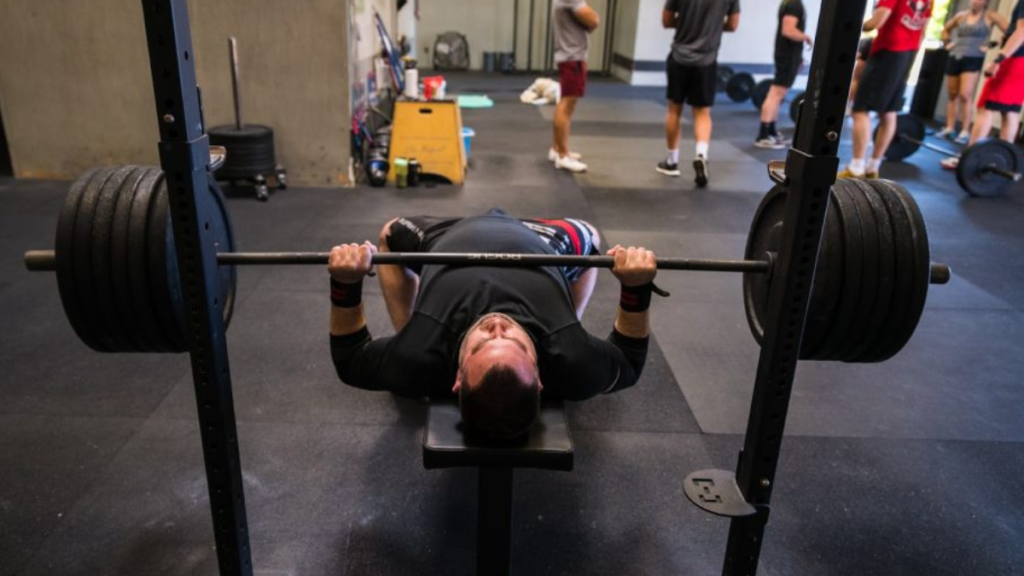
The push up is a simple way to train your chest, triceps, and shoulders. Your trunk also works to keep your body steady as you lower and press yourself away from the floor. A study comparing push ups with the bench press found that the two movements can produce similar strength gains when the training conditions and muscle activity are comparable.
How to do it
Start in a high plank with your hands just outside shoulder width. Keep your body in a straight line from your head to your heels, brace your midsection, and bend your elbows to lower your chest toward the floor. Press through your hands to return to the starting position. Keep your hips from sagging and avoid lifting your head to reach the floor.
If a full push up is too difficult, place your hands on a stable elevated surface such as a bench or countertop. As you get stronger, lower the surface gradually until you can perform the movement from the floor. If standard push ups become easy, try slowing the lowering phase or elevating your feet. You can also add a backpack with a secure, light load if you are experienced and can maintain good form.
How Many Chin-Ups Should You Be Able to Do Based on Your Age?
The goal is not to collect as many repetitions as possible with poor technique. Use a range that lets you control each repetition and finish with only a few good repetitions left in reserve. That gives you a clear way to make the movement harder over time.
2. Pull Up
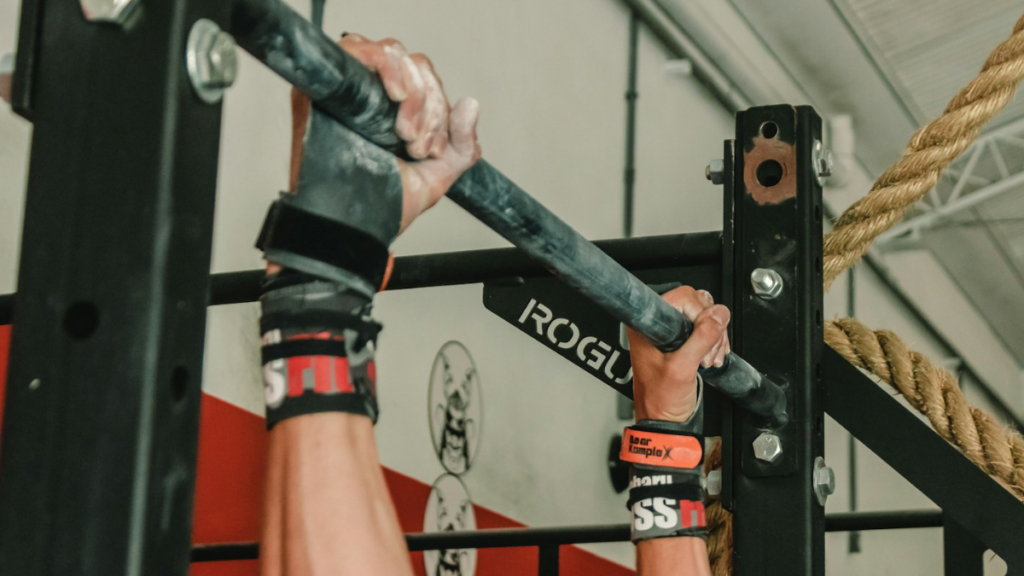
The pull up gives your workout a pulling movement to balance the push up. It trains the muscles of your back and arms, including the latissimus dorsi and biceps. Research measuring muscle activity during pull ups and chin ups has found substantial activity in these muscles, although the exact pattern changes with grip and technique.
How to do it
Grip a sturdy pull up bar with your hands slightly wider than shoulder width and your palms facing away from you. Start from a controlled hang, then pull your chest upward by driving your elbows down toward your sides. Lower yourself under control until your arms are straight again. Avoid swinging your legs to create momentum.
If you cannot yet do a full pull up, use a resistance band for assistance or practice controlled lowering repetitions by starting with your chin above the bar and lowering slowly. You can also build strength with a row under a sturdy, low bar if you have a safe setup. Do not use a table, railing, or improvised anchor unless you know it can safely support your weight.
Once you can perform several clean repetitions, work toward more repetitions or try a slower lowering phase. Keep the movement controlled and stop if you feel sharp pain in your shoulders or elbows.
3. Bodyweight Squat
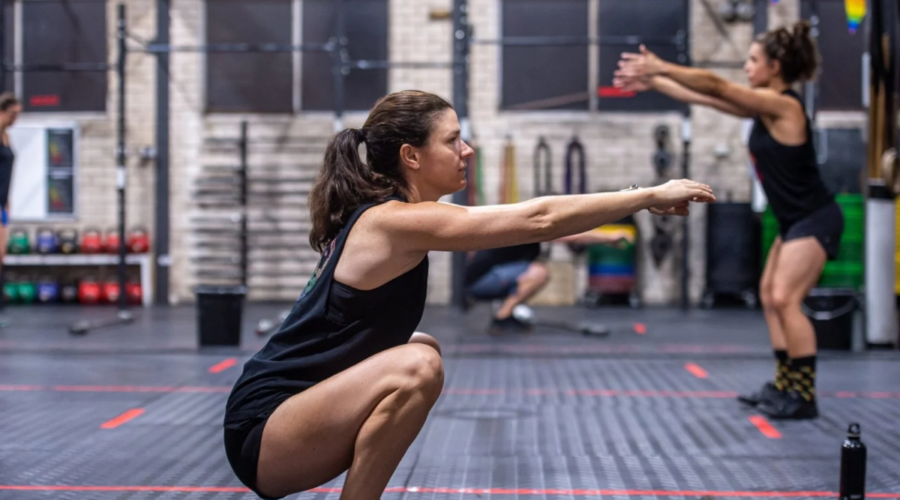
The bodyweight squat trains your quadriceps and glutes while asking your trunk to support your position. It is an accessible way to practice lower body strength and movement control. For a harder version, you can progress to a single leg variation, but it is worth first building consistent, comfortable repetitions with both feet on the floor.
How to do it
Stand with your feet around shoulder width apart and your toes turned slightly outward if that feels comfortable. Brace your midsection and sit your hips down and back, bending your knees as you lower. Go as low as you can while keeping control and maintaining a stable foot position. Press through the floor to stand.
Your squat depth will depend on your mobility, proportions, and comfort. Aim for a depth you can repeat without losing balance or feeling pain. If you are new to squats, use a chair or bench behind you as a target. Lightly touch it, then stand again.
When regular squats no longer feel challenging, slow the descent, pause briefly at the bottom, or try a split squat. Progression matters because the same easy set repeated indefinitely is unlikely to keep challenging your muscles.
4. Split Squat
The split squat trains one leg at a time, with emphasis on the quadriceps and glutes. Because you work each side separately, it can also help you notice differences in balance or control between legs. Research comparing squat variations has found that the muscle activity pattern can change depending on the exercise, which is one reason to include more than one lower body movement in a routine.
How to do it
Stand with one foot forward and the other behind you, as if you are standing on two train tracks. Keep your feet far enough apart to balance comfortably. Lower your back knee toward the floor while bending your front knee, then press through the front foot to return to standing. Complete your repetitions on one side before switching.
Keep your torso steady and use a range of motion that feels controlled. You can hold a wall or chair lightly for balance while you learn the movement. To make it harder, increase the range of motion, slow the lowering phase, or progress to a rear foot elevated split squat once you are comfortable with the standard version.
Start with fewer repetitions than you think you can manage. Split squats can feel demanding because each leg does a larger share of the work than it does during a two leg squat.
5. Glute Bridge
The glute bridge adds a hip extension movement to the routine and trains the glutes. It is useful for beginners because the floor provides support and the movement is easy to scale. It also complements squats and split squats, which challenge the hips and knees through a different pattern.
How to do it
Lie on your back with your knees bent and your feet flat on the floor, about hip width apart. Place your arms by your sides. Brace your midsection, squeeze your glutes, and lift your hips until your body forms a line from your shoulders to your knees. Pause briefly, then lower your hips with control.
Avoid arching your lower back to lift higher. The movement should come from your hips, and you should feel your glutes doing the work. If the standard version becomes easy, pause at the top, slow the lowering phase, or try a single leg glute bridge. Begin the single leg variation only when you can perform the two leg version comfortably and with control.
How to Build a Bodyweight Routine
You can train these exercises two or three times per week, leaving time between sessions to recover. A simple starting point is two or three sets of each exercise. Choose a variation that lets you perform roughly 6 to 15 controlled repetitions for the upper body movements and 8 to 20 repetitions for the lower body movements. For pull ups, use an assisted variation if needed so each repetition stays controlled.
These ranges are practical starting points, not a rule that every person must follow. Research reviews suggest that muscle growth can occur with a range of training loads, while heavier loads tend to be more useful for maximizing strength. With bodyweight exercises, the variation you choose determines how demanding each repetition is.
Keep a record of the variation, sets, and repetitions you complete. When you can reach the top of your chosen range with good form, make the exercise slightly harder or add repetitions. You do not need to take every set to the point where you cannot complete another repetition. Research reviews have not found that momentary failure is necessary for muscle growth, so most beginners can finish a set when they feel that only one or two clean repetitions remain.
A bodyweight program can build strength and muscle, but the workout needs to challenge you over time. If all five exercises feel easy for many repetitions, progress the variation or add load safely. When your goal includes a specific strength test, such as a heavy bench press or squat, bodyweight training alone may not fully prepare you for that exact lift. It can still provide a useful foundation.
Key Takeaways
| Focus | Takeaway |
|---|---|
| Upper body push | Use push ups to train your chest, triceps, and shoulders. |
| Upper body pull | Use pull ups or a suitable assisted variation to train your back and arms. |
| Lower body | Combine squats and split squats to challenge both legs together and one leg at a time. |
| Glutes | Add glute bridges for a controlled hip extension movement. |
| Progress | Add repetitions, improve control, or choose a harder variation as you get stronger. |
References
- American College of Sports Medicine (2009) ‘American College of Sports Medicine position stand. Progression models in resistance training for healthy adults’, Medicine & Science in Sports & Exercise, 41(3), pp. 687–708.
- Calatayud, J., Borreani, S., Colado, J.C., Martin, F., Tella, V. and Andersen, L.L. (2015) ‘Bench press and push-up at comparable levels of muscle activity results in similar strength gains’, Journal of Strength and Conditioning Research, 29(1), pp. 246–253.
- Knoll, M.G., Davidge, M., Wraspir, C. and Korak, J.A. (2019) ‘Comparisons of single leg squat variations on lower limb muscle activation and center of pressure alterations’, International Journal of Exercise Science, 12(1), pp. 950–959.
- Ogawa, M., Hashimoto, Y., Mochizuki, Y., Inoguchi, T., Kouzuma, A., Deguchi, M., Saito, M., Homma, H., Kikuchi, N. and Okamoto, T. (2023) ‘Effects of free weight and body mass-based resistance training on thigh muscle size, strength and intramuscular fat in healthy young and middle-aged individuals’, Experimental Physiology, 108(7), pp. 975–985.
- Refalo, M.C., Helms, E.R., Trexler, E.T., Hamilton, D.L. and Fyfe, J.J. (2023) ‘Influence of resistance training proximity-to-failure on skeletal muscle hypertrophy: a systematic review with meta-analysis’, Sports Medicine, 53(3), pp. 649–665.
- Schoenfeld, B.J., Grgic, J., Ogborn, D. and Krieger, J.W. (2017) ‘Strength and hypertrophy adaptations between low- vs. high-load resistance training: a systematic review and meta-analysis’, Journal of Strength and Conditioning Research, 31(12), pp. 3508–3523.
- Youdas, J.W., Amundson, C.L., Cicero, K.S., Hahn, J.J., Harezlak, D.T. and Hollman, J.H. (2010) ‘Surface electromyographic activation patterns and elbow joint motion during a pull-up, chin-up, or perfect-pullup rotational exercise’, Journal of Strength and Conditioning Research, 24(12), pp. 3404–3414.