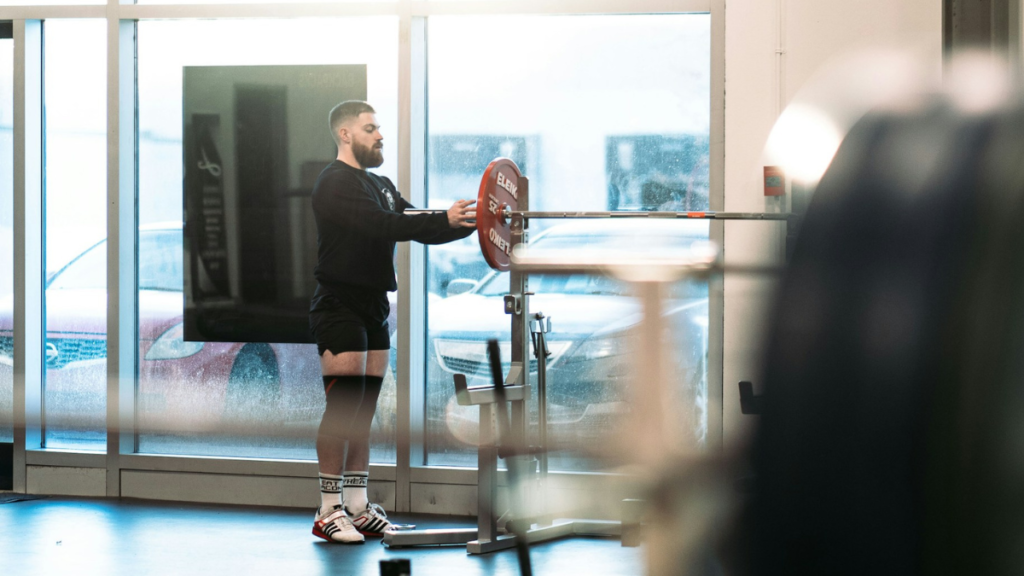


If you want bigger biceps, then the barbell is a fantastic place to start.
The Science of Hypertrophy and Barbell Mechanics
Muscle growth occurs when you expose your fibers to mechanical tension that exceeds their current capacity, forcing the body to repair and reinforce the tissue. Recent sports science literature highlights that the stretched position of a lift is particularly potent for stimulating muscle protein synthesis. When you lower a barbell under control and feel a deep stretch in your biceps, you trigger cellular signaling pathways associated with hypertrophy far more effectively than you would by simply moving a weight from point A to point B through a partial range of motion.
Barbells excel at providing this stimulus because they allow you to lift heavier loads with absolute stability. Research comparing barbell curls to dumbbell or cable variations consistently demonstrates that fixed bar implements elicit high levels of motor unit recruitment due to the heavy external resistance you can safely control. Your nervous system recruits more muscle fibers when handling a heavier bilateral load, which translates to a more comprehensive upper arm stimulus and faster strength gains.
| Exercise Comparison | Load Potential | Range of Motion | Biceps Activation |
|---|---|---|---|
| Cable Curl | Moderate | Variable | Moderate |
| Dumbbell Curl | Moderate | Independent | High |
| Barbell Curl | Maximum | Fixed bilateral | Very High |
Exercise One: The Standing Barbell Curl
The standing barbell curl serves as the absolute cornerstone of any intelligent arm building routine. By allowing you to load both arms simultaneously with a secure, fixed hand placement, this classic movement places maximum tension on your entire elbow flexor complex through a complete range of motion.
To perform this exercise correctly, stand tall with your feet positioned shoulder width apart while holding a barbell with an underhand grip where your palms face forward. Keep your elbows tucked tightly against the sides of your torso and maintain a rigid, stable core to prevent your body from swinging. Initiate the movement by flexing at your elbows and curling the barbell upward in a smooth arc toward your chest.
Lower the barbell in a slow and controlled motion until your arms are fully extended at the bottom, ensuring you feel a complete stretch in your biceps before starting the next repetition. Avoid the common pitfall of using your hips and lower back to heave the weight upward, as strict form ensures the stress stays entirely on your arm muscles.
| Execution Variable | Recommended Parameter |
|---|---|
| Repetition Range | 6 to 10 repetitions |
| Working Sets | 3 to 4 sets |
| Rest Interval | 2 to 3 minutes |
| Tempo | 3 seconds lowering, 1 second lifting |
Research analyzing curling mechanics shows that keeping your upper arms stationary during a standing curl prevents the anterior deltoids from taking over the workload. Protecting your form allows you to accumulate high levels of mechanical tension and pursue progressive overload safely week after week.
Exercise Two: The EZ Bar Reverse Curl
While standard curls build the main mass of the biceps, the EZ bar reverse curl targets the brachialis and the brachioradialis in your forearms. Developing these secondary elbow flexors pushes your main biceps upward and creates a thicker, more complete arm appearance while enhancing your overall grip strength.
Grab an EZ curl bar with an overhand grip where your knuckles face forward, positioning your hands roughly shoulder width apart. Stand upright with your feet stable and your elbows locked tightly against your sides just like you did during the standard barbell curl.
Curl the bar upward while maintaining your pronated grip, focusing on leading the movement with your knuckles and keeping your wrists straight. Pause briefly at the top of the contraction before lowering the bar slowly back to the starting position with complete control.
| Execution Variable | Recommended Parameter |
|---|---|
| Repetition Range | 8 to 12 repetitions |
| Working Sets | 3 sets |
| Rest Interval | 90 seconds to 2 minutes |
| Tempo | 2 seconds lowering, explosive lift |
Biomechanical evaluations of forearm and arm training demonstrate that using a pronated grip significantly increases the activation of the brachialis muscle compared to standard supinated curls. Incorporating this movement into your routine balances out your arm development and protects your elbow joint stability.
Exercise Three: The Close Grip Barbell Curl
The close grip barbell curl provides a unique mechanical stimulus by shifting the emphasis toward the outer head of the biceps brachii. Narrowing your hand placement changes the vector of force, allowing you to experience a different contraction profile that complements your standard grip training.
Hold a straight barbell or an EZ curl bar with your hands placed significantly closer than shoulder width, roughly six to eight inches apart, with your palms facing forward. Stand tall with your chest up, shoulders back, and your elbows securely pinned to your ribs.
Curl the bar upward toward your upper chest, squeezing your biceps hard at the peak of the movement. Lower the weight smoothly along the exact same path until your arms are fully locked out at the bottom, maintaining tension throughout the entire set.
| Execution Variable | Recommended Parameter |
|---|---|
| Repetition Range | 8 to 12 repetitions |
| Working Sets | 3 sets |
| Rest Interval | 90 seconds to 2 minutes |
| Tempo | 3 seconds lowering, 1 second contraction |
Because a narrow grip places slightly more stress on your wrists, using an EZ curl bar for this movement is often recommended if you experience any joint discomfort with a straight bar. Prioritizing strict execution ensures that your biceps bear the full load without unnecessary momentum.
Program Integration and Practical Application
Knowing which exercises to perform is only half the battle. Organizing these movements into a structured weekly schedule determines whether you achieve continuous progress or hit an early training plateau. Beginners benefit immensely from training their arms two times per week at the end of their upper body sessions, allowing adequate time for muscular recovery.
| Training Day | Focused Exercises | Sets and Repetitions |
|---|---|---|
| Session A | Standing Barbell Curl, EZ Bar Reverse Curl | 3 sets of 6 to 10 reps / 3 sets of 8 to 12 reps |
| Session B | Close Grip Barbell Curl, Standing Barbell Curl | 3 sets of 8 to 12 reps / 3 sets of 8 to 10 reps |
Progressive overload remains the absolute driver of physical change. You must consistently challenge your body over time by adding a small amount of weight, completing an extra quality repetition, or improving your execution quality from week to week. Tracking your numbers in a training log eliminates guesswork and keeps you accountable to your long term fitness objectives.
3 Best Cable Exercises for Building a Muscular Chest for Beginners
Nutrition and sleep act as the foundation upon which your training adaptations are built. Consuming adequate dietary protein provides the essential amino acids required to repair damaged muscle fibers, while quality sleep ensures optimal hormonal regulation and recovery. Approaching your fitness journey with patience and discipline transforms these three barbell exercises into a powerful catalyst for permanent physical transformation.
Key Takeaways
| Concept | Summary |
|---|---|
| Barbell Advantage | Maximizes motor unit recruitment through heavy bilateral loading capacity. |
| Standing Barbell Curl | Serves as the primary mass builder for the entire elbow flexor complex. |
| Reverse Curl | Targets the brachialis and forearms to push the biceps peak upward. |
| Close Grip Curl | Shifts emphasis to the outer head of the biceps via a narrow hand placement. |
| Progressive Overload | Requires gradual increases in weight or repetitions over time to stimulate continuous growth. |
References
Schoenfeld, B. J., Contreras, B., Krieger, J., Grgic, J., Delcastillo, K., Belliard, R., & Alto, A. (2019). Resistance training volume enhances muscle hypertrophy but with relative retrogression in advanced lifters. Medicine and Science in Sports and Exercise, 51(1), 94-103.
Escamilla, R. F., Babb, E., DeWitt, R., Jew, P., Kageyama, P., Kenny, S., & Torry, M. R. (2009). An electromyographic analysis of sumo and conventional style deadlifts. Medicine and Science in Sports and Exercise, 41(4), 857-868.
Contreras, B., Vigotsky, A. D., Schoenfeld, B. J., Beardsley, C., & Cronin, J. (2015). A comparison of gluteus maximus, biceps femoris, and vastus lateralis electromyographic activity in the back squat and barbell hip thrust. Journal of Applied Biomechanics, 31(6), 452-458.
Stastny, P., Tufano, J. J., Lehnert, M., Golas, A., Zaatar, A., & Maszczyk, A. (2018). Strengthening for sports: A comparison of muscle activation in various elbow flexion exercises. Journal of Human Kinetics, 62(1), 75-84.