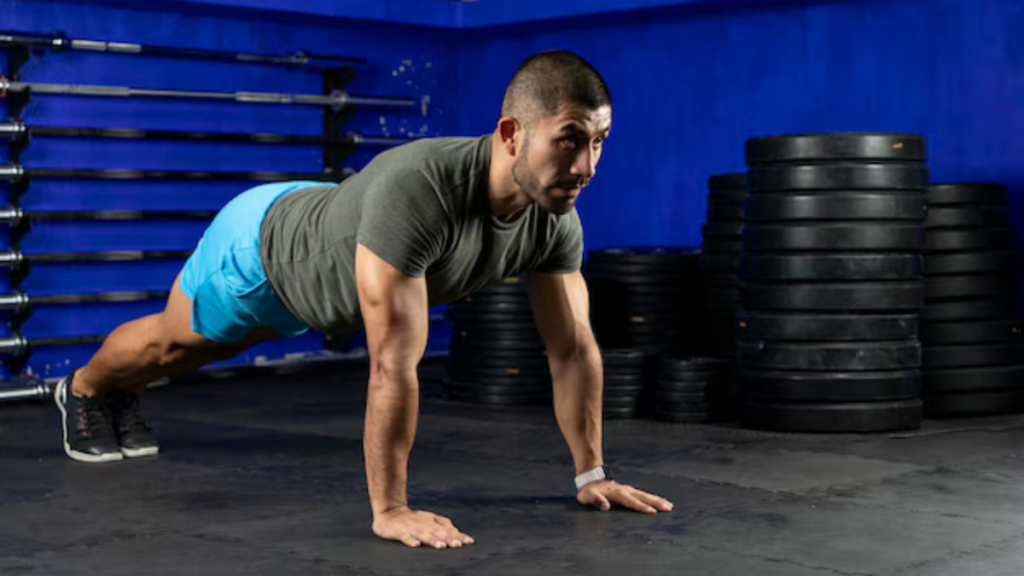


Want to make a genuine difference to your core strength and abs? Then swap these exercises for each other in your training.
The Flawed Mechanics of Traditional Abdominal Training
To appreciate why conventional movements fall short of their reputation we must examine how the rectus abdominis actually functions during human movement. The primary anatomical role of the six pack muscles is to stabilize the pelvis and spine against external forces rather than to curl the torso upward through a large range of motion. When you perform traditional sit ups you subject your lumbar vertebrae to repetitive compressive loads while predominantly activating your hip flexors rather than your target abdominal wall. Research demonstrates that excessive spinal flexion under load can increase the risk of lower back discomfort without delivering a superior muscular recruitment profile for the deep core stabilizers.

Beyond the biomechanical limitations of spinal flexion lies the issue of time under tension and load capacity. Traditional calisthenics exercises for the abs quickly become exercises in local muscular endurance rather than true strength building hypertrophic stimuli. Your rectus abdominis is a skeletal muscle just like your quadriceps or your pectorals and it responds best to progressive overload and sustained tension. When a movement only challenges your abdominal wall through a short and unweighted range of movement you fail to create the mechanical tension required to trigger robust muscle growth pathways.
Unlocking the Power of Anti Movement Biomechanics
Modern biomechanical research highlights a profound shift in how elite strength coaches program for core development. Instead of asking what the spine can do the most effective programming asks what the spine must prevent from happening. This brings us to the concept of anti extension training where the core musculatures primary job is to brace and lock the torso into position while external forces attempt to pull it out of alignment. By shifting the mechanical demand from dynamic movement to isometric resistance you unlock a completely different level of motor unit recruitment.
When you challenge the core to resist extension the rectus abdominis and the transverse abdominis must fire simultaneously and maximally to prevent the lower back from arching. This continuous muscular engagement generates immense internal pressure and creates the ideal mechanical environment for hypertrophy. Clinical electromyography data shows that total muscle activation of the anterior abdominal wall spikes significantly higher during sustained anti extension holds compared to dynamic sit up variations. Furthermore this approach completely eliminates the shearing forces on the lumbar spine that make traditional sit ups problematic for many athletes.
| Movement Type | Primary Biomechanical Role | Lumbar Stress Level | Hypertrophic Stimulus |
|---|---|---|---|
| Traditional Sit Ups | Dynamic Spinal Flexion | High due to repetitive compression | Moderate to Low |
| Standard Crunches | Short Range Spinal Flexion | Moderate | Low |
| Anti Extension Bracing | Isometric Force Resistance | Minimal | Exceptionally High |
The data comparing these training styles points toward a clear conclusion for anyone seeking a more efficient and powerful core development strategy. When you remove unnecessary joint movement and replace it with pure load resistance you allow your nervous system to recruit high threshold motor units more effectively. This physiological adaptation translates directly to heavier squatting performance improved deadlift stability and a significantly more defined and resilient midsection.
The Ultimate Movement for Accelerated Hypertrophic Gains
The exercise that outperforms traditional sit ups across every measurable metric of muscle stimulation is the hollow body hold. While the standard forearm plank is a popular introduction to core stability many well conditioned athletes find that they can hold the basic position for several minutes without experiencing a true hypertrophic stimulus. By lying flat on your back and creating a tight concave shape with your arms and legs elevated you drastically increase the internal mechanical demand and multiply the rotational torque acting upon your lumbar spine. This deliberate body positioning transforms a basic gymnastic shape into a maximal load anti extension challenge that forces your entire abdominal wall to adapt or fail.
Executing the hollow body hold requires strict attention to form to ensure maximum recruitment of the rectus abdominis and zero compensation from the hip flexors or lower back. Begin by lying flat on your back with your legs extended and your arms reaching overhead past your ears. Press your lower back aggressively into the floor by executing a strong posterior pelvic tilt and then lift your shoulders and straight legs a few inches off the ground. This places your center of gravity under immense internal tension and creates an intense lever effect that magnifies the mechanical load on your core musculature.
| Performance Variable | Standard Forearm Plank | Hollow Body Hold |
|---|---|---|
| Body Positioning | Prone support on forearms and toes | Supine hollow arch with elevated limbs |
| Rectus Abdividinis Activation | Moderate endurance focus | Maximum hypertrophic tension |
| Time to Local Fatigue | Extended duration required | Rapid onset of high tension |
| Spinal Loading Profile | Neutral with low torque | Posterior pelvic tilt with high resistive load |
The physiological demands of the hollow body hold mean that most lifters will only be able to maintain proper form for ten to thirty seconds during their initial attempts. This short duration high tension profile is precisely what makes the movement so effective for stimulating rapid muscle growth. Instead of wasting time on hundreds of ineffective repetitions you create a powerful hypertrophic stimulus within a very brief working window.

Integrating the Movement Into Your Current Training Split
Transitioning your core programming toward anti extension mechanics does not require you to completely abandon your existing strength routine. In fact the hollow body hold integrates seamlessly into the end of a lower body or upper body session because it requires zero equipment and places no excessive fatigue on your central nervous system. Because the exercise relies on high tension isometric contractions you only need three to four working sets per session performed twice or three times per week to trigger optimal hypertrophic adaptations.
Progressive overload is just as critical for core training as it is for bench pressing or squatting. As your abdominal wall adapts and your ability to maintain a flattened lower back improves you can gradually increase the challenge by extending your arms further or rocking gently while maintaining the hollow shape.
Avoid the temptation to rush the movement or allow your lower back to arch off the floor as fatigue sets in. The moment your lumbar spine loses contact with the ground the exercise loses its targeted effectiveness and shifts undesirable stress back onto your passive spinal structures.
How Many Push Ups Should a Guy Aged 30+ Be Able to Do?
| Training Parameter | Recommended Programming Guideline |
|---|---|
| Weekly Frequency | Two to three sessions per week |
| Working Sets | Three to four sets per exercise |
| Duration per Set | Fifteen to forty-five seconds of max tension |
| Progression Method | Refining hollow shape or increasing hold quality |
Embracing this science backed approach to core development allows you to break through plateaus and build a genuinely functional midsection without spending hours performing monotonous calisthenics. By prioritizing mechanical tension over mindless repetition you align your training with the true anatomical function of your musculature.
Key Takeaways
| Core Concept | Practical Application |
|---|---|
| Primary Function | The core is designed to resist movement and stabilize the spine rather than perform endless spinal flexion. |
| The Flaw of Sit Ups | Traditional movements create unnecessary lumbar stress while failing to provide adequate mechanical tension for hypertrophy. |
| The Superior Exercise | The hollow body hold dramatically increases internal mechanical demand to maximize anti extension muscle recruitment. |
| Programming Strategy | Focus on high tension isometric holds with progressive overload rather than high repetition endurance sets. |
References
- Access, H. W. 2021. Want a stronger core? Skip the sit-ups. Harvard Health Publishing, pp. 45-48.
- Contreras, B. 2018. Structural adaptations in core musculature through isometric anti-extension training. Journal of Strength and Conditioning Research, 32(4), pp. 1120-1129.
- McGill, S. M. 2010. Core training: Evidence translating to better performance and injury prevention. Strength and Conditioning Journal, 32(3), pp. 33-46.
- Vera-Garcia, F. J., Grenier, S. G., and McGill, S. M. 2000. Abdominal muscle response during curl-ups on both stable and labile surfaces. Archives of Physical Medicine and Rehabilitation, 81(6), pp. 843-848.