Shoulders are one of the most visible muscle groups on the human body. Broad, rounded deltoids create the appearance of a wider frame, improve upper body aesthetics, and contribute significantly to strength performance in pressing, throwing, lifting, and athletic movement.
Many people spend years chasing bigger shoulders without seeing meaningful progress. The problem is rarely effort. More often, it comes down to exercise selection. Not all shoulder exercises provide the same stimulus for hypertrophy. Some movements create superior mechanical tension, allow greater loading potential, or target neglected portions of the deltoid muscle that contribute most to shoulder size.

Scientific research has consistently shown that muscle growth is driven primarily by sufficient mechanical tension, training volume, progressive overload, and recovery. Choosing exercises that maximize these factors can dramatically improve shoulder development.
This article breaks down four of the most effective shoulder-building exercises supported by current evidence. These movements target all three heads of the deltoid while allowing progressive overload and high levels of muscle activation.
Understanding Shoulder Anatomy for Maximum Growth
Before examining the exercises, it is important to understand how the shoulder muscles function. The deltoid consists of three distinct heads.
The anterior deltoid sits at the front of the shoulder and assists with shoulder flexion and pressing movements. The lateral deltoid sits on the side of the shoulder and is primarily responsible for shoulder abduction. This muscle contributes most to the visual width of the shoulders. The posterior deltoid sits at the rear and assists with shoulder extension and horizontal abduction. Well developed rear delts improve posture, shoulder health, and overall shoulder thickness.
Research has demonstrated that different shoulder exercises emphasize different portions of the deltoid. Therefore, effective shoulder development requires movements that collectively stimulate all three heads rather than relying on a single exercise.
What Makes an Exercise Effective for Shoulder Growth?
Several factors determine whether an exercise is effective for building muscle. Mechanical tension is considered the primary driver of hypertrophy. Exercises that allow heavier loads through a full range of motion typically create greater muscle-building stimulus.
Muscle activation is another important consideration. Electromyography studies provide insight into which exercises produce high levels of recruitment in specific muscle groups. The ability to progressively overload is also critical. If an exercise cannot be loaded gradually over time, long-term growth becomes limited.
Finally, exercises should be stable enough to allow hard effort while minimizing unnecessary fatigue from balancing or coordination demands. The following four exercises consistently rank among the best choices when these criteria are considered.
Exercise 1: Standing Overhead Press
Why It Works
The standing overhead press remains one of the most effective compound movements for upper body development. Unlike isolation exercises, the overhead press allows substantial loading while recruiting multiple muscle groups simultaneously. The anterior deltoids are heavily involved, but the lateral deltoids, triceps, upper chest, and upper back also contribute.
Research examining muscle activation during shoulder exercises consistently shows high anterior deltoid involvement during overhead pressing variations. Because the exercise permits significant progressive overload, it serves as an excellent foundation for shoulder growth.
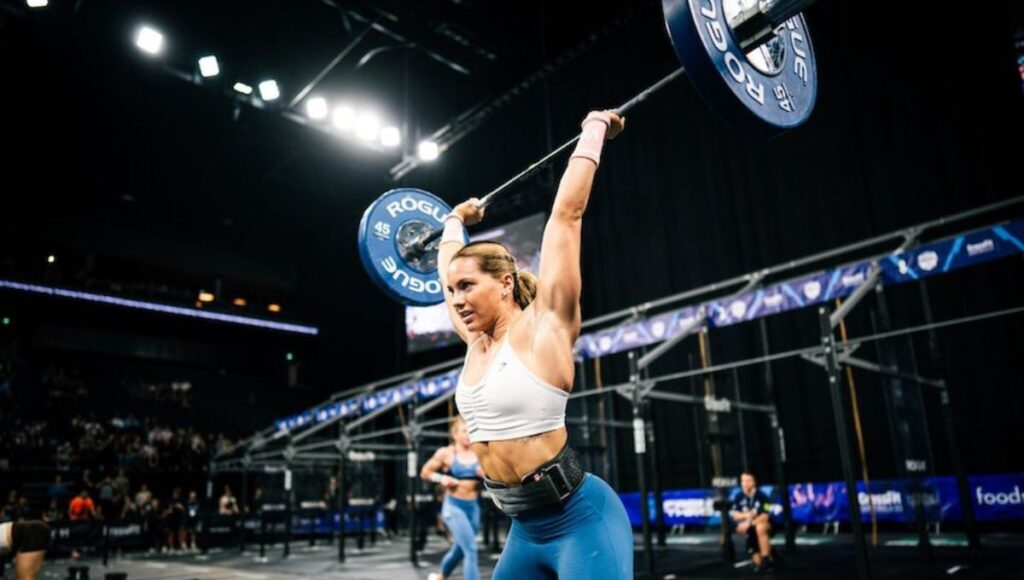
Another advantage is the requirement for shoulder stability. The rotator cuff and scapular stabilizers must work continuously to maintain proper positioning during the lift.
How to Perform It
- Stand with feet approximately shoulder width apart.
- Grip the bar slightly wider than shoulder width.
- Brace the core and glutes before initiating the movement.
- Press the bar vertically overhead until the elbows lock out.
- Lower the bar under control to the starting position near the upper chest.
- Avoid excessive leaning backward, which can shift emphasis toward the upper chest and place unnecessary stress on the lower back.
Programming Recommendations
For hypertrophy, perform three to five sets of six to ten repetitions. The overhead press is best placed early in a workout when energy and strength levels are highest.
Exercise 2: Dumbbell Lateral Raise
Why It Works
If there is one exercise that directly contributes to wider shoulders, it is the lateral raise. The lateral deltoid often receives insufficient stimulation from pressing exercises alone. While overhead pressing effectively develops the anterior deltoid, it may not maximize growth in the middle portion of the shoulder.
Electromyography studies consistently identify lateral raises as one of the highest activating exercises for the lateral deltoid.
The primary role of the lateral deltoid is shoulder abduction. Lateral raises train this function directly, creating targeted stress that promotes hypertrophy. One of the biggest advantages of lateral raises is the ability to accumulate significant training volume without excessive systemic fatigue.
How to Perform It
- Hold a dumbbell in each hand with arms at your sides.
- Maintain a slight bend in the elbows.
- Raise the weights outward until they reach approximately shoulder height.
- Pause briefly at the top.
- Lower under control to the starting position.
- Focus on moving through the shoulder rather than using momentum from the torso.
Common Mistakes
Many lifters use excessive weight, causing body sway and reducing tension on the deltoids. Another common error is raising the dumbbells too high. Going significantly above shoulder height often shifts stress away from the target muscle.
Programming Recommendations
Perform three to five sets of ten to twenty repetitions. Moderate and higher repetition ranges often work exceptionally well because the lateral deltoid responds favorably to increased training volume.
Exercise 3: Reverse Pec Deck Fly
Why It Works
The posterior deltoids are frequently neglected in many training programs. This oversight can limit overall shoulder development because the rear delts contribute significantly to shoulder thickness and balance.

Research examining shoulder muscle activation frequently finds high levels of posterior deltoid recruitment during reverse fly variations. The reverse pec deck offers several advantages over free weight alternatives. The machine provides stability, reduces momentum, and keeps tension on the target muscles throughout the movement.
Compared with bent-over dumbbell reverse flies, the machine often allows better isolation and more consistent execution.
How to Perform It
- Adjust the machine so the handles align with shoulder height.
- Sit facing the machine with the chest against the pad.
- Grip the handles with a neutral grip.
- Pull the arms outward and backward until fully extended.
- Squeeze the rear deltoids at the end of the movement.
- Return slowly to the starting position.
- Avoid shrugging the shoulders during the exercise, as this increases upper trapezius involvement.
Programming Recommendations
Perform three to four sets of ten to fifteen repetitions. Focus on controlled movement and strong contraction rather than heavy weight.
Exercise 4: Leaning Cable Lateral Raise
Why It Works
Cable exercises provide a unique benefit that dumbbells cannot fully replicate. With dumbbells, resistance changes throughout the range of motion due to gravity. At the bottom of the movement, tension on the lateral deltoid is relatively low.
Cables maintain resistance throughout a much larger portion of the range of motion. Leaning away from the cable stack increases the effective range and places the shoulder under tension in stretched positions. Emerging evidence suggests that training muscles under loaded stretch conditions may enhance hypertrophy.
The leaning cable lateral raise combines targeted lateral delt activation with continuous resistance, making it one of the most effective isolation exercises available.
How to Perform It
- Stand beside a low cable pulley.
- Hold the handle with the hand furthest from the machine.
- Grip the machine or support structure with the opposite hand.
- Lean slightly away from the cable stack.
- Raise the handle outward until arm position reaches shoulder height.
- Lower under control while maintaining tension.
- Keep movements smooth and deliberate.
Programming Recommendations
Perform two to four sets of twelve to twenty repetitions. This exercise works particularly well near the end of a workout after heavier compound movements.
Training Frequency for Faster Shoulder Growth
Shoulders recover relatively quickly compared with larger muscle groups such as the quadriceps. Research comparing different training frequencies suggests that distributing volume across multiple sessions may improve hypertrophy outcomes.
Training shoulders two or three times per week often produces better results than concentrating all volume into a single workout. Higher frequency allows better quality repetitions, improved technique, and more opportunities to stimulate muscle protein synthesis.
Final Thoughts
Building bigger shoulders quickly requires more than simply training harder. It requires selecting exercises that effectively target all portions of the deltoid while allowing progressive overload and sufficient training volume. The standing overhead press provides the foundation for strength and anterior delt development. The dumbbell lateral raise remains one of the best tools for increasing shoulder width.
3 Important Leg Exercises Men Over 40 Must Do
The reverse pec deck fly ensures complete development of the posterior deltoids. The leaning cable lateral raise adds constant tension and complements traditional lateral raise variations. Combined with appropriate training volume, progressive overload, proper nutrition, and adequate recovery, these four exercises provide an evidence based blueprint for building larger, stronger, and more impressive shoulders.
References
• American College of Sports Medicine (2009) ‘Progression models in resistance training for healthy adults’, Medicine & Science in Sports & Exercise, 41(3), pp. 687-708.
• Gentil, P., Soares, S. and Bottaro, M. (2015) ‘Single versus multi-joint resistance exercises: effects on muscle strength and hypertrophy’, Asian Journal of Sports Medicine, 6(2), e24057.
• Grgic, J., Schoenfeld, B.J. and Latella, C. (2018) ‘Resistance training frequency and skeletal muscle hypertrophy: a review of available evidence’, Journal of Science and Medicine in Sport, 22(3), pp. 361-370.
• Krieger, J.W. (2010) ‘Single versus multiple sets of resistance exercise for muscle hypertrophy: a meta-analysis’, Journal of Strength and Conditioning Research, 24(4), pp. 1150-1159.
• Morton, R.W., Murphy, K.T., McKellar, S.R., Schoenfeld, B.J., Henselmans, M., Helms, E., Aragon, A.A., Devries, M.C., Banfield, L., Krieger, J.W. and Phillips, S.M. (2018) ‘A systematic review, meta-analysis and meta-regression of the effect of protein supplementation on resistance training-induced gains in muscle mass and strength in healthy adults’, British Journal of Sports Medicine, 52(6), pp. 376-384.
• Paoli, A., Gentil, P., Moro, T., Marcolin, G. and Bianco, A. (2017) ‘Resistance training with single versus multi-joint exercises at equal total load volume: effects on body composition, cardiorespiratory fitness, and muscle strength’, Frontiers in Physiology, 8, 1105.
• Schoenfeld, B.J. (2010) ‘The mechanisms of muscle hypertrophy and their application to resistance training’, Journal of Strength and Conditioning Research, 24(10), pp. 2857-2872.
• Schoenfeld, B.J. (2016) ‘Science and development of muscle hypertrophy’, Human Kinetics, 2nd ed.
• Schoenfeld, B.J., Ogborn, D. and Krieger, J.W. (2017) ‘Dose-response relationship between weekly resistance training volume and increases in muscle mass: a systematic review and meta-analysis’, Journal of Sports Sciences, 35(11), pp. 1073-1082.
• Signorile, J.F., Zink, A.J. and Szwed, S.P. (2002) ‘A comparative electromyographical investigation of muscle utilization patterns using various hand positions during the lat pull-down’, Journal of Strength and Conditioning Research, 16(4), pp. 539-546.
• Simão, R., Spineti, J., Salles, B.F., Oliveira, L.F., Matta, T., Miranda, F., Miranda, H. and Costa, P.B. (2012) ‘Influence of exercise order on maximum strength and muscle volume in nonlinear periodized resistance training’, Journal of Sports Science and Medicine, 11(1), pp. 152-157.
• Wakahara, T., Fukutani, A., Kawakami, Y. and Yanai, T. (2013) ‘Nonuniform muscle hypertrophy: its relation to muscle activation in training session’, Medicine & Science in Sports & Exercise, 45(11), pp. 2158-2165.
• Walker, S., Häkkinen, K., Haff, G.G. and Newton, R.U. (2020) ‘Moderate load muscular endurance strength training did not improve peak power or maximal strength in healthy adults’, Sports Medicine, 50(7), pp. 1257-1268.