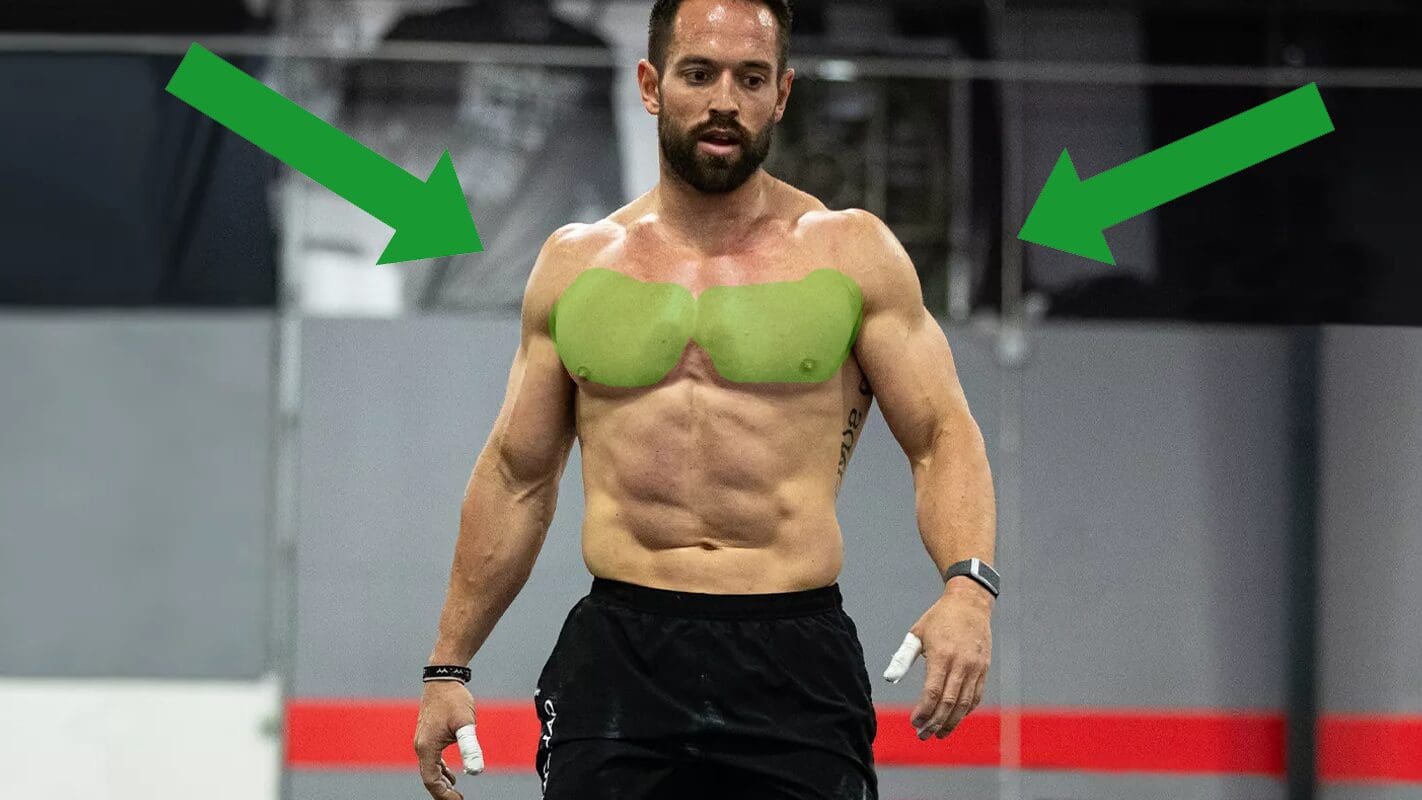


Building stronger pecs is not simply about choosing the exercise that creates the biggest pump or allows you to lift the heaviest weight. Compound and isolation chest exercises both have a place in an effective program, but they produce different training demands and solve different problems.
Compound exercises, such as the barbell bench press, dumbbell press, push up, and dip, train the chest alongside the triceps and front shoulders. Isolation exercises, such as cable flyes, pec deck flyes, and dumbbell flyes, emphasize the shoulder movement that brings the upper arm toward the center of the body. This makes them useful for giving the pectoral muscles more direct work with less assistance from other muscle groups.


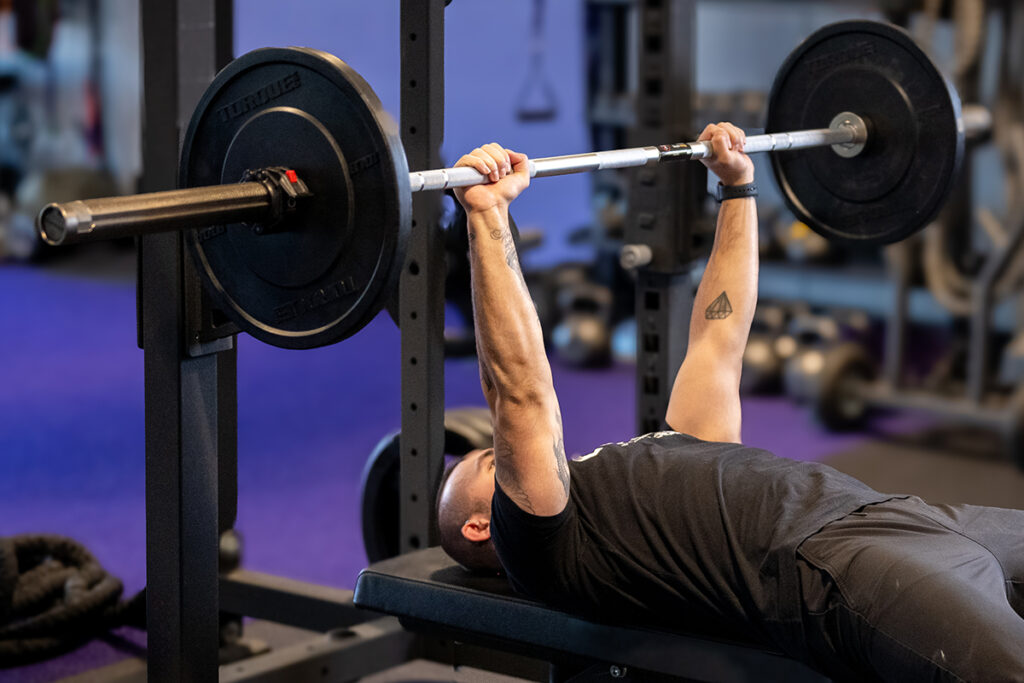
The best choice depends on what you mean by stronger pecs. If you want to press heavier weights, compound exercises should form the foundation of your training. If you want to add more direct chest volume, improve your ability to train the pecs hard without triceps fatigue becoming the limiting factor, or focus on a particular area of the movement, isolation work can be extremely valuable.
For most lifters, the most productive answer is not compound versus isolation. It is learning how to use both in the right order and in the right amount.
What Makes an Exercise Compound or Isolation?
A compound exercise involves movement at more than one joint. During a bench press, your shoulders move as the upper arm moves toward the torso, while your elbows extend as the triceps help press the weight upward. The chest is a major contributor, but it works with the triceps and anterior deltoids.
The barbell bench press is the classic compound chest movement. Dumbbell bench presses, incline presses, push ups, weighted push ups, and parallel bar dips are also compound exercises that can load the chest effectively. They allow you to use substantial resistance and train a coordinated pressing pattern.
Isolation exercises aim to reduce the contribution of other muscles by minimizing elbow movement. In a cable fly, pec deck fly, or dumbbell fly, the elbow remains slightly bent but relatively fixed. The main action is horizontal shoulder adduction, which is one of the primary functions of the pectoralis major.
No exercise completely isolates a muscle. Your shoulders, arms, grip, and trunk still help stabilize the movement. However, a fly variation generally places a greater proportion of the challenge on the chest and less on elbow extension than a pressing exercise.
Why Compound Exercises Are So Effective for Chest Strength
They Build Strength in the Pressing Pattern
Strength has a high degree of specificity. This means that getting stronger at a particular movement requires practicing that movement under meaningful resistance. If your goal is to increase your bench press, then regularly bench pressing is far more useful than relying only on flyes.
Compound pressing movements let you progressively load the chest, triceps, and shoulders together. Over time, this improves coordination between the muscles involved in pressing, helps your nervous system produce force more effectively, and develops the strength needed to move heavier loads.
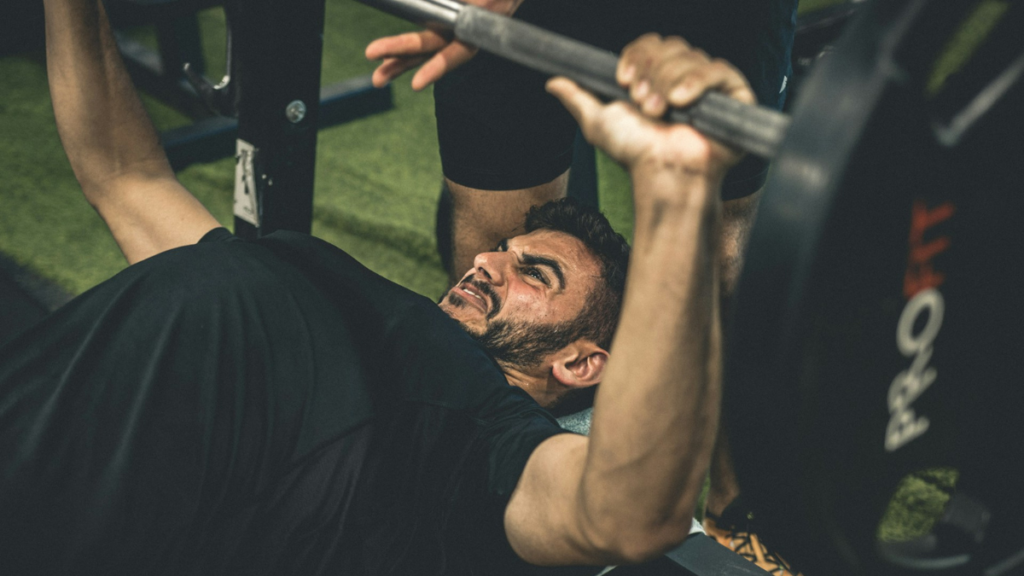
Research consistently shows that resistance training improves muscle strength, while higher load training tends to produce the greatest improvements in maximum strength. This does not mean every chest set must be extremely heavy. It means that including heavier pressing work is useful when your goal is to develop stronger pecs in practical gym movements.
The bench press also allows for clear and measurable progression. You can add small amounts of weight, perform more repetitions with the same load, improve your range of motion, or use better control and technique. These are all meaningful signs that your chest and pressing muscles are becoming stronger.
They Train More Muscle in Less Time
Compound exercises are efficient because they train several muscle groups in one movement. A hard set of bench presses challenges the chest, triceps, and front delts while requiring stability from the upper back, forearms, and trunk.
This can be especially useful for beginners or anyone with limited training time. Rather than spending an entire session on separate exercises for the chest, shoulders, and triceps, a small number of well performed compound lifts can provide a strong training stimulus across the upper body.
Studies comparing single joint and multi joint resistance training have found that both approaches can increase muscle size and strength when training volume is appropriately managed. Multi joint exercises are not automatically superior for every outcome, but they offer a time efficient way to train several important muscles at once.
They Can Use Heavy Loads Safely With Good Technique
The chest is capable of producing considerable force, and compound movements provide a practical way to expose it to heavier resistance. A barbell bench press can be loaded more heavily than a cable fly because the movement is supported by the bench, the bar path is relatively stable, and the elbows can extend to assist the lift.
Heavy pressing does require good technique. Your shoulder blades should remain controlled against the bench, your feet should create a stable base, and the bar should move through a consistent path. The goal is not to force the largest possible weight onto the bar. The goal is to create repeatable, high quality sets that can be progressed over months.
Where Compound Exercises Can Fall Short
Compound exercises are highly effective, but they do not always place the chest under the greatest possible stimulus. In many pressing movements, the triceps or front delts may fatigue before the pecs do. This is common when a lifter uses a close grip, allows the elbows to tuck excessively, or has relatively stronger chest muscles than triceps.
Technique also changes which muscles do the most work. A decline press, a narrow grip bench press, and a dip with a more upright torso can all shift more of the demand toward the triceps. An incline press can be excellent for the upper chest, but it can also become very front delt dominant if the bench angle is too steep.
Compound lifts can also be more fatiguing systemically. Heavy bench presses require setup, concentration, warm up sets, and recovery. That does not make them a poor choice. It simply means they should be programmed intelligently rather than added endlessly on top of high volume shoulder and triceps work.
Why Isolation Exercises Matter for Stronger Pecs
They Provide Direct Chest Volume
Muscle growth is strongly related to performing enough challenging weekly training volume. Multiple hard sets generally produce better hypertrophy results than very low volume programs, although the ideal amount varies according to training experience, recovery, exercise selection, and effort.
Isolation exercises give you a way to add direct chest work without placing the same demand on the triceps. After several sets of pressing, your triceps may be tired enough to limit further compound work. Cable flyes or pec deck flyes can let you continue training the pecs productively without needing your triceps to press another heavy load.
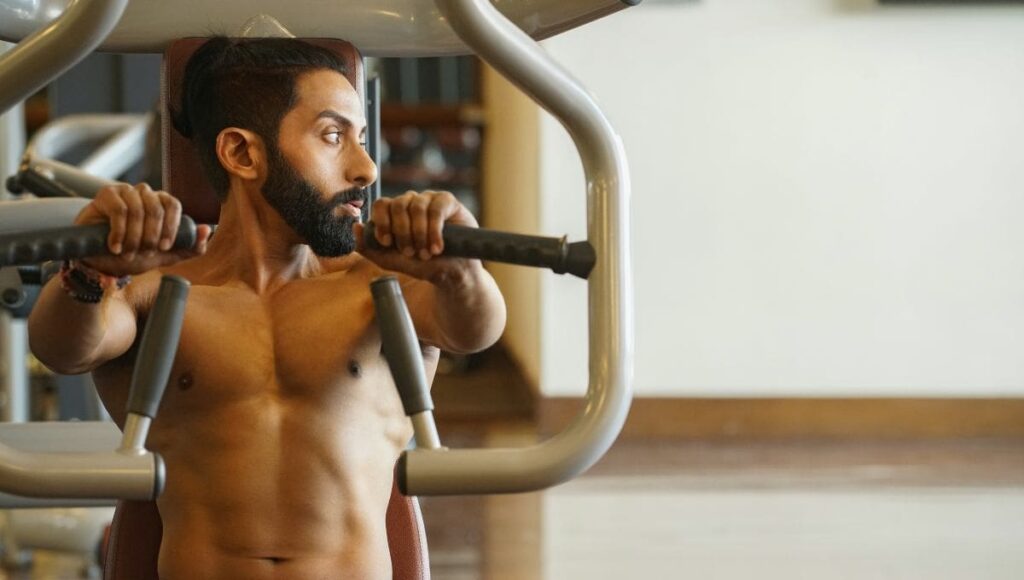
This is particularly useful for lifters whose chest development has stalled despite improving their bench press. More pressing is not always the answer. Sometimes the chest needs additional direct work, while the triceps and shoulders need less fatigue.
They Can Challenge the Chest in a Lengthened Position
The pectoralis major is stretched when the upper arm moves behind the torso or out to the side under control. Fly exercises can expose the chest to resistance through this lengthened position, especially when performed with cables.
Cable flyes have a practical advantage over dumbbell flyes because the cable can maintain tension across more of the movement. With dumbbells, resistance is greatest when the arms are out to the side and decreases near the top as the dumbbells move over the chest. A cable can keep the pecs working as the hands come together, provided the machine is set up correctly.
Training through a comfortable and controlled range of motion is important. You should feel a stretch across the chest without allowing the shoulder to drift into a painful position. More range of motion is not automatically better if it causes discomfort or makes you lose control.
They Are Easier to Take Close to Muscular Failure
A pec deck or cable fly is often safer to perform close to muscular failure than a barbell bench press. If your final repetition becomes difficult, you can simply stop the set. You do not need a spotter to help you re rack a heavy bar.
Training close to failure can be valuable because it helps ensure that the working sets are sufficiently challenging, particularly when using lighter or moderate loads. Research suggests that a wide range of loads can stimulate muscle growth when sets are performed with a high level of effort. Heavier loads still have an advantage for maximal strength, but lighter and moderate loads can be useful for hypertrophy when the set is hard enough.
This makes isolation exercises ideal for moderate and higher repetition chest work. They can allow you to create substantial local fatigue in the pecs while using a load that is easier on the elbows and wrists.
The Limits of Isolation Chest Exercises
Isolation exercises are valuable, but they should not replace compound pressing if you want to become stronger in pressing movements. A cable fly will not teach you how to control a heavy barbell on your chest, generate force through your arms, or coordinate your chest, shoulders, and triceps under load.
It is also easy to turn a fly into a poor movement by using too much weight. When the load is excessive, lifters often bend and extend the elbows repeatedly, shrug the shoulders upward, or shorten the range of motion. The exercise becomes less about the chest and more about finding a way to move the stack.

The solution is simple. Use a weight that allows you to keep a slight bend in the elbows, maintain a stable torso, and bring the upper arms toward the midline with control. You should be able to feel the chest working throughout the repetition without losing shoulder position.
Which Is Better for Stronger Pecs?
Compound exercises are better for building pressing strength. They let you train the chest in combination with the triceps and shoulders, use heavier loads, and practice the exact movement pattern needed for stronger bench presses, push ups, and dips.
Isolation exercises are better for adding direct chest volume and training the pecs when your triceps or shoulders would otherwise limit further pressing. They are also a useful way to train close to failure with lower technical risk and less overall fatigue.
If you are a beginner, put most of your energy into learning and progressing compound movements. One or two pressing exercises per session can provide an excellent foundation. Add one isolation movement if you want more chest volume or need a chest exercise that creates less triceps fatigue.
If you are an intermediate or advanced lifter, a combination is usually the best approach. Begin with a compound press while you are fresh, then use an isolation exercise to add targeted chest work. This sequencing allows you to prioritize strength and still accumulate enough high quality volume for muscle growth.
A Simple Chest Training Structure
A practical chest session might begin with a flat barbell or dumbbell bench press for several challenging sets in a moderate repetition range. Follow this with an incline dumbbell press or weighted push up to train the chest from a slightly different angle. Finish with cable flyes or pec deck flyes for controlled, higher repetition direct chest work.
3 Best Exercises for Beginners that Want Wider Biceps Quickly
You do not need a huge number of exercises. Progress comes from repeatedly performing enough hard, technically sound sets and gradually improving your performance. Keep your compound lifts consistent long enough to measure progress, then use isolation work to fill the gaps rather than randomly changing your program every week.
Pay attention to how your body responds. If your shoulders are irritated by deep flyes, reduce the range of motion or choose a pec deck. If your triceps constantly fail before your chest during pressing, add direct chest volume through cables. If your bench press has stopped improving, assess your technique, training load, sleep, recovery, and total weekly pressing volume before assuming you need another exercise.
The Bottom Line
Compound chest exercises should be the foundation of a program designed to build stronger pecs. They develop the ability to press heavy loads, build coordinated upper body strength, and train several important muscles efficiently.
Isolation exercises are not optional extras with no real value. They are a practical tool for adding chest focused volume, training around triceps fatigue, and pushing the pecs hard with control. The strongest chest programs use compound presses to build strength and carefully chosen isolation work to maximize quality training volume.
References
- Currier, B.S., McLeod, J.C., Banfield, L., Beyene, J., Welton, N.J., D’Souza, A.C., Keogh, J.A.J., Lin, L., Coletta, G., Yang, A., Colenso Semple, L., Lau, K.J., Verboom, A. and Phillips, S.M. (2023) ‘Resistance training prescription for muscle strength and hypertrophy in healthy adults: A systematic review and Bayesian network meta analysis’, British Journal of Sports Medicine, 57(18), pp. 1211–1220.
- Figueiredo, V.C., de Salles, B.F. and Trajano, G.S. (2018) ‘Volume for muscle hypertrophy and health outcomes: The most effective variable in resistance training’, Sports Medicine, 48(3), pp. 499–505.
- Krieger, J.W. (2010) ‘Single versus multiple sets of resistance exercise for muscle hypertrophy: A meta analysis’, Journal of Strength and Conditioning Research, 24(4), pp. 1150–1159.
- Lasevicius, T., Ugrinowitsch, C., Schoenfeld, B.J., Roschel, H., Tavares, L.D., de Souza, E.O., Tricoli, V. and Teixeira, E.L. (2018) ‘Effects of different intensities of resistance training with equated volume load on muscle strength and hypertrophy’, European Journal of Sport Science, 18(6), pp. 772–780.
- Schoenfeld, B.J., Ogborn, D. and Krieger, J.W. (2017) ‘Dose response relationship between weekly resistance training volume and increases in muscle mass: A systematic review and meta analysis’, Journal of Sports Sciences, 35(11), pp. 1073–1082.
- Schoenfeld, B.J., Grgic, J., Ogborn, D. and Krieger, J.W. (2017) ‘Strength and hypertrophy adaptations between low versus high load resistance training: A systematic review and meta analysis’, Journal of Strength and Conditioning Research, 31(12), pp. 3508–3523.
- Simao, R., de Salles, B.F., Figueiredo, T., Dias, I., Willardson, J.M. and Miranda, H. (2012) ‘Exercise order in resistance training’, Sports Medicine, 42(3), pp. 251–265.
- Wirth, K., Hartmann, H., Mickel, C., Szilvas, E., Keiner, M. and Sander, A. (2016) ‘The impact of back squat and leg press exercises on maximal strength and speed strength’, Journal of Strength and Conditioning Research, 30(5), pp. 1205–1212.
Key takeaways
| Question | Practical answer |
|---|---|
| Which type of exercise is best for pressing strength? | Compound presses are best because they allow heavier loading and develop the full chest, shoulder, and triceps pressing pattern. |
| Are flyes useful for building pecs? | Yes. They provide direct chest work and can add productive training volume when the triceps or shoulders are fatigued. |
| Should beginners use isolation exercises? | Yes, but compound presses should receive most of the attention while technique and basic strength are developed. |
| What is the best exercise order? | Perform compound pressing first, then use flyes or pec deck work later in the session for controlled chest focused volume. |
| Can chest training use lighter weights? | Yes. Moderate and lighter loads can support muscle growth when sets are performed with high effort and good technique. |