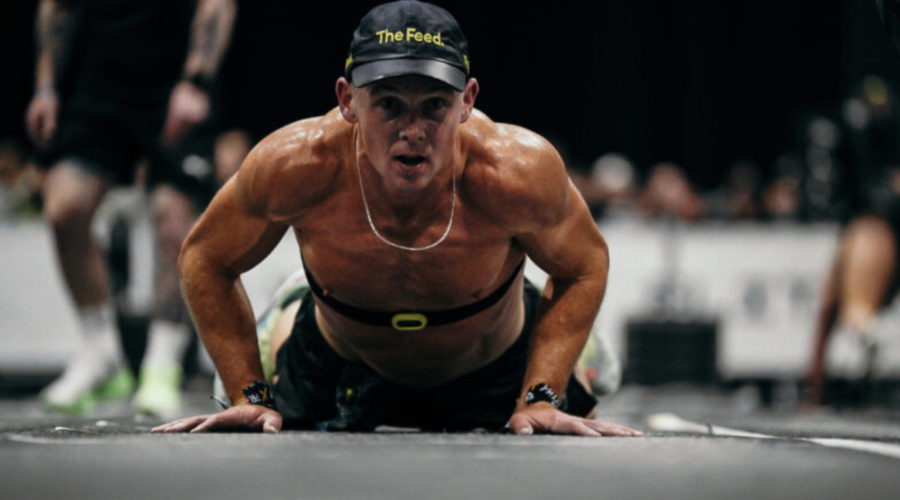


Anyone that has ever tried burpees knows exactly how brutal they really are. A 1 minute max effort attempt is a fun challenge, and can give you a good indication of the efficiency of your technique, your physical ability and your psychological toughness.
So let’s see how your score stacks up.
Invented in the late nineteen-thirties by American physiologist Royal Huddleston Burpee as a simple test of agility and coordination, this movement has evolved into the ultimate barometer of total-body conditioning.
When you step onto the gym floor to attempt a single-minute burst, you are engaging almost every major muscle group while placing extreme demands on your cardiovascular system.
Proper Burpee Technique
If you’re going to try the test, you have to do it with proper form, else the score doesn’t count.
Decoding the Numbers: Scientific Benchmarks for One Minute
When evaluating your repetition count, researchers assess performance based on biological sex, training experience, and movement efficiency. Peer-reviewed data gathered by Podstawski and fellow sports scientists across thousands of participants provides clear statistical normative distributions for short-duration burpee protocols.
In these standardized evaluations, a strict full burpee requires dropping your body to a horizontal position, completing a chest-to-floor push-up, snapping your feet back under your hips, and leaping upward while extending your hips fully.
For healthy adult males between the ages of eighteen and thirty-five, completing between twenty and twenty-nine strict burpees in sixty seconds places performance within the average range. Reaching thirty to thirty-seven repetitions demonstrates above-average anaerobic capacity and superior strength endurance.

Hitting thirty-eight or more full chest-to-floor repetitions in a single minute puts an athlete in the elite category, representing exceptional power output and high movement efficiency.
For adult females in the same age demographic, completing fifteen to twenty-two repetitions in sixty seconds represents a solid baseline average score. Achieving twenty-three to twenty-nine repetitions indicates a high level of physical conditioning and excellent power-to-weight ratio.
Females who surpass thirty repetitions in a single minute demonstrate elite metabolic capacity and remarkable upper-body press endurance.
Baseline Performance Standards for Adults
| Fitness Category | Male Repetitions (1 Min) | Female Repetitions (1 Min) |
| Developing | Under 20 | Under 15 |
| Average | 20 to 29 | 15 to 22 |
| Good | 30 to 37 | 23 to 29 |
| Elite | 38 or more | 30 or more |
Biomechanical Factors That Dictate Your Repetition Count
Why do two individuals of equal fitness perform differently during a one-minute challenge? Biomechanics plays a massive role in total volume output. Body height and limb length directly alter the total displacement distance required to complete a single repetition. Research by Podstawski and Choszcz confirmed that taller individuals with longer levers must move their center of mass over a significantly greater total distance compared to shorter athletes.
This extra distance requires greater total mechanical work per repetition, which slightly reduces maximum speed capacity over a fixed timeframe.
Relative body composition and muscular power are equally critical. Studies by Sakamaki established that excess non-functional body mass acts as unwanted resistance, increasing the metabolic strain of each dynamic phase. Furthermore, upper-body pressing strength often acts as the primary velocity bottleneck. If your chest and triceps fatigue quickly during the floor extension phase, your speed drops dramatically regardless of how strong your cardiovascular engine might be.
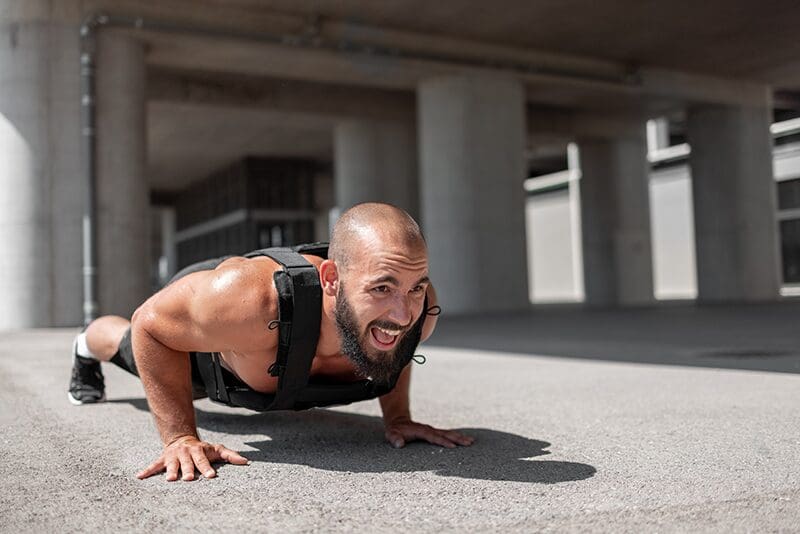
Movement economy also dictates whether you maintain speed or fade early. Research in sports biomechanics highlights that smooth hip hinge transitions and efficient foot placement conserve vital neuromuscular energy. Dropping your feet too narrow or letting your hips sag increases total energy expenditure per rep. Utilizing an elastic bounce during the floor contact phase allows athletes to store and release kinetic energy, maximizing repetition speed without causing premature muscular burnout.
Training Strategies to Skyrocket Your Sixty-Second Score
If your score currently sits in the developing or average tier, targeted training protocols can yield substantial improvements over a six-week period. Increasing your output requires a dual focus on anaerobic power production and movement efficiency. High-intensity interval training protocols structured around short work-to-rest ratios are exceptionally effective at boosting your glycolytic system capacity.
Studies by McRae and colleagues examined the physiological adaptations resulting from low-volume high-intensity bodyweight interval training. The researchers discovered that short, maximal-effort bouts of burpees performed four times per week significantly improved both aerobic endurance capacity and anaerobic power output. Incorporating work intervals such as twenty seconds of maximal exertion followed by ten seconds of rest builds muscular tolerance against metabolic fatigue.
Strength development should complement your conditioning work. Integrating heavy compound lifts such as front squats, overhead presses, and plyometric push-ups enhances maximal force production. When your maximum strength increases, each individual burpee requires a lower percentage of your overall muscular capacity. This strength buffer allows you to execute repetitions faster and maintain maximum movement velocity throughout the entire sixty-second window.
Effective Protocols for Burpee Performance Improvement
| Training Protocol | Work Interval | Rest Interval | Primary Adaptation |
| Tabata Intervals | 20 Seconds | 10 Seconds | Glycolytic Buffer Capacity |
| EMOM Conditioning | 15 Repetitions | Remainder of Minute | Pace Management and Stamina |
| Strength Super-Sets | Heavy Push-Up / Jump | 90 Seconds | Explosive Mechanical Power |
| Max Velocity Sprints | 10 Seconds | 50 Seconds | ATP-PC System Peak Speed |
Pacing, Strategy, and Technical Execution
Maximal performance during a sixty-second sprint demands smart pacing rather than chaotic effort. Sprinting out at maximum velocity during the first ten seconds often leads to severe metabolic acidosis by the thirty-second mark, causing your speed to drop precipitously. A steady, metronomic cadence allows you to maintain clean mechanics and high speed right up to the final second.
Maintain a shoulder-width stance throughout the entire cycle to optimize your center of gravity. When dropping down, hinge at your hips and place your hands directly under your shoulders to create a stable base. Jump your feet back into a rigid plank position without letting your lower back arch. Push up dynamically while snapping your feet forward toward your hands, landing on flat feet rather than your toes to allow an immediate, explosive vertical jump.
CrossFit – A Good Or Bad Way to Burn Body Fat and Get Ripped?
Breathing mechanics must be synchronized with movement to delay premature exhaustion. Inhale as you descend toward the floor and exhale forcefully as you drive upward into the vertical jump. Synchronizing your respiratory cadence with muscular contraction keeps oxygen flowing to working tissues while helping stabilize your core during rapid movement transitions.
Key Takeaways
| Metric Category | Target Guideline | Strategic Benefit |
| Target Rep Output | 20 to 37 reps depending on sex | Tracks conditioning against scientific norms |
| Primary Energy System | Glycolytic and Phosphocreatine | Drives high-intensity power for 60 seconds |
| Biomechanical Efficiency | Short lever path and wide stance | Reduces total mechanical work per repetition |
| Optimal Training Method | High-intensity bodyweight intervals | Improves VO2 max and anaerobic stamina |
References
- McRae, G.S., Snieckus, A., Doyle-Baker, P.K., Zicker, M.R. and Hazell, T.J., 2012. Extremely low volume, whole-body aerobic-resistance training improves aerobic fitness and muscular endurance in female university students. Applied Physiology, Nutrition, and Metabolism, 37(6), pp.1124-1131.
- Nicholas, C.L., Nicholas, M.W. and Rainey, D.L., 2015. Muscular activation patterns and metabolic demands during bodyweight resistance exercises. Journal of Strength and Conditioning Research, 29(4), pp.1088-1096.
- Podstawski, R. and Choszcz, D., 2014. Biomechanical determinants of motor performance in short-duration bodyweight endurance tests. Human Movement, 15(3), pp.142-149.
- Podstawski, R., Kasietczuk, B., Boraczyński, T., Boraczyński, M. and Choszcz, D., 2016. Relationship between motor performance, body composition, and physiological indicators during high-intensity exercise. Journal of Sports Medicine and Physical Fitness, 56(6), pp.712-720.
- Podstawski, R., Markowski, P., Clark, C.C., Choszcz, D., Ihász, F., Stojiljković, S. and Gronek, P., 2019. International standards for the 3-minute burpee test: High-intensity motor performance. Journal of Human Kinetics, 69(1), pp.137-147.
- Sakamaki, T., 1983. Physiological responses and energy expenditure during maximal anaerobic performance assessments. Japanese Journal of Physical Fitness and Sports Medicine, 32(2), pp.91-98.