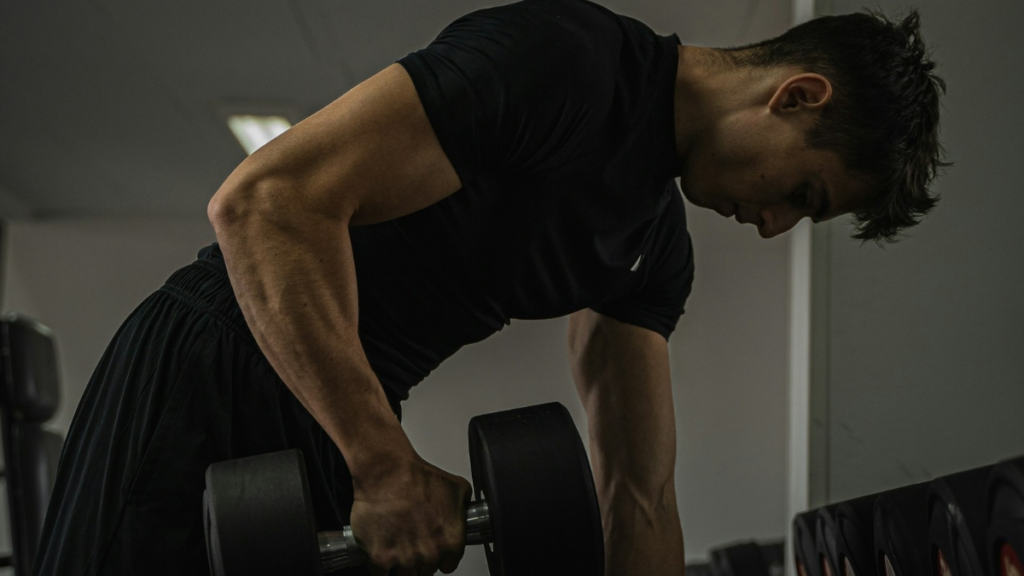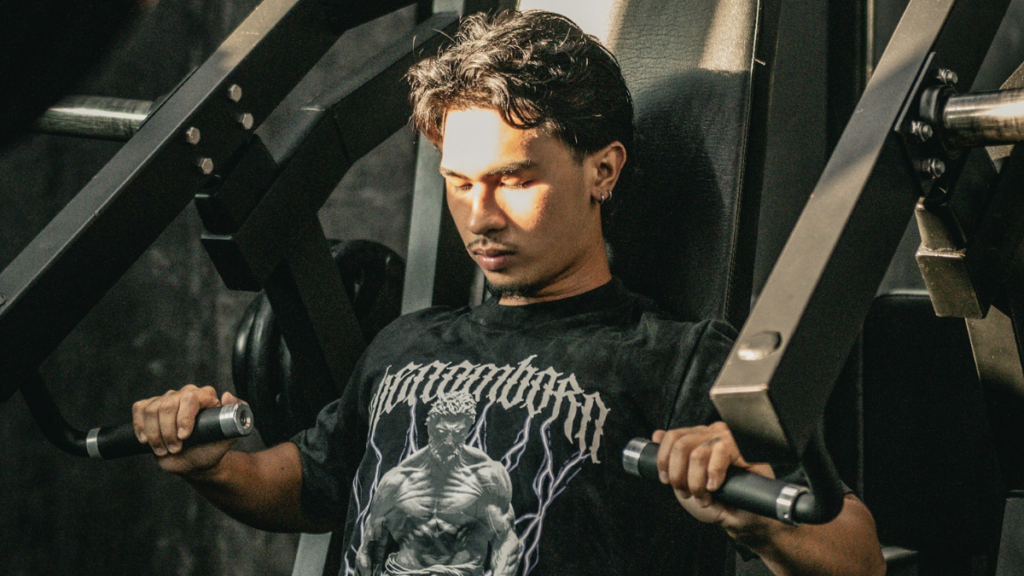


A stronger chest is useful far beyond improving how your upper body looks in a T shirt. Your chest muscles contribute to pressing actions in sport, training, and everyday life, including pushing yourself up from the floor, moving furniture, and controlling a loaded object away from your body. Building them also gives beginners a more balanced upper body when it is paired with regular back training.
The chest is mainly made up of the pectoralis major, a large muscle that helps bring the upper arm across the body and press it forward. The pectoralis minor is a smaller muscle beneath it that helps control the shoulder blade. Effective chest training involves movements that challenge the pectoralis major through a comfortable range of motion while allowing you to gradually add repetitions, load, or control over time.



Beginners do not need a huge menu of exercises to make progress. What matters most is choosing movements you can perform consistently with good technique, training hard enough to make the muscles work, and gradually making the exercise more demanding as you get stronger. Research consistently shows that resistance training can increase muscle size and strength, while greater weekly training volume is generally associated with larger improvements in muscle growth when recovery is managed properly.
The three exercises below cover the fundamentals. Push ups develop bodyweight pressing strength and can be scaled to almost any ability. The dumbbell bench press builds pressing strength while allowing each arm to work independently. The chest press machine offers a stable option that can help beginners train the chest confidently and progressively.
How to Build Chest Muscle as a Beginner
Muscle growth happens when training creates a sufficient stimulus and your body has the resources to recover and adapt. This does not mean every set needs to be an all out effort, but the final repetitions should feel challenging. If you finish every set knowing you could comfortably perform another 10 repetitions, the exercise is probably too easy to provide the best possible stimulus.
For beginners, two to three chest focused sessions per week is a practical starting point. You can place the exercises inside a full body workout or an upper body session. Start with a manageable amount of work, such as two or three hard sets per exercise, and build up only when you are recovering well and your technique remains solid.
Use a controlled tempo. Lower the weight or your body with control, pause briefly when necessary, then press smoothly without rushing. Controlled repetitions make it easier to learn the movement, maintain stable shoulder positions, and recognize when the working muscles are close to fatigue.
Progressive overload is the key principle. When you can complete the top end of your chosen repetition range with clean form, make a small increase. You might add one or two repetitions, use slightly heavier dumbbells, lower the height of an incline push up, or add a small amount of weight to a machine. Small, repeatable improvements are more valuable than occasional difficult sessions followed by long breaks from training.
1. Push Ups
The push up is one of the best chest exercises for beginners because it requires little equipment, teaches whole body tension, and can be adapted to different strength levels. It trains the chest, triceps, and front of the shoulders while asking your core and legs to keep your body in a stable plank position.
Research comparing push up and bench press training has found that both can produce meaningful gains in upper body strength and chest muscle thickness when the effort and loading are appropriately matched. That makes the push up much more than a beginner substitute for weights. It is a useful chest builder in its own right.
How to Perform a Push Up
Start in a high plank with your hands on the floor slightly wider than shoulder width. Your shoulders should be positioned over or just behind your hands. Brace your stomach, squeeze your glutes, and create a straight line from your head to your heels.
Lower your body by bending your elbows while keeping them angled slightly away from your torso. Aim to bring your chest close to the floor without losing your body position. Press the floor away, straightening your arms until you return to the starting position.
Think about bringing your upper arms toward the middle of your chest as you press. This can help you focus on using the pectoral muscles instead of allowing the shoulders to dominate the movement.
How to Make Push Ups Easier or Harder
If a floor push up is currently too difficult, start with an incline push up. Place your hands on a secure bench, sturdy box, or Smith machine bar. The higher your hands are, the less of your bodyweight you need to press. As you get stronger, gradually use a lower surface.
Knee push ups can also be useful, but incline push ups often make it easier to maintain a straight body position and practice the same pressing pattern used in a standard push up.
When standard push ups become comfortable, make them harder by adding repetitions, slowing the lowering phase, elevating your feet, wearing a weighted vest, or using resistance bands. The exercise remains effective as long as the sets are challenging and your form is stable.
Aim for two to four sets of six to 15 repetitions. Choose a version that allows you to finish the set with good technique while still making the final few repetitions demanding.
2. Dumbbell Bench Press
The dumbbell bench press is an excellent next step because it allows you to load the chest more directly while each arm works independently. This can help beginners identify differences in strength or control between sides. Dumbbells also allow a natural arm path, which many people find comfortable for their shoulders.
Bench pressing movements train the pectoralis major, triceps, and front deltoids. The dumbbell version requires more control than a machine because you must stabilize each weight. That makes it important to begin with light loads and prioritize a consistent range of motion.
How to Perform a Dumbbell Bench Press
Sit on the edge of a flat bench with a dumbbell resting on each thigh. Carefully lean back while bringing the dumbbells to either side of your chest. Begin with your feet firmly on the floor and your upper back in contact with the bench.
Hold the dumbbells with your palms facing forward or turned slightly inward. Press the weights up and slightly toward each other until your arms are straight but your elbows are not aggressively locked. The dumbbells should finish above your chest rather than directly above your face.
Lower the dumbbells slowly until your upper arms are roughly in line with your torso or until you reach a comfortable depth. Keep your wrists stacked over your elbows and avoid allowing the weights to drift too far toward your shoulders. Press back up smoothly while keeping your feet planted and your torso stable.
Common Dumbbell Bench Press Mistakes
A common mistake is starting too heavy. If the dumbbells wobble significantly, your elbows flare uncontrollably, or you cannot lower them with control, reduce the weight. The goal is to place tension on the chest through repeated quality sets, not to prove strength with a single difficult repetition.
Another mistake is turning the exercise into a short range arm press. Lowering the dumbbells under control through a comfortable range helps create a better training stimulus. At the same time, forcing extra depth if it causes shoulder discomfort is unnecessary. Your best range is one you can repeat pain free with stable technique.
Start with two or three sets of eight to 12 repetitions. Rest long enough between sets that you can maintain good form, usually around one to three minutes depending on how challenging the set was.
3. Chest Press Machine
The chest press machine is highly useful for beginners because the machine provides external stability. Instead of spending most of your attention trying to balance free weights, you can focus on pressing with control and bringing the chest muscles close to fatigue. This makes the machine a practical way to accumulate quality training volume.
Machines and free weights can both improve strength and muscle size. Neither is automatically better in every situation. The best choice is the one that you can perform safely, train consistently, and progressively overload over time. For many beginners, the chest press machine is especially valuable after learning push ups and before feeling fully confident with heavier dumbbells.
How to Set Up a Chest Press Machine
Adjust the seat so the handles begin around mid chest height. If the handles are too high, the movement may shift more work to the shoulders. If they are too low, it may feel awkward and limit your ability to press smoothly.
Sit with your upper back against the pad and your feet firmly on the floor. Grip the handles and begin with your elbows bent. Press forward until your arms are straight, then return under control until you reach the starting position without allowing the weight stack to slam.
Keep your shoulders down and back against the pad rather than shrugging toward your ears. Use a grip width that feels natural and lets your wrists remain comfortable. A slight pause near the stretched position can help you maintain control and avoid bouncing through the repetition.
How to Progress on the Chest Press Machine
The chest press machine makes progression simple. First, aim to improve your repetitions using the same weight. Once you can perform the top end of your target range across all sets with clean form, move the pin up by the smallest available increment.
Use two or three sets of 10 to 15 repetitions. The higher repetition range is useful because it gives beginners time to practice the movement and build confidence. The final few repetitions should be difficult, but you should still be able to control the weight and maintain your position against the pad.
A Simple Plan for Faster Chest Progress
You can use all three exercises in the same workout, but you do not need to perform a huge amount of chest training to grow. A simple session might begin with push ups to practice bodyweight control, continue with the dumbbell bench press for strength focused work, and finish with the chest press machine for controlled repetitions.
Train your chest two times per week on nonconsecutive days. Start with two sets of each movement during the first week or two. If you are recovering well and still improving, move to three sets. Keep a simple record of the exercise, load, and repetitions so you can clearly see progress over time.
Are Your Biceps Big for Your Bodyweight?
Nutrition and recovery also affect your results. Resistance training works best when it is supported by sufficient energy intake, enough dietary protein, and regular sleep. You do not need a perfect routine, but you do need enough consistency for your body to adapt.
Do not ignore your back training. Rows, pulldowns, and rear shoulder work help develop a balanced upper body and can support stronger, more stable pressing. If you feel sharp pain in the chest, shoulder, elbow, or wrist during an exercise, stop the movement and seek advice from a qualified health professional if symptoms persist.
A stronger and bigger chest is built through repeatable work. Learn the push up, practice the dumbbell bench press with patience, and use the chest press machine to add productive volume. Do that consistently, improve gradually, and give yourself time to recover. That is the fastest route to progress that actually lasts.
References
- American College of Sports Medicine (2009) ‘American College of Sports Medicine position stand. Progression models in resistance training for healthy adults’, Medicine and Science in Sports and Exercise, 41(3), pp. 687 to 708.
- Grgic, J., Schoenfeld, B.J., Skrepnik, M., Davies, T.B. and Mikulic, P. (2018) ‘Effects of rest interval duration in resistance training on measures of muscular strength: A systematic review’, Sports Medicine, 48(1), pp. 137 to 151.
- Kikuchi, N. and Nakazato, K. (2017) ‘Low load bench press and push up induce similar muscle hypertrophy and strength gain’, Journal of Exercise Science and Fitness, 15(1), pp. 37 to 42.
- Kikuchi, N. and Nakazato, K. (2018) ‘Effect of progressive calisthenic push up training on muscle strength and thickness’, Journal of Physical Therapy Science, 30(4), pp. 585 to 589.
- Morton, R.W., Murphy, K.T., McKellar, S.R., Schoch, R.D., Henselmans, M., Helms, E., Aragon, A.A., Devries, M.C., Banfield, L., Krieger, J.W. and Phillips, S.M. (2018) ‘A systematic review, meta analysis and meta regression of the effect of protein supplementation on resistance training induced gains in muscle mass and strength in healthy adults’, British Journal of Sports Medicine, 52(6), pp. 376 to 384.
- Schoenfeld, B.J., Ogborn, D. and Krieger, J.W. (2017) ‘Dose response relationship between weekly resistance training volume and increases in muscle mass: A systematic review and meta analysis’, Journal of Sports Sciences, 35(11), pp. 1073 to 1082.
- Schoenfeld, B.J., Ogborn, D. and Krieger, J.W. (2019) ‘Effects of resistance training frequency on measures of muscle hypertrophy: A systematic review and meta analysis’, Sports Medicine, 49(6), pp. 883 to 894.
Key Takeaways
| Exercise | Why it works for beginners | Practical starting point |
|---|---|---|
| Push up | Builds chest, triceps, shoulder, and whole body pressing control with minimal equipment | Two to four sets of six to 15 repetitions using an incline if needed |
| Dumbbell bench press | Allows each arm to work independently and can be progressively loaded | Two to three sets of eight to 12 controlled repetitions |
| Chest press machine | Provides stability, making it easier to focus on the chest and train near fatigue | Two to three sets of 10 to 15 repetitions |
| Weekly approach | Consistent training volume and progressive overload support muscle growth | Train chest two times per week on nonconsecutive days |