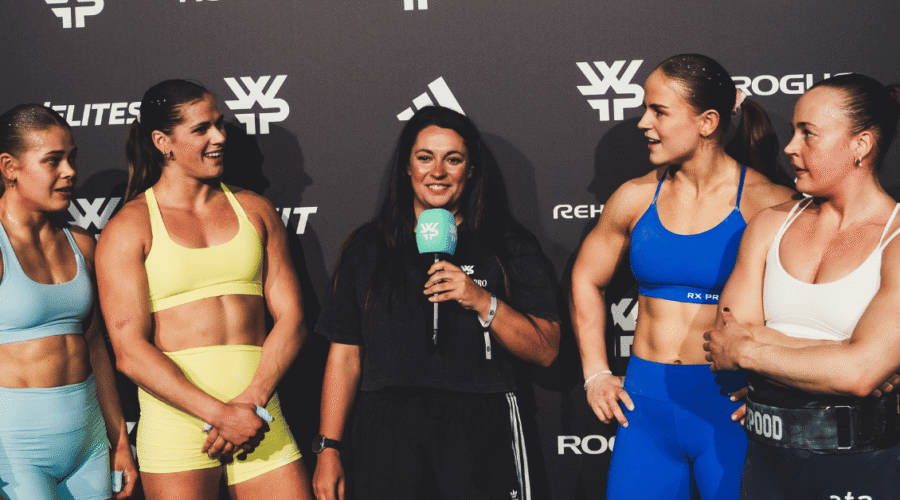


Sara Sigmundsdóttir is walking off the competition floor at Drumsheds and heading toward my interview position. She has not competed since the Rebel Renegade Games in 2025. She has been rehabbing a knee and only been training again for six weeks. Two weeks ago, she could not lift the 68KG sandbag she’s just completed a workout with. Luke, her partner, is on edge for both of them. I have never seen a support system stand more tightly to an athlete than he did across these three days. And the woman who is widely considered one of the greatest competitors this sport has ever produced is, as she reaches me, smiling. A real, unguarded smile that does not look anything like bravery.
That smile, pointed at something that ran through the whole weekend, the kind of thing you only see if you are in the warm-up area, watching the way athletes carry themselves between events. London was a weekend where the most telling moments did not happen on the leaderboard.
The headline result is that Aimee Cringle took the overall title with 594 points, the only athlete in the field to finish top ten in all seven events, edging Laura Horváth by 45 points despite Horváth being the only athlete to win multiple events across the weekend. Roman Khrennikov and James Sprague led the men’s side. Those are the facts. But the story I want to tell is about the quieter, harder things several of these athletes did, which was to decide for themselves what showing up was even going to look like.
Sara had told me, somewhere between events, that this weekend was a marker. A starting line. She used the word “grateful” more times than I could count. Her goal was to finish her career on her terms, not when her body decides for her and this was her comeback. There is a version of professional sport in which an athlete of Sara’s stature waits to return when she can win. There is another in which she comes back before then, in front of the people who know exactly who she used to be, and lets the floor tell her where she is. She chose the second one. None of that shows up on a leaderboard and doesn’t reflect the bravery it takes.
From the outside, Laura Horváth has long been read as a fierce, almost unreachable competitor. She has said as much herself, drawing a clear line between the private Laura and the Laura who goes to work. The version the sport knows on camera is the second one, what has been a quiet joy over the past couple of years is getting to know the first. Her recent Red Bull documentary showed her at her most vulnerable and London showed her at her most open. She and her brother Kristóf, who gives so much of himself to her career, made time for volunteers, crew and media letting the rest of us a little further into their world than before. The leaderboard saw two event wins and second overall on 549 points. What the rest of us watched was a champion letting us in, to see a little more of who she actually is.
By that evening, the men’s floor was offering a story of its own. Pat Vellner pulled a lifetime PR deadlift in front of his parents and his long-time coach Michelle Letendre. As the crowd cheered for the lift itself, I was cheering for the journey it had taken to even turn up on this floor, let alone PB. A heart ablation procedure in the off-season, rehab, the loss of his dog and the quiet, unfamiliar work of figuring out what it means to no longer be the strongest version of himself. All of that inside a season the Canadian has confirmed will be his last.
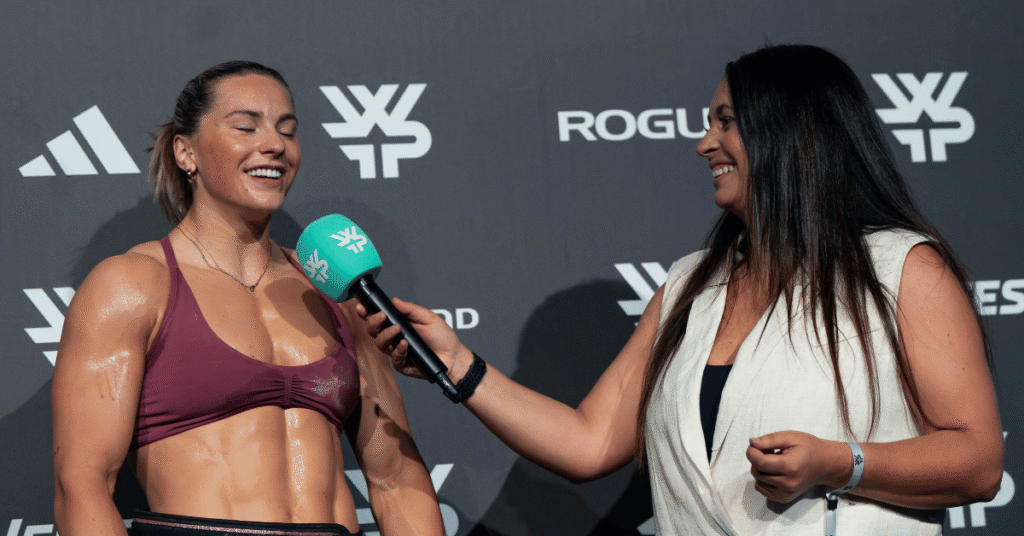
I caught a few minutes with Michelle between events. The conversation was about what this version of Pat needs on competition day and how that version competes. Pat is rewriting the terms of his own farewell, refusing to chase the athlete he used to be and instead giving the sport the athlete he actually is right now, which feels to me like its own kind of greatness.
The same instinct was riding the train into Drumsheds with us on Saturday morning. Gui Malheiros arrived in London with a four-month-old baby with a full head of black hair. I sat with him and broadcaster Tommy Marquez as they compared notes on sleep regression. Gui has had effectively zero sleep for four months while continuing to compete at the level that secured him sixth in the 2025 WFP season. A family travelling the world together, building a life and an income out of competitive fitness in the public eye with all the rough edges visible. He was doing both fatherhood and fitness on his terms.
For most of the time that I have known Aimee Cringle her biggest challenge was believing she belonged. Something shifted in London and you could see it before the deadlift event even started. She has had a secret deadlift in her for a while and whilst not many people knew the number her coaching team’s plan was conservative. They told her to stop at 410, She didn’t hear them, or didn’t want to. Going on to hit 435 and 445. “Let a girl have her deadlifts” she told the Buttery Bros. She walked off the floor on Sunday as the overall winner of WFP’s first 2026 Tour Stop, and perhaps more importantly as someone who finally agrees with what the rest of us have been seeing for years, she’s a Champion.
A weekend like that needs a stage that does it justice and Drumsheds, for all the last-minute upheaval that brought us there, delivered one. The atmosphere inside the building was cinematic from the lighting, the sound design to the production values built for the level of athlete competing on the floor. The venue switch was late and the bank holiday sunshine did the gate no favours, but anyone who chose the garden over Drumsheds genuinely missed a show. The phrase I kept hearing all weekend, from athletes and crew alike, was the one WFP itself returns to: People Matter More. It showed in how the staff moved, in how athletes were treated, in the small acts of care that make a competition feel like a community.
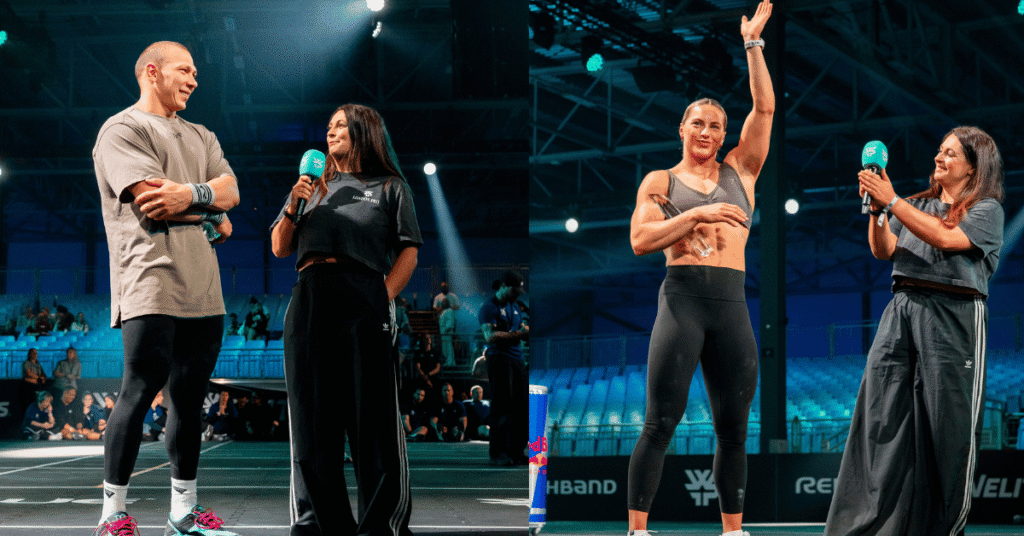
The Tour goes to Grand Park Pro next, on 28-30 August, and then the Finals in Copenhagen in December. Tickets for both are live. If you missed London, do not miss the next two.
There is a louder conversation happening around our sport right now than there used to be. More competitions, more opinions, more noise about which league or format or standard matters most. London answered very little of that and I think that is to its credit. What it offered instead were athletes writing their own stories in real time. A returning legend choosing her starting line, a reigning star letting the rest of us see a little more of who she actually is, a champion redefining what greatness looks like in the final chapter of his career, a father competing without pretending he is anything other than a sleep-deprived dad going to work and a young winner who has found where she belongs.
None of that fits neatly onto a score sheet, half of it doesn’t make the livestream and all of it is the reason to keep watching.
But to witness it, to feel it, you have to be in the room.
About the Author
Lauren is a sports presenter, reporter and voice over artist working internationally. You may have seen her conducting interviews on BT Sport’s European Rugby, ViaPlay’s URC coverage, hosting Twickenham Stadium or on location around the world interviewing cycling athletes on Red Bull TV.
The face of Hyrox, named in FORBE’S Top 50 most innovative companies in the World, she is immersed in the world of Fitness also covering The CrossFit Games, Strongman and Body Building.
She is a regular sight at Wembley & Twickenham Stadium hosting international match days & more recently the Olympic Games.
In her spare time she co-owns a CrossFit gym and enjoys training and coaching.