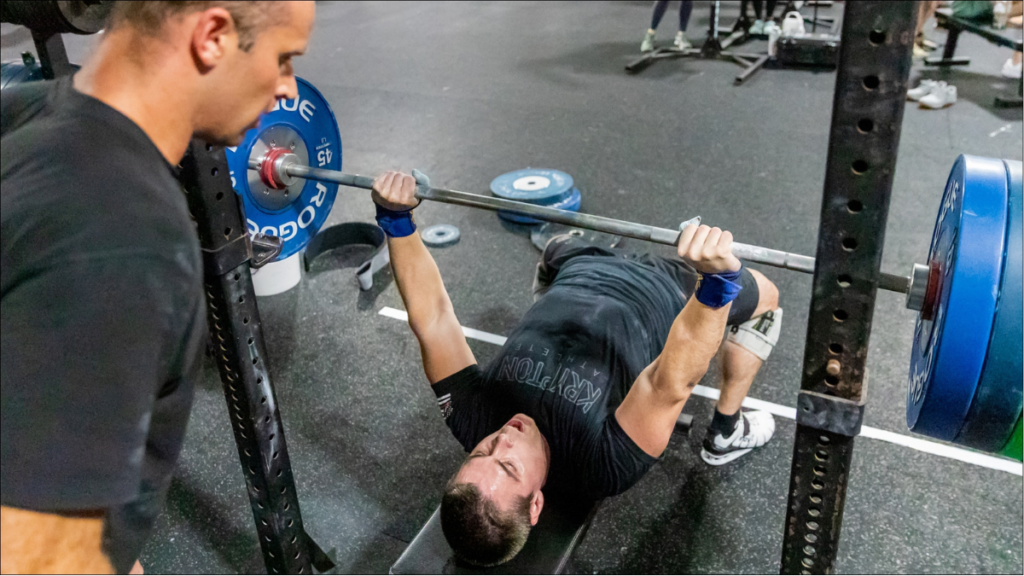
Walk into almost any gym and you will hear some version of the same advice: lift heavy if you want to build muscle. It sounds simple, logical, and even motivating. Heavy weights feel intense. They look impressive. They create the sense that you are doing something serious. But the science of muscle hypertrophy tells a more nuanced story.
Lifting heavy can absolutely build muscle. In fact, it is one of several effective strategies. The problem is that it is not always the best approach, and in some cases it can even limit your progress if it becomes your only focus.


Understanding What Drives Muscle Growth
Before getting into the reasons, it is important to understand the basic mechanisms of hypertrophy. Muscle growth is primarily driven by three factors:
- Mechanical tension
- Metabolic stress
- Muscle damage
Mechanical tension refers to the force placed on muscle fibers during contraction. Metabolic stress is the buildup of metabolites like lactate during higher repetition work. Muscle damage involves microtrauma to muscle tissue that triggers repair and growth.
All three contribute, but mechanical tension is considered the most important driver. The key point is that mechanical tension is not exclusive to heavy weights. It can also be achieved with lighter loads when sets are taken close to failure. This is where the common misunderstanding begins.
Reason 1: Muscle Growth Is Not Dependent on Heavy Loads Alone
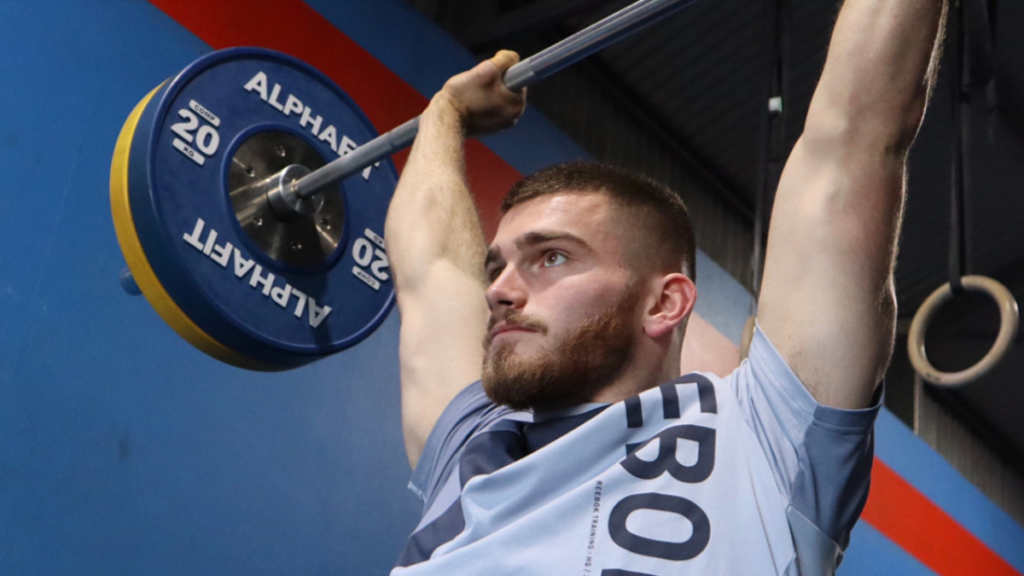
Light and Moderate Loads Can Build Just as Much Muscle
A large body of research shows that muscle hypertrophy can occur across a wide range of loads, as long as the sets are performed close to muscular failure.
Studies comparing low load training around 30 percent of one repetition maximum with high load training above 70 percent have consistently found similar increases in muscle size when total effort is matched.
This means that lifting heavy is not required to stimulate hypertrophy. What matters more is recruiting and fatiguing a high number of muscle fibers.
When you lift a lighter weight for more repetitions and push close to failure, your body gradually recruits more motor units, including the larger fast-twitch fibers that have the greatest growth potential.
Motor Unit Recruitment and Effort
Motor unit recruitment follows a principle called the size principle. Smaller, low-threshold motor units are recruited first, and larger, high-threshold motor units are recruited as force demands increase. Heavy weights recruit these high-threshold units immediately. Lighter weights recruit them progressively as fatigue builds.
The end result can be very similar if the set is taken close enough to failure. This is why a set of 8 repetitions with a heavy load and a set of 20 repetitions with a lighter load can both stimulate hypertrophy, provided both sets are challenging.
Practical Implications
Relying only on heavy weights can unnecessarily limit your training options. Including moderate and lighter loads can:
- Increase total training volume
- Reduce joint stress
- Improve exercise variation
- Allow better technique control
A balanced approach that includes multiple rep ranges is often more effective than a heavy-only strategy.
Reason 2: Heavy Lifting Increases Fatigue and Limits Volume

Volume Is a Key Driver of Hypertrophy
Training volume, usually measured as the number of hard sets per muscle group, is one of the most consistent predictors of muscle growth. Higher volumes are generally associated with greater hypertrophy, up to a point where recovery becomes limiting.
Heavy lifting tends to produce more systemic fatigue and neural stress, which can reduce your ability to accumulate sufficient volume over time.
Central and Peripheral Fatigue
Heavy loads place significant demands on both the nervous system and the muscles. Central fatigue refers to reduced neural drive from the brain and spinal cord. Peripheral fatigue occurs within the muscle itself.
High intensity lifting increases both types of fatigue, especially when performed frequently or with compound exercises like squats and deadlifts. This can lead to:
- Reduced performance in subsequent sets
- Longer recovery times between sessions
- Increased risk of overtraining if not managed properly
Volume Trade-Off
Because heavy lifting is so taxing, it often limits how many quality sets you can perform. For example, performing five sets of heavy squats may leave you too fatigued to effectively train other muscle groups in the same session.
In contrast, using moderate loads allows you to perform more total sets with less fatigue per set, leading to greater overall stimulus.
Research on Volume and Load
Research comparing high load and moderate load training often shows that when volume is equated, hypertrophy outcomes are similar. However, in real-world training, volume is rarely equal. Moderate loads make it easier to accumulate higher volumes, which may give them an advantage for muscle growth in practice.
Practical Implications
If your goal is hypertrophy, focusing only on heavy lifting may limit your ability to:
- Perform enough weekly sets per muscle group
- Maintain performance across multiple exercises
- Recover adequately between sessions
Incorporating moderate loads can help you train harder overall without excessive fatigue.
Reason 3: Heavy Lifting Increases Injury Risk and Joint Stress
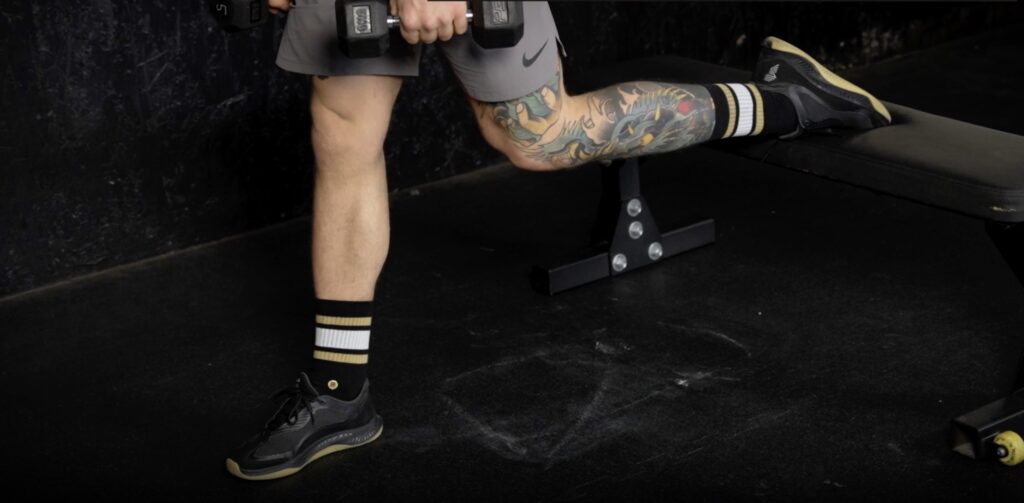
Joint Stress and Connective Tissue Load
Heavy lifting places greater stress on joints, tendons, and ligaments. While these tissues adapt over time, they do so more slowly than muscle.
Repeated exposure to very high loads can increase the risk of overuse injuries, especially if technique is not perfect or recovery is insufficient. Common issues include:
- Tendinopathy
- Joint pain in knees, shoulders, and elbows
- Lower back strain
These problems can disrupt training consistency, which is one of the most important factors for long-term muscle growth.
Injury Risk and Load Intensity
Higher loads are associated with a greater risk of acute injury, particularly when lifting near maximal weights. Even small technical errors can have larger consequences when the load is heavy. Moderate and lighter loads provide a larger margin for error, allowing you to maintain good form and reduce injury risk.
Longevity and Training Sustainability
Building muscle is a long-term process. Consistency over months and years matters more than any single workout. If heavy lifting leads to frequent injuries or chronic pain, it becomes counterproductive. A more balanced approach that includes a variety of loads can help you:
- Train consistently without interruptions
- Manage joint health
- Maintain motivation and enjoyment
Practical Implications
Heavy lifting should be used strategically rather than exclusively. It is particularly useful for:
- Building strength
- Improving neural efficiency
- Training specific compound movements
However, relying on it as the primary method for hypertrophy can increase the likelihood of setbacks.
Additional Factors That Matter More Than Load Alone
Proximity to Failure
One of the most important variables for muscle growth is how close you train to failure. Stopping too far from failure reduces motor unit recruitment and limits hypertrophy. Both heavy and light loads can be effective if sets are performed within a few repetitions of failure.
Time Under Tension
Lighter and moderate loads often increase time under tension, which can contribute to metabolic stress and hypertrophy. This does not mean slow reps are always better, but controlled repetitions with sufficient duration can enhance the stimulus.
Exercise Selection
Different exercises respond better to different loading strategies. For example:
- Isolation exercises often work well with moderate to high repetitions
- Compound lifts can be performed across a range of loads
Using only heavy weights may not be ideal for all exercises.
Individual Differences
People respond differently to various training approaches based on:
- Training experience
- Injury history
- Muscle fiber composition
- Recovery capacity
Some individuals may benefit more from heavier loads, while others progress better with moderate or mixed approaches.
How to Apply This in Your Training
Use a Range of Rep Schemes
Instead of focusing only on heavy sets of 3 to 6 repetitions, include a variety of rep ranges:
- Low reps for strength and neural adaptation
- Moderate reps for hypertrophy
- Higher reps for metabolic stress and joint-friendly training
Prioritize Volume and Consistency
Aim for an appropriate number of weekly sets per muscle group, typically in the range of 10 to 20 sets depending on experience level. Ensure that these sets are performed with sufficient effort and good technique.
Manage Fatigue
Balance heavy and moderate sessions to avoid excessive fatigue. For example:
- Use heavy loads for primary compound lifts
- Use moderate loads for accessory work
- Use higher reps for isolation exercises
Focus on Progressive Overload
Progressive overload remains essential. This can be achieved by:
- Increasing weight
- Increasing repetitions
- Increasing number of sets
- Improving technique and control
Load is just one of several ways to apply overload.
Final Thoughts
Lifting heavy is an effective tool for building muscle, but it is not the only one and it is not always the best. Muscle growth depends on mechanical tension, effort, volume, and consistency. These can be achieved with a wide range of loads.
Overemphasizing heavy lifting can limit your training volume, increase fatigue, and raise the risk of injury. A smarter approach is to use a variety of loads, train close to failure, and focus on long-term consistency. This is how you build muscle efficiently while staying healthy and progressing over time.
Key Takeaways
| Concept | What It Means | Practical Application |
|---|---|---|
| Load is not everything | Muscle can grow with light, moderate, and heavy weights | Use a variety of rep ranges |
| Effort matters most | Training close to failure drives hypertrophy | Push sets within a few reps of failure |
| Volume drives growth | More quality sets lead to better results | Aim for sufficient weekly sets per muscle |
| Heavy lifting causes more fatigue | High loads limit total training capacity | Balance heavy and moderate sessions |
| Injury risk increases with heavy loads | Joint and connective tissue stress is higher | Use moderate loads to reduce risk |
| Consistency is key | Long-term training matters more than intensity alone | Train sustainably without frequent setbacks |
References
- Burd, N.A., Andrews, R.J., West, D.W., Little, J.P., Cochran, A.J., Hector, A.J., Cashaback, J.G. and Gibala, M.J. (2012). Muscle time under tension during resistance exercise stimulates differential muscle protein sub-fractional synthetic responses in men. Journal of Physiology, 590(2), pp.351-362.
- Fry, A.C. (2004). The role of resistance exercise intensity on muscle fibre adaptations. Sports Medicine, 34(10), pp.663-679.
- Grgic, J., Schoenfeld, B.J., Orazem, J. and Sabol, F. (2018). Effects of resistance training performed to repetition failure or non-failure on muscular strength and hypertrophy. Journal of Sport and Health Science, 10(3), pp.1-10.
- Morton, R.W., Oikawa, S.Y., Wavell, C.G., Mazara, N., McGlory, C., Quadrilatero, J., Baechler, B.L., Baker, S.K. and Phillips, S.M. (2016). Neither load nor systemic hormones determine resistance training mediated hypertrophy or strength gains in resistance trained young men. Journal of Applied Physiology, 121(1), pp.129-138.
- Schoenfeld, B.J. (2010). The mechanisms of muscle hypertrophy and their application to resistance training. Journal of Strength and Conditioning Research, 24(10), pp.2857-2872.
- Schoenfeld, B.J., Ogborn, D. and Krieger, J.W. (2017). Dose-response relationship between weekly resistance training volume and increases in muscle mass. Journal of Sports Sciences, 35(11), pp.1073-1082.