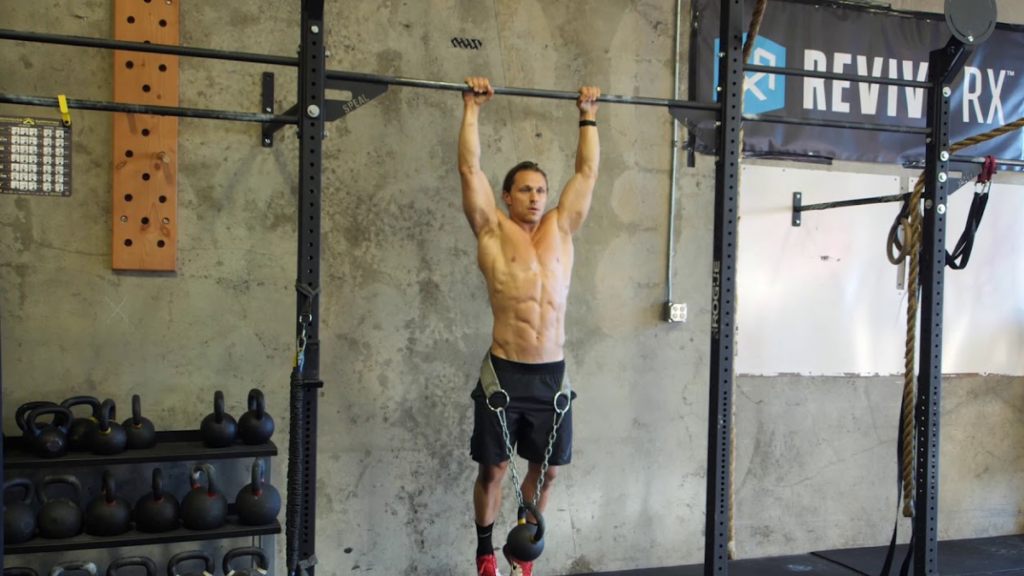


The ring muscle up is one of the most demanding upper body movements in functional fitness. It combines pulling strength, pushing strength, coordination, and precise timing. Many athletes struggle with it not because of poor technique alone, but because they lack the specific strength required in key positions of the movement.
If you want to improve your ring muscle ups, you need to focus on targeted strength work. General fitness is not enough. The body must be strong in very specific joint angles and movement patterns. This is where the right strength exercises make a massive difference.


Why Strength Matters for Ring Muscle Ups
Before jumping into the exercises, it is important to understand why strength is the limiting factor for most athletes.
A ring muscle up consists of three main phases:
- The pull phase
- The transition phase
- The dip phase
Each phase requires high levels of force production. Research shows that maximal strength is strongly correlated with performance in bodyweight pulling and pushing movements. Stronger athletes can produce higher relative force, which directly improves movement efficiency and reduces fatigue.
The transition phase is often the weakest link. This is because it requires strength at deep shoulder flexion combined with internal rotation and scapular control. Studies on joint specific strength demonstrate that force production varies depending on joint angle. This means that being strong in a pull up does not automatically make you strong in the transition.
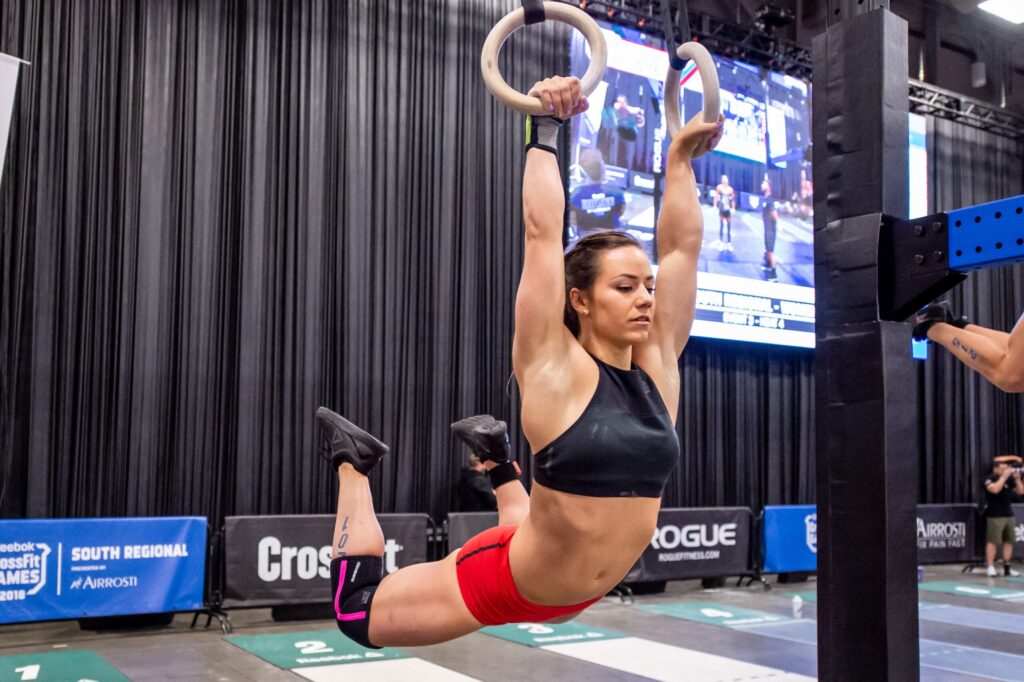
Another key factor is scapular stability. The shoulder joint relies heavily on surrounding musculature for stability. Weak scapular control increases energy leaks and reduces force transfer. Strength exercises that improve scapular positioning can significantly enhance upper body performance.
With that in mind, let’s break down the most effective Strength Exercises for Ring Muscle Ups.
Exercise 1: Strict Chest to Ring Pull Ups
Why This Exercise Works
Strict chest to ring pull ups are one of the most effective Strength Exercises for Ring Muscle Ups because they build vertical pulling strength through a full range of motion.
Unlike standard pull ups, this variation requires you to pull the rings to your chest while maintaining control. This mimics the high pull required in the muscle up.
Scientific evidence shows that training through a greater range of motion leads to increased muscle activation and strength gains. Pulling the rings to the chest recruits more of the latissimus dorsi, biceps, and scapular stabilizers compared to partial range movements.
Electromyography studies confirm that higher pulling positions increase activation in the upper back muscles. This is critical for the transition phase of the muscle up.
How to Perform
- Hang from rings with a false grip if possible
- Keep your body tight and legs slightly in front
- Initiate the pull by depressing and retracting the scapula
- Pull explosively until the rings touch your chest
- Lower under control to full extension
Common Mistakes
- Using momentum or kipping
- Failing to reach chest height
- Losing scapular control at the bottom
Programming Tips
To build strength effectively:
- Perform 3 to 5 sets of 3 to 6 reps
- Rest at least 2 minutes between sets
- Focus on strict form rather than volume
Progressions include adding weight with a vest or slowing down the eccentric phase. Both methods increase time under tension, which is a key driver of strength adaptations.
Scientific Insight
Strength gains are influenced by mechanical tension and motor unit recruitment. Heavy, controlled pulling movements increase recruitment of high threshold motor units, which are essential for explosive movements like muscle ups.
Exercise 2: Deep Ring Dips
Why This Exercise Works
The second essential movement in Strength Exercises for Ring Muscle Ups is the deep ring dip.
Many athletes underestimate the importance of the dip phase. However, the ability to press out of the bottom position is critical. If you cannot stabilize and push from a deep dip, the muscle up will fail even if the pull and transition are strong.
Ring dips are more demanding than bar dips because they require stabilization in multiple planes. This increases activation of the chest, triceps, and shoulder stabilizers.

Research shows that unstable surface training increases muscle activation compared to stable conditions. The rings create instability that forces the body to recruit more stabilizing muscles.
Going deep into the dip increases stretch on the pectoral muscles. This stretch can enhance force production through the stretch shortening cycle, which improves explosive pushing strength.
How to Perform
- Support yourself on the rings with arms locked out
- Turn the rings slightly outward for stability
- Lower slowly until shoulders are below the elbows
- Maintain control and avoid collapsing forward
- Press back up to full lockout
Common Mistakes
- Cutting depth short
- Letting the rings drift too far apart
- Losing shoulder stability
Programming Tips
For optimal strength development:
- Perform 3 to 5 sets of 4 to 8 reps
- Add weight when you can perform 8 clean reps
- Use slow eccentrics to increase difficulty
Scientific Insight
Strength training at longer muscle lengths can increase hypertrophy and strength more effectively than partial movements. Deep dips place the muscles under tension at extended lengths, which contributes to greater strength gains.
Additionally, stabilization demands improve neuromuscular coordination. This is crucial for controlling the rings during a muscle up.
Exercise 3: Transition Drills with Low Rings
Why This Exercise Works
The transition is the most technical and strength dependent part of the muscle up. It is also the phase where most athletes fail.
Low ring transition drills are one of the most specific Strength Exercises for Ring Muscle Ups because they directly train the movement pattern under controlled conditions.
Motor learning research shows that practicing specific movement patterns improves neural efficiency. The closer the exercise is to the target movement, the better the transfer.
These drills allow you to build strength in the exact joint angles used during the transition. This is critical because strength is highly specific to position.
How to Perform
- Set the rings at chest height
- Start with feet on the ground
- Use a false grip
- Pull the rings toward your chest
- Lean forward and rotate your elbows over the rings
- Press into a support position
Common Mistakes
- Rushing the transition
- Losing false grip
- Using too much leg assistance
Programming Tips
To maximize results:
- Perform 4 to 6 sets of 3 to 5 controlled reps
- Focus on slow and deliberate movement
- Gradually reduce leg assistance over time
Scientific Insight
Skill acquisition and strength development are interconnected. Practicing transitions under controlled conditions improves both neural coordination and muscular strength.
Studies on motor control highlight the importance of repetition in building efficient movement patterns. Over time, this reduces energy expenditure and improves performance.
Supporting Strength Factors
Grip Strength and False Grip Development
The false grip is essential for efficient muscle ups. It reduces the distance needed during the transition.
Grip strength research shows that stronger forearms improve performance in pulling exercises. Training the false grip specifically enhances endurance and control on the rings.
Include exercises like:
- False grip hangs
- Ring rows with false grip
Core Stability
A strong core helps maintain body position during the muscle up. Poor core stability leads to energy leaks and inefficient movement.
Studies on core training demonstrate its role in force transfer between upper and lower body. A stable core allows more effective force production during pulling and pushing phases.

Scapular Strength
The scapula plays a critical role in shoulder function. Weak scapular muscles reduce stability and increase injury risk.
Exercises like scapular pull ups and ring support holds improve shoulder mechanics. This leads to better force production and control.
How to Combine These Strength Exercises for Ring Muscle Ups
To get the best results, you need to structure your training properly.
Here is a simple weekly template:
Day 1:
- Chest to ring pull ups
- Transition drills
- Core work
Day 2:
- Deep ring dips
- False grip training
- Scapular exercises
Day 3:
- Mixed session with all three exercises at lower intensity
Progressive overload is key. Gradually increase difficulty by adding weight, reducing assistance, or increasing time under tension.
Recovery and Adaptation
Strength gains do not happen during training. They occur during recovery. Research shows that adequate rest and nutrition are essential for muscle growth and neural adaptation. Key recovery strategies include:
- Getting enough sleep
- Consuming sufficient protein
- Managing training volume
Overtraining can reduce performance and increase injury risk. Balance intensity with recovery to maximize progress.
Final Thoughts on Strength Exercises for Ring Muscle Ups
Mastering the ring muscle up requires more than just practice. It requires targeted strength development.
The three exercises covered in this article are the most effective Strength Exercises for Ring Muscle Ups because they address the key limitations:
- Pulling strength
- Pushing strength
- Transition strength
By consistently training these movements, you will build the strength needed to perform muscle ups with control and efficiency.
References
- Andersen, V., Fimland, M.S., Brennset, O. et al. (2014). Muscle activation and strength in different pull up variations. Journal of Strength and Conditioning Research.
- Behm, D.G. and Colado, J.C. (2012). The effectiveness of resistance training using unstable surfaces. Sports Medicine.
- Gentil, P., Soares, S. and Bottaro, M. (2015). Single vs multi joint resistance exercises. Sports Medicine.
- Kubo, K., Kanehisa, H. and Fukunaga, T. (2001). Effects of different training programs on muscle and tendon properties. European Journal of Applied Physiology.
- McGill, S.M. (2010). Core training evidence and applications. Journal of Strength and Conditioning Research.
- Schoenfeld, B.J. (2010). The mechanisms of muscle hypertrophy and their application to resistance training. Journal of Strength and Conditioning Research.
- Schoenfeld, B.J. and Grgic, J. (2020). Effects of range of motion on muscle development. Sports Medicine.