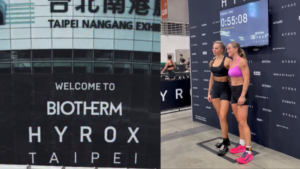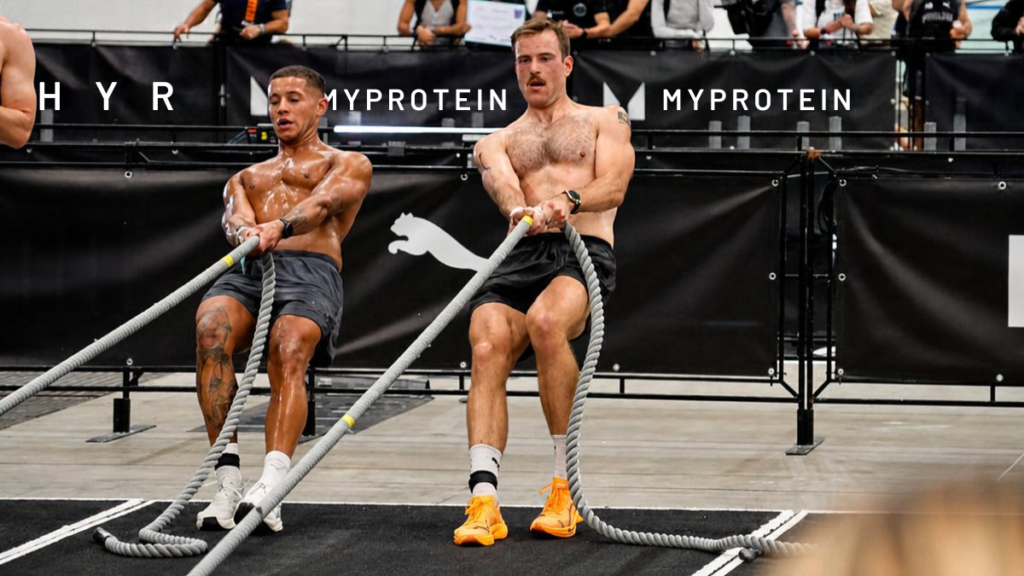


HYROX is not just another fitness race. It blends strength, power, muscular endurance, aerobic capacity, and mental resilience into a single, punishing format: 8 x 1 km runs interspersed with functional stations like sled pushes, sled pulls, burpee broad jumps, rowing, farmer’s carries, sandbag lunges, and wall balls.
To perform at a high level, athletes need more than solid training. They need strategic fueling — especially protein intake — to support muscle repair, immune function, recovery between sessions, and body composition goals.


Let’s start with the foundation.
Why Protein Is Critical for HYROX Athletes
HYROX combines repeated endurance efforts with high-force muscular contractions. This creates both metabolic stress and mechanical muscle damage — two primary drivers of muscle protein breakdown.
Protein and Muscle Repair
Resistance and high-intensity training increase muscle protein synthesis (MPS), the process by which muscle tissue repairs and adapts (Phillips et al., 1997). However, without adequate protein intake, muscle protein breakdown can exceed synthesis, leading to impaired recovery.

Meta-analyses show that protein supplementation enhances gains in strength and fat-free mass during resistance training (Morton et al., 2018). Since HYROX training includes strength work (sled pushes, lunges, wall balls), these findings are directly relevant.
How Much Protein Do HYROX Athletes Need?
The general Recommended Dietary Allowance (RDA) of 0.8 g/kg/day is not sufficient for athletes.
The International Society of Sports Nutrition (ISSN) recommends 1.4–2.0 g/kg/day for physically active individuals (Jäger et al., 2017). For athletes in intense training blocks, some research suggests benefits up to 2.2 g/kg/day, particularly during caloric restriction or high-volume training (Helms et al., 2014).
HYROX athletes typically train 4–6 days per week with mixed-modal sessions. A 80 kg athlete may therefore need between 112 and 176 grams of protein daily.
Protein Timing Matters
Distributing protein intake evenly throughout the day appears superior to consuming most protein in one meal. Research shows that ~20–40 g of high-quality protein per meal maximally stimulates MPS in most adults (Moore et al., 2009).
Spacing protein every 3–4 hours optimizes muscle repair (Areta et al., 2013). This is where high-protein snacks become essential — they help bridge gaps between meals.
The Leucine Threshold
Leucine, an essential amino acid, acts as a trigger for MPS through activation of the mTOR pathway (Norton & Layman, 2006). Approximately 2–3 g of leucine per feeding appears necessary to maximize MPS in young adults (Moore et al., 2009).
Animal proteins such as whey, dairy, eggs, and meat are naturally high in leucine. Plant proteins can work too but may require higher total doses due to lower leucine content and digestibility (Phillips, 2017).
With this foundation in place, here are three evidence-based high-protein snack options for HYROX athletes.
Snack 1: Greek Yogurt + Whey + Berries
This is one of the most efficient recovery snacks available.
Why It Works
Greek yogurt is rich in casein protein, a slow-digesting dairy protein that provides sustained amino acid release (Boirie et al., 1997). Whey protein, in contrast, digests rapidly and causes a sharp increase in amino acids in the bloodstream (Tang et al., 2009).
Combining casein and whey provides both rapid and sustained amino acid availability — ideal after training.

Adding berries provides carbohydrates and polyphenols. Carbohydrates help replenish glycogen stores, which is important after high-intensity interval sessions (Ivy, 2004). Polyphenols may help reduce exercise-induced oxidative stress (McAnulty et al., 2013).
The Science Behind Whey Protein
Whey protein has repeatedly been shown to stimulate MPS more effectively than soy or casein when consumed in isolation (Tang et al., 2009). This is largely due to its higher leucine content and faster digestion rate.
A dose of 20–25 g whey protein maximally stimulates MPS in young adults after resistance training (Moore et al., 2009).
Practical Serving Example
• 1 cup (225 g) nonfat Greek yogurt
• 1 scoop (20–25 g) whey protein
• ½ cup mixed berries
Approximate protein content: 35–45 g
This exceeds the leucine threshold and provides both fast and slow proteins.
When to Eat It
Ideal post-workout within 1–2 hours. Also works as a mid-afternoon recovery snack between double training sessions.
Snack 2: Cottage Cheese + Pineapple + Almonds
Cottage cheese is often overlooked, but it is one of the most effective slow-digesting protein sources available.
Casein Before Bed
Cottage cheese is rich in casein. Consuming casein before sleep has been shown to increase overnight MPS (Res et al., 2012).
In that study, 40 g of casein consumed before bed significantly improved overnight muscle protein synthesis in trained individuals.
HYROX athletes frequently train early in the morning or late in the evening. Overnight recovery becomes crucial. A pre-sleep protein feeding supports this adaptation window.
Protein and Satiety
High-protein foods increase satiety more than carbohydrate or fat alone (Paddon-Jones et al., 2008). For athletes trying to maintain lean body mass while controlling body fat, protein-rich snacks can support appetite regulation.
Why Add Pineapple?
Pineapple provides carbohydrates to restore glycogen and contains bromelain, an enzyme proposed to support digestion and possibly reduce inflammation. While evidence for bromelain in athletic recovery is mixed, carbohydrate intake post-training is well-established for glycogen replenishment (Ivy, 2004).
Why Add Almonds?
Almonds provide healthy fats and magnesium. Magnesium plays a role in muscle contraction and energy metabolism (Volpe, 2015). Athletes may have increased magnesium requirements due to sweat losses.
Practical Serving Example
• 1 cup low-fat cottage cheese
• ½ cup pineapple
• 15–20 almonds
Approximate protein content: 30–35 g
When to Eat It
Best consumed in the evening or before bed to support overnight recovery.
Snack 3: High-Protein Wrap (Turkey or Tofu)
HYROX training often includes long sessions. Sometimes athletes need something more substantial than dairy-based snacks.

A high-protein wrap offers portable, whole-food protein plus carbohydrates.
Lean Turkey Option
Turkey breast is rich in complete protein and leucine. Lean poultry has been shown to effectively stimulate MPS similarly to other animal proteins when consumed in adequate amounts (Phillips, 2017).
A serving of 90–120 g turkey provides approximately 20–30 g protein.
Plant-Based Tofu Option
Soy protein is the highest-quality plant protein in terms of digestibility and amino acid score (Phillips, 2017). While whey may stimulate MPS more robustly acutely, soy still supports muscle hypertrophy when total protein intake is adequate (Messina et al., 2018).
For plant-based HYROX athletes, firm tofu provides ~20 g protein per 200 g serving.
Add Complex Carbohydrates
Using a whole-grain wrap provides carbohydrates and fiber. Carbohydrates consumed post-training accelerate glycogen resynthesis, especially when paired with protein (Ivy, 2004).
Combining protein and carbohydrate also enhances recovery of strength in subsequent sessions (Berardi et al., 2006).
Practical Serving Example
• 1 whole-grain wrap
• 100 g sliced turkey breast or 200 g firm tofu
• Spinach, tomato, mustard or hummus
Approximate protein content: 25–35 g
When to Eat It
Ideal as a post-training meal if a full meal is not available. Also effective 2–3 hours before competition as part of pre-race fueling, depending on tolerance.
Why Snacks Matter in HYROX Preparation
Training Frequency
HYROX athletes often train twice per day during peak phases. Inadequate protein distribution can blunt adaptation.
Research shows that evenly distributing protein intake (e.g., 4 servings of 20 g) results in greater 24-hour MPS compared to skewed patterns (Areta et al., 2013).
Snacks make even distribution possible.
Immune Function
Intense training can suppress immune function. Adequate protein supports immune cell production and function (Calder, 2013). For athletes during competition season, staying healthy is performance-critical.
Body Composition
Higher protein diets improve fat loss while preserving lean mass during energy deficits (Helms et al., 2014). This is particularly relevant for athletes aiming to improve power-to-weight ratio.
How to Personalize Protein Intake
• Aim for 0.3–0.5 g/kg protein per feeding
• Target 3–5 protein feedings daily
• Ensure 2–3 g leucine per serving
• Increase intake during heavy training blocks
A 75 kg HYROX athlete might consume 25–35 g protein per snack to reach total daily targets.
Common Mistakes HYROX Athletes Make
1. Skipping Post-Workout Protein
Muscle sensitivity to amino acids is elevated after training (Burd et al., 2011). Delaying intake unnecessarily may slow recovery.
2. Relying on Low-Protein Snack Foods
Granola bars and fruit-only snacks often contain minimal protein. They fail to stimulate MPS effectively.
3. Underestimating Total Needs
Many hybrid athletes consume endurance-level protein intakes (~1.2 g/kg), which may be insufficient for combined strength training demands.
Final Thoughts
HYROX demands strength, endurance, and repeated high-intensity output. Training stress is significant. Recovery cannot be an afterthought.
High-protein snacks are not optional extras. They are strategic tools that:
• Maximize muscle repair
• Support glycogen replenishment
• Enhance body composition
• Improve immune resilience
• Maintain training quality
Greek yogurt with whey and berries. Cottage cheese with pineapple and almonds. A high-protein wrap with turkey or tofu.
Simple. Evidence-based. Practical.
Fueling properly is not complicated — but it must be deliberate.
Key Takeaways
| Strategy | Why It Matters for HYROX | Practical Target |
|---|---|---|
| Daily Protein Intake | Supports strength, recovery, immune health | 1.4–2.2 g/kg/day |
| Protein Per Feeding | Maximizes muscle protein synthesis | 20–40 g |
| Leucine Threshold | Triggers mTOR and muscle repair | 2–3 g leucine |
| Post-Workout Snack | Enhances muscle repair and glycogen resynthesis | Eat within 1–2 hours |
| Pre-Sleep Protein | Improves overnight recovery | 30–40 g casein |
| Even Distribution | Optimizes 24-hour muscle protein synthesis | Every 3–4 hours |
References
• Areta, J.L., Burke, L.M., Ross, M.L.R., Camera, D.M., West, D.W.D., Broad, E.M., Jeacocke, N.A., Moore, D.R., Stellingwerff, T. and Phillips, S.M. (2013) ‘Timing and distribution of protein ingestion during prolonged recovery from resistance exercise alters myofibrillar protein synthesis’, The Journal of Physiology, 591(9), pp. 2319–2331.
• Berardi, J.M., Price, T.B., Noreen, E.E. and Lemon, P.W.R. (2006) ‘Postexercise muscle glycogen recovery enhanced with a carbohydrate-protein supplement’, Medicine & Science in Sports & Exercise, 38(6), pp. 1106–1113.
• Boirie, Y., Dangin, M., Gachon, P., Vasson, M.P., Maubois, J.L. and Beaufrère, B. (1997) ‘Slow and fast dietary proteins differently modulate postprandial protein accretion’, Proceedings of the National Academy of Sciences, 94(26), pp. 14930–14935.
• Burd, N.A., West, D.W.D., Moore, D.R., Atherton, P.J., Staples, A.W., Prior, T., Tang, J.E., Rennie, M.J., Baker, S.K. and Phillips, S.M. (2011) ‘Enhanced amino acid sensitivity of myofibrillar protein synthesis persists for up to 24 h after resistance exercise’, The Journal of Nutrition, 141(4), pp. 568–573.