

When it comes to building a more attractive chest, most lifters tend to focus on traditional exercises like the bench press.
While these movements are highly effective, incorporating lesser-known, unusual barbell exercises into your routine can help stimulate new growth, address muscular imbalances, and develop a more aesthetically pleasing chest. In this article, we’ll explore five unique barbell exercises that can help you achieve a more defined and attractive chest.


Each exercise is backed by science, ensuring that you’re getting the most out of your training.
The Importance of Exercise Variation for Chest Development
Variety in your chest training is essential for several reasons. Firstly, different angles and movement patterns target different regions of the chest muscle, including the upper, middle, and lower portions. Secondly, varying exercises can prevent plateaus by continuously challenging your muscles in new ways. Studies show that exercise variety leads to greater muscle activation and hypertrophy (Schoenfeld, 2010). Incorporating unusual movements not only keeps your workouts fresh but also engages muscles in ways traditional exercises may miss.
1. Barbell Squeeze Press
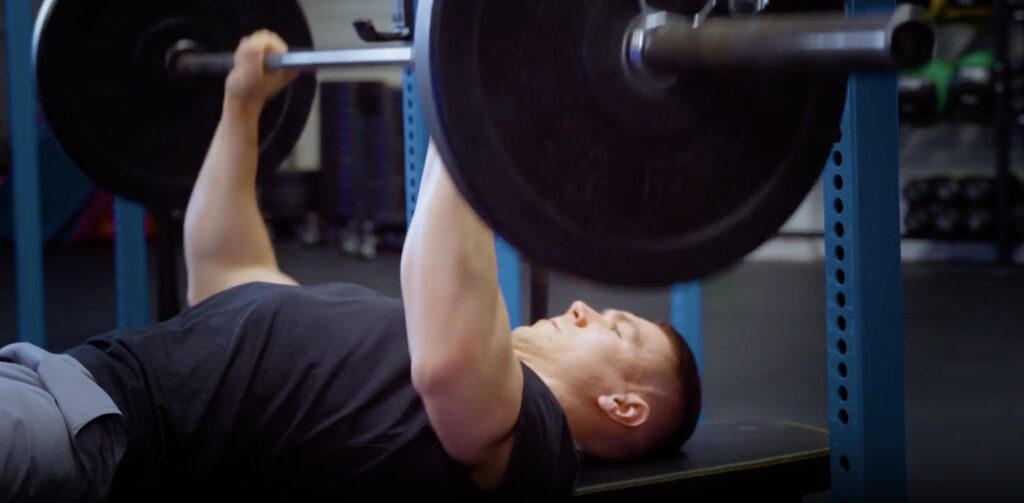
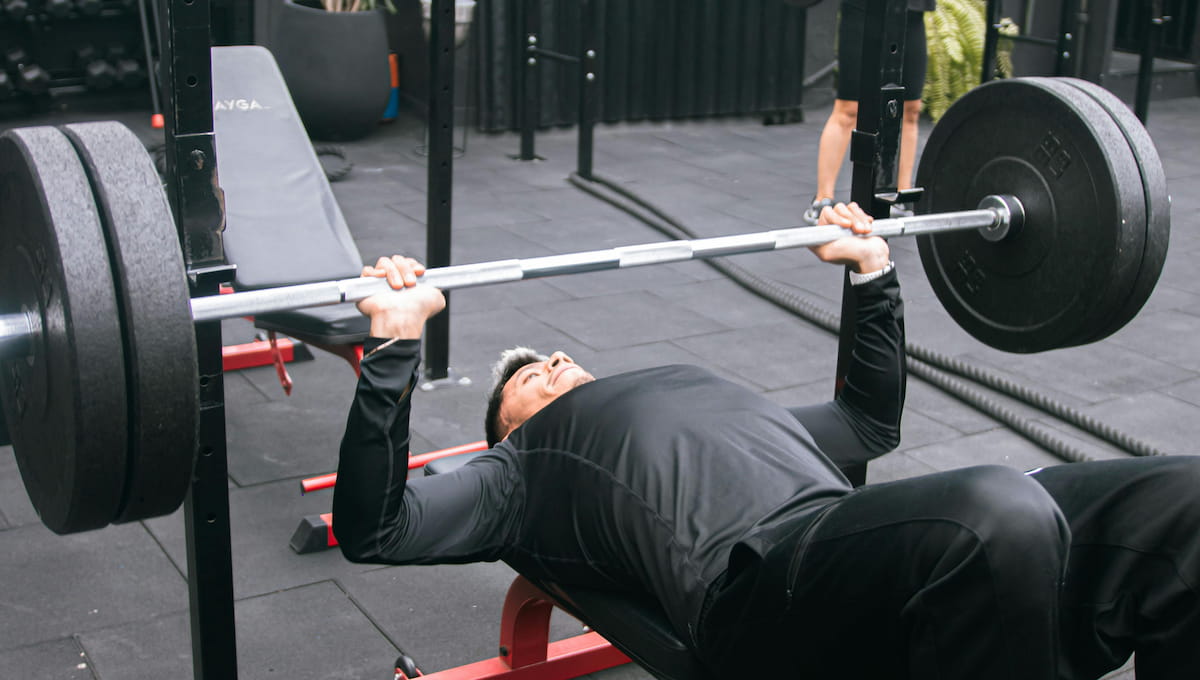
The barbell squeeze press is an excellent alternative to the traditional bench press, offering a more focused contraction of the chest muscles. Unlike the bench press, where you push the barbell upwards with your hands at shoulder-width, the barbell squeeze press requires you to grip the barbell as narrowly as possible while actively squeezing it together as you press.
How It Works: The squeeze press increases chest activation by engaging more muscle fibres in the pectorals. The squeezing motion recruits the inner chest, which is often neglected in standard pressing movements. Research has shown that increasing muscle tension through techniques like this can lead to greater muscle hypertrophy (Folland & Williams, 2007).
Execution:
- Lie on a bench with the barbell positioned at chest height.
- Grip the barbell with your hands almost touching.
- Squeeze the bar together as if you’re trying to press your hands inward.
- Lower the barbell slowly to your chest, maintaining the squeezing motion.
- Push the barbell back to the starting position while continuing to squeeze.
Benefits: This exercise provides a high level of time under tension, which is crucial for muscle growth. It also helps develop the inner portion of the chest, enhancing the overall appearance of your pectorals.
2. Reverse Grip Barbell Bench Press
The reverse grip barbell bench press is another unconventional movement that shifts the emphasis to the upper chest and front deltoids. Research has shown that reversing your grip on the barbell increases activation in the clavicular head of the pectoralis major, which is responsible for the upper portion of your chest (Barnett et al., 1995).
How It Works: By using a reverse grip, you change the line of pull, placing more tension on the upper chest. This variation is ideal for lifters who struggle to build size and definition in the upper pectorals.
Execution:
- Lie on a flat bench and grip the barbell with your palms facing towards you (supinated grip).
- Lower the barbell slowly to your chest, keeping your elbows close to your torso.
- Press the barbell back up to the starting position in a controlled manner.
Benefits: This exercise allows for a more comprehensive development of the chest, particularly the often-underdeveloped upper chest. It also engages the triceps and shoulders, making it a great compound movement for upper body strength.
3. Barbell Pullover
While barbell pullovers are traditionally considered a back exercise, they can also target the chest, particularly the lower portion and serratus anterior, which helps create the illusion of a more defined chest. Research has found that the barbell pullover activates both the chest and back muscles simultaneously, making it a highly effective compound movement (Wright et al., 2008).
How It Works: This exercise stretches the chest muscles while activating the latissimus dorsi. The pullover works through a greater range of motion than most chest exercises, leading to improved flexibility and muscle activation.
Execution:
- Lie on a flat bench, holding a barbell with a shoulder-width grip.
- With your arms extended, slowly lower the barbell behind your head in an arc.
- Keep your arms slightly bent throughout the movement.
- Once you feel a deep stretch in your chest, reverse the motion and bring the barbell back over your head to the starting position.
Benefits: The barbell pullover is a great exercise for targeting the lower chest while also stretching the entire upper body. It helps to build both size and flexibility, contributing to a more balanced and aesthetically pleasing chest.
4. Guillotine Press
The guillotine press is a lesser-known variation of the bench press that emphasises the upper and middle portions of the chest. This exercise was popularised by bodybuilder Vince Gironda and is known for its ability to develop the chest while minimising shoulder involvement. Studies indicate that adjusting the bar path during bench presses can alter muscle activation patterns, which is particularly true for the guillotine press (Lehman et al., 2005).
How It Works: The guillotine press involves lowering the barbell to your neck rather than your chest, which shifts more of the load onto the pectorals.
Execution:
- Lie on a flat bench with a barbell held above your chest.
- Lower the barbell slowly towards your neck, keeping your elbows flared out to the sides.
- Stop just above your neck and press the bar back up to the starting position.
Benefits: The guillotine press isolates the chest muscles more than the traditional bench press, allowing for a greater focus on muscle growth. It also enhances the upper chest, which contributes to a fuller and more balanced appearance.
5. Incline Barbell Landmine Press
The incline barbell landmine press is a unique exercise that works both the upper chest and shoulders. By using a landmine attachment (or wedging the barbell into a corner), you can perform pressing movements at an angle, which places a unique tension on the upper chest. Studies have shown that pressing at an incline increases upper chest activation (Trebs et al., 2010).
How It Works: This exercise allows for a more controlled and focused contraction of the upper chest. The landmine setup also reduces strain on the shoulders, making it a safer option for lifters with shoulder issues.
Execution:
- Stand in front of a landmine attachment with the barbell at shoulder height.
- Grip the barbell with both hands and press it upwards at a 45-degree angle.
- Slowly lower the barbell back to your chest and repeat.
Benefits: The incline barbell landmine press targets the upper chest while minimising shoulder strain. It also provides a unique movement pattern, which can help break through plateaus and stimulate new muscle growth.
Conclusion
Incorporating these unusual barbell exercises into your chest training routine can help you develop a more balanced, attractive chest. These movements target different areas of the chest, improve muscle activation, and introduce variety into your workouts, which can prevent plateaus and keep your training engaging. By focusing on exercises that challenge your muscles in new ways, you can optimise your chest development and achieve a more aesthetically pleasing physique.
Key Takeaways Table
| Key Takeaways |
|---|
| Barbell Squeeze Press: Increases inner chest activation by focusing on squeezing the barbell throughout the movement. |
| Reverse Grip Barbell Bench Press: Targets the upper chest and front deltoids, making it great for enhancing the upper pectorals. |
| Barbell Pullover: A compound exercise that stretches and activates both the chest and back, with a focus on the lower chest. |
| Guillotine Press: Emphasises the upper and middle chest while reducing shoulder involvement, perfect for developing a fuller chest. |
| Incline Barbell Landmine Press: Works the upper chest and shoulders with a unique pressing angle, reducing strain on the joints. |
Bibliography
Barnett, C., Kippers, V. and Turner, P. (1995). Effects of variations of the bench press exercise on the EMG activity of five shoulder muscles. Journal of Strength and Conditioning Research, 9(4), pp.222-227.
Folland, J.P. and Williams, A.G. (2007). The adaptations to strength training: morphological and neurological contributions to increased strength. Sports Medicine, 37(2), pp.145-168.
Lehman, G.J., McGill, S.M. and Sayers, S. (2005). Influence of head and neck posture on muscle activity during a bench press exercise. Journal of Strength and Conditioning Research, 19(3), pp.593-598.
Schoenfeld, B.J. (2010). The mechanisms of muscle hypertrophy and their application to resistance training. Journal of Strength and Conditioning Research, 24(10), pp.2857-2872.
Trebs, A.A., Brandenburg, J.P. and Pitney, W.A. (2010). An electromyographic analysis of 3 muscles surrounding the shoulder joint during a bench press exercise. Journal of Strength and Conditioning Research, 24(8), pp.2235-2240.
Wright, G.A., Delong, T.H. and Gehlsen, G. (2008). Electromyographic activity of the hamstrings during performance of the leg curl, stiff-leg deadlift, and back squat movements. Journal of Strength and Conditioning Research, 23(3), pp.660-670.