

Lifting weights after 35 is not only safe, it is one of the most powerful tools available for preserving muscle mass, bone density, metabolic health, and long-term independence. Large-scale population studies consistently show that adults who engage in regular resistance training live longer, experience fewer chronic diseases, and maintain higher quality of life as they age.
However, the body you train in your late 30s, 40s, and beyond is not the same one you had at 22. Hormonal profiles shift, connective tissues adapt more slowly, recovery capacity changes, and lifestyle stress accumulates. Ignoring these realities does not make you tough. It makes you vulnerable to injury, burnout, and stalled progress.


This article breaks down five evidence-based considerations every lifter over 35 should understand. These are not trends, hacks, or motivational slogans. They are principles supported by decades of exercise science, clinical research, and real-world outcomes.

If you want to keep lifting heavy, moving well, and training consistently for decades, these points matter.
1. Muscle Loss Is Not Inevitable — But Only If You Train for It
Age-Related Muscle Loss Is Real
Starting around the age of 30, humans begin to lose skeletal muscle mass at a rate of approximately 3–8 percent per decade. This process, known as sarcopenia, accelerates after age 50 and is strongly associated with increased risk of falls, metabolic disease, frailty, and loss of independence.
Longitudinal studies show that sedentary adults can lose up to 40 percent of muscle mass between the ages of 20 and 80. This loss is not merely cosmetic. Muscle tissue plays a central role in glucose regulation, insulin sensitivity, joint stability, and force production.
The key point is this: aging itself does not cause sarcopenia. Physical inactivity does.
Resistance Training Blunts and Reverses Sarcopenia
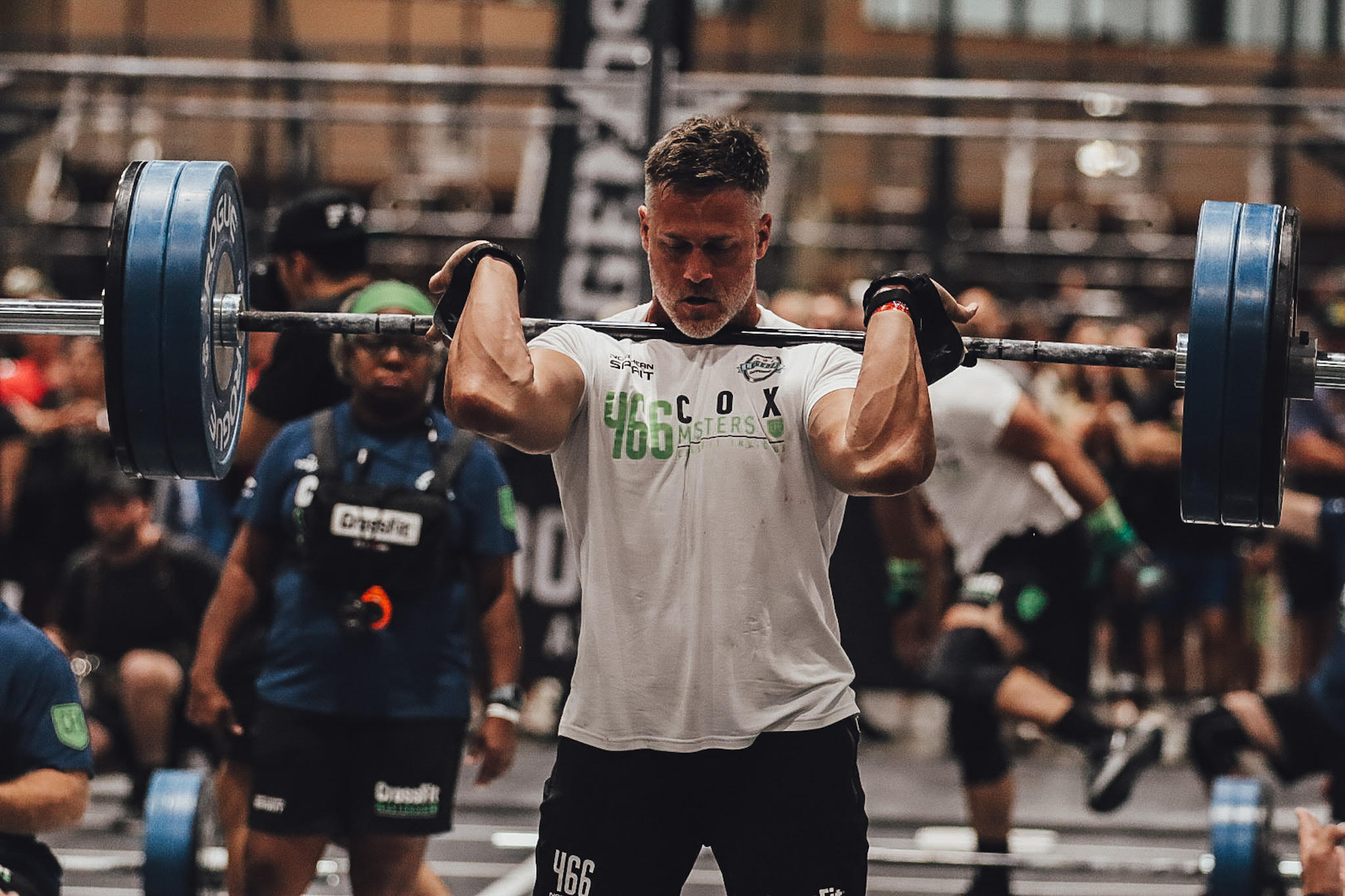
Resistance training is the most effective intervention known for preserving and rebuilding muscle mass across the lifespan. Meta-analyses of randomized controlled trials show that adults over 40 can significantly increase lean muscle mass, strength, and functional capacity with structured resistance training.
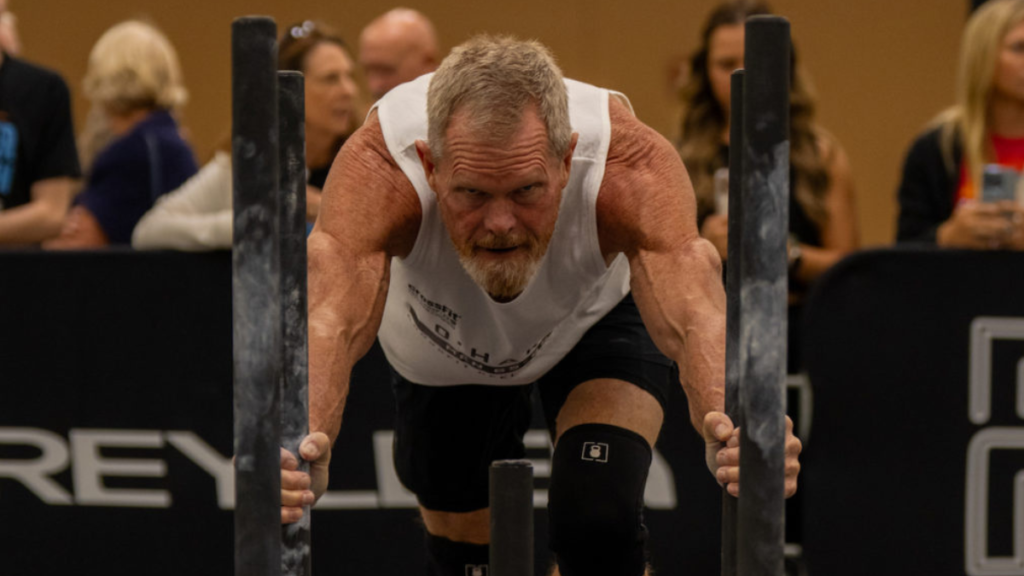
Importantly, older adults remain highly responsive to training stimulus. Studies involving participants in their 60s, 70s, and even 80s demonstrate hypertrophy rates comparable to younger adults when training volume and intensity are appropriately programmed.
Muscle protein synthesis, the biological process responsible for muscle growth, does become less sensitive to low-dose stimuli with age. This phenomenon is referred to as anabolic resistance. However, it can be overcome with sufficient mechanical tension, volume, and protein intake.
What Changes After 35
While muscle growth remains achievable, the margin for error narrows. In younger lifters, inconsistent training, poor sleep, or suboptimal nutrition may only slow progress. After 35, those same factors can lead to muscle loss despite training.
This means that lifting weights casually is no longer enough. Resistance training must be intentional, progressive, and adequately dosed.
For adults over 35, the evidence supports:
• Training each major muscle group at least twice per week
• Using moderate to heavy loads, typically 65–85 percent of one-repetition maximum
• Performing sufficient volume, generally 8–15 challenging sets per muscle group per week
Anything less may maintain strength temporarily, but it is unlikely to preserve muscle mass long-term.
2. Recovery Capacity Changes Before Strength Does
Strength Often Improves While Recovery Declines
One of the most confusing experiences for lifters in their late 30s and 40s is feeling strong while simultaneously feeling beat up. This is not psychological. It is physiological.
Maximal strength and power can be maintained well into middle age with proper training. However, recovery capacity — the ability to adapt positively to training stress — begins to decline earlier.
Several factors contribute to this:
• Reduced growth hormone and testosterone levels
• Increased systemic inflammation
• Slower connective tissue remodeling
• Accumulated life stress from work, family, and sleep disruption
The result is that you may still be capable of lifting heavy weights, but less capable of tolerating high volumes, frequent maximal efforts, or chronic intensity.
The Cost of Ignoring Recovery
Chronic under-recovery does not usually show up as immediate injury. It appears gradually as:
• Persistent joint soreness
• Declining motivation
• Plateaued or regressing performance
• Increased susceptibility to strains and tendinopathies
Research shows that insufficient recovery elevates cortisol levels, impairs immune function, and reduces neuromuscular efficiency. Over time, this leads to a state of non-functional overreaching or, in severe cases, overtraining syndrome.

For adults over 35, the risk of drifting into chronic fatigue is significantly higher when recovery is treated as an afterthought.
Smarter Recovery, Not Less Training
Recovery does not mean training less. It means distributing stress more intelligently.
Evidence-based strategies include:
• Reducing weekly high-intensity sessions to two or three
• Cycling volume and intensity in planned phases
• Incorporating deload weeks every 4–8 weeks
• Prioritizing sleep duration and consistency
Studies comparing periodized training models consistently show superior strength and hypertrophy outcomes when training stress is strategically varied rather than applied relentlessly.
The strongest lifters in their 40s are rarely the ones who train hardest every session. They are the ones who manage fatigue best.
3. Joint Health Becomes a Limiting Factor If You Let It
Cartilage and Tendons Adapt More Slowly With Age
Joints do not “wear out” from lifting weights. In fact, resistance training is associated with improved joint health and reduced osteoarthritis symptoms when appropriately programmed.
However, connective tissues such as tendons, ligaments, and cartilage have a slower metabolic rate than muscle. With age, collagen synthesis declines, blood supply decreases, and tissue elasticity changes.
This means that joints adapt more slowly to increases in load and volume than muscles do.
If training progression is driven solely by muscular strength gains, connective tissues can become the weak link.
The Myth of “Bad” Exercises
There is no high-quality evidence that exercises like squats, deadlifts, or overhead presses are inherently dangerous for aging lifters. Injury risk is more strongly associated with load management, technique, fatigue, and previous injury history than with specific movements.
Large observational studies of resistance-trained populations show lower rates of joint pain and musculoskeletal injury compared to sedentary adults.
What causes problems is not the movement itself, but the mismatch between capacity and demand.
Joint-Friendly Programming Principles
Research on injury prevention and connective tissue health supports several key practices:
• Gradual load progression, especially after layoffs
• Using full ranges of motion within individual tolerance
• Incorporating tempo control and isometric work
• Including unilateral and accessory movements
Isometric training, in particular, has strong evidence for improving tendon stiffness and reducing pain in conditions such as patellar and Achilles tendinopathy.
For lifters over 35, joints should be trained, not protected by avoidance. But they must be trained deliberately.
4. Hormonal Changes Affect How You Should Train and Eat
Testosterone, Estrogen, and Growth Hormone Decline
Hormonal shifts are an unavoidable part of aging, but their impact is often misunderstood.
Testosterone levels in men decline gradually beginning in the early 30s, with an average decrease of about 1 percent per year. In women, estrogen levels fluctuate significantly during perimenopause and decline sharply after menopause.
Growth hormone and insulin-like growth factor 1 (IGF-1) also decrease with age in both sexes.
These hormones influence:
• Muscle protein synthesis
• Fat distribution
• Bone density
• Recovery and tissue repair
Lower levels do not prevent progress, but they reduce the margin for nutritional and training errors.
Protein Needs Increase With Age
One of the most consistent findings in aging research is that older adults require higher protein intake to stimulate muscle protein synthesis compared to younger individuals.
While the general adult recommendation is 0.8 grams per kilogram of bodyweight per day, studies suggest that adults over 35 benefit from intakes closer to 1.6–2.2 grams per kilogram per day, particularly when resistance training.
Protein distribution also matters. Consuming sufficient protein per meal, rather than skewing intake toward one large serving, improves anabolic response.
Strength Training Supports Hormonal Health
Resistance training itself has beneficial effects on hormonal regulation. Acute bouts of heavy lifting increase testosterone and growth hormone transiently, while long-term training improves insulin sensitivity and metabolic health.
In women, resistance training has been shown to mitigate bone loss and improve body composition during and after menopause.
The key is consistency. Hormones respond to long-term patterns, not occasional heroic workouts.
5. Training Should Support Life, Not Compete With It
Injury Risk Increases When Stress Is Ignored
Physiological stress is cumulative. Training stress stacks on top of work stress, family responsibilities, sleep deprivation, and psychological load.
Research in sports science shows that injury risk increases when total stress exceeds adaptive capacity, regardless of training quality.
For adults over 35, life stress is often higher than it was in their 20s. Ignoring this reality leads to poor decisions about volume, intensity, and recovery.
Minimum Effective Dose Becomes the Goal
The most effective long-term training approach after 35 is not maximal volume or constant intensity. It is identifying the minimum effective dose that produces results while preserving health.

Studies comparing high-volume and moderate-volume resistance training in older adults often find similar strength and hypertrophy outcomes, with lower injury risk and better adherence in moderate programs.
This does not mean training should be easy. It means training should be efficient.
Longevity Requires Long-Term Thinking
The goal after 35 is not to win every workout. It is to remain capable, strong, and injury-free for decades.
Resistance training is one of the strongest predictors of healthy aging. But only if it is sustainable.
That requires humility, patience, and respect for biology.
Conclusion
Lifting weights after 35 is not about lowering expectations. It is about raising standards.
The standards are consistency, recovery, intelligent programming, adequate nutrition, and long-term thinking. When these are in place, age becomes far less relevant than most people believe.
The science is clear: resistance training is one of the most powerful interventions for healthy aging. But it must be applied with an understanding of how the body changes over time.
Train hard. Train smart. And train for the long game.
References
• American College of Sports Medicine (2009). Progression models in resistance training for healthy adults. Medicine & Science in Sports & Exercise, 41(3), 687–708.
• Bauer, J. et al. (2013). Evidence-based recommendations for optimal dietary protein intake in older people. Journal of the American Medical Directors Association, 14(8), 542–559.
• Borde, R., Hortobágyi, T. and Granacher, U. (2015). Dose–response relationships of resistance training in healthy old adults. Sports Medicine, 45(12), 1693–1720.
• Booth, F.W., Roberts, C.K. and Laye, M.J. (2012). Lack of exercise is a major cause of chronic diseases. Comprehensive Physiology, 2(2), 1143–1211.
• Burd, N.A. et al. (2013). Ageing, muscle protein turnover and the anabolic response to exercise and nutrition. European Journal of Sport Science, 13(1), 1–9.