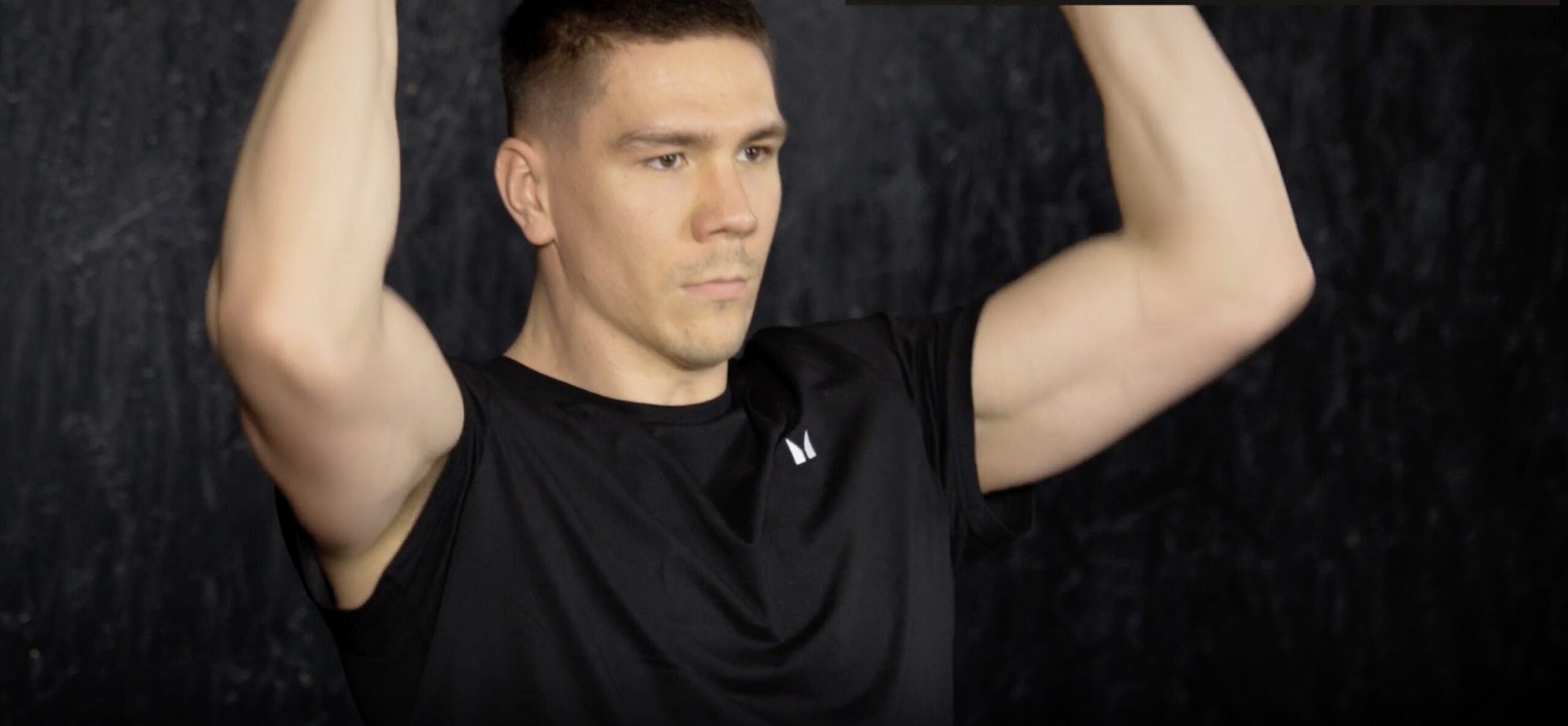


Training your shoulders at home without weights is not only possible but highly effective when done correctly. The shoulder complex, primarily made up of the deltoid muscles and supported by the rotator cuff and surrounding stabilizers, responds well to bodyweight resistance, time under tension, and smart exercise selection.
Scientific research shows that muscle growth and strength gains are driven more by effort, volume, and mechanical tension than by equipment alone.


This means you can build strong, defined shoulders using nothing more than your body weight, proper technique, and progressive overload. The key is understanding how the shoulder works and how to manipulate variables like leverage, tempo, and range of motion.
This article breaks down exactly how to train your shoulders at home without weights using evidence based strategies. It also provides a structured approach to programming, exercise selection, and progression so you can continue improving over time.
Understanding Shoulder Anatomy and Function
The Three Heads of the Deltoid
The shoulder is primarily made up of the deltoid muscle, which has three distinct heads:
- Anterior deltoid, responsible for shoulder flexion and pushing movements
- Lateral deltoid, responsible for shoulder abduction and width
- Posterior deltoid, responsible for shoulder extension and pulling movements

Balanced development requires targeting all three heads. Many people overtrain the front delts due to excessive pushing movements and neglect the rear delts, which can lead to poor posture and increased injury risk.
Supporting Muscles
The rotator cuff muscles stabilize the shoulder joint, while the trapezius and serratus anterior assist in scapular movement. Proper shoulder training should include movements that promote stability and control, not just strength.
Research shows that balanced activation of these muscles improves joint health and reduces injury risk.
Principles of Shoulder Training Without Weights
Mechanical Tension and Effort
Muscle growth is driven by mechanical tension and effort. Studies show that bodyweight training can produce similar hypertrophy to weight training when exercises are performed close to failure.
This means push ups, pike push ups, and handstand variations can effectively stimulate shoulder growth if done with sufficient intensity.
Progressive Overload Without Equipment
Progressive overload can be achieved in several ways:
- Increasing repetitions
- Slowing tempo
- Increasing range of motion
- Changing leverage
- Reducing rest time
For example, moving from a regular push up to a pike push up increases shoulder involvement due to a steeper angle of force.
Time Under Tension
Slower movements increase time under tension, which enhances muscle activation. Research shows that controlled tempos can increase muscle fiber recruitment and metabolic stress.
A simple way to apply this is using a three second lowering phase in exercises like push ups or wall supported handstand push ups.
Training to Near Failure
Training close to muscular failure is critical for maximizing muscle activation. Studies indicate that high effort is more important than the load used, especially in bodyweight training.
The Best Shoulder Exercises Without Weights
Push Up Variations
Push ups are often seen as a chest exercise, but they significantly engage the anterior deltoid.
Standard Push Up
This is the foundation. Focus on full range of motion and controlled tempo.
Decline Push Up
Elevating your feet increases the load on your shoulders.
Archer Push Up
Shifts more load onto one side, increasing intensity.
Pike Push Ups
Pike push ups are one of the most effective shoulder exercises without weights.
They mimic an overhead press movement by placing your body in a vertical pressing position. Research on electromyography shows high anterior deltoid activation in vertical pushing movements.
To increase difficulty:
- Elevate your feet
- Reduce base of support
- Slow down the movement
Handstand Push Ups
This is the gold standard for shoulder strength at home.
It directly targets all three deltoid heads and requires significant stabilization from the core and upper back.
Progressions include:
- Wall supported holds
- Partial range of motion reps
- Full handstand push ups
Studies on calisthenics athletes show that advanced bodyweight movements can produce high levels of muscle activation comparable to resistance training.
Wall Walks
Wall walks build strength and control while teaching proper alignment. They also improve scapular stability, which is critical for shoulder health.
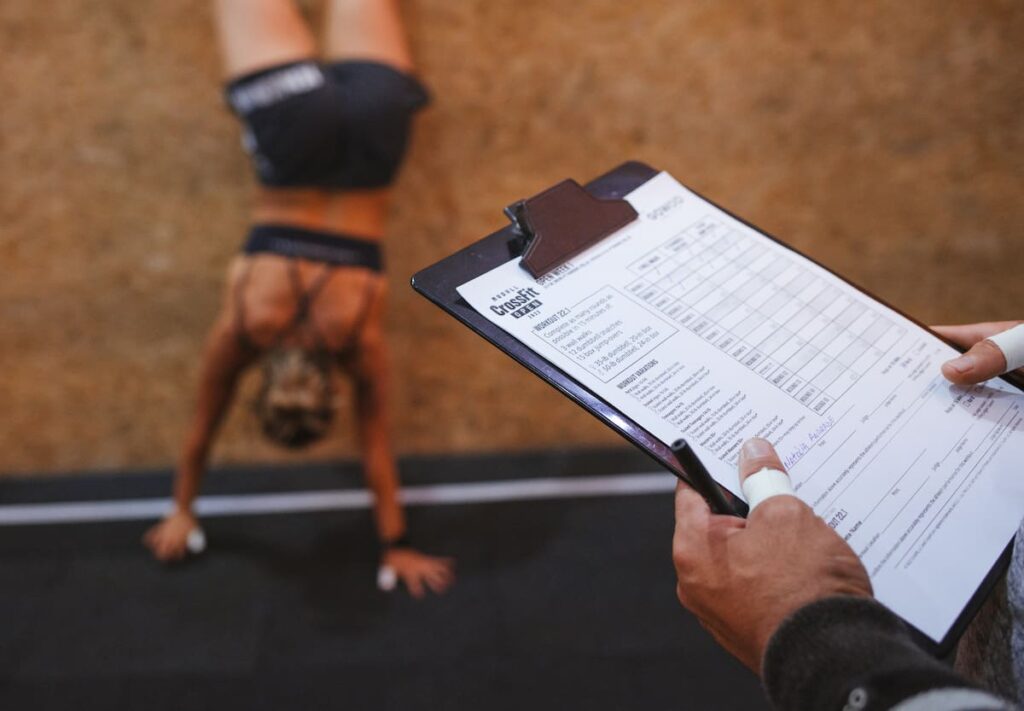
Plank to Pike
This dynamic movement targets the shoulders while also engaging the core. It increases time under tension and improves coordination.
Reverse Snow Angels
Performed lying face down, this exercise targets the posterior deltoids and upper back. Rear delt activation is essential for balanced shoulder development and injury prevention.
Isometric Holds
Isometric training has been shown to improve strength and muscle endurance.
Examples include:
- Handstand hold
- Plank hold
- Pike hold
Holding positions under tension recruits stabilizing muscles and improves joint control.
Structuring Your Shoulder Workout
Frequency
Research suggests training a muscle group two to three times per week is optimal for hypertrophy.
For shoulders, this can be achieved through dedicated sessions or by incorporating shoulder focused exercises into full body workouts.
Volume
Aim for:
- 10 to 20 sets per week for shoulders
Divide this across multiple sessions for better recovery and performance.
Sample Home Shoulder Workout
Beginner
- Incline push ups, 3 sets of 10 to 15 reps
- Pike push ups, 3 sets of 6 to 10 reps
- Plank hold, 3 sets of 30 seconds
- Reverse snow angels, 3 sets of 12 reps
Intermediate
- Decline push ups, 4 sets of 12 reps
- Elevated pike push ups, 4 sets of 8 reps
- Wall walks, 3 sets
- Handstand hold, 3 sets of 30 to 45 seconds
Advanced
- Handstand push ups, 5 sets of 5 to 8 reps
- Deficit pike push ups, 4 sets of 10 reps
- Archer push ups, 3 sets of 8 reps per side
- Handstand hold, 4 sets of 60 seconds
Targeting Each Shoulder Head

Anterior Deltoid
Best exercises:
- Push ups
- Pike push ups
- Handstand push ups
These movements involve shoulder flexion and pressing, which strongly activate the front delts.
Lateral Deltoid
The lateral deltoid is harder to isolate without weights, but can still be trained effectively.
Strategies include:
- Wider hand placement in push ups
- Isometric holds in abducted positions
- Slow eccentric movements
Research shows that muscle activation can be increased through positioning and tempo.
Posterior Deltoid
Often neglected, but critical.
Best exercises:
- Reverse snow angels
- Prone Y and T raises
- Scapular retraction drills
Strengthening the rear delts improves posture and reduces shoulder pain.
The Role of Core and Stability
Shoulder training without weights heavily relies on core stability.
Exercises like handstand push ups and planks require full body tension. Studies show that increased core activation enhances force transfer and overall performance.
To maximize results:
- Keep your core tight
- Avoid excessive arching
- Focus on controlled movement
Common Mistakes to Avoid
Poor Range of Motion
Partial reps limit muscle activation. Always aim for full range of motion unless working on a specific progression.
Rushing Reps
Fast, uncontrolled reps reduce time under tension and increase injury risk.
Neglecting Rear Delts
This creates imbalance and increases injury risk.
Skipping Progressions
Jumping straight into advanced exercises can lead to poor form and overuse injuries.
Recovery and Adaptation
Rest and Sleep
Muscle growth occurs during recovery. Research shows that sleep plays a crucial role in muscle repair and hormone regulation.
Aim for seven to nine hours of sleep per night.
Nutrition
Protein intake is essential for muscle growth. Studies recommend around 1.6 to 2.2 grams of protein per kilogram of body weight.
Adequate calorie intake is also necessary to support training.
Mobility Work
Shoulder mobility improves performance and reduces injury risk.
Include:
- Arm circles
- Wall slides
- Thoracic mobility drills
How to Progress Over Time
Increase Difficulty Gradually
Move from:
- Incline push ups to decline push ups
- Pike push ups to elevated pike push ups
- Handstand holds to handstand push ups
Track Your Performance
Keep a record of:
- Reps
- Sets
- Hold times
Progressive overload requires measurable improvements.
Use Advanced Techniques
- Tempo training
- Paused reps
- One arm variations
These increase intensity without adding weights.
Scientific Evidence Supporting Bodyweight Shoulder Training
Research consistently shows that muscle hypertrophy can be achieved with both high load and low load training, as long as exercises are performed close to failure.
Electromyography studies demonstrate that bodyweight exercises like push ups and handstand push ups activate the deltoid muscles at levels comparable to traditional resistance exercises.
Additionally, calisthenics training has been shown to improve not only muscle size but also neuromuscular coordination and joint stability.
This makes bodyweight shoulder training not just effective, but also functional.
Conclusion
Training your shoulders at home without weights is highly effective when you apply the right principles. By focusing on effort, progression, and exercise selection, you can build strong, well developed shoulders using only your body weight.
The key is consistency and intelligent programming. Train all three heads of the deltoid, incorporate stability work, and progressively challenge your muscles over time.
With the strategies outlined in this article, you have everything you need to build impressive shoulders without ever stepping into a gym.
Key Takeaways
| Key Point | Explanation |
|---|---|
| Bodyweight training works | High effort training can build muscle without weights |
| Progressive overload is essential | Increase reps, difficulty, or time under tension |
| Target all deltoid heads | Balanced training prevents injury and improves aesthetics |
| Handstand push ups are highly effective | They mimic overhead pressing and build strength |
| Rear delts matter | They improve posture and shoulder health |
| Recovery supports growth | Sleep and nutrition are critical |
References
- American College of Sports Medicine (2009). Progression models in resistance training for healthy adults. Medicine and Science in Sports and Exercise.
- Calatayud, J. et al. (2015). Muscle activation during push ups with different suspension training systems. Journal of Sports Science and Medicine.
- Gentil, P. et al. (2017). Effects of load on muscle hypertrophy and strength. Journal of Strength and Conditioning Research.
- Kikuchi, N. and Nakazato, K. (2017). Low load bench press training to fatigue results in muscle hypertrophy similar to high load training. Journal of Exercise Science and Fitness.
- Schoenfeld, B. (2010). The mechanisms of muscle hypertrophy and their application to resistance training. Journal of Strength and Conditioning Research.
- Schoenfeld, B. et al. (2017). Strength and hypertrophy adaptations between low and high load resistance training. Journal of Strength and Conditioning Research.
- Snarr, R. and Esco, M. (2013). Electromyographical comparison of plank variations. Journal of Strength and Conditioning Research.
- Wakahara, T. et al. (2013). Non uniform muscle hypertrophy. European Journal of Applied Physiology.