

The 500m rowing test is one of the purest measures of speed and power on the rowing machine. Unlike the longer 2000m test, the 500m sprint is short, explosive, and brutally intense. It demands maximum effort from the very first stroke and leaves little room for pacing mistakes.
Whether you are training for competition, improving your fitness, or simply testing yourself on the erg, comparing your 500m time against standard benchmarks can help you understand your current level and set realistic goals for improvement.


A good 500m rowing time for a man is 1:33.2. This is the average 500m time across men of all ages and abilities. The fastest 500m time ever rowed by a man is an incredible 1:10.5.
Below, you can compare your performance against rowing standards for different age groups and ability levels.
What Is a Good 500m Row Time for a Man?
A good 500m rowing time depends on your age, training history, and level of experience. Because the distance is so short, power output and anaerobic fitness play a much bigger role than endurance. For most recreational rowers:
- Finishing under 2 minutes is a solid starting point
- Breaking 1:45 shows good fitness and rowing power
- Times below 1:35 are considered strong
- Competitive rowers often finish under 1:25
- Elite-level athletes can approach 1:20 or faster
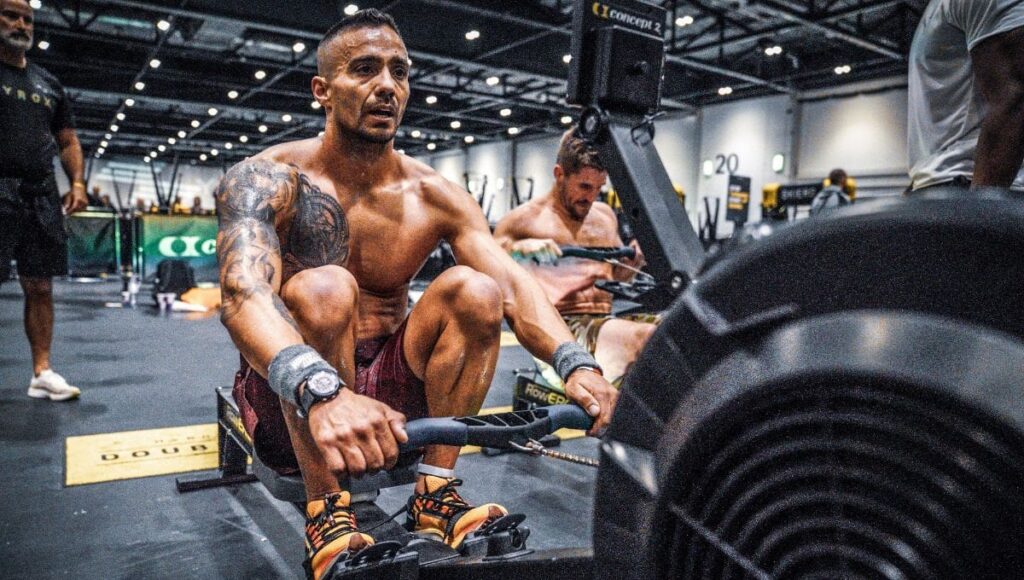
Across all age groups, the average intermediate benchmark is 1:33.2, making this an excellent target for many men training consistently.
Average 500m Row Times by Age
| Age | Beginner | Novice | Intermediate | Advanced | Elite |
|---|---|---|---|---|---|
| 20 | 01:53.9 | 01:44.8 | 01:36.1 | 01:28.2 | 01:21.2 |
| 25 | 01:51.9 | 01:43.0 | 01:34.5 | 01:26.6 | 01:19.8 |
| 30 | 01:50.4 | 01:41.6 | 01:33.2 | 01:25.4 | 01:18.7 |
| 40 | 01:55.4 | 01:46.2 | 01:37.4 | 01:29.3 | 01:22.2 |
| 50 | 01:55.4 | 01:46.2 | 01:37.4 | 01:29.3 | 01:22.2 |
| 60 | 02:07.9 | 01:57.7 | 01:48.0 | 01:39.0 | 01:31.1 |
| 70 | 02:17.6 | 02:06.7 | 01:56.2 | 01:46.5 | 01:38.1 |
| 80 | 02:31.1 | 02:19.1 | 02:07.5 | 01:56.9 | 01:47.7 |
All data can originally be found on Rowing Times.
These averages show how rowing performance changes with age and experience. Most men achieve their fastest sprint times between ages 20 and 35, when strength, cardiovascular fitness, and recovery capacity are typically at their peak.
What Do the Rowing Ability Levels Mean?
Beginner
A beginner rower is faster than 5% of rowers. At this stage, a person has usually been rowing for at least a month and is still developing technique, fitness, and pacing.
Novice
A novice rower is faster than 20% of rowers and has typically trained consistently for at least six months. Novice athletes usually have a better understanding of rowing mechanics and conditioning.
Intermediate
Intermediate rowers are faster than 50% of rowers overall. Most have rowed regularly for at least two years and have developed a solid combination of power, endurance, and technical efficiency.
Advanced
An advanced rower is faster than 80% of rowers and generally has more than five years of rowing experience. Athletes at this level often train with structured programs and compete regularly.
Elite
Elite rowers are faster than 95% of rowers. Reaching this level requires years of dedicated training, exceptional conditioning, and competitive experience.
How Performance Changes With Age
The data shows that rowing sprint performance improves rapidly through the teenage years and generally peaks during the late 20s and early 30s. After this point, times gradually become slower as strength, recovery, and anaerobic power naturally decline with age.
For example:
- The average intermediate 30-year-old rows 1:33.2
- At age 60, the equivalent intermediate time is 1:48.0
- At age 80, it becomes 2:07.5
Despite this decline, experienced older rowers continue to post impressive times. Consistent training, good technique, and strength work can help maintain a very high level of performance well into later decades.
Beginner vs Elite: How Big Is the Difference?
The gap between beginner and elite times highlights just how demanding elite rowing performance really is.
At age 30:
- Beginner: 1:50.4
- Elite: 1:18.7
That difference of over 30 seconds across only 500m is enormous in rowing terms. Elite athletes generate significantly more power per stroke and maintain much higher stroke rates throughout the sprint.
Even moving from beginner to novice can produce major improvements. Better technique, improved fitness, and stronger pacing strategies often lead to rapid gains during the first few years of rowing.
The Fastest Men’s 500m Row Time
The fastest recorded 500m rowing time for men is 1:10.5.
Maintaining this pace requires extraordinary explosive power and conditioning. To achieve a time this fast, athletes must sustain an extremely high stroke rate while producing massive force with every drive.
For most recreational rowers, even holding world-record pace for 100m would be incredibly difficult.
How to Improve Your 500m Row Time
Improving your 500m time requires a different approach than training for longer rowing distances. Because the event is so short, success depends heavily on explosive power, anaerobic fitness, and the ability to maintain maximum intensity from start to finish.
Build Explosive Power
The 500m sprint rewards athletes who can generate high force quickly. Strength training is essential for improving acceleration and stroke power. Exercises such as squats, deadlifts, lunges, and power cleans help develop the leg and hip strength needed for faster rowing.
Explosive movements also improve the ability to accelerate the flywheel quickly during the opening strokes, which is critical in short-distance rowing.
Improve Sprint Conditioning
Anaerobic conditioning plays a major role in 500m performance. High-intensity interval training teaches your body how to tolerate fatigue and sustain speed under pressure.
Workouts involving short all-out efforts, repeated sprints, or race-pace intervals can help increase power output and improve recovery between hard efforts. These sessions are uncomfortable, but they are one of the most effective ways to reduce sprint times.
Refine Your Technique
Technique matters even in a short sprint. Efficient rowing mechanics help transfer more power into each stroke while minimizing wasted energy.
Strong leg drive, controlled body positioning, and smooth sequencing all contribute to better performance. Sprint rowers must also learn how to maintain technique under fatigue, especially during the final 100m when exhaustion peaks.
Practice Your Start
The start is especially important in a 500m test because the race is over so quickly. A strong opening sequence helps build momentum early and can dramatically influence your final result.
Many rowers practice high-rate opening strokes to improve acceleration and establish race pace immediately. However, controlling the opening effort is equally important, since going out too aggressively can lead to a sharp slowdown later in the piece.
Stay Consistent
Like all rowing improvements, lowering your 500m time takes patience and consistent training. Even small improvements can represent significant gains in fitness and power output.
Tracking your times regularly, following a structured training plan, and gradually increasing intensity over time are the most reliable ways to continue improving. Whether your goal is to break two minutes or reach elite-level sprint standards, consistency is what ultimately leads to faster performances.
Where Do You Rank?
Here is a simple guide for men aged 20–35:
| Time | Level |
|---|---|
| 2:00+ | Beginner |
| 1:40–2:00 | Novice |
| 1:30–1:40 | Intermediate |
| 1:20–1:30 | Advanced |
| Under 1:20 | Elite |
Remember that rowing performance varies with age, body size, training background, and experience. The most important comparison is not against other people, but against your own previous performances.
Whether you are aiming to break 1:50, reach 1:30, or push toward elite sprint times, every second earned on the rowing machine reflects real progress and dedication.
Learn More: Average 2000m Row Times for Men, How Do You Compare?