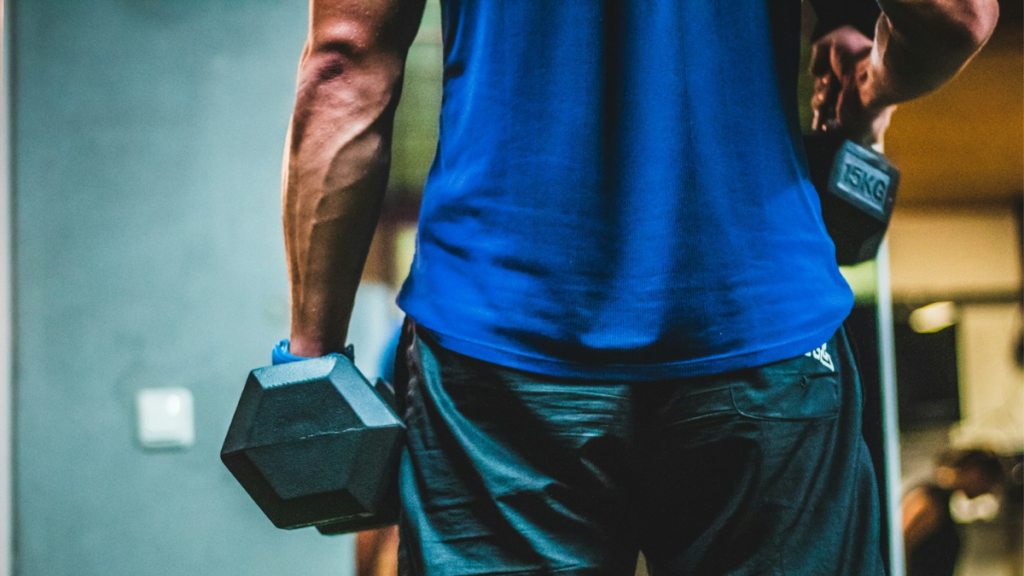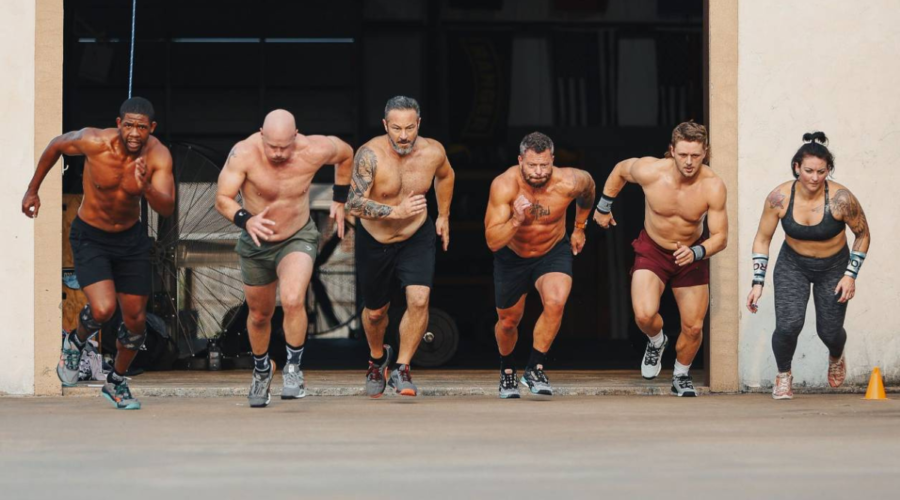


Staying lean after 40 is not the same as staying lean at 25. Many men notice that body fat seems easier to gain and harder to lose with each passing decade. Energy levels can decline, muscle mass often decreases, recovery takes longer, and busy careers or family responsibilities can make consistent training more challenging.
The good news is that age does not automatically mean gaining excess body fat or losing athleticism. Research consistently shows that men over 40 can maintain a lean physique, preserve muscle mass, improve metabolic health, and remain physically capable for decades through the right type of exercise. The key is choosing movements that provide the greatest return on investment.


Want to Bench Press 100kg / 220lbs? Here Are 4 Numbers You Need to Hit First
The best exercises are not necessarily the most complicated. They are the ones that recruit large amounts of muscle mass, support strength and muscle retention, increase energy expenditure, and remain sustainable as the body ages.
Why Staying Lean Gets Harder After 40
Before looking at the exercises themselves, it helps to understand what changes with age. One of the biggest challenges is sarcopenia, the age related loss of muscle mass. Research shows that adults can lose between 3% and 8% of muscle mass per decade after age 30, with the rate accelerating later in life.
Muscle tissue is metabolically active. When muscle mass decreases, resting energy expenditure tends to decline as well. This means the body burns fewer calories throughout the day. Hormonal changes can also play a role. Testosterone levels gradually decrease with age in many men. While the decline is usually modest, it can contribute to reduced muscle maintenance and increased fat accumulation.
Physical activity often decreases too. Many men spend more time sitting at desks, driving, or managing responsibilities that limit movement. The solution is not excessive cardio or crash dieting. Research consistently demonstrates that resistance training remains one of the most effective strategies for preserving lean mass, improving body composition, and supporting healthy aging.
The exercises below were selected because they provide a combination of:
• High muscle recruitment
• Significant calorie expenditure
• Functional strength development
• Long term joint friendliness
• Proven effectiveness in scientific research
Exercise #1: The Squat
The squat is arguably the most valuable lower body exercise for men over 40. Whether performed with a barbell, dumbbells, kettlebells, or simply bodyweight, squats recruit some of the largest muscles in the body, including the quadriceps, glutes, hamstrings, and core musculature. Because such a large amount of muscle tissue is involved, squats create a substantial metabolic demand.
Why Squats Help You Stay Lean
Research shows that multi joint exercises involving large muscle groups produce greater hormonal responses and energy expenditure compared with isolation movements. Squats also help preserve and build muscle mass throughout the lower body, which is critical for maintaining metabolic rate as men age. In addition, lower body strength is strongly associated with long term health outcomes, mobility, and independence.
Additional Benefits
Squats may improve:
• Bone density
• Functional movement capacity
• Athletic performance
• Insulin sensitivity
• Balance and coordination
Best Variations for Men Over 40
Not every man needs heavy barbell back squats. Excellent alternatives include:
• Goblet squats
• Front squats
• Safety bar squats
• Box squats
• Bodyweight squats
Many men find goblet squats especially useful because they reinforce proper technique while placing less stress on the spine.
Programming Recommendation
Aim for:
3 to 5 sets of 5 to 12 repetitions
Train squats one to three times weekly depending on experience and recovery capacity.
Exercise #2: The Deadlift
The deadlift is one of the most effective full body strength exercises ever studied. It trains the posterior chain, including the glutes, hamstrings, spinal erectors, upper back, and core. Because modern life often involves prolonged sitting, strengthening these muscles becomes increasingly important with age.

Why Deadlifts Help You Stay Lean
Deadlifts recruit a tremendous amount of muscle mass simultaneously. Research examining resistance training consistently demonstrates that exercises involving multiple large muscle groups produce significant energy expenditure both during and after training. The deadlift also helps maintain lean body mass, which remains one of the strongest predictors of long term metabolic health.
The Importance of Posterior Chain Strength
Many age related physical problems stem from weakness in the posterior chain. Common issues include:
• Poor posture
• Back pain
• Reduced athletic capacity
• Lower movement efficiency
Deadlifts directly address these areas while promoting whole body strength.
Best Deadlift Variations for Men Over 40
Joint history, mobility, and training experience should determine exercise selection. Excellent options include:
• Trap bar deadlift
• Romanian deadlift
• Kettlebell deadlift
• Rack pull
• Conventional deadlift
Among these, the trap bar deadlift is often particularly well suited for older trainees because it places the body in a more upright position and may reduce stress on the lower back.
Programming Recommendation
Most men over 40 respond well to moderate deadlift volume. Try 2 to 4 sets of 3 to 8 repetitions. Once or twice weekly is usually sufficient.
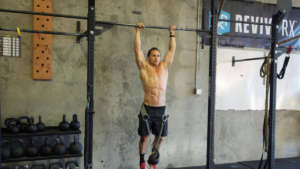
Exercise #3: The Pull Up
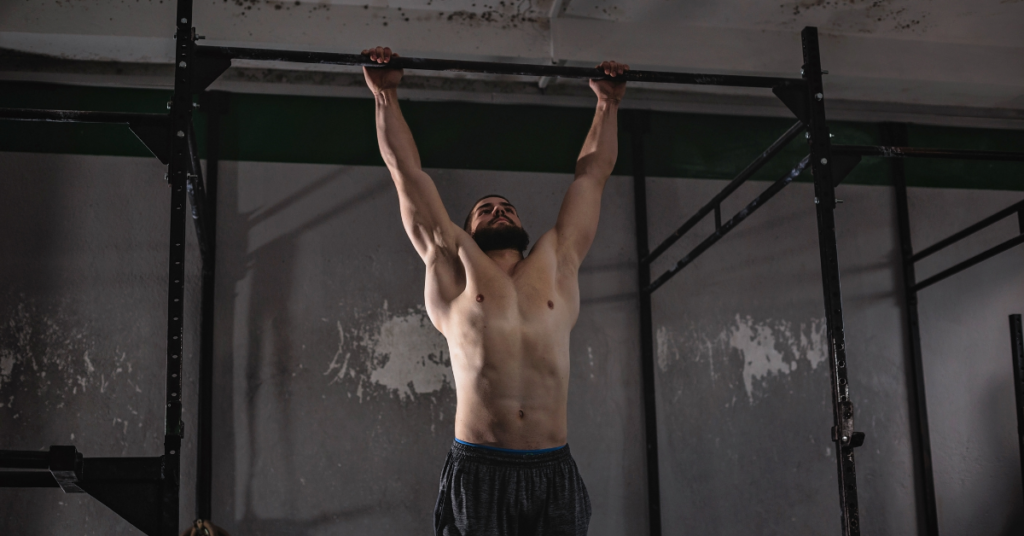
Upper body muscle mass often declines noticeably with age. The pull up remains one of the best exercises for maintaining upper body strength and muscularity while helping support a lean physique.
Unlike many machine based exercises, pull ups require moving your entire body through space. This creates a unique strength to bodyweight challenge that becomes increasingly valuable over time.
Why Pull Ups Help You Stay Lean
Pull ups train:
• Latissimus dorsi
• Rhomboids
• Trapezius
• Biceps
• Forearms
• Core muscles
Because bodyweight must be lifted, maintaining a healthy body composition becomes advantageous. In practical terms, men who stay lean often perform pull ups better, while consistent pull up training encourages maintaining lower levels of body fat.
Functional Strength Matters
Research increasingly highlights the importance of relative strength, meaning strength in relation to body weight. Pull ups are one of the clearest demonstrations of relative strength. A man who can perform multiple strict pull ups generally possesses a combination of muscle mass, neuromuscular efficiency, and body composition that supports athletic function.
If You Cannot Yet Perform Pull Ups
Start with:
• Assisted pull ups
• Resistance band pull ups
• Lat pulldowns
• Eccentric pull ups
These variations build strength until full bodyweight repetitions become achievable.
Programming Recommendation
Perform 3 to 5 sets of 6 to 12 repetitions, or as many quality repetitions as possible.
Exercise #4: Loaded Carries
Loaded carries are often overlooked despite having remarkable benefits for body composition and overall health. The concept is simple. Pick up a weight and walk. Examples include:
• Farmer’s carries
• Suitcase carries
• Front rack carries
• Overhead carries
Why Loaded Carries Help You Stay Lean
Loaded carries combine resistance training and cardiovascular training into a single exercise. Research shows that carrying loads while walking significantly increases energy expenditure compared with normal walking. At the same time, the body must stabilize the spine, hips, shoulders, and core continuously. This creates substantial muscular demand without high impact stress.
Benefits Beyond Fat Loss
Loaded carries may improve:
• Grip strength
• Core stability
• Posture
• Conditioning
• Work capacity
• Functional strength
Grip strength deserves special attention. Research has repeatedly identified grip strength as a powerful predictor of health outcomes and longevity.
Joint Friendly Conditioning
Many men over 40 struggle with running related injuries or joint discomfort. Loaded carries provide a lower impact alternative while still creating meaningful cardiovascular and metabolic stress.
Programming Recommendation
Try 3 to 6 rounds of 30 to 60 seconds per carry. Rest 60 to 120 seconds between rounds.
Exercise #5: Sprint Intervals
Traditional steady state cardio has benefits, but sprint intervals can be particularly effective for preserving lean muscle while promoting fat loss. High intensity interval training, often abbreviated as HIIT, has been extensively studied over the past two decades.

Why Sprint Intervals Help You Stay Lean
Research consistently demonstrates that HIIT can improve body composition while requiring significantly less training time than conventional endurance exercise. Sprint intervals create a large metabolic disturbance and elevate post exercise oxygen consumption. This means calorie expenditure remains elevated after training has finished.
Muscle Preservation Benefits
Unlike prolonged endurance training, sprinting places substantial force demands on the muscles. This helps preserve fast twitch muscle fibers that often decline with aging. Maintaining these fibers is important for:
• Athletic performance
• Power production
• Metabolic health
• Fall prevention
Joint Friendly Sprint Options
Not everyone should sprint on a track. Alternative options include:
• Assault bike intervals
• Stationary bike sprints
• Rowing machine intervals
• Hill sprints
• Sled pushes
These choices often reduce impact while delivering similar benefits.
Programming Recommendation
A simple protocol is to try 20 seconds all out effort with 100 seconds recovery. Repeat 6 to 10 times. Perform one to three sessions weekly depending on recovery.
Final Thoughts
Getting lean after 40 is not about finding a secret workout or spending hours in the gym every day. The evidence points toward a simpler approach. Focus on exercises that recruit large amounts of muscle, support strength development, preserve lean mass, and improve overall fitness.
Squats, deadlifts, pull ups, loaded carries, and sprint intervals accomplish exactly that. Together, they address the key physiological challenges that emerge with age, including muscle loss, declining metabolic rate, reduced athleticism, and increasing body fat.
Men who consistently perform these exercises, while supporting them with sound nutrition and adequate recovery, put themselves in an excellent position to stay lean, strong, and capable for decades to come.
References
• Aagaard, P., Suetta, C., Caserotti, P., Magnusson, S.P. and Kjaer, M. (2010) ‘Role of the nervous system in sarcopenia and muscle atrophy with aging’, Journal of Gerontology Series A: Biological Sciences and Medical Sciences, 65(5), pp. 453-462.
• American College of Sports Medicine (2009) ‘Progression models in resistance training for healthy adults’, Medicine & Science in Sports & Exercise, 41(3), pp. 687-708.
• Fragala, M.S., Cadore, E.L., Dorgo, S., Izquierdo, M., Kraemer, W.J., Peterson, M.D. and Ryan, E.D. (2019) ‘Resistance training for older adults’, Journal of Strength and Conditioning Research, 33(8), pp. 2019-2052.
• Hunter, G.R., McCarthy, J.P. and Bamman, M.M. (2004) ‘Effects of resistance training on older adults’, Sports Medicine, 34(5), pp. 329-348.
• LaStayo, P.C., Ewy, G.A., Pierotti, D.D., Johns, R.K. and Lindstedt, S. (2003) ‘The positive effects of negative work: increased muscle strength and decreased fall risk in a frail elderly population’, Journal of Gerontology Series A: Biological Sciences and Medical Sciences, 58(5), pp. 419-424.
• Lopez, P., Taaffe, D.R., Galvao, D.A., Newton, R.U. and Nonemacher, E.R. (2021) ‘Resistance training effectiveness on body composition and muscle strength in older adults’, Ageing Research Reviews, 68, 101337.