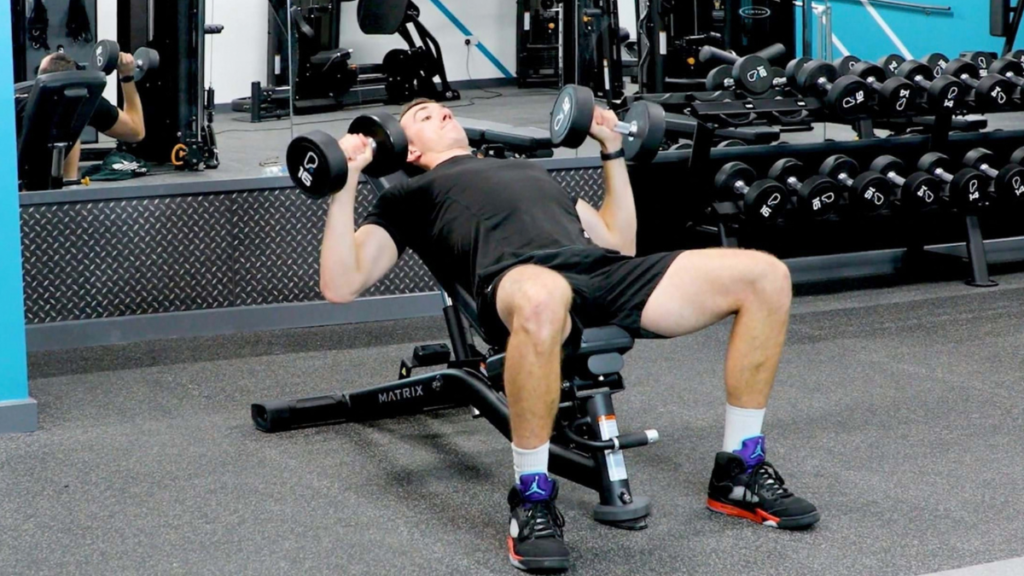


The bench press has been the gold standard for building upper body strength and muscle for decades. Walk into any commercial gym and you will probably see someone pressing a barbell. Most lifters focus on adding more weight or squeezing out more repetitions, but very few think about changing how each repetition begins.
That is where the Dead Stop bench press stands out. Instead of lowering the bar and immediately pressing it back up using stored elastic energy, every repetition starts from a complete pause on the safety pins inside a power rack. The bar comes to a full stop before you drive it upward with maximum force.


This small adjustment changes the exercise in important ways. It removes momentum, increases the demand on the chest, shoulders, and triceps, and forces your muscles to produce force from a completely static position. For lifters chasing a bigger chest, stronger pressing power, and better technique, it can become one of the most valuable variations in your training.
Science supports many of the mechanisms behind this approach. Research on strength training consistently shows that exercises emphasizing high mechanical tension, full recruitment of muscle fibers, and explosive force production create an excellent environment for muscle growth and strength gains.
Here are three evidence based reasons why the Dead Stop bench press deserves a place in your chest workouts.
What Is the Dead Stop Bench Press?
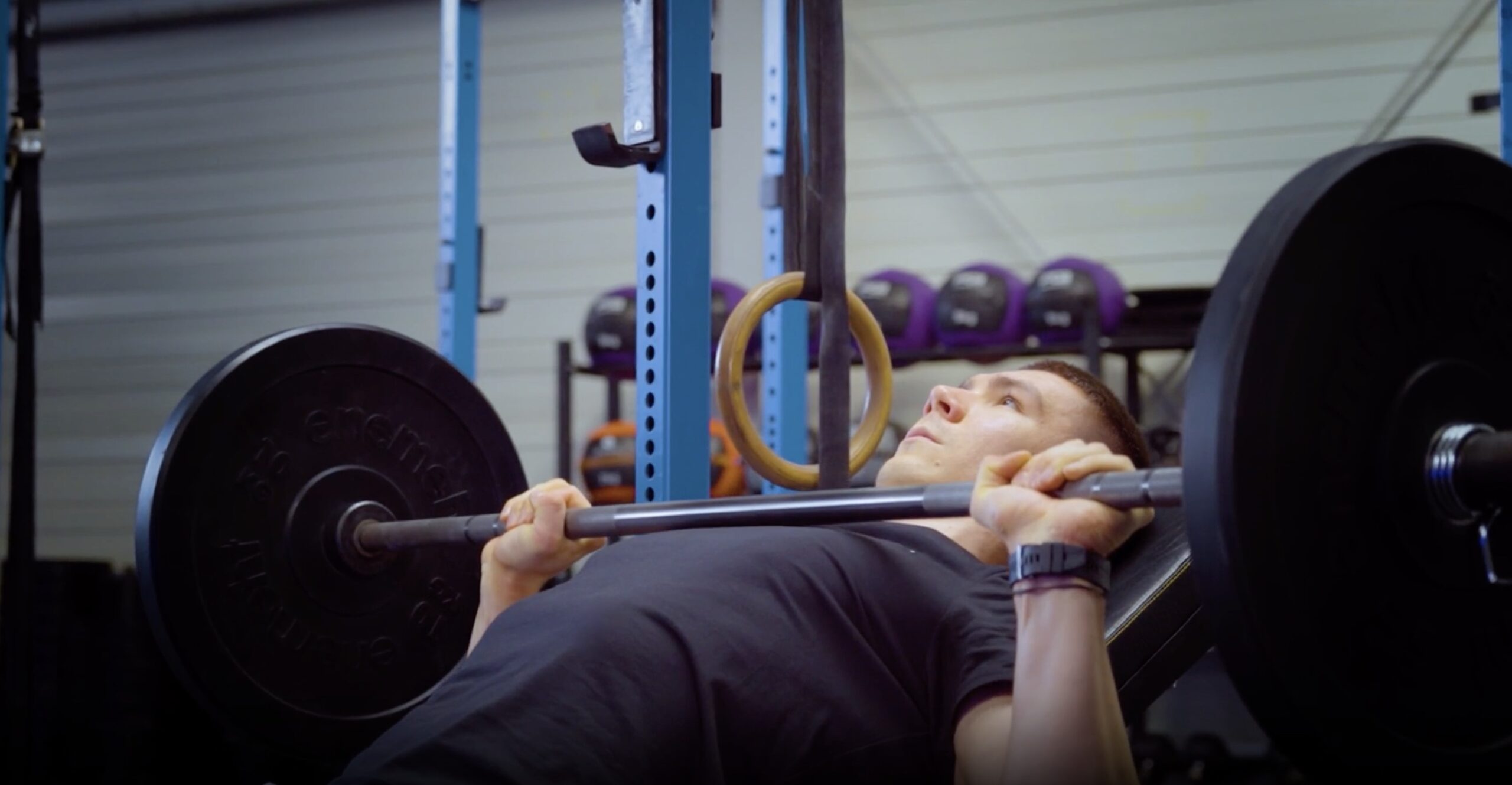
The Dead Stop bench press is performed inside a power rack with the safety pins positioned so the bar rests just above your chest at the bottom of the movement.
You begin each repetition with the bar sitting motionless on the pins. After establishing full body tension, you press the bar upward until your arms are nearly locked out. You then lower it under control until it settles completely onto the pins before beginning the next repetition.
Unlike the traditional bench press, there is no bouncing, no touch and go rhythm, and no assistance from the stretch shortening cycle. Every repetition starts from zero momentum. This forces your muscles to do all the work from the weakest position of the lift.
Reason 1: The Dead Stop Bench Press Maximizes Mechanical Tension
Mechanical tension is widely recognized as one of the primary drivers of muscle hypertrophy. When muscles generate high levels of force while under load, they receive a powerful stimulus to grow.
The Dead Stop bench press increases mechanical tension because it removes elastic rebound from the movement. During a normal touch and go bench press, tendons and muscles store elastic energy during the lowering phase. That stored energy contributes to the upward movement, making the initial portion of the lift easier.
3 Best Dead Stop Exercises for Muscular Legs
By pausing completely on the pins, that stored energy disappears. Your chest, shoulders, and triceps must produce force entirely through muscular contraction. Research examining resistance training mechanisms consistently identifies mechanical tension as one of the strongest signals for muscle protein synthesis and hypertrophy. High tension loads activate cellular pathways that promote muscle growth over time. Because the Dead Stop bench press requires maximal force generation from a complete stop, every repetition exposes the working muscles to greater contractile demands.
The chest muscles are particularly challenged during the first few inches of the press. This is where many lifters struggle during heavy bench attempts. Improving strength in this position can increase both muscle development and overall pressing performance.
Another advantage is improved exercise quality. Since momentum is eliminated, lifters are less likely to rush repetitions or allow technique to deteriorate. Every rep begins under complete control, encouraging better movement consistency and more productive training.
Why Starting Strength Matters
Starting strength refers to the ability to produce force rapidly from a completely stationary position. Athletes who excel at pressing, throwing, sprinting, and jumping all rely on strong force production at the beginning of movement. The Dead Stop bench press directly trains this quality.
Because there is no momentum, your nervous system must recruit a large number of motor units immediately to move the weight. Over time this can improve neuromuscular efficiency and increase your ability to generate force quickly.
Better starting strength also carries over to conventional bench pressing, where the most difficult portion of the lift usually occurs just above the chest.
Reason 2: It Improves Muscle Fiber Recruitment
Building a bigger chest requires recruiting as many muscle fibers as possible. The nervous system controls muscle contraction by activating motor units. Larger motor units contain fast twitch muscle fibers, which possess the greatest potential for hypertrophy.
These high threshold motor units are recruited when force demands become high. Since the Dead Stop bench press removes momentum and requires explosive effort from a complete stop, it creates ideal conditions for activating these larger motor units.
Research on resistance exercise demonstrates that attempting to move heavy loads with maximum intent recruits more high threshold motor units, even if the actual movement speed is relatively slow because of the weight being lifted. This means you do not need to throw the bar explosively. Simply attempting to accelerate the weight as fast as possible is enough to increase neural drive.
The result is greater activation of the chest, triceps, and anterior deltoids throughout the lift. Repeated exposure to this type of training improves coordination between muscles while increasing force production capacity.
These neural adaptations often occur before noticeable muscle growth, allowing lifters to become stronger relatively quickly. As heavier weights become manageable, the muscles receive progressively greater overload, supporting long term hypertrophy.
Reason 3: It Helps Break Plateaus
Almost every experienced lifter eventually reaches a point where bench press progress slows. Often the sticking point occurs near the bottom portion of the lift.
Weakness in this range prevents heavier weights from reaching lockout. The Dead Stop bench press directly attacks this limitation. Instead of practicing the easiest portion of the lift repeatedly, you spend every repetition strengthening the weakest position.
This concept follows the principle of specificity. Strength adaptations occur according to the demands placed on the body. If your sticking point is just above your chest, training repeatedly from that exact position teaches your muscles and nervous system to become stronger there. Research consistently supports the importance of exercise specificity for maximizing strength improvements.
The more closely a training movement matches the challenge you want to improve, the greater the transfer. The Dead Stop bench press also encourages patience. Since every repetition starts from a complete stop, lifters naturally avoid rushing sets. The increased focus on setup, breathing, and bracing often improves performance when returning to conventional bench pressing.
Many powerlifters regularly use paused bench variations for this exact reason. Although the Dead Stop bench press differs slightly from competition style paused bench pressing, both methods reduce reliance on stored elastic energy and strengthen the bottom position.
How to Perform the Dead Stop Bench Press Correctly
Setup is critical for getting the most from this exercise.
- Place a flat bench inside a power rack and adjust the safety pins so the bar rests just above your chest when you are lying in your normal bench press position.
- Grip the bar as you normally would and create tension throughout your body before each repetition.
- Retract your shoulder blades, brace your core, and keep your feet firmly planted on the floor.
- Drive the bar upward aggressively while maintaining your bar path.
- Lower the weight under complete control until it rests motionless on the pins.
- Allow the bar to settle before beginning the next repetition.
- Avoid relaxing completely between repetitions.
- Maintain full body tightness while simply allowing the bar itself to come to a stop.
This preserves proper mechanics while still eliminating momentum.
How to Program the Dead Stop Bench Press
The Dead Stop bench press works best as either a primary strength movement or a secondary accessory exercise after conventional bench pressing. For strength development, moderate to heavy loads performed for three to six repetitions per set work well because they encourage maximal force production.
For hypertrophy, slightly lighter weights performed for six to ten repetitions allow more total training volume while maintaining excellent technique. Because every repetition begins from a complete stop, fatigue accumulates more quickly than during traditional touch and go bench pressing.
Most lifters benefit from keeping total volume moderate and emphasizing quality over quantity. Training this variation once each week is usually sufficient to see improvements in both strength and chest development.
Common Mistakes to Avoid
One of the biggest mistakes is setting the safety pins too high. If the bar begins several inches above your chest, the most challenging portion of the movement disappears.
The pins should allow the bar to rest just above your chest while maintaining proper shoulder positioning. Another mistake is relaxing completely between repetitions.
The bar should come to a full stop, but your body should remain tight. Losing upper back tension reduces force production and may increase unnecessary shoulder movement. Finally, avoid treating the Dead Stop bench press like a speed exercise with light weights only. Although explosive intent is important, sufficient loading is still necessary to maximize mechanical tension and stimulate muscle growth.
Is the Dead Stop Bench Press Better Than the Traditional Bench Press?
The traditional bench press remains one of the best upper body exercises ever created. The Dead Stop variation is not intended to replace it. Instead, it complements it. Traditional bench pressing allows heavier overall loads and develops rhythm across continuous repetitions.
The Dead Stop version develops starting strength, improves force production, reinforces technique, and strengthens the weakest portion of the lift. Using both variations throughout a training program provides a broader training stimulus than relying on either exercise alone. For lifters focused on building a bigger chest while increasing pressing strength, this combination can be especially effective.
Final Thoughts
The Dead Stop bench press may not receive as much attention as other bench press variations, but it deserves far more recognition. By removing momentum, increasing mechanical tension, and forcing your muscles to generate force from a completely static position, it creates an outstanding stimulus for both strength and muscle growth.
It also strengthens the bottom portion of the press where many lifters struggle, reinforces better technique, and encourages full recruitment of high threshold muscle fibers. When combined with progressive overload, adequate training volume, quality nutrition, and proper recovery, the Dead Stop bench press can become one of the most productive tools for building a bigger, stronger chest.
Key Takeaways
| Topic | Key Point |
|---|---|
| Mechanical tension | Removing momentum increases muscular force production and enhances one of the primary drivers of hypertrophy. |
| Muscle recruitment | Starting each repetition from a Dead Stop promotes greater recruitment of high threshold motor units. |
| Strength gains | Training from the weakest portion of the lift improves starting strength and helps overcome bench press sticking points. |
| Technique | Eliminating bounce encourages better control, stability, and consistent chest loading. |
| Programming | Perform one session per week using moderate to heavy loads while prioritizing high quality repetitions. |
| Overall value | The Dead Stop bench press complements, rather than replaces, the traditional bench press for building size and strength. |
References
- Andersen, L.L. and Aagaard, P. (2006) ‘Influence of maximal muscle strength and intrinsic muscle contractile properties on contractile rate of force development’, European Journal of Applied Physiology, 96(1), pp. 46 to 52.
- Bird, S.P., Tarpenning, K.M. and Marino, F.E. (2005) ‘Designing resistance training programmes to enhance muscular fitness’, Sports Medicine, 35(10), pp. 841 to 851.
- Cormie, P., McGuigan, M.R. and Newton, R.U. (2011) ‘Developing maximal neuromuscular power. Part 2. Training considerations for improving maximal power production’, Sports Medicine, 41(2), pp. 125 to 146.
- Kraemer, W.J. and Ratamess, N.A. (2004) ‘Fundamentals of resistance training. Progression and exercise prescription’, Medicine & Science in Sports & Exercise, 36(4), pp. 674 to 688.
- Schoenfeld, B.J. (2010) ‘The mechanisms of muscle hypertrophy and their application to resistance training’, Journal of Strength and Conditioning Research, 24(10), pp. 2857 to 2872.
- Schoenfeld, B.J. (2016) Science and Development of Muscle Hypertrophy. Champaign, IL: Human Kinetics.
- Suchomel, T.J., Nimphius, S. and Stone, M.H. (2016) ‘The importance of muscular strength in athletic performance’, Sports Medicine, 46(10), pp. 1419 to 1449.