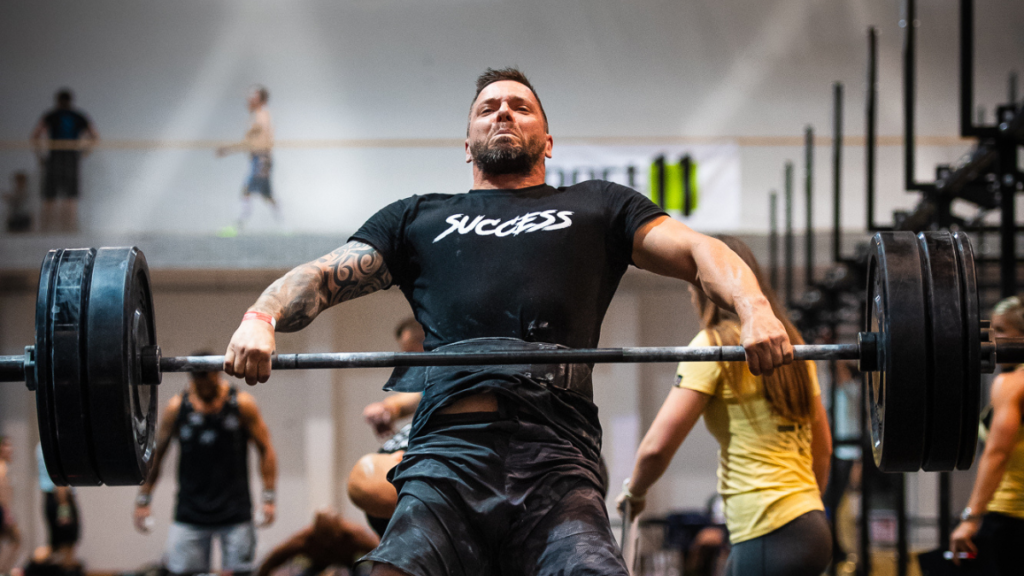


Building a bigger and stronger torso does not require a complicated training program or a gym full of specialized equipment. In fact, a single barbell can provide everything a beginner needs to develop impressive muscle mass across the chest, shoulders, back, and core while also building total body strength.
Barbell exercises allow you to lift heavier loads than most dumbbell or machine movements. They also encourage coordinated movement between multiple muscle groups, which helps beginners develop strength, balance, and movement efficiency at the same time. Research consistently shows that multi joint exercises produce significant improvements in muscular strength and hypertrophy, especially when they are performed with progressive overload and good technique.



The key is choosing the right movements. Beginners often make the mistake of trying to master too many exercises at once. Instead, focusing on a few proven compound lifts leads to faster progress while reducing unnecessary complexity. These are the three best barbell exercises for beginners who want to build a muscular torso.
Why Beginners Should Prioritize Compound Barbell Exercises
Compound exercises involve movement at multiple joints while recruiting large amounts of muscle mass. Compared with isolation exercises, compound lifts allow greater loading, higher mechanical tension, and more overall muscle stimulation. Mechanical tension is considered one of the primary drivers of muscle growth. Scientific reviews have identified progressive resistance training as the most effective method for increasing skeletal muscle size and strength across healthy adults.
How Many Sit Ups Should You Be Able to Do?
Barbell training also improves neuromuscular coordination. Beginners experience rapid improvements because their nervous system becomes more efficient at recruiting muscle fibers. This process explains why strength often increases dramatically during the first months of resistance training even before large increases in muscle size occur.
The three exercises below provide an outstanding combination of upper body muscle development, strength gains, and long term progression.
1. The Barbell Bench Press
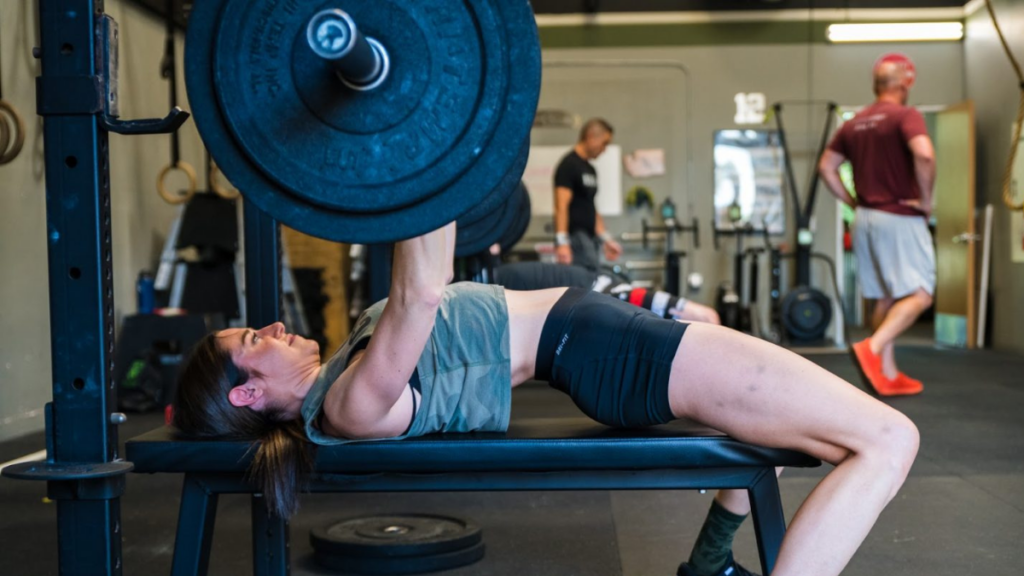
The barbell bench press has earned its reputation as one of the most effective upper body exercises ever created. It develops the chest while simultaneously strengthening the shoulders and triceps, making it one of the best choices for building a wider and thicker torso.
Muscles Worked
The bench press primarily targets the pectoralis major. It also heavily recruits the anterior deltoids and triceps brachii while requiring stabilization from the upper back, rotator cuff muscles, and core.
Electromyography research consistently demonstrates high activation of the pectoralis major during flat barbell bench pressing, making it one of the most efficient exercises for chest development.

Why It Works
One major advantage of the bench press is the ability to progressively increase loading over time. Progressive overload remains the foundation of muscle growth. As strength improves, heavier weights create greater mechanical tension across the chest and pressing muscles.
Large longitudinal studies have demonstrated that increases in training volume and progressive resistance are strongly associated with gains in muscle size and maximal strength.
The bench press also teaches beginners how to generate full body tension. Although it appears to be an upper body movement, effective bench pressing requires leg drive, core stability, shoulder positioning, and coordinated force production.
Technique Tips
- Lie flat with your eyes positioned beneath the bar.
- Grip the bar slightly wider than shoulder width.
- Retract and depress the shoulder blades before lifting the bar.
- Lower the bar under control until it reaches the middle of the chest.
- Press the bar upward in a smooth path while maintaining full body tension.
Avoid bouncing the bar off the chest or flaring the elbows excessively, since both mistakes increase stress on the shoulder joint without improving muscle development.
2. The Barbell Bent Over Row
Every great torso needs a strong back. The bent over row builds thickness throughout the upper and middle back while improving posture and shoulder health. Many beginners focus heavily on pressing exercises while neglecting pulling movements. This imbalance can eventually contribute to shoulder discomfort and poor posture. Including rows from the beginning creates balanced muscular development.
Muscles Worked
The bent over row primarily develops the latissimus dorsi, rhomboids, middle trapezius, posterior deltoids, and spinal erectors. The biceps and forearms also contribute significantly. Unlike machine rows, the barbell version requires substantial stabilization from the core and lower back throughout the lift.
Why It Works
The bent over row challenges nearly every muscle along the posterior chain while placing the upper back under high levels of mechanical tension. Research comparing different rowing variations has shown strong activation across the latissimus dorsi and middle trapezius during horizontal pulling movements. Balanced development between the muscles of the front and back of the torso supports shoulder function and reduces muscular imbalances.
Maintaining an isometric hip hinge throughout each set also strengthens the spinal erectors and deep trunk stabilizers, providing benefits that extend to nearly every other compound exercise.
Technique Tips
- Stand with feet approximately hip width apart.
- Grip the bar slightly wider than shoulder width.
- Push the hips backward while maintaining a neutral spine.
- Allow the torso to lean forward until it approaches parallel with the floor.
- Pull the bar toward the lower ribs while squeezing the shoulder blades together.
- Lower the bar under control before beginning the next repetition.
Avoid using excessive momentum or jerking the torso upward. Controlled repetitions produce better muscle activation while reducing unnecessary stress on the lower back.
3. The Overhead Press
Few exercises build impressive shoulders like the standing barbell overhead press. Although many people think of it as purely a shoulder exercise, it develops much more than that. The overhead press strengthens the shoulders, upper chest, triceps, traps, and core while teaching full body stability.

Muscles Worked
The primary movers are the anterior and lateral deltoids along with the triceps brachii. The upper trapezius, serratus anterior, rotator cuff muscles, rectus abdominis, obliques, glutes, and spinal erectors all contribute to stabilizing the body during heavy presses.
Why It Works
Standing overhead pressing requires force to transfer efficiently from the feet through the legs and core before reaching the upper body.
Research examining shoulder exercises has demonstrated high activation of the anterior deltoid and upper trapezius during overhead pressing movements. Standing variations also increase activation of trunk stabilizing muscles because the body must resist spinal extension throughout the lift.
The overhead press develops shoulder size while improving overhead strength that carries over into sports and daily activities.
Technique Tips
- Stand with feet approximately shoulder width apart.
- Grip the bar just outside shoulder width.
- Rest the bar across the front of the shoulders.
- Brace the core and squeeze the glutes before initiating the press.
- Press the bar upward while keeping it close to the face.
- Finish with the bar directly above the shoulders rather than in front of the body.
- Lower the bar slowly back to the shoulders before repeating.
Avoid leaning excessively backward during the lift, since this shifts stress toward the lower back rather than the shoulders.
Why These Three Exercises Are Enough for Beginners
Many beginners assume they need ten or more different upper body exercises during each workout. Scientific evidence suggests otherwise. Muscle hypertrophy depends primarily on sufficient training volume, effort, progressive overload, and consistency rather than endless exercise variety. These three barbell movements collectively train nearly every major muscle of the torso.
- The bench press develops the chest, shoulders, and triceps.
- The bent over row builds the back, rear shoulders, and biceps.
- The overhead press strengthens the shoulders, upper chest, traps, triceps, and core.
Together they create balanced muscular development while reinforcing movement patterns that serve as the foundation for more advanced training later. Research has also shown that beginners achieve substantial gains using relatively simple resistance training programs because nearly any appropriately designed progressive program provides a strong stimulus during the early stages of training.
How to Progress for Maximum Muscle Growth
Exercise selection is only part of the equation. Consistent progression determines long term results. Aim to perform each exercise two or three times per week. Most beginners respond well to three or four working sets of six to twelve repetitions. Once all prescribed repetitions can be completed with solid technique, increase the load slightly during the following workout.
Scientific reviews indicate that training close to muscular failure while maintaining good technique produces robust hypertrophy across a wide range of repetition schemes. The exact number of repetitions matters less than applying sufficient effort and gradually increasing training demands over time.
Adequate recovery also plays a crucial role. Muscles grow after training rather than during it. Consuming enough dietary protein supports muscle protein synthesis, while sufficient sleep improves recovery, hormonal regulation, and performance in future workouts.
Final Thoughts
If your goal is to build a bigger, stronger, and more muscular torso, you do not need dozens of exercises or complicated workout plans. The barbell bench press, bent over row, and overhead press have stood the test of time because they consistently produce results. Together they train every major upper body muscle while teaching movement quality, improving coordination, and building a solid strength foundation.
Focus on mastering technique before chasing heavier weights. Train consistently, increase the load gradually, eat enough protein, and recover well between sessions. Over time these three classic barbell lifts can transform a beginner into someone with noticeably more muscle, better posture, and significantly greater upper body strength.
Key Takeaways
| Exercise | Primary Muscles | Main Benefit | Beginner Focus |
|---|---|---|---|
| Barbell Bench Press | Chest, shoulders, triceps | Builds upper body pushing strength and chest size | Learn consistent bar path and shoulder positioning |
| Barbell Bent Over Row | Lats, rhomboids, traps, rear delts | Builds back thickness and improves posture | Maintain a neutral spine and controlled movement |
| Standing Overhead Press | Shoulders, triceps, upper traps, core | Develops shoulder mass and total body stability | Brace the core and avoid excessive back arching |
| Overall Program | Entire torso | Builds balanced muscle and strength | Progress gradually while prioritizing technique |
References
- American College of Sports Medicine. (2009). Progression models in resistance training for healthy adults. Medicine & Science in Sports & Exercise, 41(3), pp. 687 to 708.
- Gentil, P., Fisher, J. and Steele, J. (2017). A review of the acute effects and long term adaptations of single and multi joint exercises during resistance training. Sports Medicine, 47(5), pp. 843 to 855.
- Krzysztofik, M., Wilk, M., Wojdała, G. and Gołaś, A. (2019). Maximizing muscle hypertrophy. A systematic review of advanced resistance training techniques and methods. International Journal of Environmental Research and Public Health, 16(24), 4897.
- Schoenfeld, B.J. (2010). The mechanisms of muscle hypertrophy and their application to resistance training. Journal of Strength and Conditioning Research, 24(10), pp. 2857 to 2872.
- Schoenfeld, B.J. (2016). Science and Development of Muscle Hypertrophy. Human Kinetics.
- Schoenfeld, B.J., Ogborn, D. and Krieger, J.W. (2017). Dose response relationship between weekly resistance training volume and increases in muscle mass. Journal of Sports Sciences, 35(11), pp. 1073 to 1082.
- Signorile, J.F., Zink, A.J. and Szwed, S.P. (2002). A comparative electromyographical investigation of muscle utilization patterns using various hand positions during the lat pull down. Journal of Strength and Conditioning Research, 16(4), pp. 539 to 546.
- Welsch, E.A., Bird, M. and Mayhew, J.L. (2005). Electromyographic activity of the pectoralis major and anterior deltoid muscles during three upper body lifts. Journal of Strength and Conditioning Research, 19(2), pp. 449 to 452.