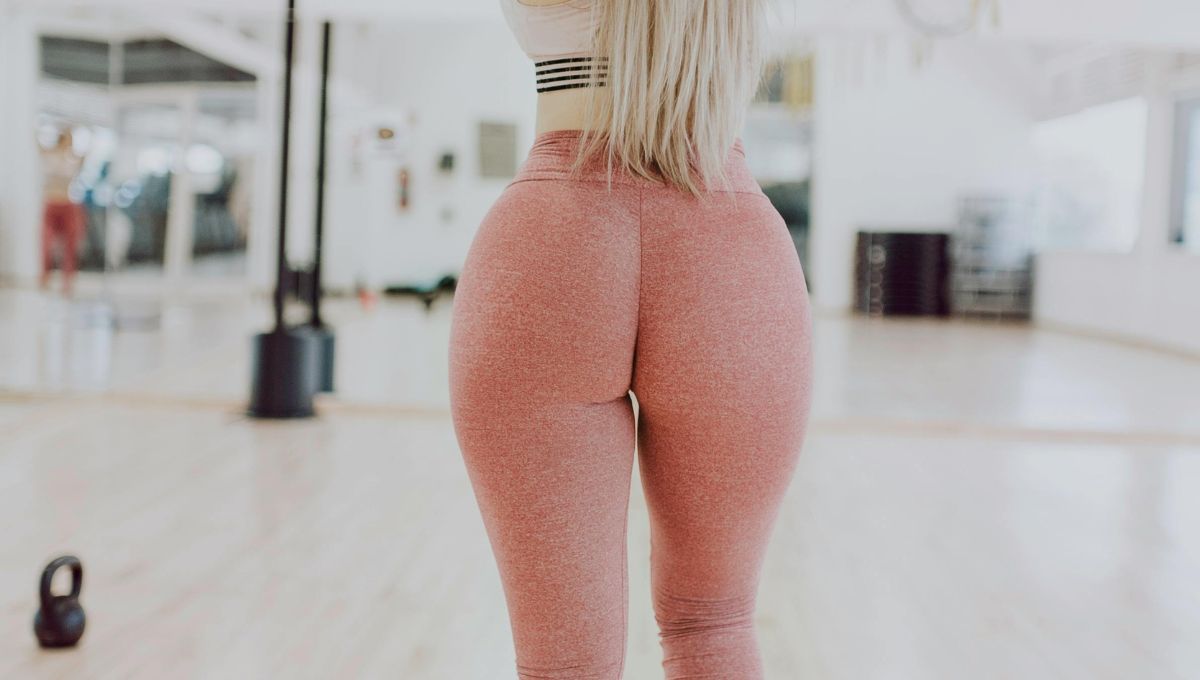


Strong glutes are about much more than appearance. The glute muscles are the largest and most powerful muscle group in the human body, and they play a major role in walking, running, jumping, climbing stairs, lifting weights, and protecting the lower back and knees. For beginners, building stronger glutes can improve athletic performance, reduce the risk of injury, and make everyday movement feel easier.
Many people spend hours performing complicated workouts or endless high repetition exercises without seeing much progress. The good news is that beginners do not need dozens of exercises. Research consistently shows that a few well chosen movements performed with good technique and progressive overload are enough to produce significant improvements in strength and muscle growth.



The glute muscles respond well to resistance training because they are designed to generate large amounts of force. Training them through a full range of motion while gradually increasing resistance stimulates muscle protein synthesis, improves neuromuscular coordination, and encourages hypertrophy.
This guide focuses on three beginner friendly exercises that are supported by biomechanics research and strength training science. Together they target all three glute muscles while remaining easy to learn and highly effective.
Why Strong Glutes Matter
The gluteal muscles consist of the gluteus maximus, gluteus medius, and gluteus minimus. The gluteus maximus is responsible for hip extension, external rotation, and generating explosive power. It is the muscle that contributes most to the shape and size of the buttocks.
The gluteus medius helps stabilize the pelvis during walking and running. It also controls hip abduction and prevents the knees from collapsing inward during movement. The gluteus minimus works alongside the gluteus medius to stabilize the hip and improve balance.
Research has shown that weak glutes are associated with poor movement mechanics, increased stress on the knees, reduced athletic performance, and a higher likelihood of developing lower back discomfort. Strengthening these muscles can improve posture, running mechanics, jumping ability, and overall lower body function. Resistance training also promotes increases in lean muscle mass. Building muscle increases resting metabolic rate slightly while improving body composition over time when combined with appropriate nutrition.
Which Athletes are Competing at the 2026 CrossFit Games in the Individuals Division?
What Makes an Exercise Great for Beginners?
Beginners benefit most from exercises that are simple to learn, easy to progress, and capable of producing high muscle activation without excessive joint stress.
Research using electromyography, also known as EMG, allows scientists to measure how hard muscles work during different exercises. While EMG does not directly measure muscle growth, it provides valuable information about which movements recruit the glute muscles effectively.

The best beginner exercises also allow progressive overload. This simply means gradually making the exercise more challenging by increasing resistance, repetitions, or training volume over time. Progressive overload remains one of the most important principles for developing muscle and strength.
Exercise 1. Barbell or Bodyweight Hip Thrust
Why it Works
The hip thrust has become one of the most researched glute exercises during the past decade. Multiple EMG studies have shown exceptionally high activation of the gluteus maximus during the movement.
Unlike many traditional lower body exercises, the hip thrust loads the hips heavily near full extension, where the glutes are highly active. This makes it especially useful for targeting the gluteus maximus directly.
Studies comparing hip thrusts with squats have found that both exercises improve lower body strength, although hip thrusts appear to emphasize hip extension strength more specifically. Combining both exercises often produces the best results.
How to Perform It
- Sit on the floor with your upper back resting against a sturdy bench.
- Place your feet flat on the floor about shoulder width apart.
- If using a barbell, position it comfortably across your hips using a pad if necessary.
- Brace your core and drive through your heels.
- Lift your hips until your shoulders, hips, and knees form a straight line.
- Pause briefly while squeezing your glutes as hard as possible.
- Lower under control until your hips nearly touch the floor before beginning the next repetition.
Beginners who are not ready for external resistance can start with bodyweight hip thrusts before gradually adding weight.
Common Mistakes
Many beginners arch the lower back instead of extending the hips. The movement should come from squeezing the glutes rather than leaning backward.
Another common mistake is placing the feet too far forward or too close to the body. Adjusting foot position until the knees reach about ninety degrees at the top usually creates the strongest contraction.
Exercise 2. Goblet Squat
Why it Works
The squat remains one of the most effective lower body exercises ever studied. Although many people associate squats mainly with the quadriceps, research demonstrates substantial activation of the gluteus maximus, particularly when squatting through a deep range of motion.
For beginners, the goblet squat offers several advantages over the traditional back squat. Holding a dumbbell close to the chest naturally encourages an upright torso, making the movement easier to learn while reducing technical complexity.

Deep squats have been shown to produce greater glute activation than partial squats because the muscles work through a longer range of motion. As flexibility and mobility improve, beginners should gradually work toward comfortable full depth while maintaining proper technique.
How to Perform It
- Hold a dumbbell vertically against your chest.
- Stand with your feet about shoulder width apart.
- Brace your core and begin sitting down by bending your hips and knees together.
- Lower until your thighs reach at least parallel to the floor, or deeper if your mobility allows without discomfort.
- Drive through your entire foot while standing back up.
- Finish by fully extending your hips while squeezing your glutes.
Common Mistakes
Allowing the knees to collapse inward reduces efficiency and may increase stress on the joints. Focus on keeping the knees aligned with the feet throughout the movement.
Many beginners also shorten the range of motion because of balance concerns. Using a lighter weight often allows better technique and greater depth.
Exercise 3. Romanian Deadlift
Why it Works
The Romanian deadlift is one of the best exercises for strengthening the entire posterior chain, including the glutes and hamstrings.
Unlike conventional deadlifts, Romanian deadlifts emphasize the eccentric phase, where the muscles lengthen under tension. Research consistently shows that eccentric loading plays an important role in muscle growth and strength development.
The movement teaches beginners how to perform a proper hip hinge, which is an essential movement pattern for both athletic performance and everyday lifting.
Biomechanical studies demonstrate that the gluteus maximus works intensely during hip extension, particularly when significant tension is placed on the muscles while they are stretched.
How to Perform It
- Stand holding a pair of dumbbells or a barbell in front of your thighs.
- Keep your knees slightly bent throughout the exercise.
- Push your hips backward while maintaining a neutral spine.
- Lower the weights until you feel a strong stretch in the hamstrings while keeping the weights close to your legs.
- Drive your hips forward by squeezing your glutes.
- Return to the starting position without leaning backward.
Common Mistakes
Rounding the lower back is the most common technical error. Focus on maintaining a neutral spine throughout the lift.
Another mistake is turning the exercise into a squat by bending the knees excessively. The hips should move backward much more than the knees move forward.
How Many Sets and Repetitions Should Beginners Do?
Current resistance training guidelines recommend performing multiple sets using moderate repetitions. For most beginners, completing two to four sets of eight to fifteen repetitions per exercise provides an effective balance between learning technique and stimulating muscle growth.
The final few repetitions should feel challenging while still allowing good form. Training all the way to complete failure is not necessary for beginners, although finishing each set within a few repetitions of failure appears sufficient to maximize progress. Training the glutes two or three times each week allows adequate recovery while providing enough stimulus for consistent improvement.
How Long Does It Take to See Results?
Most beginners notice improvements in strength within the first few weeks. Early gains occur largely because the nervous system becomes more efficient at recruiting muscle fibers.
Visible changes in muscle size usually require more patience. Most people begin noticing measurable changes after eight to twelve weeks of consistent resistance training combined with appropriate nutrition. The exact timeline varies depending on genetics, training consistency, recovery, age, and dietary habits. The most important factor is consistency. Performing these three exercises regularly while gradually increasing resistance over time will produce significantly better long term results than constantly switching between different workout programs.
Final Thoughts
Building stronger and better looking glutes does not require complicated training methods. Science consistently supports focusing on a small number of effective compound movements performed with excellent technique and progressive overload.
The hip thrust directly challenges the gluteus maximus through powerful hip extension. The goblet squat develops strength through a large range of motion while improving movement quality. The Romanian deadlift strengthens the posterior chain while teaching one of the most important movement patterns in strength training.
Together these three exercises provide beginners with an efficient and evidence based foundation for developing stronger, healthier, and more athletic glutes. Combine them with adequate protein intake, quality sleep, and consistent training, and meaningful improvements in both strength and appearance will follow.
Key Takeaways
| Exercise or Concept | Why It Matters | Beginner Recommendation |
|---|---|---|
| Hip Thrust | Maximizes gluteus maximus activation during hip extension | Perform 2 to 4 sets of 8 to 15 repetitions |
| Goblet Squat | Strengthens glutes through a deep range of motion while improving movement mechanics | Focus on full depth with controlled technique |
| Romanian Deadlift | Builds posterior chain strength while stretching the glutes under load | Learn the hip hinge before increasing weight |
| Training Frequency | Frequent practice improves strength and muscle growth | Train glutes 2 to 3 times each week |
| Progressive Overload | Gradually increasing challenge drives long term adaptation | Add weight or repetitions when technique remains solid |
| Protein Intake | Supports muscle repair and growth | Aim for 1.4 to 2.2 grams per kilogram of body weight daily |
References
- American College of Sports Medicine. (2009) ‘American College of Sports Medicine position stand. Progression models in resistance training for healthy adults’, Medicine & Science in Sports & Exercise, 41(3), pp. 687 to 708.
- Contreras, B., Vigotsky, A.D., Schoenfeld, B.J., Beardsley, C. and Cronin, J. (2015) ‘A comparison of gluteus maximus, biceps femoris and vastus lateralis electromyographic activity in the back squat and barbell hip thrust exercises’, Journal of Applied Biomechanics, 31(6), pp. 452 to 458.
- Grgic, J., Schoenfeld, B.J., Orazem, J. and Sabol, F. (2022) ‘Effects of resistance training performed to repetition failure or non failure on muscular strength and hypertrophy’, Scandinavian Journal of Medicine & Science in Sports, 32(11), pp. 1427 to 1437.
- Krzysztofik, M., Wilk, M., Wojdala, G. and Golas, A. (2019) ‘Maximizing muscle hypertrophy. A systematic review of advanced resistance training techniques and methods’, International Journal of Environmental Research and Public Health, 16(24), 4897.
- Pearson, S.J. and Hussain, S.R. (2015) ‘A review on the mechanisms of blood flow restriction resistance training induced muscle hypertrophy’, Sports Medicine, 45(2), pp. 187 to 200.
- Schoenfeld, B.J. (2010) ‘The mechanisms of muscle hypertrophy and their application to resistance training’, Journal of Strength and Conditioning Research, 24(10), pp. 2857 to 2872.
- Schoenfeld, B.J., Ogborn, D. and Krieger, J.W. (2017) ‘Dose response relationship between weekly resistance training volume and increases in muscle mass. A systematic review and meta analysis’, Journal of Sports Sciences, 35(11), pp. 1073 to 1082.