

Few bodyweight exercises reveal your true level of strength like the chin up. Unlike many gym movements, you cannot hide behind machines or momentum. Every repetition requires you to lift your entire body using your back, arms, shoulders, and core while maintaining control throughout the movement.
Many people assume chin ups are only a test of upper body strength. In reality, they measure relative strength, which is the amount of strength you have compared to your body weight. Someone who can perform 15 strict chin ups has developed an impressive combination of muscular strength, endurance, coordination, and body composition.


Age naturally influences physical performance. Muscle mass begins to decline gradually after the age of 30 if strength training is neglected, and the rate of loss accelerates later in life. However, research consistently shows that regular resistance training can dramatically slow these changes, allowing many adults to maintain excellent pulling strength well into their 60s and beyond.
So how many chin ups should you actually be able to do at your age?
Why Chin Ups Matter
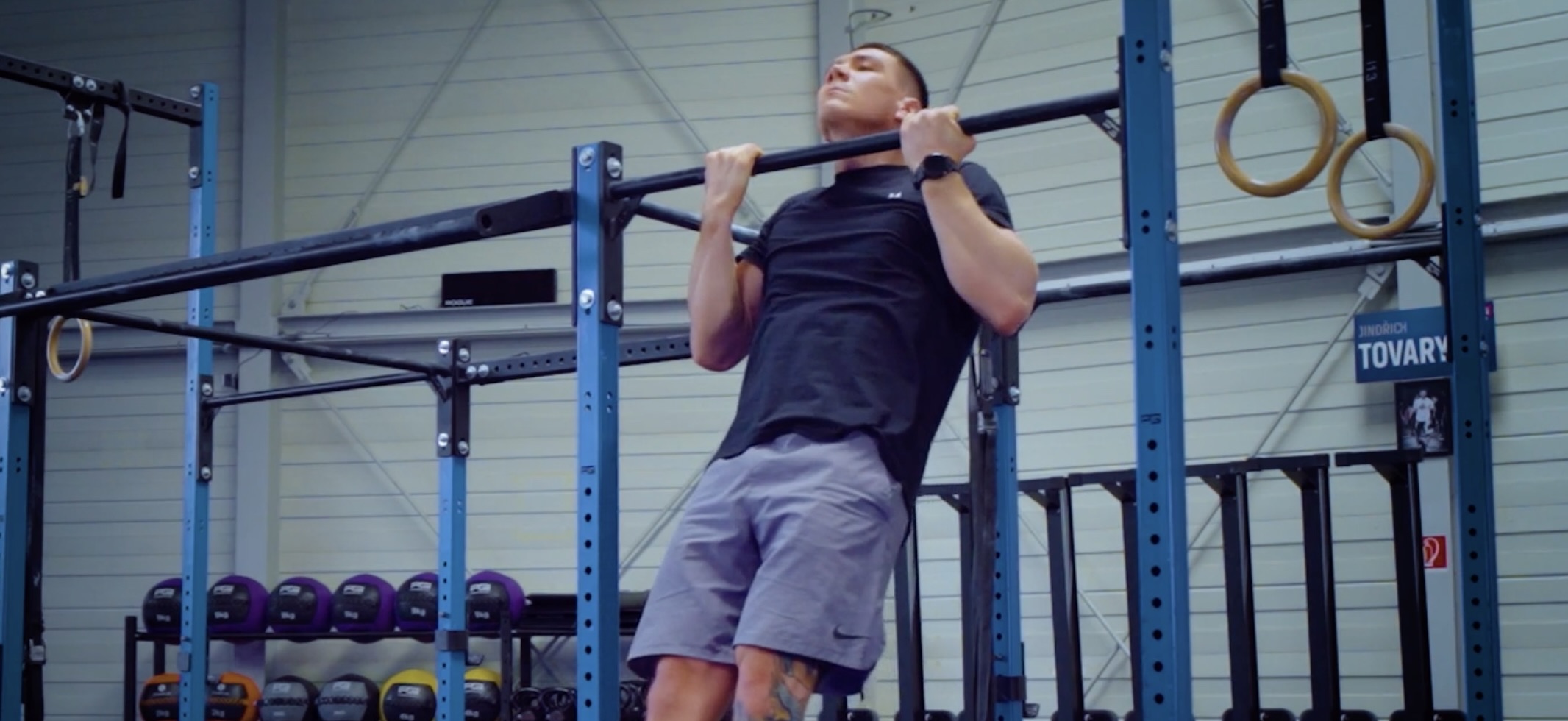
The chin up is performed with an underhand grip, typically shoulder width apart. Compared to the pull up, which uses an overhand grip, chin ups generally allow most people to complete more repetitions because the biceps contribute more to the movement.
During each repetition, several major muscle groups work together. The latissimus dorsi generates much of the pulling force, while the biceps brachii, brachialis, posterior deltoids, rhomboids, lower trapezius, forearms, and core muscles stabilize and assist throughout the movement.
Research using electromyography has consistently demonstrated that chin ups produce high levels of activation across the latissimus dorsi and elbow flexors, making them one of the most effective exercises for upper body development.
Because you are lifting your own body weight, the exercise also rewards maintaining a healthy body composition. Two people with identical pulling strength may perform very differently if one carries significantly more body fat.
How Aging Affects Chin Up Performance
Strength changes with age for several reasons. Muscle mass gradually decreases through a process known as sarcopenia. Hormonal changes reduce the body’s ability to build and repair muscle tissue. Tendons become less elastic, recovery takes longer, and physical activity often declines with age.
Fortunately, none of these changes are inevitable at a dramatic rate. Numerous studies have shown that resistance training remains highly effective across the lifespan. Older adults can significantly increase muscle mass, improve strength, and enhance functional performance through consistent training.
That means your chronological age matters far less than your training age. Someone who begins strength training at 55 can often outperform an inactive 30 year old within a few years.
Chin Up Standards by Age
The following standards assume strict repetitions with full range of motion.
A proper chin up begins from a dead hang with fully extended elbows. Pull until your chin clearly passes over the bar before lowering under control to full extension. Half repetitions should not count.
Ages 18 to 29
This is typically the period of highest physical potential.
- Excellent: 15 or more
- Above average: 10 to 14
- Average: 5 to 9
- Below average: 1 to 4
- Needs improvement: 0
Many healthy young adults struggle to complete even one chin up because of insufficient pulling strength or excess body weight. Reaching 10 strict repetitions already places you well above the general population.
Ages 30 to 39
Strength remains very high with consistent training.
- Excellent: 14 or more
- Above average: 9 to 13
- Average: 4 to 8
- Below average: 1 to 3
- Needs improvement: 0
Many recreational lifters actually achieve their lifetime best performances during this decade thanks to years of accumulated training.
Ages 40 to 49
Recovery becomes more important, but excellent strength remains achievable.
- Excellent: 12 or more
- Above average: 8 to 11
- Average: 3 to 7
- Below average: 1 to 2
- Needs improvement: 0
Maintaining double digit chin ups during your 40s is an outstanding indicator of relative strength.
Is the Floor Press the Perfect Bench Press Alternative for Stronger Pecs?
Ages 50 to 59
Natural muscle loss becomes more noticeable without regular exercise.
- Excellent: 10 or more
- Above average: 6 to 9
- Average: 2 to 5
- Below average: 1
- Needs improvement: 0
Individuals who continue resistance training frequently exceed these numbers.
Ages 60 to 69
Healthy aging remains compatible with impressive strength.
- Excellent: 8 or more
- Above average: 5 to 7
- Average: 1 to 4
- Below average: Assisted repetitions only
- Needs improvement: Unable to perform assisted repetitions
Many active adults in this age group continue performing multiple strict chin ups through lifelong strength training.
Ages 70 and Older
Preserving pulling strength becomes increasingly valuable for independence and overall health.
- Excellent: 5 or more
- Above average: 3 to 4
- Average: 1 to 2
- Below average: Assisted repetitions
- Needs improvement: Unable to perform assisted repetitions
Even one strict chin up at this age represents exceptional functional strength.
Why Relative Strength Is More Important Than Absolute Strength
Many people compare their bench press or deadlift numbers. Chin ups tell a different story. Since you lift your own body weight, carrying unnecessary mass directly affects performance. Imagine two athletes with identical back strength. One weighs 160 pounds while the other weighs 240 pounds. The lighter athlete will usually perform significantly more repetitions because less weight must be lifted with each repetition.
Research consistently demonstrates that lean body mass positively influences chin up performance, while excess fat mass reduces it. This is one reason chin ups are frequently used by military organizations, firefighters, tactical athletes, and climbing communities to assess practical strength.
Men and Women Should Expect Different Numbers
Biological differences affect upper body strength. On average, men possess greater upper body muscle mass due largely to higher testosterone levels. Women generally have lower absolute upper body strength but often demonstrate excellent muscular endurance relative to their own capabilities.
This means average repetition numbers differ between men and women. Many physically active women initially struggle with strict chin ups because upper body strength receives less emphasis throughout life. However, research shows that women improve rapidly with structured strength training.
Many women achieve their first chin up within several months of consistent practice, while experienced female athletes frequently perform well into double digit repetitions.
The Biggest Factors That Determine Chin Up Performance
Body Weight
Every extra pound increases the load you must lift. Improving body composition often increases chin up performance without any additional strength gains.
Grip Strength
Weak hands frequently become the limiting factor before the back or biceps fatigue. Studies have repeatedly linked grip strength with overall health, functional capacity, and longevity. Improving grip strength through hanging exercises, carries, rows, and deadlifts often transfers directly to better chin up performance.
Back Strength
The latissimus dorsi provides the majority of pulling power. Exercises such as rows, pulldowns, straight arm pulldowns, and single arm dumbbell rows all help develop stronger pulling muscles.
Core Stability
The body should remain relatively rigid throughout each repetition. A weak core wastes energy through excessive swinging and reduces force production.
Training Frequency
Practice matters. Research comparing different resistance training frequencies suggests that training a movement multiple times per week generally produces greater improvements than performing it only occasionally.
Performing chin ups two or three times weekly usually produces faster progress than training them once every seven days.
How to Improve Your Chin Ups
The fastest improvements come from combining strength training with intelligent progression. If you cannot yet perform one repetition, begin with assisted chin ups using resistance bands or an assisted machine. Negative repetitions are also highly effective. Jump to the top position, then lower yourself as slowly as possible.
If you can already perform several repetitions, avoid taking every set to complete failure. Performing multiple submaximal sets throughout the week allows more high quality practice while reducing fatigue.
Strengthening supporting muscles also accelerates progress. Rows, pulldowns, face pulls, biceps curls, and grip exercises all contribute to better performance.
Reducing excess body fat can also have a dramatic impact because every pound lost reduces the resistance lifted during every repetition.
Adequate dietary protein supports muscle growth and recovery. Research consistently recommends approximately 1.2 to 2.0 grams of protein per kilogram of body weight daily for active adults seeking to maximize muscle maintenance and growth.
Sleep also plays an essential role. Most muscle repair occurs during recovery rather than during training itself.
Final Thoughts
Age certainly influences strength, but it does not determine your limits. Regular resistance training can preserve remarkable levels of pulling strength for decades. Many people in their 50s, 60s, and even 70s outperform inactive adults half their age because they consistently challenge their muscles.
If you are currently unable to perform a single chin up, do not be discouraged. Every experienced athlete started somewhere. With progressive training, improved body composition, adequate nutrition, and patience, most healthy adults can dramatically improve their performance.
Whether your goal is one chin up or twenty, every additional repetition represents stronger muscles, healthier aging, and greater functional fitness.
Key Takeaways
| Age Group | Excellent | Average | Main Goal |
|---|---|---|---|
| 18 to 29 | 15 or more | 5 to 9 | Build maximum relative strength |
| 30 to 39 | 14 or more | 4 to 8 | Maintain peak performance |
| 40 to 49 | 12 or more | 3 to 7 | Preserve strength with consistent training |
| 50 to 59 | 10 or more | 2 to 5 | Slow age related muscle loss |
| 60 to 69 | 8 or more | 1 to 4 | Maintain functional independence |
| 70 and older | 5 or more | 1 to 2 | Preserve mobility and quality of life |
References
- American College of Sports Medicine. (2021). ACSM’s Guidelines for Exercise Testing and Prescription. 11th ed. Philadelphia: Wolters Kluwer.
- Cruz Jentoft, A.J., Bahat, G., Bauer, J., Boirie, Y., Bruyère, O., Cederholm, T., Cooper, C., Landi, F., Rolland, Y., Sayer, A.A., Schneider, S.M., Sieber, C.C., Topinkova, E., Vandewoude, M. and Visser, M. (2019). Sarcopenia: Revised European consensus on definition and diagnosis. Age and Ageing, 48(1), pp.16–31.
- Grgic, J., Schoenfeld, B.J., Orazem, J. and Sabol, F. (2018). Effects of resistance training performed to repetition failure or non failure on muscular strength and hypertrophy. Journal of Sport and Health Science, 10(3), pp.275–283.
- Lusk, S.J., Hale, B.D. and Russell, D.M. (2010). Grip width and forearm orientation effects on muscle activity during the lat pull down. Journal of Strength and Conditioning Research, 24(7), pp.1895–1900.
- Morton, R.W., Murphy, K.T., McKellar, S.R., Schoenfeld, B.J., Henselmans, M., Helms, E., Aragon, A.A., Devries, M.C., Banfield, L., Krieger, J.W. and Phillips, S.M. (2018). A systematic review, meta analysis and meta regression of protein supplementation on resistance training induced gains in muscle mass and strength in healthy adults. British Journal of Sports Medicine, 52(6), pp.376–384.
- Peterson, M.D., Rhea, M.R. and Sen, A. (2010). Resistance exercise for muscular strength in older adults. Ageing Research Reviews, 9(3), pp.226–237.
- Schoenfeld, B.J., Ogborn, D. and Krieger, J.W. (2016). Effects of resistance training frequency on measures of muscle hypertrophy. Sports Medicine, 46(11), pp.1689–1697.
- Signorile, J.F., Zink, A.J. and Szwed, S.P. (2002). A comparative electromyographical investigation of muscle utilization patterns using various hand positions during the lat pull down. Journal of Strength and Conditioning Research, 16(4), pp.539–546.