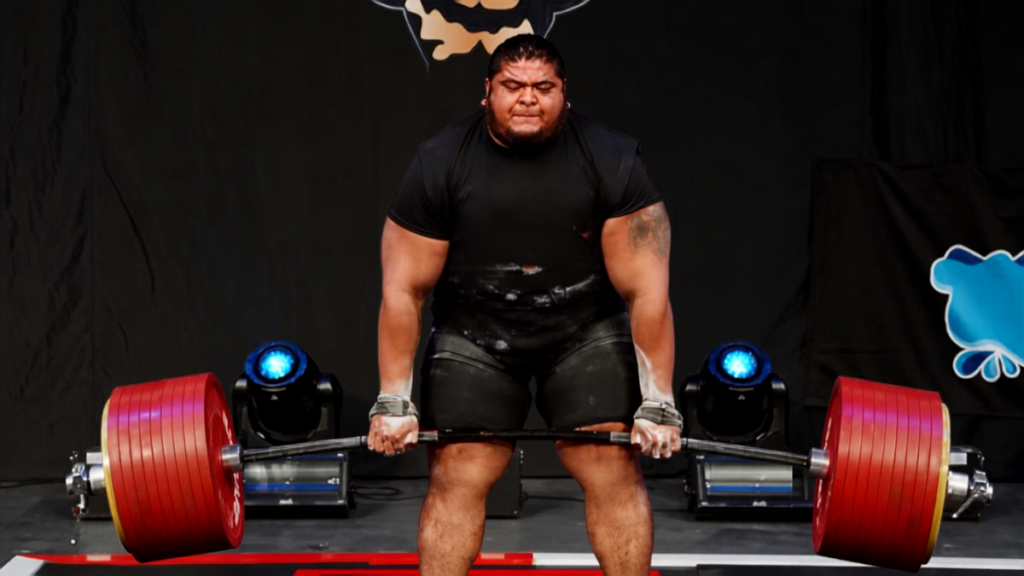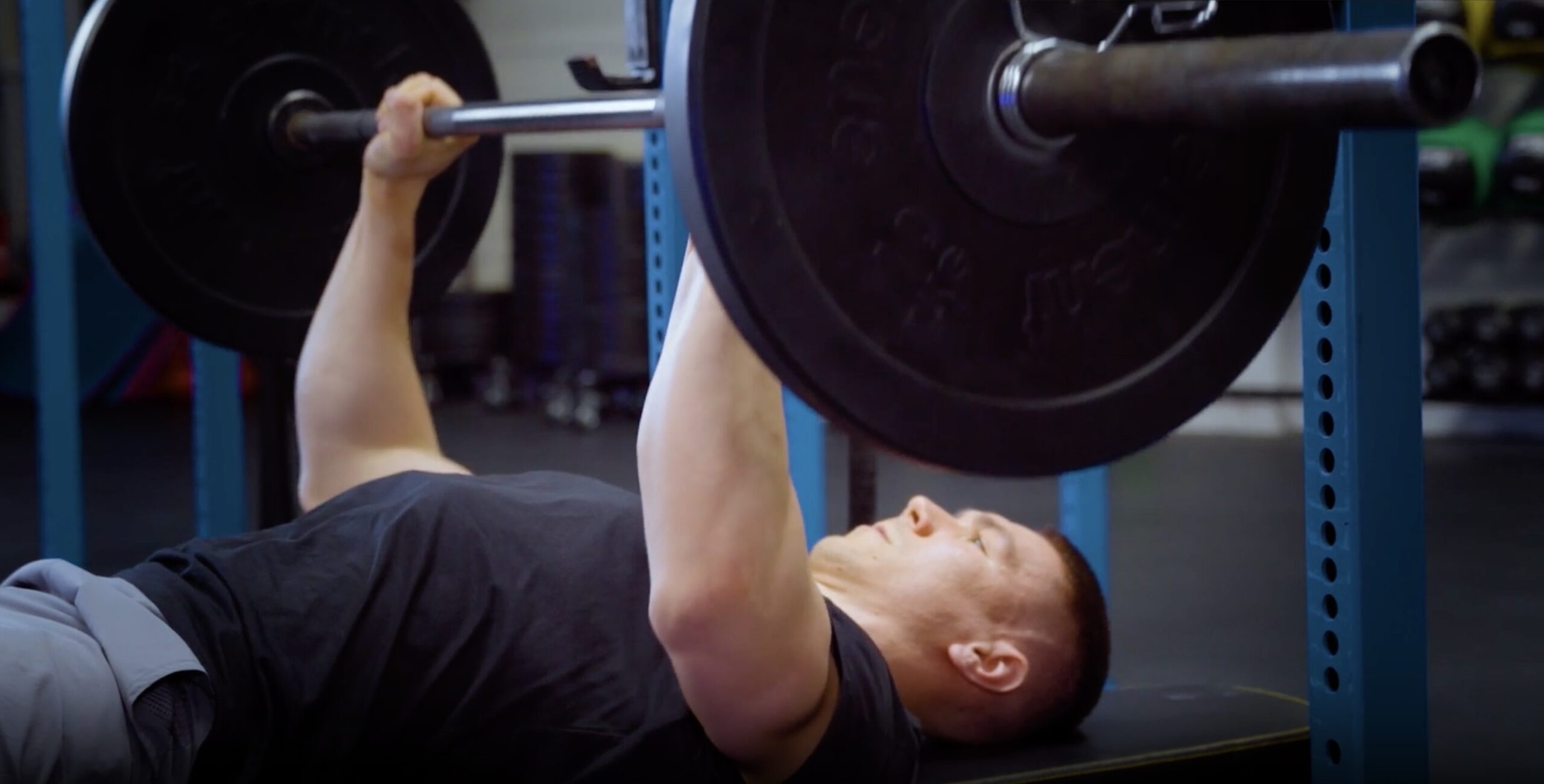


The bench press has earned its place as one of the most effective exercises for building upper body strength and muscle. Over the years, countless variations have appeared, each promising unique benefits. One of the most interesting is the Larsen Press.
Unlike the traditional bench press, the Larsen Press removes leg drive entirely. Instead of planting your feet firmly on the floor, you lift them off the ground or extend them in front of you while pressing the barbell. This forces your upper body to do all the work without assistance from the lower body.



Powerlifters often use the Larsen Press to improve pressing mechanics, while bodybuilders appreciate the increased focus on the chest, shoulders, and triceps. But does this variation actually lead to greater muscle growth? Or is it simply another exercise that looks impressive on social media?
The answer depends on what you want from your training. Understanding the biomechanics and scientific evidence behind the Larsen Press reveals where it shines and where the traditional bench press still has the advantage.
What Is the Larsen Press?
The Larsen Press is named after Norwegian powerlifter Adrian Larsen, who popularized the movement as a tool for improving bench press technique.
The exercise begins exactly like a flat barbell bench press. The major difference is your lower body position. Instead of driving your feet into the floor, your legs remain elevated or extended, preventing any contribution from the hips or legs.
This changes the lift significantly. The upper body becomes responsible for creating stability throughout every repetition. Since leg drive is eliminated, the lifter cannot generate additional momentum during the press. The result is a slower, more controlled lift that emphasizes muscular tension rather than maximal weight.
How Does the Larsen Press Change Muscle Activation?
Removing leg drive affects much more than balance. The traditional bench press is a full body exercise. While the chest, shoulders, and triceps produce most of the movement, the legs and hips generate force that helps stabilize the body and contribute to bar speed.
Research using electromyography consistently shows that greater stability allows muscles to produce higher force. When stability decreases, more muscular effort is directed toward maintaining body position rather than moving the load.
During the Larsen Press, the pectoralis major, anterior deltoids, triceps brachii, rotator cuff, and upper back all work harder to maintain control of the barbell. At the same time, the absence of leg drive generally reduces the total weight that can be lifted.
Muscle Growth Depends More on Tension Than Exercise Selection
Many people assume that a more difficult exercise automatically builds more muscle. That is not necessarily true.
The primary drivers of hypertrophy include mechanical tension, sufficient training volume, proximity to muscular failure, and progressive overload. Mechanical tension remains the most important factor because it stimulates the cellular pathways responsible for muscle protein synthesis.
Research by Brad Schoenfeld and colleagues has consistently demonstrated that muscle growth can occur across a wide range of repetition ranges, provided sets are performed close to failure and overall training volume is sufficient.
The Larsen Press increases local muscular demand because the chest, shoulders, and triceps cannot rely on lower body assistance. However, the traditional bench press usually allows substantially heavier loads. This creates an important trade off. Higher muscular effort per repetition does not necessarily mean greater overall mechanical tension if the load is much lighter.
Does Less Weight Mean Less Muscle Growth?
Not always. Studies comparing heavy and moderate loads show that hypertrophy is remarkably similar when total training volume and effort are matched.
If a lifter performs the Larsen Press with complete control and pushes sets close to failure, the chest muscles still experience substantial growth stimulus.

However, because the exercise is inherently less stable, many lifters fatigue earlier in the shoulders and stabilizing muscles before the chest receives maximal stimulation. This means individual experience matters.
Some lifters feel exceptional chest activation during Larsen Presses. Others simply notice reduced pressing strength without any improvement in chest development.
Why Bodybuilders Like the Larsen Press
Many experienced bodybuilders intentionally reduce stability during certain exercises. The goal is not lifting the most weight possible. The goal is increasing muscular involvement in the target muscle.
The Larsen Press naturally encourages slower repetitions, better bar control, and greater awareness of chest contraction. Without leg drive, there is less temptation to bounce the bar or rely on momentum. This often improves lifting technique and creates longer time under tension. Longer periods of muscular tension may contribute to hypertrophy, particularly when combined with sufficient training volume and progressive overload.
The Technique Benefits Are Significant
Even if muscle growth is similar between the Larsen Press and traditional bench press, the technique benefits are substantial. Removing leg drive exposes weaknesses that many lifters never notice during conventional pressing.
Poor bar path becomes obvious. Uneven pressing strength between arms becomes easier to identify. Weak upper back stability is more noticeable. Inconsistent shoulder positioning also becomes apparent. Because the exercise demands greater control, many lifters develop cleaner pressing mechanics that later transfer back to their regular bench press. Powerlifting coaches frequently use the Larsen Press during off season training for this reason.
Does the Larsen Press Increase Chest Activation?
Direct research specifically examining the Larsen Press remains limited. However, several studies examining bench press variations provide useful insight. Research comparing unstable and stable pressing conditions shows that unstable exercises generally increase activation of stabilizing muscles while reducing the amount of weight lifted. Similarly, studies examining bench press grip width and technique demonstrate that relatively small changes in body position alter muscular recruitment patterns.
3 Best Beginner Exercises for Bigger Arms Only Using Machines
Although higher muscle activation often appears attractive, increased electromyographic activity does not automatically translate into greater muscle growth. Hypertrophy depends on the total training stimulus accumulated over weeks and months rather than one exercise producing slightly higher muscle activation.
Is the Larsen Press Better for Beginners?
Usually not. Beginners benefit most from mastering the standard bench press first. Learning proper setup, bar path, shoulder positioning, and safe spotting should come before experimenting with advanced variations.
Because beginners already struggle with stability, removing leg drive often makes the exercise unnecessarily difficult. The traditional bench press provides a more efficient learning environment. Once technique becomes consistent, adding Larsen Presses as an accessory movement can help reinforce proper upper body control.
Is It Better for Intermediate and Advanced Lifters?
This is where the Larsen Press becomes much more valuable. Intermediate and advanced lifters often reach plateaus where technique rather than strength becomes the limiting factor. The Larsen Press addresses several common weaknesses.
- It teaches patience during the descent.
- It improves control near the chest.
- It strengthens the lockout through greater triceps contribution.
- It develops upper back stability.
Many experienced lifters also find that it reduces excessive arching and encourages better positioning throughout the movement.
How Much Weight Should You Use?
Expect to use less weight than your normal bench press. Most lifters handle between 70 and 90 percent of their conventional bench press load depending on experience and technique.
Trying to match your normal bench numbers defeats the purpose of the exercise. Instead, prioritize smooth repetitions, complete control, and full range of motion. Keeping every repetition technically perfect produces a better hypertrophy stimulus than sacrificing form for heavier weights.
Programming the Larsen Press for Muscle Growth
The Larsen Press works best as a secondary pressing exercise rather than your primary strength movement. After completing heavy bench presses, adding Larsen Presses for moderate repetitions allows you to accumulate additional chest volume with excellent technique.
Most hypertrophy focused programs respond well to three or four sets of six to twelve repetitions performed within one to three repetitions of muscular failure. Progressive overload remains essential. Increase repetitions, improve technique, or gradually add weight over time. Consistent progression drives muscle growth more effectively than constantly changing exercises.
So Is the Larsen Press the Perfect Chest Exercise?
Probably not. There is no perfect chest exercise. Scientific evidence consistently shows that muscle growth depends more on progressive overload, sufficient training volume, proper recovery, and nutritional support than any single movement.
The Larsen Press is an outstanding accessory exercise because it develops pressing control, improves stability, and encourages excellent technique. For many lifters, it also increases awareness of chest engagement and reduces excessive reliance on leg drive.
However, the traditional bench press remains superior for maximizing total load and developing absolute pressing strength. The smartest approach is not choosing one over the other.
- Use the standard bench press as your primary strength builder.
- Use the Larsen Press to improve technique, increase quality training volume, and reinforce strict upper body pressing mechanics.
Together they complement each other extremely well. Over months of consistent training, that combination is likely to produce better chest development than relying exclusively on either exercise alone.
Key Takeaways
| Topic | Takeaway |
|---|---|
| Main benefit | The Larsen Press removes leg drive and increases upper body stability demands. |
| Muscle growth | It can build muscle effectively when performed close to failure with sufficient volume. |
| Strength | The traditional bench press remains better for maximizing absolute strength because heavier loads can be used. |
| Best users | Intermediate and advanced lifters benefit most from the technique improvements. |
| Programming | Use it as an accessory exercise after primary bench pressing or on hypertrophy focused upper body days. |
| Perfect chest exercise? | No single exercise is perfect. Combining the Larsen Press with conventional bench pressing offers the greatest overall benefit for most lifters. |
References
- Anderson, K. and Behm, D.G. (2005). Trunk muscle activity increases with unstable squat movements. Canadian Journal of Applied Physiology, 30(1), pp. 33 to 45.
- Behm, D.G. and Colado, J.C. (2012). The effectiveness of resistance training using unstable surfaces and devices for rehabilitation. International Journal of Sports Physical Therapy, 7(2), pp. 226 to 241.
- Calatayud, J., Borreani, S., Colado, J.C., Martin, F., Tella, V. and Andersen, L.L. (2015). Bench press and push up at comparable levels of muscle activity results in similar strength gains. Journal of Strength and Conditioning Research, 29(1), pp. 246 to 253.
- Gentil, P., Fisher, J. and Steele, J. (2017). A review of the acute effects and long term adaptations of single and multi joint exercises during resistance training. Sports Medicine, 47(5), pp. 843 to 855.
- Grgic, J., Schoenfeld, B.J., Orazem, J. and Sabol, F. (2020). Effects of resistance training performed to repetition failure or non failure on muscular strength and hypertrophy. Journal of Sport and Health Science, 10(3), pp. 275 to 283.
- Saeterbakken, A.H., van den Tillaar, R. and Fimland, M.S. (2011). A comparison of muscle activity and one repetition maximum strength of three chest press exercises with different stability requirements. Journal of Strength and Conditioning Research, 25(2), pp. 533 to 538.