

If you are new to strength training, one of the first questions you will probably ask is whether you should bench press with a barbell or dumbbells. Both exercises are staples of muscle building programs, both target the chest, shoulders, and triceps, and both can help beginners gain impressive strength and size. However, they are not identical.
The differences between the two exercises affect muscle activation, strength development, safety, learning curve, and long term progress. Choosing the right variation can make your first months of training more productive while reducing frustration and lowering injury risk.


The good news is that scientific research provides useful answers. Studies comparing barbells and dumbbells have examined muscle activation, movement mechanics, strength improvements, and training outcomes. When combined with practical coaching experience, the evidence paints a clear picture of which exercise deserves priority for beginners.
What Makes a Great Chest Exercise for Beginners?
The best beginner exercise is not necessarily the one that allows the heaviest weight or creates the biggest muscle pump. Instead, it should meet several important criteria.
It should effectively stimulate the chest muscles through a large range of motion. It should be simple enough to learn without requiring years of technical practice. It should allow gradual increases in weight over time, since progressive overload remains one of the most important drivers of muscle growth. Finally, it should have a manageable injury risk so new lifters can train consistently.
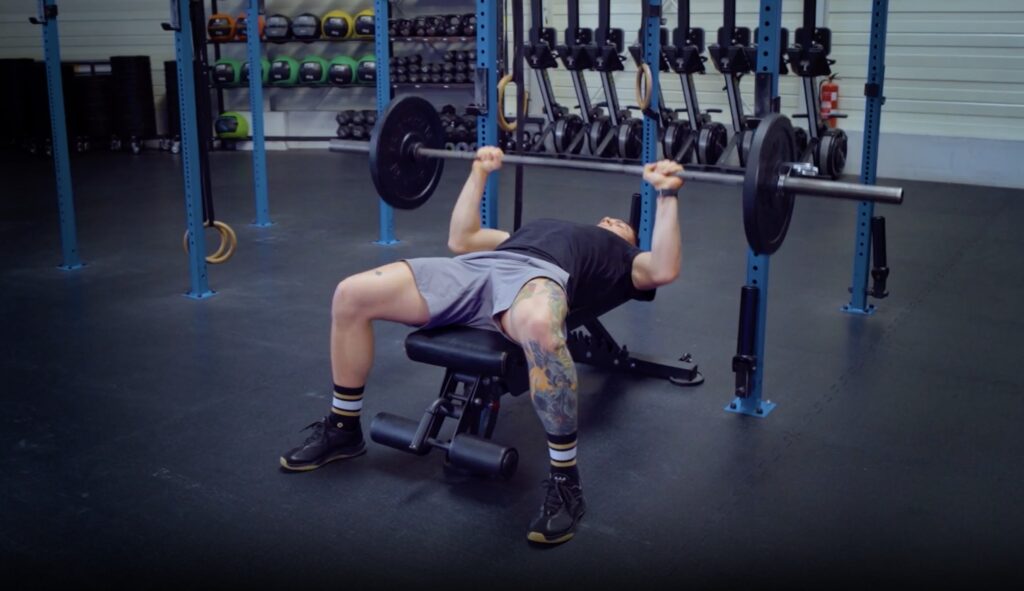
Both the barbell bench press and dumbbell bench press satisfy these requirements to varying degrees, but each has unique strengths and weaknesses.
How the Chest Builds Muscle
Understanding how muscle growth occurs makes it easier to compare exercises. Skeletal muscle grows primarily in response to mechanical tension, sufficient training volume, and consistent progression. Modern evidence suggests that muscle hypertrophy can be achieved across a wide range of loads, provided sets are performed close to muscular failure.
For beginners, nearly any properly performed resistance exercise creates a powerful growth stimulus. Their muscles are highly responsive because they are adapting to a completely new challenge.
The pectoralis major serves as the primary mover during both versions of the bench press. The anterior deltoids and triceps brachii also contribute significantly to pressing strength. As a result, both exercises develop multiple upper body muscles simultaneously, making them excellent compound movements.
The Barbell Bench Press
The traditional barbell bench press is arguably the most recognizable strength exercise in the world. The lifter lowers a loaded bar to the chest before pressing it back to full arm extension.
Because both hands are connected by the same bar, stability demands are relatively low compared to dumbbells. This allows most people to lift heavier loads.
Advantages of the Barbell Bench Press
The greatest benefit of the barbell bench press is progressive overload. Adding small weight increments is straightforward because barbells typically allow increases of just a few pounds at a time.
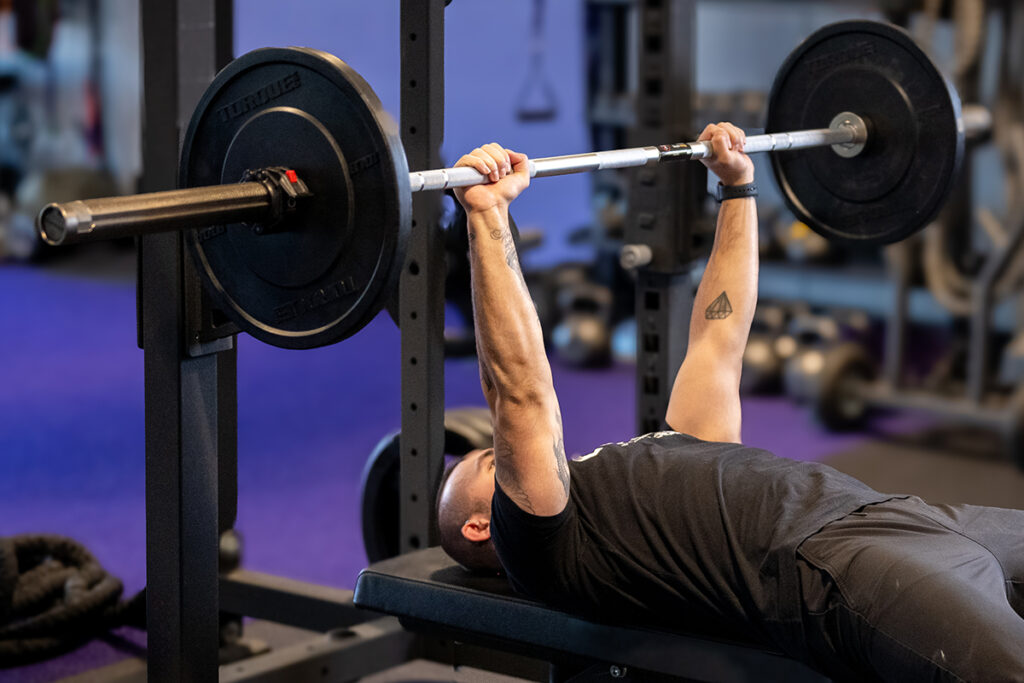
Lifting heavier loads also produces high levels of mechanical tension, one of the primary drivers of muscle growth.
Research consistently shows that the barbell bench press enables significantly greater absolute loads than dumbbell pressing. This makes it especially valuable for developing maximal upper body strength.
Another advantage is movement consistency. Since the bar follows a predictable path, beginners often find it easier to repeat the same technique from workout to workout. Most commercial gyms also provide multiple bench stations with safety racks, making the exercise highly accessible.
Is The Larsen Press the Perfect Chest Exercise for Muscle Mass Gains?
Limitations of the Barbell Bench Press
The fixed position of the hands limits natural arm movement. Everyone has slightly different shoulder anatomy, and some individuals feel discomfort when pressing a straight bar. The bar also stops when it reaches the chest. This limits the range of motion compared with dumbbells, which can descend slightly lower.
Another drawback is that one side of the body can compensate for the other. If one arm is stronger, it may contribute more without the lifter realizing it. Finally, heavy barbell bench pressing usually requires a spotter for maximum safety.
The Dumbbell Bench Press
- The dumbbell bench press uses two independent weights instead of a connected bar.
- Each arm moves separately, allowing a more natural pressing path that better matches individual shoulder mechanics.
- Because each arm must stabilize its own weight, the exercise requires greater coordination and muscular control.
Advantages of the Dumbbell Bench Press
One of the biggest benefits is the increased range of motion. Since the dumbbells are not blocked by the chest, the elbows can travel slightly farther, placing the chest muscles under tension through a longer movement.

Research suggests that training muscles through larger ranges of motion may promote greater hypertrophy in certain situations. Dumbbells also eliminate side to side compensation. Each arm performs the same amount of work, making it easier to identify and correct strength imbalances.
Many lifters report greater shoulder comfort because the wrists and elbows can rotate naturally during the movement. Several electromyography studies have found similar activation of the pectoralis major during both barbell and dumbbell pressing. However, dumbbells often produce greater activation of stabilizing muscles due to the increased balance demands.
Limitations of the Dumbbell Bench Press
The biggest disadvantage is loading. Most people can lift substantially less total weight with dumbbells than with a barbell. Since each arm works independently, coordination becomes the limiting factor before maximal force production.
Getting heavy dumbbells into position also becomes increasingly difficult as strength improves. Progression may be less precise because many gyms increase dumbbell weights in five pound increments rather than the smaller increases available with barbells.
Finally, beginners sometimes struggle to control the weights, leading to inconsistent technique during their first few sessions.
Which Exercise Builds More Chest Muscle?
This is where many people expect one clear winner. In reality, current scientific evidence suggests that both exercises are highly effective for chest hypertrophy.
Studies comparing muscle activation during barbell and dumbbell bench pressing generally report similar activation of the pectoralis major. The major difference is that dumbbells require greater stabilization from smaller muscles around the shoulder.
Research examining resistance training programs consistently shows that muscle growth depends more on total training volume, effort level, and progressive overload than on whether a barbell or dumbbells are used.
If weekly training volume and effort are matched, both exercises can build significant chest muscle.
This means beginners should focus less on finding the perfect exercise and more on performing one consistently with good technique.
Which Exercise Builds More Strength?
Strength and muscle size are related but not identical. The barbell bench press has a clear advantage for building maximal pressing strength.

Because stability demands are lower, the nervous system can produce higher levels of force. This allows greater loading, which directly improves barbell strength.
Studies comparing training specificity consistently show that practicing a movement improves performance in that exact movement more than alternative exercises. If your goal includes increasing your one repetition maximum on the bench press, you need to spend time practicing the barbell version.
Dumbbells certainly improve pressing strength, especially in beginners, but they do not transfer perfectly to maximal barbell performance.
Which Exercise Is Safer for Beginners?
Safety depends largely on technique, supervision, and appropriate loading.
The barbell bench press carries greater consequences if a repetition fails because the bar can become trapped on the chest or neck. Using safety arms or a competent spotter greatly reduces this risk.
Dumbbells are generally easier to escape from during a failed repetition because they can usually be dropped to the sides. However, lifting heavy dumbbells into the starting position can place stress on the shoulders if performed carelessly.
From a shoulder health perspective, many coaches favor dumbbells for beginners because the wrists and elbows can move naturally throughout the lift. This may reduce joint stress for people with limited shoulder mobility. Neither exercise is inherently dangerous when performed correctly with appropriate loads.
Should Beginners Choose One or Use Both?
The smartest approach is often to combine them. A beginner might use the barbell bench press as the primary strength movement early in the workout when energy levels are highest. Dumbbell presses can then follow for additional chest volume while increasing range of motion and improving shoulder stability.
This combination provides the advantages of both exercises while minimizing their individual limitations. For someone training twice per week, one session could emphasize the barbell while the second focuses on dumbbells.
Over time, this exposes the muscles to slightly different movement patterns, helps prevent overuse, and develops balanced upper body strength.
The Final Verdict
For pure muscle growth, there is no convincing scientific evidence that either the barbell or dumbbell bench press is dramatically superior. Both effectively train the chest, shoulders, and triceps when performed with proper technique and sufficient effort.
The barbell bench press is the better choice for building maximal strength and progressing heavier loads over time. It is easier to standardize, allows smaller weight increases, and serves as one of the foundational exercises in strength training.
The dumbbell bench press offers greater freedom of movement, a larger range of motion, improved unilateral development, and increased stability demands. Many beginners also find it more comfortable on their shoulders.
Rather than viewing the exercises as competitors, beginners should think of them as complementary tools. Building a strong, muscular chest is less about choosing one exercise forever and more about training consistently, progressing gradually, and maintaining excellent technique.
If you have to choose only one exercise during your first months of lifting, the barbell bench press offers a slight advantage because of its ease of progression and superior strength development. However, adding dumbbell bench presses to your program as soon as possible creates a more complete training stimulus and may help build balanced muscle development over the long term.
Key Takeaways
| Topic | Main Point |
|---|---|
| Best for strength | Barbell bench press allows heavier loading and greater maximal strength development. |
| Best for muscle growth | Both exercises produce similar chest hypertrophy when training volume and effort are matched. |
| Shoulder comfort | Dumbbells often feel more natural because each arm moves independently. |
| Range of motion | Dumbbells provide a slightly larger range of motion, which may benefit muscle development. |
| Stability | Dumbbells require greater stabilization and coordination. |
| Progressive overload | Barbells make small weight increases easier over time. |
| Muscle imbalances | Dumbbells help identify and reduce side to side strength differences. |
| Best beginner strategy | Learn the barbell bench press, then include dumbbell pressing as an accessory exercise for balanced development. |
References
- Barnett, C., Kippers, V. and Turner, P. (1995) ‘Effects of variations of the bench press exercise on the EMG activity of five shoulder muscles’, Journal of Strength and Conditioning Research, 9(4), pp. 222 to 227.
- Gentil, P., Soares, S. and Bottaro, M. (2015) ‘Single versus multi joint resistance exercises for muscle strength and hypertrophy’, Sports Medicine, 45(6), pp. 841 to 851.
- Krzysztofik, M., Wilk, M., Wojdala, G. and Golas, A. (2019) ‘Maximizing muscle hypertrophy. A systematic review of advanced resistance training techniques and methods’, International Journal of Environmental Research and Public Health, 16(24), pp. 4897.
- Saeterbakken, A.H., van den Tillaar, R. and Fimland, M.S. (2011) ‘A comparison of muscle activity and one repetition maximum strength of three chest press exercises with different stability requirements’, Journal of Strength and Conditioning Research, 25(2), pp. 533 to 538.
- Schoenfeld, B.J. (2010) ‘The mechanisms of muscle hypertrophy and their application to resistance training’, Journal of Strength and Conditioning Research, 24(10), pp. 2857 to 2872.
- Schoenfeld, B.J., Grgic, J., Ogborn, D. and Krieger, J.W. (2017) ‘Strength and hypertrophy adaptations between low load and high load resistance training. A systematic review and meta analysis’, Journal of Strength and Conditioning Research, 31(12), pp. 3508 to 3523.
- Schoenfeld, B.J. and Grgic, J. (2020) ‘Does training volume matter for muscle hypertrophy and strength? A systematic review and meta analysis’, Sports Medicine, 50(8), pp. 1311 to 1322.