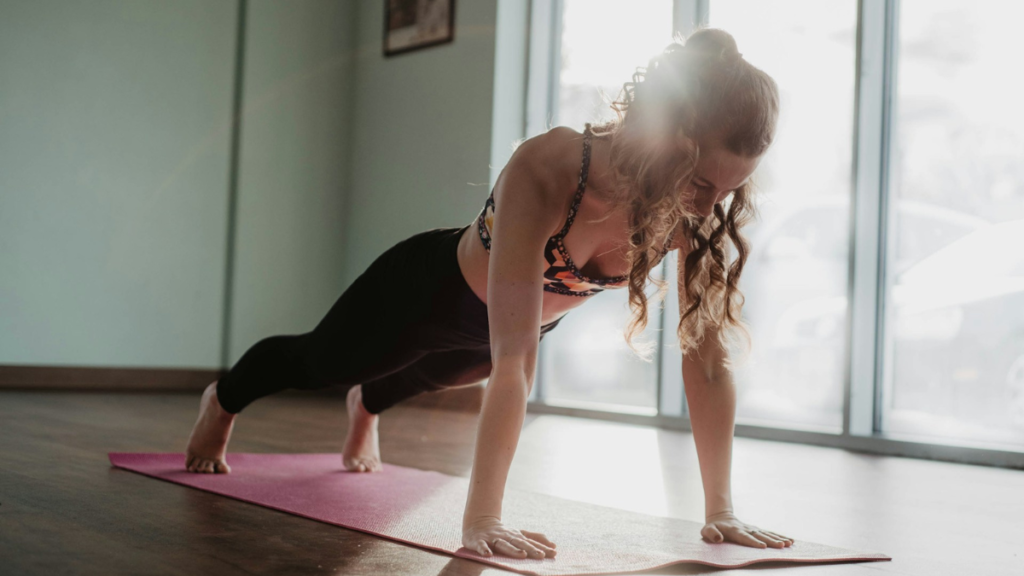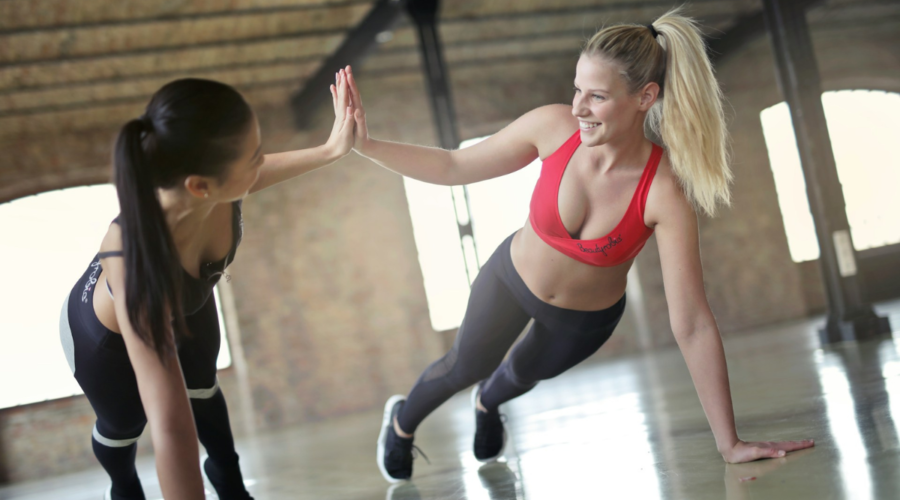


The plank is one of the simplest exercises you can do, but it is also one of the most misunderstood. Many people believe that holding a plank for several minutes is the ultimate sign of fitness. Others struggle to hold the position for just a few seconds and wonder if they are falling behind.
The truth is that there is no single number that defines a good plank. Your age, training experience, body weight, muscle strength, and overall health all influence how long you can maintain proper form. More importantly, the quality of your plank matters much more than the number of seconds on the clock.


Research consistently shows that core endurance is associated with better functional movement, reduced injury risk, improved athletic performance, and healthier aging. The plank is one of the most reliable and accessible ways to measure and improve that endurance.
So how long should you be able to hold a plank based on your age? Science offers useful benchmarks that can help you set realistic expectations.
Why the Plank Matters
The plank is an isometric exercise, which means your muscles generate force without changing length. Instead of moving through repetitions, your muscles work continuously to stabilize your spine and pelvis.
During a properly performed forearm plank, numerous muscles are active. The rectus abdominis, transverse abdominis, internal and external obliques, erector spinae, gluteus maximus, shoulders, chest, and hip muscles all contribute to maintaining posture.
5 Perfect Exercises for Every Beginner that Wants Stronger Shoulders
Electromyography studies have shown that planks effectively activate deep abdominal muscles that play an essential role in spinal stability. Unlike exercises that primarily train movement, the plank develops endurance, allowing your muscles to resist fatigue during daily activities and sports.
Core endurance is especially important because many everyday tasks require muscles to stabilize rather than generate explosive power. Walking, carrying groceries, lifting children, climbing stairs, and maintaining posture throughout the day all rely on sustained muscular endurance.
What Science Says About Core Endurance
Researchers have spent decades studying core endurance because it appears to be a better predictor of spinal health than maximum strength alone. One of the most influential researchers in this area, Professor Stuart McGill, developed several endurance tests to evaluate core function. These include the plank, side plank, and trunk extension hold.
McGill’s work suggests that individuals with balanced core endurance are less likely to develop chronic lower back problems. Rather than focusing on maximum strength, his research emphasizes maintaining endurance while preserving good movement quality.
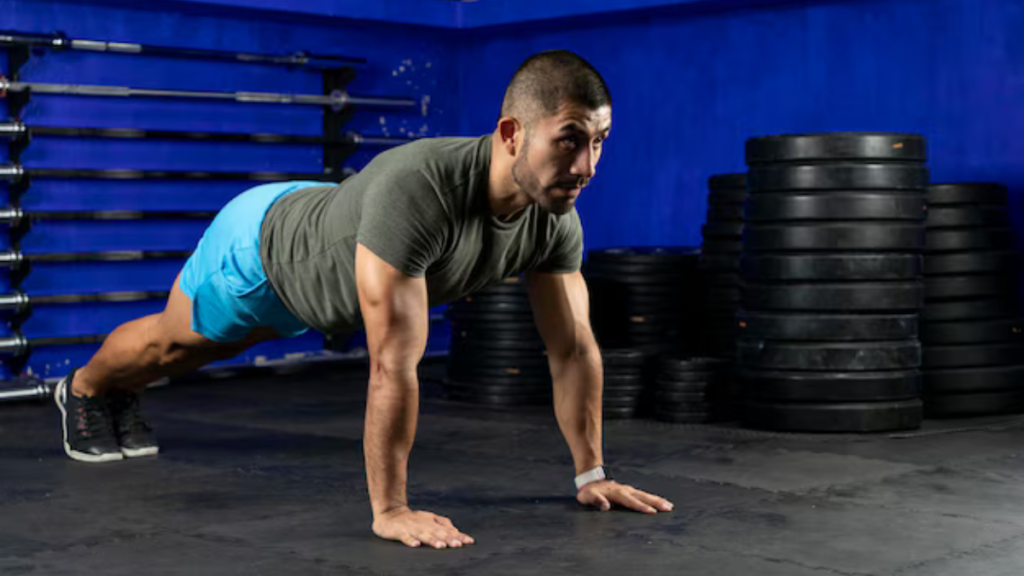
Large observational studies also show that muscular endurance is associated with better physical function throughout adulthood. Individuals who maintain higher levels of muscular fitness generally experience slower declines in mobility as they age.
Although the plank is only one measure of fitness, it provides valuable information about your ability to stabilize your spine during physical activity.
How Age Changes Your Plank Performance
Age naturally affects muscular endurance. Beginning around age 30, adults gradually lose muscle mass in a process known as sarcopenia. This process accelerates after age 60 if resistance training is not performed regularly.
The decline is not simply about muscle size. Muscle quality, nerve function, recovery capacity, and coordination also change over time. As a result, endurance during isometric exercises often decreases with age. Fortunately, this decline is far from inevitable.
Numerous intervention studies have shown that resistance training and regular physical activity can preserve muscular endurance well into older adulthood. Adults in their sixties and seventies who strength train consistently often outperform sedentary individuals decades younger. This means your age should guide expectations, but it should never become an excuse.
Recommended Plank Times by Age
There is no universal clinical chart that assigns ideal plank times to every age group. However, combining available research on muscular endurance, functional fitness testing, and normative fitness assessments allows for practical benchmarks. These values assume proper technique throughout the entire hold.
Ages 18 to 29
Healthy adults in this age group should generally aim for 60 to 120 seconds.
Many recreationally active individuals can comfortably exceed one minute. Competitive athletes often hold quality planks for two minutes or longer, although additional time provides diminishing fitness benefits. If you cannot maintain proper form for at least 30 seconds, improving core endurance should become a training priority.
Ages 30 to 39
A realistic target is 60 to 90 seconds.
Although muscular endurance may begin to decline slightly during this decade, regular exercise usually prevents noticeable losses. Most healthy adults should still be capable of holding a technically sound one minute plank.
Ages 40 to 49
Good performance generally falls between 45 and 75 seconds.
At this stage, consistent strength training becomes increasingly important for maintaining muscle function. Adults who remain physically active often continue achieving plank times similar to younger adults.
Ages 50 to 59
Holding a quality plank for 40 to 60 seconds represents solid core endurance.
Many people in this decade begin experiencing reductions in physical activity. Those who continue resistance training typically maintain much better endurance than sedentary peers.
Ages 60 to 69
A target of 30 to 45 seconds is a strong indicator of functional core endurance. Studies consistently show that resistance exercise remains highly effective at preserving muscular function during older adulthood.
Age 70 and Older
Maintaining proper plank position for 20 to 40 seconds demonstrates meaningful core endurance.
For many older adults, shorter holds performed with excellent technique provide greater benefits than attempting longer durations with poor form.
Why More Time Is Not Always Better
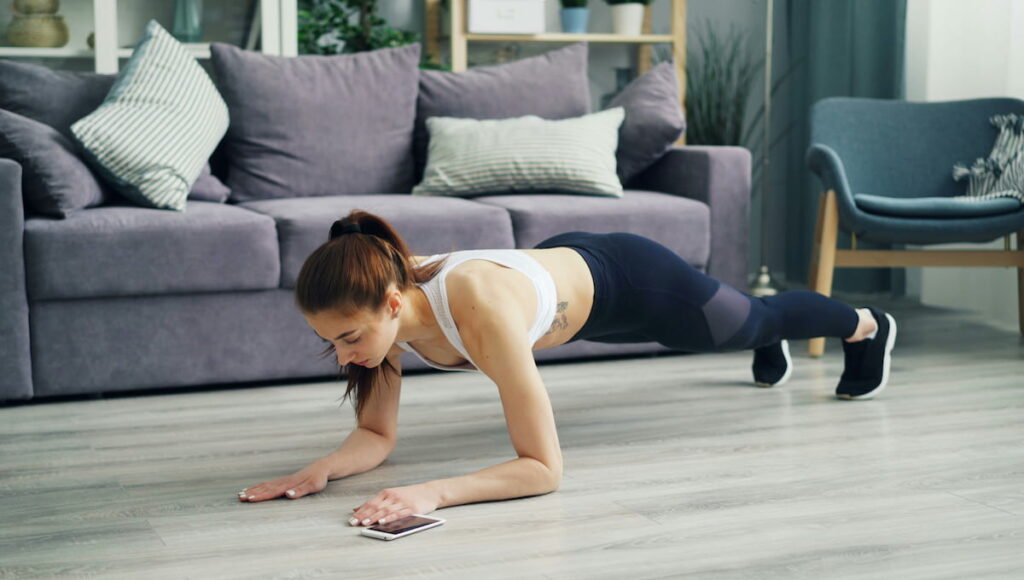
Social media has popularized extreme plank challenges lasting five, ten, or even twenty minutes. These impressive performances rarely provide additional health benefits.
Muscular endurance improves most efficiently through progressive overload, not marathon holds. After approximately one to two minutes, improvements become increasingly specific to simply holding a plank longer rather than developing functional strength.
Long holds may also encourage compensations such as excessive spinal extension, shoulder collapse, or altered breathing. Many strength coaches now recommend progressing by increasing exercise difficulty instead of dramatically extending duration. For example, lifting one foot, extending one arm, or performing weighted planks challenges the core more effectively than simply waiting longer.
Form Matters More Than Seconds
A technically perfect 30 second plank is far more valuable than a sloppy two minute effort.
- Proper technique begins with positioning the elbows directly beneath the shoulders.
- The head should remain in line with the spine rather than looking upward or dropping toward the floor.
- The shoulders should stay active instead of collapsing.
- The hips should neither sag toward the ground nor rise excessively.
- The glutes should remain lightly contracted while the abdominal muscles brace naturally around the spine.
- Breathing should stay slow and controlled throughout the hold.
- The plank should end as soon as posture begins to deteriorate.
Research examining trunk muscle activation demonstrates that poor positioning reduces the effectiveness of the exercise while increasing stress on passive structures of the spine.
Factors That Influence Your Plank Time
Age is only one piece of the puzzle. Body weight has a major influence because the plank requires supporting your own mass. Individuals carrying more weight often find the exercise more demanding even when they possess considerable strength.
Training history also matters. Someone who regularly performs resistance training, gymnastics, climbing, rowing, or yoga usually develops greater core endurance than someone who rarely exercises. Sex differences appear relatively small after accounting for body size and training status. Women often demonstrate similar or even better muscular endurance during certain isometric tasks despite generally producing lower maximal force.
Previous injuries can also affect performance. Lower back pain, shoulder problems, or wrist discomfort may reduce plank duration independent of overall fitness. Finally, fatigue plays an important role. Testing your plank after an intense workout will naturally produce lower scores than performing it while fresh.
How to Improve Your Plank Time
Improving your plank is remarkably straightforward. Training the exercise two or three times each week appears sufficient for most people. Instead of attempting one maximum effort, performing several shorter holds usually produces better results.
For example, if your maximum plank is 45 seconds, performing three or four sets of 30 seconds allows you to accumulate more high quality training time. As endurance improves, gradually increase hold duration or progress to more challenging variations.
Adding side planks is also worthwhile because they strengthen muscles responsible for resisting lateral movement and rotational forces. A comprehensive core program should also include movement based exercises such as dead bugs, bird dogs, farmer carries, and controlled rotational movements.
Research comparing different core training methods suggests that variety produces broader improvements in stability and function than relying on one exercise alone.
Should Beginners Worry About Their Time?
Absolutely not. Beginners often become discouraged after comparing themselves with experienced exercisers online. What matters most is establishing consistent practice while maintaining proper technique.
Even holding a plank for 15 to 20 seconds represents a useful training stimulus if performed correctly. Within six to eight weeks of regular training, beginners frequently experience substantial improvements in muscular endurance. Progress happens surprisingly quickly because the nervous system becomes more efficient at coordinating muscle activity before major increases in muscle size occur. Consistency will always beat occasional heroic efforts.
The Bottom Line
A good plank is not defined by an internet challenge or a world record. It is defined by your ability to maintain excellent posture while your core muscles stabilize your body.
Most healthy younger adults should aim for around one minute, while older adults can achieve excellent functional fitness with shorter holds. Regular strength training can dramatically slow the age related decline in muscular endurance, making chronological age much less important than lifestyle.
Instead of asking how long you can survive in a plank, ask whether every second demonstrates good technique. When your posture begins to break down, the exercise has already served its purpose.
A technically sound 45 second plank performed consistently will contribute far more to long term health and athletic performance than a shaky five minute hold driven by ego.
Key Takeaways
| Topic | Key Point |
|---|---|
| Why planks matter | They develop core endurance, spinal stability, and functional strength rather than maximal force. |
| Best measure | Technique is more important than total time. End the plank when form deteriorates. |
| Ages 18 to 29 | Aim for approximately 60 to 120 seconds. |
| Ages 30 to 39 | Aim for approximately 60 to 90 seconds. |
| Ages 40 to 49 | Aim for approximately 45 to 75 seconds. |
| Ages 50 to 59 | Aim for approximately 40 to 60 seconds. |
| Ages 60 to 69 | Aim for approximately 30 to 45 seconds. |
| Age 70 and older | Aim for approximately 20 to 40 seconds. |
| Improving performance | Practice two or three times weekly with multiple quality sets rather than one maximum effort. |
| Long holds | Extremely long planks offer limited additional fitness benefits compared with harder variations. |
References
- Akuthota, V., Ferreiro, A., Moore, T. and Fredericson, M., 2008. Core stability exercise principles. Current Sports Medicine Reports, 7(1), pp.39 to 44.
- Behm, D.G., Drinkwater, E.J., Willardson, J.M. and Cowley, P.M., 2010. Canadian Society for Exercise Physiology position stand. The use of instability to train the core in athletic and non athletic conditioning. Applied Physiology, Nutrition, and Metabolism, 35(1), pp.109 to 112.
- Granacher, U., Gollhofer, A., Hortobágyi, T., Kressig, R.W. and Muehlbauer, T., 2013. The importance of trunk muscle strength for balance, functional performance, and fall prevention in seniors. Sports Medicine, 43(7), pp.627 to 641.
- Hibbs, A.E., Thompson, K.G., French, D., Wrigley, A. and Spears, I., 2008. Optimizing performance by improving core stability and core strength. Sports Medicine, 38(12), pp.995 to 1008.
- McGill, S.M., Childs, A. and Liebenson, C., 1999. Endurance times for low back stabilization exercises. Archives of Physical Medicine and Rehabilitation, 80(8), pp.941 to 944.
- McGill, S.M., 2010. Core training. Evidence translating to better performance and injury prevention. Strength and Conditioning Journal, 32(3), pp.33 to 46.
- Narici, M.V. and Maffulli, N., 2010. Sarcopenia. Characteristics, mechanisms and functional significance. British Medical Bulletin, 95(1), pp.139 to 159.