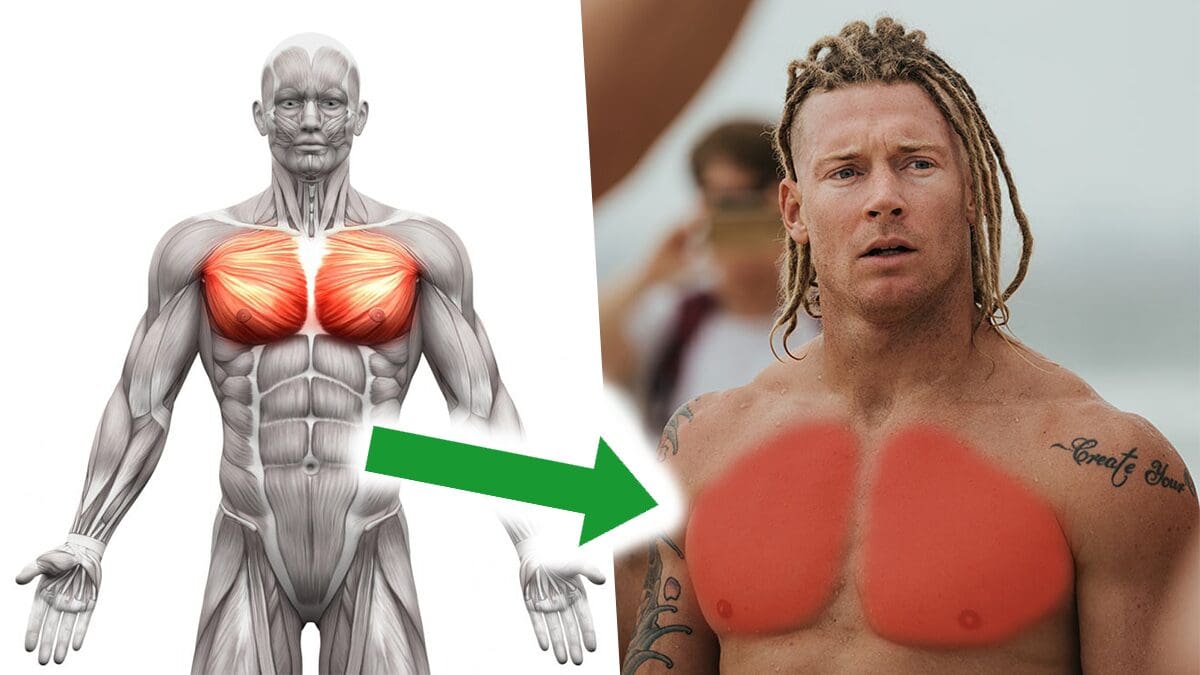


Building a thicker chest is not about finding a secret exercise or spending an hour doing random presses. Your pecs grow when you repeatedly challenge them with enough tension, good technique, sufficient training volume, and recovery that allows the muscle to adapt.
For beginners, the process is especially rewarding because consistent training can produce noticeable improvements in strength, coordination, and muscle size. However, chest training can also become frustrating when every set turns into a shoulder or triceps exercise. The answer is not necessarily more weight or more exercises. It is learning to press well, training the pecs often enough, and progressing patiently over time.


The pectoralis major is the large muscle that gives the chest its width and thickness. Its main functions include bringing the upper arm toward the body, moving the arm across the chest, and helping rotate the upper arm inward. Effective chest exercises load these actions, particularly when the pecs are challenged through a controlled range of motion. These three tips will help beginners create a chest routine that is simple, productive, and sustainable.
Tip 1: Learn to Press With Your Chest, Not Just Your Shoulders and Triceps
Use a Full, Controlled Range of Motion
The bench press is one of the most effective exercises for building the chest, but only when it is performed with control. Lowering the bar or dumbbells to a comfortable depth places the pecs under tension while they are lengthened. This is important because resistance training performed through a fuller range of motion generally produces greater improvements in muscle size and strength than partial repetitions.

For most beginners, a barbell bench press should involve lowering the bar steadily to the lower part of the chest, then pressing it back up without bouncing. With dumbbells, lower the weights until you feel a strong but controlled chest stretch, then press them up and slightly toward each other. The goal is not to force an extreme range of motion. It is to use a repeatable depth that challenges the pecs while keeping the shoulders comfortable.
A controlled lowering phase is also valuable. Muscle tissue experiences substantial tension while lowering a weight, and this tension is a major stimulus for muscle growth. Take roughly two to three seconds to lower the weight, pause briefly when appropriate, then press with intent. You do not need to move slowly on the way up, but you should avoid losing control or using momentum.
Set Your Upper Body Up for Stronger Pressing
Your position on a bench changes where the effort goes. Start by placing your feet firmly on the floor. Pull your shoulder blades gently back and down, as though you are trying to place them in your back pockets. This creates a stable base and helps your shoulders stay in a better position during the press.
Keep your chest lifted without forcing an extreme arch in your lower back. Your upper back, head, and glutes should remain in contact with the bench during the set. This setup gives the pressing muscles a stable platform from which to work and can make the movement feel more secure.
Your elbows should not be pushed straight out to the sides, but they should not be pinned tightly against your ribs either. A moderate angle usually allows most lifters to press strongly while keeping the shoulders comfortable. On a barbell bench press, a grip that is slightly wider than shoulder width often provides a practical starting position. A wider grip can increase the contribution of the chest, although comfort and control matter more than copying someone else’s exact hand placement.
Begin With Exercises You Can Control
If barbell bench pressing feels intimidating, start with dumbbell presses, chest press machines, or push ups. These exercises can all train the pecs effectively. Dumbbells allow each arm to move independently, which can help beginners find a comfortable pressing path. Machines reduce the balance demand and let you focus more directly on producing effort through the chest.
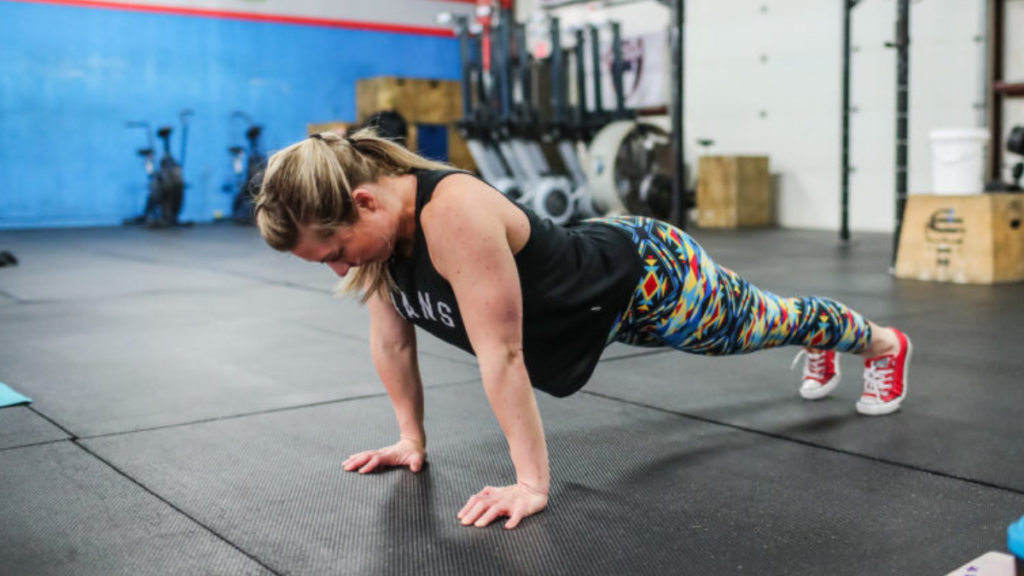
Push ups are also an excellent beginner chest exercise because they train the pecs, triceps, and shoulders while requiring the body to remain stable. If standard push ups are too difficult, elevate your hands on a bench, rack, or sturdy box. As your strength improves, reduce the height of the surface until you can perform controlled repetitions from the floor.
Use one main pressing exercise as the foundation of your program. Add a second movement only when you can perform the first one confidently and consistently. Better execution creates more useful training stimulus than constantly changing exercises.
Tip 2: Give Your Pecs Enough Hard Work Each Week

Train Chest More Than Once Per Week
Muscle growth is strongly influenced by the amount of challenging work a muscle performs over time. Research has found that higher weekly resistance training volume is generally associated with greater muscle growth, although the benefit is not unlimited and beginners do not need excessive amounts of work.
A practical starting point is around six to ten challenging sets for chest each week. You can divide these sets across two sessions. For example, you could perform three sets of machine chest press and two sets of incline dumbbell press on one day, then repeat a similar amount of work later in the week.
Training the chest twice weekly can make it easier to perform high quality sets without turning one workout into a long and exhausting session. It also gives you more opportunities to practice the movement patterns that lead to better pressing technique. The most important factor is not finding a magical training split. It is completing enough productive work consistently.
Make Sets Challenging, But Do Not Chase Failure Every Time
A hard set is one that requires focus and leaves you close to the point where you could no longer complete another repetition with good technique. You do not need to reach complete muscular failure on every set to build muscle. Training close to failure can provide an effective stimulus, while leaving a small amount in reserve can help you maintain form and recover for future sessions.
For beginners, stopping most working sets when you feel you could perform roughly one to three more good repetitions is a useful approach. If your technique changes dramatically, your shoulders rise off the bench, or you need to bounce the weight, the set is already too close to failure.
Use moderate repetition ranges that allow you to practice the movement well. Sets of about six to twelve repetitions work very well for pressing exercises, while twelve to twenty repetitions can be useful for push ups, cable fly variations, and machine exercises. Muscle growth can occur across a broad range of repetitions when sets are sufficiently challenging, but beginners often learn technique more easily with weights they can control for several repetitions.
Use Both Flat and Incline Pressing
The chest is not a single uniform area. The pectoralis major has fibers that run in different directions, and exercise angle can influence which regions receive the greatest emphasis. Flat pressing is a highly effective all around choice for chest strength and size. Incline pressing can provide additional stimulus for the upper portion of the chest, which helps create a fuller appearance near the collarbones.
You do not need to use a steep bench angle. A moderate incline is usually enough. If the bench is set too high, the movement can become more shoulder dominant. Begin with a modest incline that allows you to feel your chest working while remaining stable and comfortable.
A simple weekly plan could include flat dumbbell presses in one session and incline machine presses in another. This gives you variation without making your training complicated. Keep the exercises in your program long enough to improve at them. Switching movements every workout makes it harder to measure progress.
Tip 3: Progress Gradually and Support Growth Outside the Gym
Add Repetitions or Load Over Time
Muscles adapt when training demands gradually increase. This is known as progressive overload. You do not need to add weight every session, especially when you are new to lifting. Improving your technique, completing more repetitions with the same weight, or performing an additional productive set can all represent progress.

A simple way to progress is to choose a repetition range. For example, perform three sets of eight to twelve repetitions on a dumbbell chest press. When you can complete twelve controlled repetitions on all three sets, increase the dumbbell weight slightly. Your repetitions may then return closer to eight, and you can build up again.
Record your sets, weights, and repetitions. This removes guesswork and helps you see whether your chest training is actually improving. If you use the same weight for months and perform the same number of repetitions, your body has little reason to continue adapting. Small, repeatable increases are much more useful than occasional heroic workouts.
Eat Enough Protein and Total Food
Training creates the signal for muscle growth, but food supplies the energy and amino acids needed to support adaptation. Resistance training combined with adequate dietary protein improves gains in lean body mass and strength. For most healthy adults who regularly lift weights, a daily protein intake around 1.6 grams per kilogram of body weight is a useful evidence based target. Some people may benefit from slightly more, but more is not automatically better.
Spread protein across your meals in a way that fits your routine. Foods such as lean meat, fish, eggs, dairy products, soy foods, beans, lentils, and protein powders can all contribute. The best plan is one you can repeat consistently.
If you are trying to gain substantial muscle and are very lean, a modest calorie surplus can support weight gain. If you are carrying more body fat than you would like, you can still build strength and muscle as a beginner while eating around maintenance calories or using a modest calorie deficit. The key is to avoid aggressive dieting that leaves you unable to train hard or recover well.
Sleep and Recovery Are Part of the Program
Muscle is built during recovery, not while you are lifting. Sleep loss can negatively affect physical performance, recovery, appetite regulation, and the hormonal environment involved in muscle repair. Adults should generally aim for at least seven hours of sleep each night, with many active people benefiting from more.
Avoid training your chest hard every day. The pecs, shoulders, and triceps all need time to recover from demanding pressing sessions. Two chest focused sessions each week is enough for most beginners, particularly when each session includes quality work performed with good technique.
3 Best Beginner Exercises for Wider and More Muscular Pecs
Pay attention to joint discomfort. Muscle effort and mild soreness can be normal, but sharp pain or persistent shoulder pain is not something to push through. Reduce load, adjust the exercise, improve your setup, or seek advice from a qualified health professional if pain persists.
Thicker pecs are built through months of steady training, not a single perfect workout. Press with control, perform enough challenging weekly sets, and make small improvements over time. That combination works because it gives the chest repeated reasons to adapt while keeping the process realistic enough to maintain.
References
- American College of Sports Medicine (2009) ‘American College of Sports Medicine position stand: Progression models in resistance training for healthy adults’, Medicine and Science in Sports and Exercise, 41(3), pp. 687–708.
- Grgic, J., Schoenfeld, B.J., Skrepnik, M. and Davies, T.B. (2021) ‘Effects of resistance training performed to repetition failure or non failure on muscular strength and hypertrophy: A systematic review and meta analysis’, Journal of Sport and Health Science, 11(2), pp. 202–211.
- Morton, R.W., Murphy, K.T., McKellar, S.R., Schoenfeld, B.J., Henselmans, M., Helms, E., Aragon, A.A., Devries, M.C., Banfield, L., Krieger, J.W. and Phillips, S.M. (2018) ‘A systematic review, meta analysis and meta regression of the effect of protein supplementation on resistance training induced gains in muscle mass and strength in healthy adults’, British Journal of Sports Medicine, 52(6), pp. 376–384.
- Schoenfeld, B.J., Ogborn, D. and Krieger, J.W. (2017) ‘Dose response relationship between weekly resistance training volume and increases in muscle mass: A systematic review and meta analysis’, Journal of Sports Sciences, 35(11), pp. 1073–1082.
- Schoenfeld, B.J., Ogborn, D. and Krieger, J.W. (2017) ‘Effects of resistance training frequency on measures of muscle hypertrophy: A systematic review and meta analysis’, Sports Medicine, 47(12), pp. 2589–2603.
- Schoenfeld, B.J., Peterson, M.D., Ogborn, D., Contreras, B. and Sonmez, G.T. (2015) ‘Effects of low versus high load resistance training on muscle strength and hypertrophy in well trained men’, Journal of Strength and Conditioning Research, 29(10), pp. 2954–2963.
- Schoenfeld, B.J. and Grgic, J. (2020) ‘Effects of range of motion on muscle development during resistance training interventions: A systematic review’, Sports Medicine, 50(6), pp. 1075–1093.
- Van Dongen, H.P.A., Maislin, G., Mullington, J.M. and Dinges, D.F. (2003) ‘The cumulative cost of additional wakefulness: Dose response effects on neurobehavioral functions and sleep physiology from chronic sleep restriction and total sleep deprivation’, Sleep, 26(2), pp. 117–126.
Key takeaways
| Focus | What beginners should do | Why it matters |
|---|---|---|
| Pressing technique | Use controlled repetitions through a comfortable full range of motion | This places the pecs under meaningful tension and improves repeatability |
| Weekly volume | Complete around six to ten challenging chest sets per week across two sessions | Enough productive work creates a reliable growth stimulus without excessive fatigue |
| Exercise selection | Build around flat pressing and add moderate incline pressing | This trains the chest effectively while adding emphasis to the upper chest |
| Progression | Add repetitions, load, or quality work gradually | Muscles adapt when training demands increase over time |
| Recovery | Eat adequate protein, sleep well, and allow recovery between sessions | Training results depend on the body’s ability to repair and adapt |