

A wider back can change how your entire upper body looks. It creates more contrast between your shoulders and waist, supports a stronger posture, and gives you the foundation for better pulling strength in the gym. For beginners, the fastest route is not an endless list of complicated exercises. It is learning a few effective pulling movements, performing them consistently, and making steady progress over time.
The main muscles that create visible back width are the latissimus dorsi, usually called the lats. These large muscles run from the lower back toward the upper arm. When they grow, they contribute to the broad silhouette many lifters want. The upper back muscles, including the middle trapezius, lower trapezius, rhomboids, and rear deltoids, also matter. They add thickness, help control the shoulder blades, and make your back look more complete.


The three exercises below cover the essential movement patterns for beginners. The lat pulldown trains a vertical pull in a stable position. The chest supported row trains a horizontal pull while reducing unwanted body movement. The assisted pull up provides a demanding bodyweight pattern that can become a long term benchmark for upper body strength.
The goal is not to chase soreness or use the heaviest weight possible. The goal is to make the target muscles work hard with controlled repetitions, good technique, and gradual increases in training demand.
What Actually Makes Your Back Look Wider?
Your lats create most of the visual width in your back. Their main actions include bringing the upper arm down toward the body, drawing it backward, and contributing to shoulder internal rotation. Exercises that involve pulling your elbows down or toward your torso are therefore useful tools for developing them.
However, a wide looking back is not built by the lats alone. A stable shoulder blade position helps you pull more effectively and keeps your upper back involved. Rows strengthen the muscles that retract and control the shoulder blades, while vertical pulls place a larger emphasis on moving the upper arm down toward the body. Combining both patterns gives beginners a more balanced program than relying on just one exercise.
Exercise selection matters, but it is only one part of muscle growth. Research consistently shows that resistance training volume has a dose related relationship with hypertrophy. In practical terms, completing enough hard, high quality sets over the week is important. Beginners do not need extreme amounts of training. They need a manageable routine that they can repeat, improve, and recover from.
1. Lat Pulldown
The lat pulldown is one of the best places for a beginner to start. It allows you to train the same broad movement pattern as a pull up without having to lift your full bodyweight. You can adjust the load precisely, use a stable seated position, and focus on feeling your elbows move down toward your sides.
Current electromyography research suggests that the conventional front pulldown is a sensible choice for training the lats. Grip width appears less important than many lifters think. A dramatically wide grip does not automatically mean more lat development, and it can make the movement less comfortable for some people. Start with a grip slightly wider than shoulder width and use the position that lets you pull smoothly without shoulder discomfort.
How to Perform the Lat Pulldown
Adjust the thigh pad so it holds you securely in the seat. Reach up and take the bar with your hands a little wider than shoulder width. Sit tall, keep your feet planted, and let your arms straighten fully at the top without losing control of the weight.
Begin each repetition by pulling your shoulders gently down, then drive your elbows down toward your ribs. Pull the bar toward the upper chest while keeping your torso mostly upright. A small lean backward is natural, but avoid turning the movement into a swinging row. Pause briefly when your elbows are close to your sides, then return the bar slowly until your arms are straight again.
The important detail is the elbow path. Think about bringing your elbows toward the floor rather than pulling the bar down with your hands. This cue can help prevent your biceps from doing all the work and makes it easier to feel the lats.
Common Beginner Mistakes
The most common error is using so much weight that the torso swings backward and forward on every rep. This reduces control and makes it difficult to repeat the same movement consistently. Choose a load you can lower under control for around two seconds.
5 Signs Your Upper Body Is Stronger Than the Average Man
Another mistake is pulling the bar behind the neck. This variation places the shoulders in a position that many people find uncomfortable, and it offers no clear advantage for building a wider back. Keep the bar in front of your body and pull it toward the upper chest.
Start with two or three sets of eight to twelve repetitions. Finish each set with one or two good repetitions still possible. This gives beginners enough effort to stimulate progress while keeping technique reliable.
2. Chest Supported Row
A chest supported row is an excellent horizontal pulling exercise because the bench or machine supports your torso. That support reduces the temptation to use momentum from the lower back and hips. It also allows you to focus on moving the upper arms and shoulder blades through a controlled range of motion.
Although rows are often seen mainly as a thickness exercise, they are valuable for anyone who wants a wider looking back. Stronger upper back muscles improve the frame around the lats and support better shoulder blade control during all pulling exercises. Rows can also train the lats effectively when you keep the elbows relatively close to the body and pull toward the lower ribs.
You can use a chest supported row machine, an incline bench with dumbbells, or a cable row with your chest braced against an inclined bench. The best option is the one that feels stable and lets you train without pain.
How to Perform the Chest Supported Row
Set the bench angle low enough that you can pull your elbows behind your torso without the bench blocking the movement. Lie chest down against the pad with your feet firmly on the floor. Let your arms hang straight down and begin with your shoulders relaxed.
Pull the handles or dumbbells toward your lower ribs. Keep your elbows close enough to your body that you feel your lats and middle back working, rather than flaring them directly out to the sides. At the top, squeeze your shoulder blades together gently without shrugging your shoulders up toward your ears.
Lower the weight slowly until your arms are straight and your shoulder blades can move naturally apart. This controlled stretch is important because resistance training performed through a useful range of motion is a strong foundation for muscular development.
Why Support Makes a Difference
Beginners often find free weight bent over rows difficult because the lower back and hamstrings must work hard to hold the bent position. That is not a bad exercise, but it can limit how well a new lifter feels the back muscles working. A chest supported variation removes much of that limitation.
The result is a more repeatable exercise. You can track your reps, use a consistent range of motion, and add small amounts of weight when your current load becomes easier. These qualities are more valuable than choosing an exercise simply because it looks advanced.
Perform two or three sets of eight to fifteen repetitions. Use a weight that allows your chest to stay in contact with the support throughout every repetition.
3. Assisted Pull Up
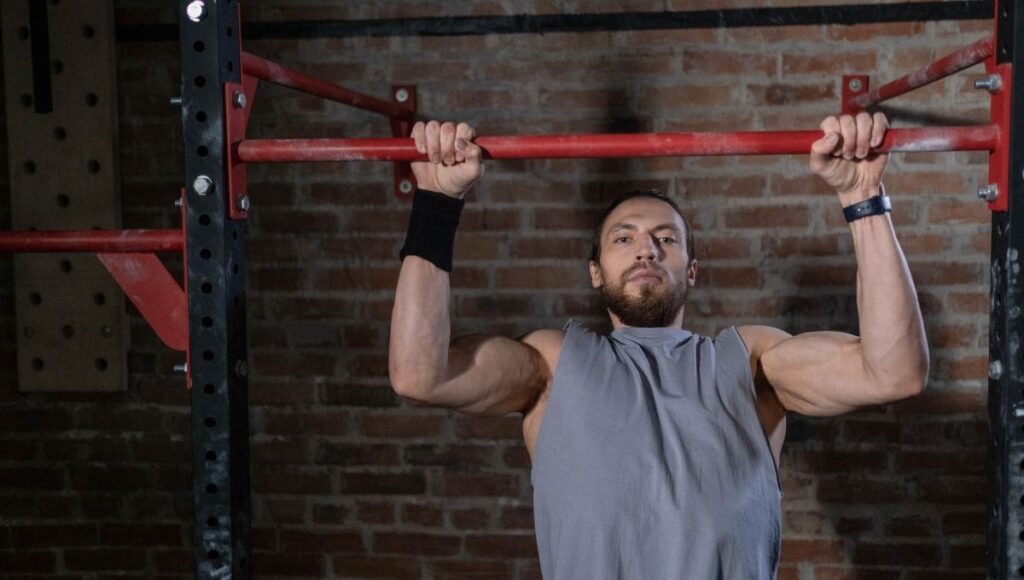
The assisted pull up is one of the most useful exercises for beginners who eventually want to perform strict bodyweight pull ups. It trains the lats, upper back, arms, and grip while teaching you to move your body through space. This makes it different from a machine pulldown, even though both movements use a vertical pulling pattern.
An assisted pull up machine lets you select counterweight assistance. More assistance makes the movement easier. As you get stronger, reduce the assistance gradually. Resistance bands can also work, although the changing tension of a band makes progress harder to measure precisely.
Research comparing pull up variations indicates that the lats are strongly involved across common grip styles. This means you do not need to obsess over finding a magic grip. A shoulder width overhand grip is a practical starting point because it is easy to standardize and usually feels comfortable for beginners.
How to Perform the Assisted Pull Up
Set the assistance to a level that lets you complete controlled reps. Start from a hanging position with your arms straight, your ribs held down, and your body steady. Pull your elbows down toward your sides and bring your upper chest toward the handles or bar.
Do not kick your legs or throw your head forward to reach the top. Instead, aim to move your body upward as one unit. Pause briefly at the top, then lower yourself until your arms are fully straight again. The lowering phase should be controlled because the eccentric part of a repetition contributes to training stimulus and strength development.
If full range repetitions are not yet possible, use more assistance. There is no benefit in struggling through partial, twisting reps when a slightly easier setting lets you practice the complete movement properly.
How to Progress It
Record the assistance, sets, and repetitions every session. Once you can complete all of your planned reps with smooth technique, reduce the assistance by the smallest available amount. This is a clear form of progressive overload.
For example, begin with three sets of six to ten repetitions. When you can complete three sets of ten with the same assistance and control the descent, make the machine slightly harder next time. Small improvements add up quickly over several months.
How to Train These Exercises for Faster Progress
Train your back two or three times each week, leaving at least one day between harder sessions when possible. For a beginner, two weekly sessions are usually enough to build momentum without creating excessive soreness or fatigue.
Start each workout with either the assisted pull up or lat pulldown. These movements require more coordination and are best done when you are fresh. Follow with the chest supported row. If you train twice each week, you can make the pulldown your first exercise in one session and the assisted pull up your first exercise in the other.
Use controlled repetitions and aim to add one repetition, a small amount of load, or a small reduction in assistance when your technique is ready. The American College of Sports Medicine recommends gradual load increases when a person can exceed their planned repetitions by one or two reps. This patient approach is safer and more effective than making large jumps in weight.
Muscle growth also depends on recovery. Eat enough overall calories to support your goal, include adequate protein in your diet, and sleep consistently. Research shows that protein supplementation can further support gains in muscle mass and strength from resistance training, particularly when total daily protein intake is sufficient and training is performed consistently.
The Bottom Line
A wider back is built through consistent pulling, not complicated training. The lat pulldown teaches a controlled vertical pull and gives your lats direct work. The chest supported row builds the upper back and reinforces strong shoulder blade control. The assisted pull up develops a demanding bodyweight pattern that you can measure and improve for years.
Use all three exercises, keep your technique honest, and make gradual progress. Beginners can see meaningful changes when they train hard enough to challenge the muscles, recover well, and keep showing up week after week.
References
- American College of Sports Medicine (2009) ‘Progression models in resistance training for healthy adults’, Medicine & Science in Sports & Exercise, 41(3), pp. 687 to 708.
- Di Fonza, D., Di Claudio, G., Colantuono, G., Persichini, L., Cerulo, N., Sangregorio, B., Buonsenso, A., Fiorilli, G., Calcagno, G. and di Cagno, A. (2026) ‘Electromyographic analysis of latissimus dorsi activation during common resistance training exercises: A narrative review’, Journal of Functional Morphology and Kinesiology, 11(3), article 315.
- Grgic, J., Schoenfeld, B.J., Orazem, J. and Sabol, F. (2022) ‘Effects of resistance training performed to repetition failure or nonfailure on muscular strength and hypertrophy: A systematic review and meta analysis’, Journal of Sport and Health Science, 11(2), pp. 202 to 211.
- Lasevicius, T., Schoenfeld, B.J., Silva Batista, C., Barros, T.S., Brisola, G.M.P., de Souza, M.V., Laurentino, G.C. and Tricoli, V. (2018) ‘Muscle failure promotes greater muscle hypertrophy in low load but not in high load resistance training’, Journal of Strength and Conditioning Research, 36(2), pp. 346 to 351.
- Morton, R.W., Murphy, K.T., McKellar, S.R., Schoenfeld, B.J., Henselmans, M., Helms, E., Aragon, A.A., Devries, M.C., Banfield, L., Krieger, J.W. and Phillips, S.M. (2018) ‘A systematic review, meta analysis and meta regression of the effect of protein supplementation on resistance training induced gains in muscle mass and strength in healthy adults’, British Journal of Sports Medicine, 52(6), pp. 376 to 384.
- Schoenfeld, B.J., Ogborn, D. and Krieger, J.W. (2017) ‘Dose response relationship between weekly resistance training volume and increases in muscle mass: A systematic review and meta analysis’, Journal of Sports Sciences, 35(11), pp. 1073 to 1082.
- Schoenfeld, B.J., Grgic, J., Van Every, D.W. and Plotkin, D.L. (2021) ‘Loading recommendations for muscle strength, hypertrophy, and local endurance: A re examination of the repetition continuum’, Sports, 9(2), article 32.
- Vigotsky, A.D., Halperin, I., Lehman, G.J., Trajano, G.S. and Vieira, T.M. (2018) ‘Interpreting signal amplitudes in surface electromyography studies in sport and rehabilitation sciences’, Frontiers in Physiology, 8, article 985.
Key Takeaways
| Exercise | Main benefit | Beginner target | Progression method |
|---|---|---|---|
| Lat pulldown | Directly trains the lats through a stable vertical pull | Two to three sets of eight to twelve reps | Add small amounts of weight after completing all reps with control |
| Chest supported row | Builds the upper back and limits momentum | Two to three sets of eight to fifteen reps | Add reps first, then increase the load gradually |
| Assisted pull up | Develops bodyweight pulling strength and lats | Three sets of six to ten reps | Reduce the machine assistance once all reps are controlled |
| Weekly training | Provides enough quality practice and muscle stimulus | Two to three back sessions per week | Increase total work gradually while maintaining recovery |