

A muscular upper body is not built by chasing a single exercise, changing workouts every week, or spending hours in the gym without a clear target. It comes from repeatedly giving your chest, back, shoulders, and arms a strong reason to adapt, then allowing that work to accumulate over time.
The good news is that you do not need an overly complicated plan. A well built upper body routine can be based on a handful of movements performed with enough effort, enough total productive work, and a sensible progression strategy. These principles work whether you train in a commercial gym, a home gym, or with a modest collection of dumbbells and a pull up bar.


The three secrets below will help you build a wider back, fuller chest, stronger shoulders, and more developed arms while making sure your training remains sustainable.
Secret One: Train Each Major Upper Body Muscle With Enough Weekly Hard Sets
The first secret is simple: muscles need enough high quality training volume to grow. Training volume is commonly measured as the number of challenging sets you perform for a muscle group across a week. A hard set is one that requires real effort and is performed with controlled technique, rather than a set completed far below your actual capability.
Research consistently shows a dose response relationship between resistance training volume and muscle growth. In practical terms, this means that a person who performs more productive sets for a muscle usually has greater potential for hypertrophy than someone who only trains that muscle with a very small amount of weekly work. More is not always better without limit, but too little volume rarely produces the best results.
For most people, beginning with around eight to twelve challenging weekly sets for larger upper body muscles is a useful target. This includes the chest, lats, upper back, and deltoids. Arms receive substantial work from pressing and pulling exercises, but adding a few direct sets for biceps and triceps can make a visible difference if your goal is a more muscular appearance.
Build Your Chest With Purposeful Pressing and Stretch Work
Your chest should be trained through pressing patterns that allow you to load the muscle progressively. Flat dumbbell presses, barbell bench presses, machine presses, and push ups are all useful options. The best choice is the one you can perform comfortably through a consistent range of motion while gradually improving over time.
A chest press should not become a shoulder exercise. Set your shoulder blades back and down against the bench, keep your rib cage stable, and lower the weight under control. The goal is to feel your chest working through the full repetition, not simply move the heaviest possible load from point A to point B.
You can then add a movement such as a cable fly, pec deck, or dumbbell fly variation. These exercises allow the chest to work in a lengthened position and can complement pressing work well. You do not need to perform every possible chest exercise. Two or three movements done consistently are more valuable than a constantly changing collection of exercises.
Create Width Through Vertical and Horizontal Pulling
A wider looking upper body depends heavily on back development. Your lats create much of the visual taper from the shoulders down toward the waist, while the upper back adds thickness and makes your posture look stronger.
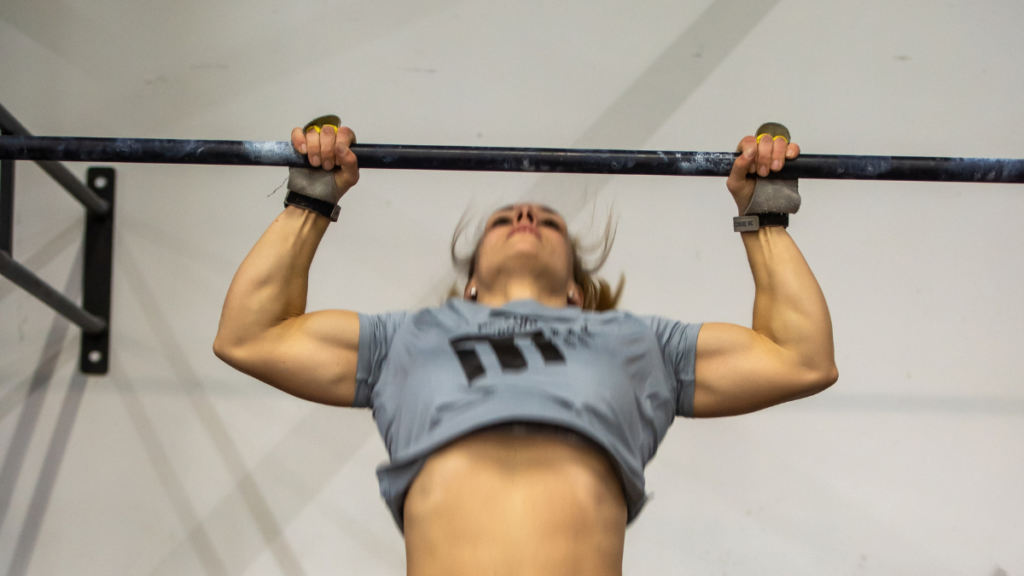
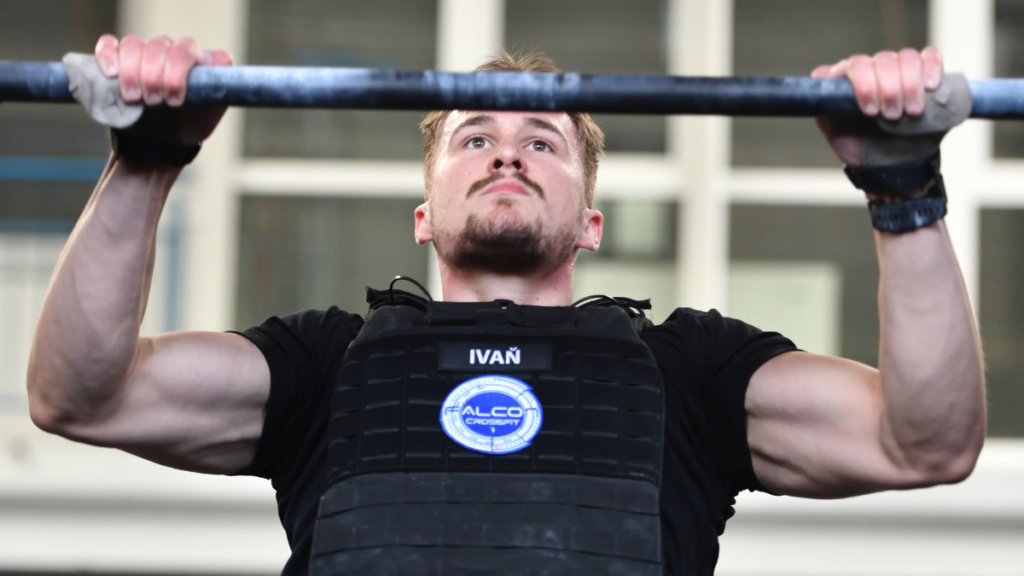
Vertical pulling exercises such as pull ups, chin ups, assisted pull ups, and lat pulldowns are highly effective for the lats. Horizontal pulling exercises such as chest supported rows, one arm dumbbell rows, seated cable rows, and machine rows contribute to the upper back, rear delts, and elbow flexors.
Use both patterns across the week. For example, you might perform pulldowns and dumbbell rows in one session, then use pull ups and chest supported rows in another. This gives your back multiple useful angles of resistance without making the program unnecessarily complicated.
Split Volume Across Two or More Sessions
You can build muscle with one upper body session each week, but spreading your work across two or more sessions is often easier to recover from and makes it easier to maintain high quality effort. Instead of trying to perform every chest, back, shoulder, and arm set in one exhausting workout, you can divide the work.
A simple approach is to train upper body twice weekly. One session can begin with a chest press and row, while the other begins with a vertical pull and overhead press. The total weekly number of productive sets matters more than chasing a perfect split, so choose a schedule you can repeat consistently.
Secret Two: Make Your Working Sets Hard Enough to Force Adaptation
The second secret is effort. A set that feels easy will not provide the same stimulus as a set that challenges the muscle. You do not have to train to complete muscular failure on every set, but you should finish most working sets knowing that you had only a small number of clean repetitions left.
This is often described as training close to failure. If you stop a set when you could have completed six more repetitions with good form, the set may not have created enough meaningful fatigue. If you stop when you could have completed one, two, or perhaps three more repetitions, you are much more likely to have made the set count.
Training close to failure is especially important when using lighter weights. Research indicates that both lighter and heavier loads can promote similar muscle growth when the sets are performed with sufficient effort. Heavy weights are useful for building strength and can be efficient, but moderate and lighter loads can be equally valuable for hypertrophy when they are taken close enough to muscular fatigue.
Use a Range of Repetitions You Can Control
For compound upper body exercises, a range of roughly six to fifteen repetitions works well for many lifters. This might include bench presses, rows, overhead presses, pulldowns, and pull ups. For isolation exercises, such as lateral raises, curls, triceps extensions, cable flyes, and rear delt raises, a slightly higher range can often be more comfortable and easier on the joints.
The exact repetition number is less important than executing it well. A set of eight controlled dumbbell presses can be productive. So can a set of fifteen controlled push ups that takes your chest close to fatigue. What matters is that the muscle is challenged and the movement remains technically sound.
Avoid using momentum to turn an exercise into something different. Swinging a curl shifts work away from the biceps. Bouncing a barbell off the chest removes control from the bottom of the press. Pulling with a jerking torso can reduce the contribution of the upper back. Controlled repetitions create a more reliable training stimulus and make progress easier to measure.
Do Not Take Every Set to Absolute Failure
Failure has a place, particularly on safer machine and isolation exercises, but it is not a requirement for muscle growth. Going to failure on every compound movement can create excessive fatigue, reduce the quality of later sets, and make technique break down.
For most compound exercises, stop when you believe you have around one to three good repetitions remaining. On an exercise such as a lateral raise, cable curl, or triceps pressdown, you can occasionally take the final set closer to failure if your form remains controlled.
This approach gives you enough effort to stimulate growth while preserving the consistency needed to train hard again later in the week. Muscle is built through months of repeatable work, not one heroic workout that leaves you unable to train properly for several days.
Secret Three: Progress Your Exercises While Building a Balanced Frame
The third secret is progressive overload. Your body adapts to the demands you place on it, so training must gradually become more challenging. This does not mean forcing a heavier weight every session. It means creating a clear record of your performance and steadily improving your ability to perform quality work.
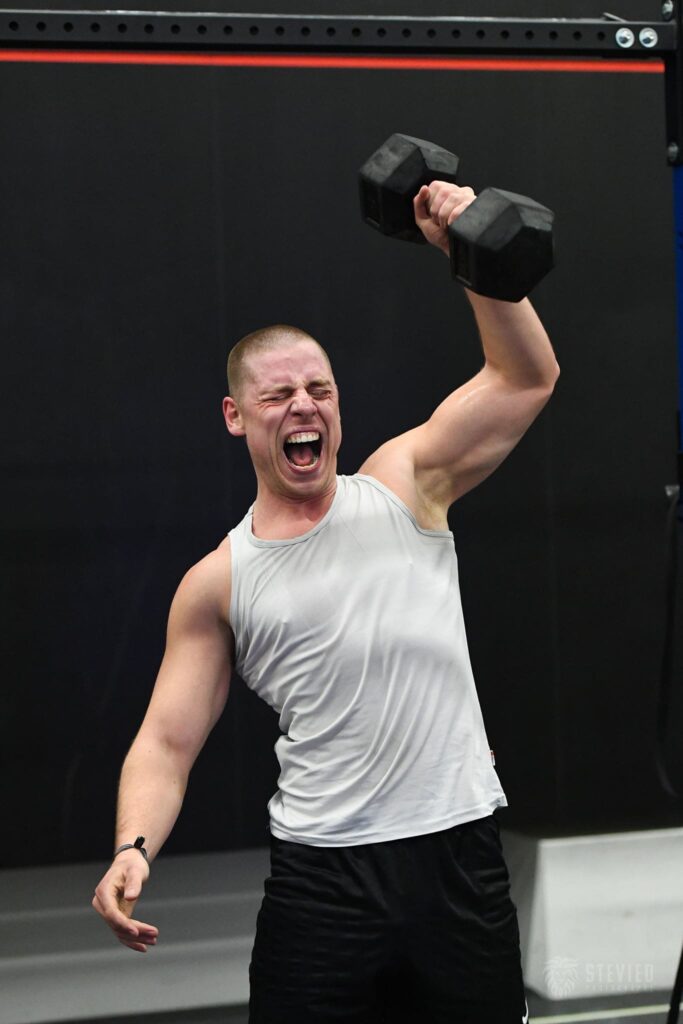
Your upper body will look more developed when no major area is ignored. A big chest with weak upper back development can make the shoulders appear rounded. Strong arms without well developed delts will not create the same broad frame. A balanced plan trains the pressing muscles, pulling muscles, side delts, rear delts, and arms with enough attention to keep your physique proportionate.
Use Double Progression to Keep Things Simple
Double progression is one of the easiest methods for tracking improvement. Choose a rep range for an exercise, such as eight to twelve repetitions. Use a weight that allows you to complete the lower end of that range with good technique. Over future sessions, aim to add repetitions while maintaining the same load.
Once you can complete the upper end of the range across all planned sets, increase the load slightly and return to the lower end of the range. For example, if you can perform three sets of twelve dumbbell presses with a certain weight, move to the next available dumbbells and work back up.
This method prevents random training. It gives you a measurable goal while allowing progress to happen gradually. Tiny improvements add up. One extra repetition, a slightly cleaner range of motion, or a small increase in load can become substantial progress when repeated over many weeks.
Prioritize Side Delts and Upper Back for a Stronger Shape
If you want a more attractive upper body, do not only focus on chest presses and arm curls. The side delts and upper back have a major visual effect because they create shoulder width and support a more athletic silhouette.
Lateral raises are one of the most direct ways to train the side delts. Use a load that lets you raise the dumbbells or cables with control, without swinging from the hips. Keep your arms moving out and slightly forward rather than forcing them directly behind your body. Moderate to higher repetitions are usually effective because the movement is difficult to load heavily with strict technique.
For the upper back and rear delts, include rows, reverse flyes, face pulls, and rear delt machine work. These movements help balance the pressing volume that many people naturally favor. They also develop the muscles that make the upper back look denser from the side and rear.
Support Training With Enough Protein and Recovery
Training provides the stimulus, but food and recovery help determine whether that stimulus becomes muscle. Protein is particularly important because it supplies amino acids needed for muscle protein synthesis. Evidence suggests that protein intakes around 1.6 grams per kilogram of bodyweight per day are sufficient for maximizing average resistance training related gains in lean mass for many healthy adults, although individual needs can vary.
3 Best Beginner Glutes Exercises with Dumbbells (Get Super Strong Now!)
Sleep matters as well. A consistent training plan is easier to sustain when you recover between sessions, manage stress, and avoid constantly adding more work than you can handle. If performance is declining week after week, joints are becoming irritated, and motivation is disappearing, the answer is not always more volume. You may need better recovery or a temporary reduction in training stress.
The best upper body routine is the one you can perform hard, track accurately, and repeat for long enough to see genuine change. Build sufficient weekly volume, make your sets count, and progress your key movements patiently. Those three secrets will do more for your physique than the latest complicated training trend.
References
- Grgic, J., Schoenfeld, B.J., Davies, T.B., Lazinica, B., Krieger, J.W. and Pedisic, Z. (2018) ‘Effect of resistance training frequency on gains in muscular strength: A systematic review and meta analysis’, Sports Medicine, 48(5), pp. 1207 to 1220.
- Morton, R.W., Murphy, K.T., McKellar, S.R., Schoenfeld, B.J., Henselmans, M., Helms, E., Aragon, A.A., Devries, M.C., Banfield, L., Krieger, J.W. and Phillips, S.M. (2018) ‘A systematic review, meta analysis and meta regression of the effect of protein supplementation on resistance training induced gains in muscle mass and strength in healthy adults’, British Journal of Sports Medicine, 52(6), pp. 376 to 384.
- Refalo, M.C., Helms, E.R., Hamilton, D.L. and Fyfe, J.J. (2022) ‘Influence of resistance training proximity to failure on skeletal muscle hypertrophy: A systematic review with meta analysis’, Sports Medicine, 53(3), pp. 649 to 665.
- Schoenfeld, B.J., Grgic, J., Ogborn, D. and Krieger, J.W. (2017) ‘Strength and hypertrophy adaptations between low versus high load resistance training: A systematic review and meta analysis’, Journal of Strength and Conditioning Research, 31(12), pp. 3508 to 3523.
- Schoenfeld, B.J., Ogborn, D. and Krieger, J.W. (2017) ‘Dose response relationship between weekly resistance training volume and increases in muscle mass: A systematic review and meta analysis’, Journal of Sports Sciences, 35(11), pp. 1073 to 1082.
Key Takeaways
| Training Secret | What to Do | Why It Matters |
|---|---|---|
| Accumulate productive weekly volume | Begin with roughly eight to twelve hard weekly sets for each major upper body muscle and spread them across sessions | Sufficient volume gives the chest, back, shoulders, and arms a consistent reason to grow |
| Train with real effort | Finish most sets with approximately one to three clean repetitions left | Hard sets create a stronger hypertrophy stimulus without requiring failure on every exercise |
| Progress and stay balanced | Track your lifts, gradually add repetitions or load, and train side delts, upper back, chest, arms, and lats | Progressive overload and proportionate development create a fuller, wider, more athletic upper body |