

Your back squat PR can tell you a lot about your lower body strength, but it does not tell the whole story unless you compare it in the right context. A 225 pound squat means something very different for a 140 pound lifter than it does for a 240 pound lifter. It also means something different for a beginner, a recreational gym member, and a competitive powerlifter.
Age matters too, although it should not become an excuse to lower your expectations too early. Strength typically peaks in early adulthood and gradually declines with age, especially when people stop training. However, regular resistance training can meaningfully improve strength well into later life. A strong 55 year old who trains consistently can easily out squat an untrained person in their twenties.


The most useful way to judge your squat is to consider your age, body weight, sex, training experience, squat depth, and testing conditions. This article gives you a practical way to do that without pretending there is one perfect number for everyone.
Why Comparing Squat PRs Is More Complicated Than It Looks
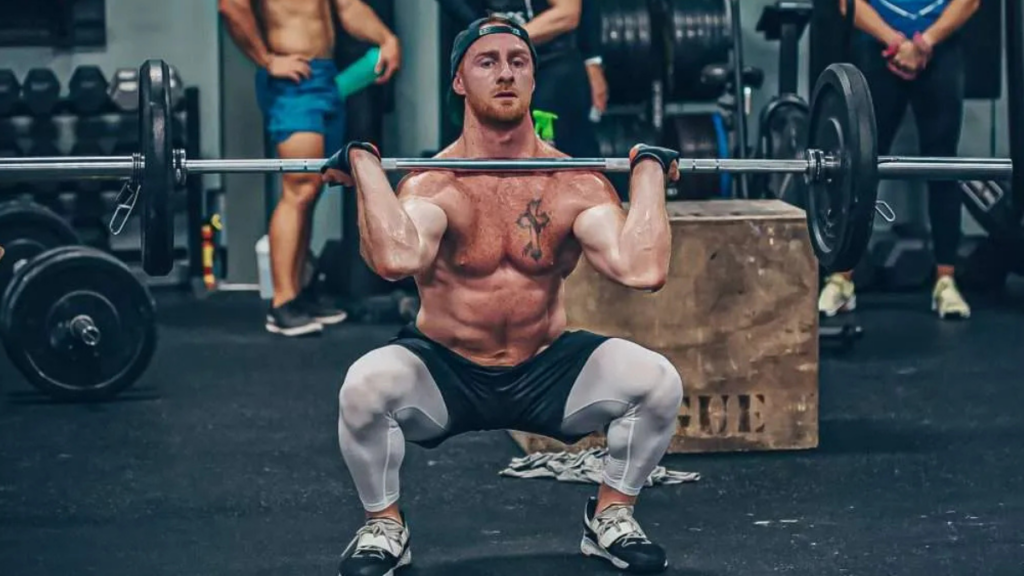
A back squat is a highly useful strength test because it requires the hips, knees, ankles, trunk, and nervous system to work together under load. It challenges the quadriceps, glutes, adductors, calves, and muscles of the trunk, while also demanding balance and coordination.
Still, a squat PR is not as simple as putting more plates on the bar. Two lifters can use the same weight and produce very different lifts. One may squat below parallel with a controlled descent and stable torso. Another may use a higher depth, lose position, or have a spotter assist without realizing it. The number on the bar only becomes comparable when the movement standard is similar.

Body weight also changes the picture. Larger people usually have more total muscle mass and can often move more absolute weight. Smaller people may lift less weight in kilograms or pounds while demonstrating higher strength relative to body mass. That is why bodyweight multiples are more useful than raw numbers when comparing lifters.
Research on barbell strength assessment also shows that age, body mass, height, and sex all influence squat performance. Simple categories such as beginner, intermediate, and advanced can be helpful, but they are not precise enough to capture every individual difference.
First, Make Sure Your PR Is a Real Back Squat PR
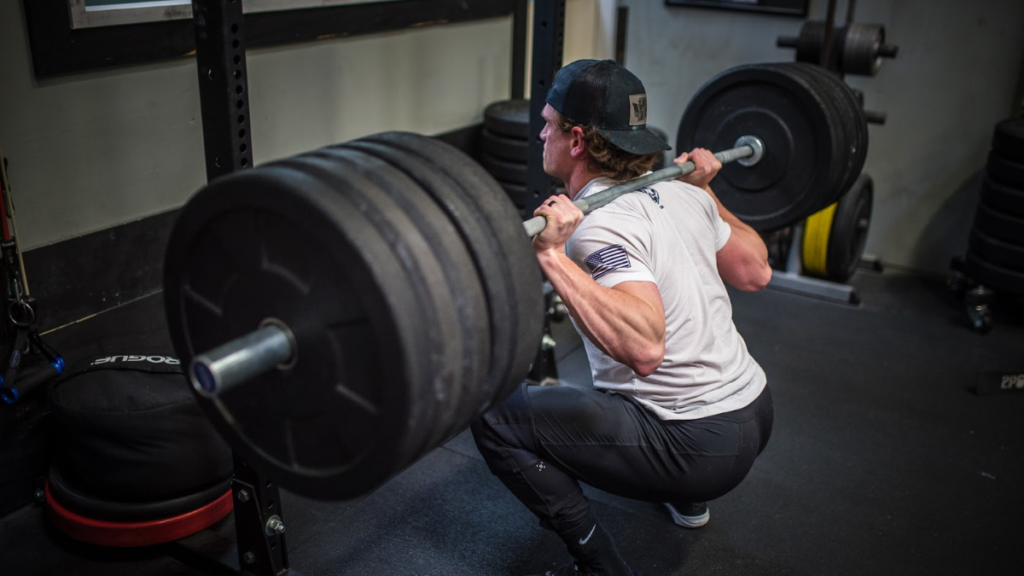
Before comparing yourself with anyone else, make the lift worth comparing. A proper back squat PR should be performed with a barbell positioned securely across the upper back, a controlled descent, and a depth where the hip crease reaches at least the top of the knee. The ascent should finish with the knees and hips locked out under control.
Competition powerlifting uses even more exact standards, including clear depth, a stable finish, and commands from judges. You do not need to compete to use those standards, but borrowing their consistency makes your progress easier to track.
A true one repetition maximum should also be tested on a day when you are rested, warmed up, and technically prepared. Grinding through an ugly repetition with a collapsing torso or painful knee position is not a useful performance test. Good technique allows you to train longer, repeat the movement reliably, and build strength safely over time.
Your Squat Style Matters
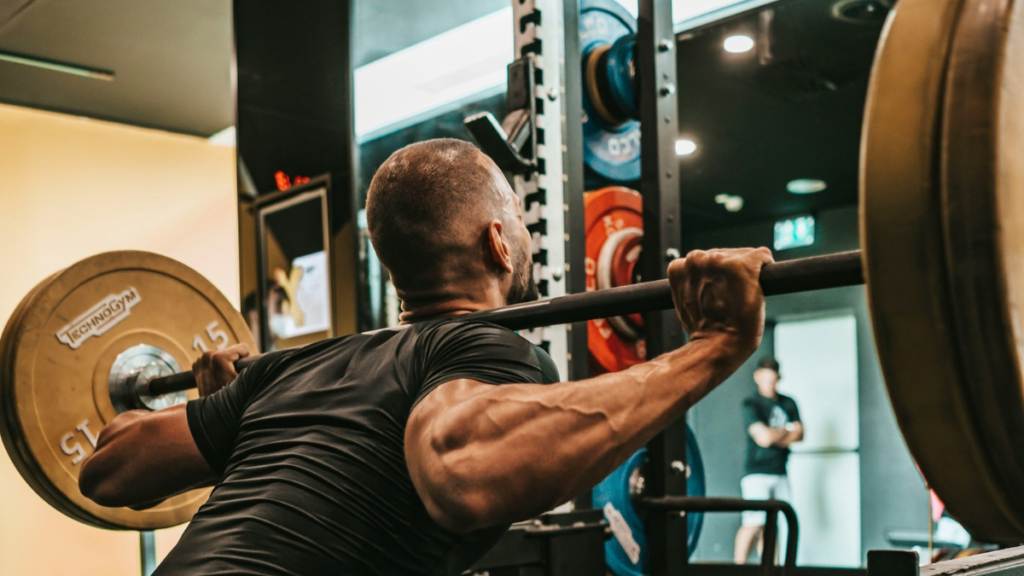
High bar and low bar squats are both legitimate variations, but they can produce different results. A low bar position often allows lifters to use more hip involvement and move heavier loads, while a high bar squat usually demands a more upright torso and greater knee flexion.
Your anatomy matters as well. Femur length, torso length, ankle mobility, and hip structure can all influence your preferred squat position. A long femur does not prevent a strong squat, but it may mean you need a different stance, heel elevation, or bar placement than someone with shorter legs.
Compare your current squat with your own previous lifts using the same setup. When comparing with other people, remember that two technically valid squat styles can still produce slightly different numbers.
The Most Useful Number: Your Squat Relative to Body Weight
Divide your best squat by your body weight to find your bodyweight multiple. For example, a 180 pound lifter who squats 270 pounds has a 1.5 times bodyweight squat. A 70 kilogram lifter who squats 105 kilograms also has a 1.5 times bodyweight squat.
This number is not perfect, because taller and heavier lifters do not scale in a perfectly linear way. Still, it gives a far more useful comparison than absolute weight alone.
For most recreational lifters, a bodyweight squat is an important milestone. Squatting around 1.5 times body weight represents solid lower body strength for a person who has trained consistently and learned the movement well. A double bodyweight squat is a strong performance that places a recreational lifter well above the average gym member.
For women, a bodyweight squat is also a meaningful and impressive milestone. A squat approaching 1.25 to 1.5 times body weight usually reflects substantial training experience, effective programming, and sound technique.
Back Squat Standards for Men by Age
These are practical recreational lifting benchmarks, not population averages or exact percentiles. Most adults do not train the back squat regularly, so a person who can perform a technically sound bodyweight squat is already stronger than many people of the same age.
The “solid” column reflects a realistic target for a consistent recreational lifter. The “strong” column reflects a well trained lifter with several years of focused practice. The “very strong” column reflects a high level recreational performance, although it is still below the standards commonly seen among competitive powerlifters.
Men’s Relative Back Squat Benchmarks
| Age | Solid recreational target | Strong recreational target | Very strong recreational target |
|---|---|---|---|
| 18 to 29 | 1.25 times body weight | 1.75 times body weight | 2.0 times body weight or more |
| 30 to 39 | 1.25 times body weight | 1.70 times body weight | 2.0 times body weight or more |
| 40 to 49 | 1.15 times body weight | 1.60 times body weight | 1.90 times body weight or more |
| 50 to 59 | 1.0 times body weight | 1.45 times body weight | 1.75 times body weight or more |
| 60 and over | 0.75 times body weight | 1.15 times body weight | 1.45 times body weight or more |
A 30 year old man who squats 1.5 times body weight with good depth is doing well. He has built useful lower body strength and is ahead of the vast majority of untrained adults. A 40 year old man with the same relative squat is also doing very well, particularly if he can maintain consistent technique and train without recurring pain.
A double bodyweight squat is an excellent long term goal for many men, but it is not a requirement for being healthy, athletic, or capable. It takes time, favorable leverage, effective programming, and enough recovery to keep progressing.
Back Squat Standards for Women by Age
Women can become exceptionally strong squatters, especially when they train consistently and develop confidence under the bar. However, average absolute squat values differ between men and women because of differences in body size, lean mass, and upper and lower body muscle distribution.
Relative strength remains the fairest starting point. A woman who squats her body weight with good depth has developed meaningful strength. A woman who squats 1.25 times body weight is likely stronger than most recreational gym goers, while a squat of 1.5 times body weight represents a high level recreational achievement.
Women’s Relative Back Squat Benchmarks
| Age | Solid recreational target | Strong recreational target | Very strong recreational target |
|---|---|---|---|
| 18 to 29 | 0.75 times body weight | 1.1 times body weight | 1.4 times body weight or more |
| 30 to 39 | 0.70 times body weight | 1.05 times body weight | 1.35 times body weight or more |
| 40 to 49 | 0.65 times body weight | 0.95 times body weight | 1.25 times body weight or more |
| 50 to 59 | 0.55 times body weight | 0.80 times body weight | 1.1 times body weight or more |
| 60 and over | 0.40 times body weight | 0.65 times body weight | 0.90 times body weight or more |
These numbers should be used as guideposts, not limits. A woman who begins resistance training in her forties, fifties, or sixties can make major improvements in strength. Research consistently shows that older adults respond positively to resistance training, including improvements in muscular strength and functional capacity.
What Changes as You Get Older?
Muscle strength does tend to decline with age, but the rate of decline is heavily influenced by training status, physical activity, nutrition, health, and body composition. The difference between a trained and untrained older adult is often much larger than the difference between two people who are only a few years apart in age.
Muscle mass, motor unit function, and the ability to generate force can decline over time. Lower body strength is especially important because it supports walking, climbing stairs, rising from a chair, maintaining balance, and reacting to a loss of balance. This does not mean you need to chase an all out max every week. It means that maintaining strength training throughout adulthood is valuable.
A sensible approach after age 40 is to keep strength work in your program while managing fatigue carefully. You can still use heavy sets, but progress may come from better technique, more consistent training, additional repetitions at a given weight, or better recovery rather than a new PR every month.
A 50 year old lifter who can squat 1.25 times body weight comfortably and consistently has built a very useful base of strength. A 60 year old who can squat with good range of motion, confidence, and control is doing something highly valuable for long term physical capacity.
Why Competitive Powerlifting Numbers Can Be Misleading
Powerlifting data can be useful because it includes large numbers of standardized squat attempts. However, it is not representative of the general public. Competitive powerlifters are a self selected group who train specifically to maximize the squat, bench press, and deadlift.
Before You Start an Upper/Lower Split, Ask Yourself These 3 Questions
Large datasets from powerlifting competition entries show enormous variation in squat performance across sex, age, body mass, and competitive level. They also show why generic internet strength labels can be misleading. An elite powerlifter may squat multiples of body weight that are unrealistic and unnecessary for the average person, even if that person trains seriously.
Do not compare your first year of training with someone who has spent a decade refining their technique, gaining muscle, and specializing in one sport. Compare yourself with people who have similar body weight, training age, goals, and movement standards.
How to Improve Your Place on the Chart
The most reliable way to improve your squat is to practice the squat consistently while gradually increasing the training challenge. Resistance training produces strength gains when the body is exposed to enough mechanical tension and progressive overload, then given enough recovery to adapt.
You do not need to max out constantly. Most productive squat training happens with submaximal loads that allow repeated high quality repetitions. Sets of three to eight repetitions can build strength effectively when the load is challenging, technique is stable, and the total weekly training volume matches your recovery capacity.
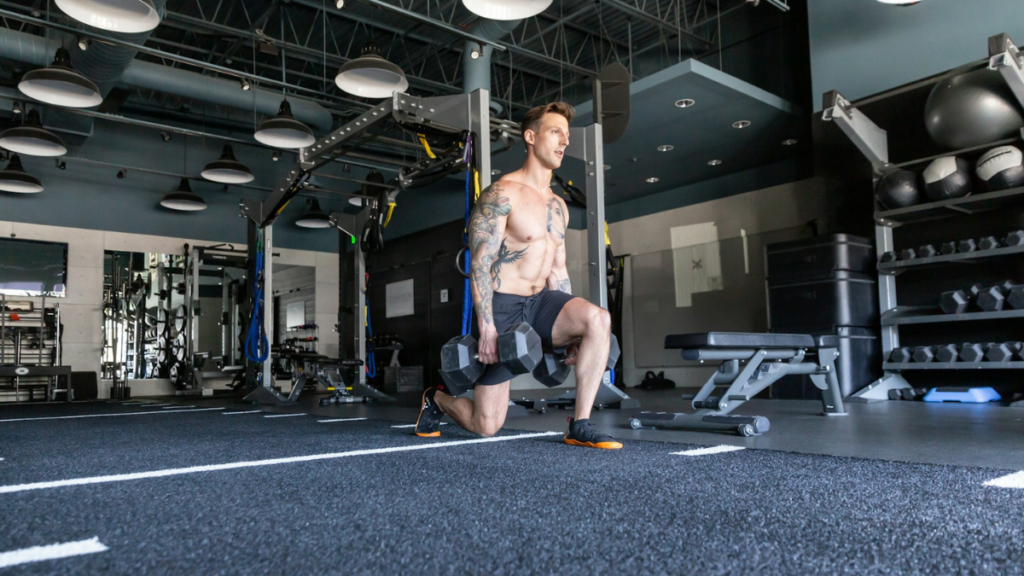
Accessory work can also help. Split squats, leg presses, Romanian deadlifts, hamstring curls, rows, and trunk training can strengthen weak links that limit your squat. If you struggle to stay upright, quadriceps strength and upper back strength may deserve attention. If you lose position out of the bottom, you may need more practice at controlled depth and stronger bracing.
Recovery matters just as much as effort. Sleep, sufficient calories, protein intake, and sensible spacing between demanding lower body sessions all affect your ability to progress. A PR is the result of training done over months, not one dramatic workout.
The Bottom Line
Your age matters, but it should not define your ceiling. A technically sound squat around bodyweight is a meaningful milestone for many adults. A squat of 1.5 times body weight represents solid strength, while a double bodyweight squat is a major recreational achievement for most men. For women, a bodyweight squat is a valuable benchmark, while 1.25 to 1.5 times body weight reflects high level recreational strength.
The best comparison is not simply with the strongest person online. Compare yourself with lifters of a similar age, body weight, sex, training history, and squat standard. Then use your result to set a realistic next target.
A stronger squat is useful, but a repeatable squat that you can train for years is more valuable than a single PR that leaves you injured or burned out.
References
- Borde, R., Hortobágyi, T. and Granacher, U. (2015) ‘Dose response relationships of resistance training in healthy old adults: A systematic review and meta analysis’, Sports Medicine, 45(12), pp. 1693–1720.
- Grgic, J., Schoenfeld, B.J., Davies, T.B., Lazinica, B., Krieger, J.W. and Pedisic, Z. (2018) ‘Effect of resistance training frequency on gains in muscular strength: A systematic review and meta analysis’, Sports Medicine, 48(5), pp. 1207–1220.
- Isenmann, E., Geisler, S., Havers, T., Gavanda, S., Diel, P., Held, S. and Flenker, U. (2026) ‘Normalization of muscle strength measures in barbell exercises by sex, age, and anthropometry: Notes on allometry’, Scientific Reports, 16, 20797.
- Peterson, M.D., Rhea, M.R., Sen, A. and Gordon, P.M. (2010) ‘Resistance exercise for muscular strength in older adults: A meta analysis’, Ageing Research Reviews, 9(3), pp. 226–237.
- Suchomel, T.J., Nimphius, S. and Stone, M.H. (2016) ‘The importance of muscular strength in athletic performance’, Sports Medicine, 46(10), pp. 1419–1449.
- Swinton, P.A., Lloyd, R., Agouris, I. and Stewart, A. (2009) ‘Contemporary training practices in elite British powerlifters: Survey results from an international competition’, Journal of Strength and Conditioning Research, 23(2), pp. 380–384.
- Steib, S., Schoene, D. and Pfeifer, K. (2010) ‘Dose response relationship of resistance training in older adults: A meta analysis’, Medicine and Science in Sports and Exercise, 42(5), pp. 902–914.
Key Takeaways
| Question | Practical answer |
|---|---|
| Is a bodyweight squat good? | Yes. For most recreational lifters, a full depth bodyweight squat is a meaningful strength milestone. |
| Is age the main factor? | No. Training history, body weight, technique, recovery, and health status all strongly affect squat performance. |
| What is a strong male recreational squat? | Around 1.5 times body weight is solid, while a double bodyweight squat is a major achievement. |
| What is a strong female recreational squat? | A bodyweight squat is meaningful, while 1.25 to 1.5 times body weight is a high level recreational result. |
| Should you test a maximum often? | No. Build strength primarily with challenging submaximal training and test a PR when you are prepared. |