

Elbow pain is one of the most common and frustrating issues among people who train regularly. Whether it shows up as a dull ache during pulling movements, a sharp sting during pressing, or lingering soreness that never quite disappears, elbow pain can quietly sabotage progress.
It is especially prevalent in strength training, CrossFit, bodybuilding, and calisthenics, where repetitive gripping, loading, and rapid force production place high stress on the elbow joint and surrounding tissues.


The most important thing to understand is that elbow pain is rarely just an “elbow problem.” The elbow is a hinge joint that transfers force between the shoulder, forearm, and hand. When movement patterns, training volume, or tissue capacity are mismatched, the elbow often becomes the weak link. Research consistently shows that overuse, poor load management, and repetitive gripping are key contributors to both medial and lateral elbow tendinopathy, commonly referred to as golfer’s elbow and tennis elbow (Coombes et al., 2015).
Stopping training altogether is usually unnecessary and often counterproductive. Complete rest can lead to deconditioning of muscles and tendons, which may actually prolong recovery. What matters most is intelligent exercise selection and load modification. The goal is to maintain strength and muscle while reducing strain on irritated tissues.
This article breaks down five science-backed, arm-friendly exercise alternatives you can use when elbow pain flares up. These movements allow you to keep training effectively while minimizing joint stress. Each section explains why the alternative works, how it reduces elbow load, and how to apply it safely.
Understanding Elbow Pain in Training
Before diving into specific exercises, it is worth briefly understanding why elbows tend to get irritated in the first place.
Why the Elbow Is Vulnerable
The elbow joint itself is structurally stable, but the tendons that cross it are not designed to tolerate endless high-volume loading without adequate recovery. The common flexor and extensor tendons anchor forearm muscles to the medial and lateral epicondyles of the humerus. These tendons experience high strain during gripping, pulling, and pressing movements.
Studies on tendinopathy show that pain is strongly linked to cumulative load rather than single traumatic events (Cook and Purdam, 2009). In other words, it is usually the slow buildup of stress that causes problems, not one bad workout.
The Role of Grip and Forearm Tension
Grip intensity has a direct effect on elbow tendon load. Research using electromyography demonstrates that increased grip force significantly raises activation of the wrist extensors and flexors, which in turn increases tendon strain at the elbow (Watanabe et al., 2005). Exercises that demand maximal gripping, such as heavy deadlifts or strict pull-ups, often aggravate symptoms.
Why Alternatives Work Better Than Avoidance
Pain science research shows that maintaining movement within a tolerable range helps preserve tissue capacity and reduces fear-related movement avoidance (Silbernagel et al., 2007). Choosing exercises that shift stress away from irritated tissues allows continued training while supporting recovery.
With that foundation in place, let’s look at the five best arm-friendly exercise alternatives.
1. Neutral-Grip Pulling Instead of Pronated or Supinated Pull-Ups
Pull-ups and chin-ups are staples in many training programs, but they are also notorious for triggering elbow pain.

Why Traditional Pull-Ups Stress the Elbow
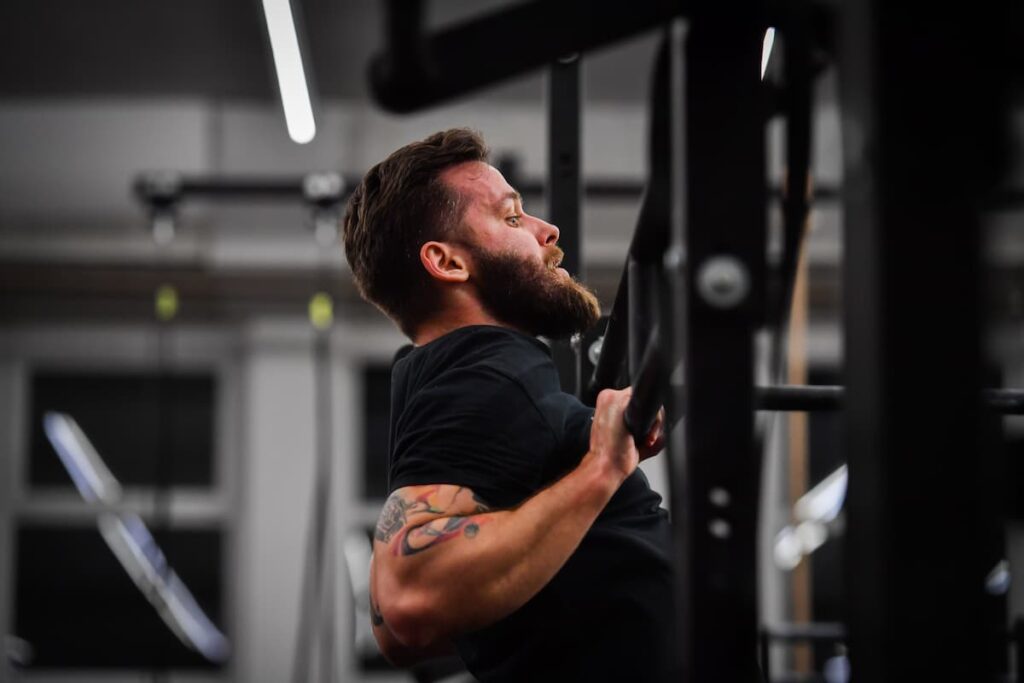
Both pronated (pull-up) and supinated (chin-up) grips place high rotational stress on the forearm. A supinated grip increases load on the biceps tendon and common flexor tendon, while a pronated grip increases strain on the wrist extensors. Biomechanical analysis shows that these grips create higher torsional forces at the elbow compared to neutral grips (You et al., 2014).
Why Neutral-Grip Pulling Is More Elbow-Friendly
A neutral grip aligns the forearm in a more anatomically natural position. This reduces internal rotation stress and distributes force more evenly across muscles of the upper arm and back. EMG studies demonstrate lower peak activation of the wrist flexors and extensors during neutral-grip pulling compared to pronated and supinated grips (Snarr and Esco, 2013).
This does not mean neutral-grip pull-ups are “easier.” They still heavily train the lats, rhomboids, and biceps, but with less strain on irritated tissues.
Practical Alternatives to Try
Neutral-grip pull-ups using parallel handles
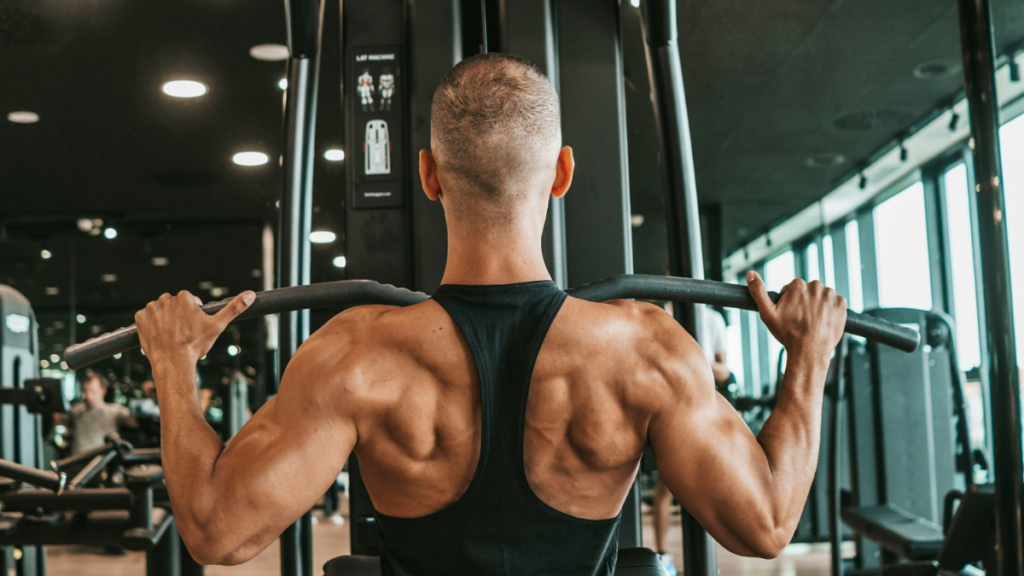
Neutral-grip lat pulldowns
Ring rows with palms facing each other
Suspension trainer rows with adjustable body angle
Research on resistance training adaptations shows that muscle activation of the lats remains high across grip variations, meaning you are not sacrificing back development by switching grips (Lusk et al., 2010).
2. Landmine Press Instead of Barbell Bench Press or Overhead Press
Pressing movements are another common trigger for elbow pain, particularly when heavy loads are involved.
Why Traditional Pressing Can Irritate the Elbow
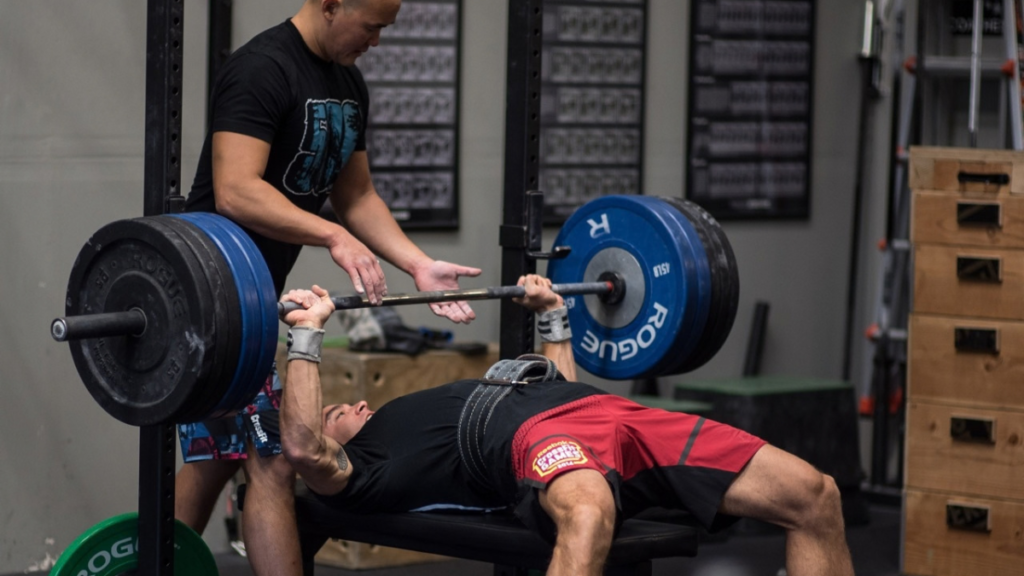
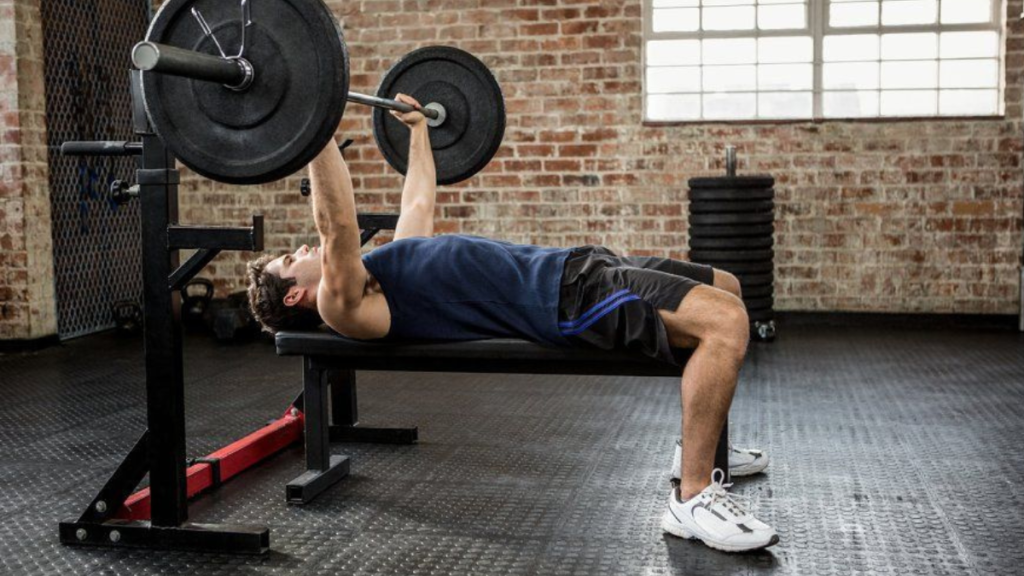
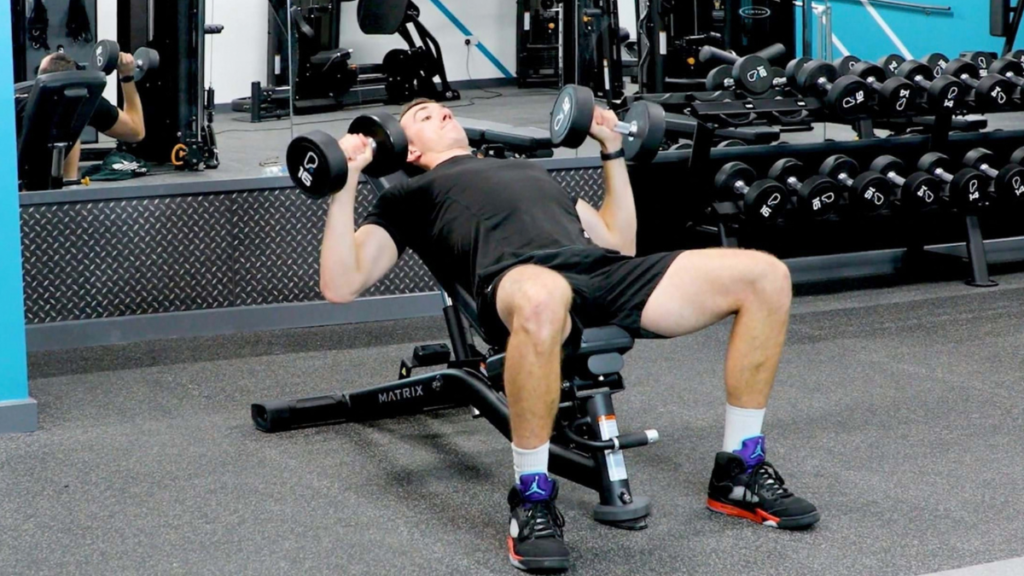
Barbell bench pressing and strict overhead pressing lock the hands into a fixed position. This forces the elbow and shoulder to adapt to the bar path, even if the lifter’s joint structure does not match that path well. Studies on joint kinematics show that fixed-grip pressing increases valgus stress at the elbow, particularly at heavier loads (Escamilla et al., 2014).
Why the Landmine Press Is Joint-Friendly
The landmine press allows the hands to move freely while pressing at an angle. This reduces both shoulder and elbow stress by allowing natural scapular movement and a semi-neutral grip. Research on angled pressing variations shows reduced joint torque at both the elbow and shoulder compared to vertical pressing (Saeterbakken et al., 2017).
Additionally, the landmine press shifts some load demand to the core and lower body, reducing peak force at the elbow.
How to Use It Effectively
Single-arm landmine press
Half-kneeling landmine press
Double-arm landmine press with neutral grip handle
Studies on unilateral pressing show similar strength gains with reduced joint stress due to lower absolute loading (McCurdy et al., 2005).
3. Belt Squats Instead of Heavy Deadlifts or Cleans
Lower-body training may not seem related to elbow pain, but gripping heavy weights often plays a major role.
Why Heavy Pulling Can Aggravate Elbow Pain
Deadlifts, cleans, and snatches require sustained high-intensity grip. Research indicates that prolonged gripping under load increases tendon strain and reduces blood flow to the forearm musculature, which may impair recovery (Kjellsson et al., 2020).
Athletes with elbow pain often notice symptoms worsen on heavy pulling days, even if the elbow is not the primary mover.
Why Belt Squats Are an Excellent Alternative
Belt squats load the lower body without requiring the hands or arms to hold the weight. This dramatically reduces elbow stress while still allowing high mechanical tension in the quadriceps and glutes. EMG studies show similar quadriceps activation between belt squats and barbell back squats when load is equated (Evans et al., 2015).
Additional Lower-Body Options
Safety bar squats with light grip
Hack squats
Leg press with controlled tempo
Maintaining lower-body strength during periods of elbow pain is critical, as detraining can negatively affect overall performance and hormone responses (Kraemer et al., 2002).
4. Dumbbell and Cable Rows Instead of Barbell Rows
Barbell rows are highly effective, but they can be rough on elbows when pain is present.

Why Barbell Rows Can Be Problematic
The fixed pronated grip used in most barbell rows increases wrist extensor activation and limits wrist movement. This increases strain on the lateral elbow, particularly during higher-rep sets. Biomechanical analysis confirms greater forearm muscle activation during barbell rows compared to dumbbell variations (Lehman, 2005).
Why Dumbbells and Cables Are Better Options
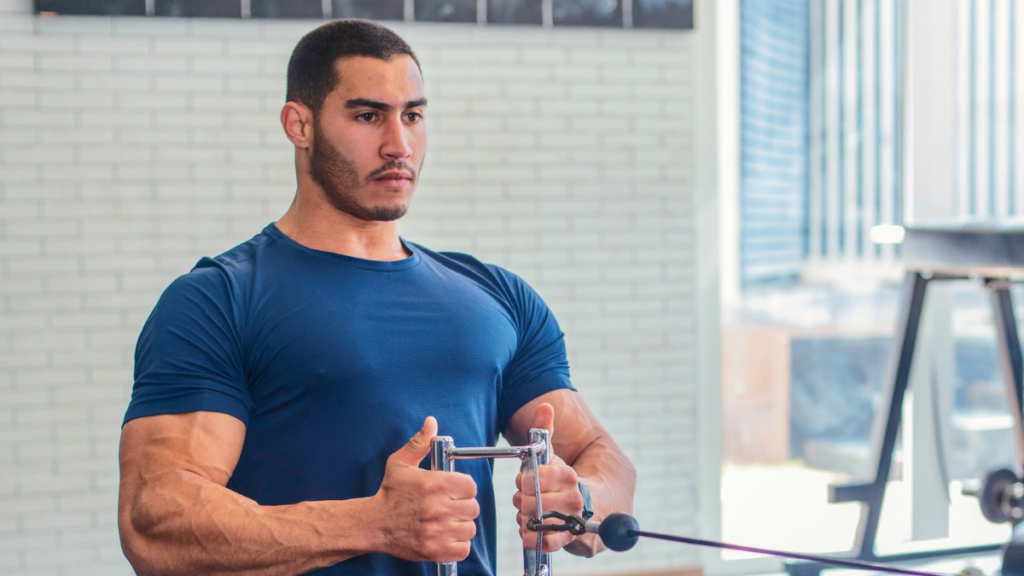
Dumbbells and cables allow each arm to move independently and rotate naturally. This reduces asymmetrical loading and allows the lifter to self-select a comfortable grip angle. Research shows that free-moving handles reduce joint torque and improve comfort without reducing back muscle activation (Saeterbakken and Fimland, 2013).
Effective Variations
Single-arm dumbbell rows with neutral grip
Chest-supported dumbbell rows
Cable rows with rope or rotating handles
Chest-supported variations further reduce compensatory strain by eliminating the need to brace heavily through the arms.
5. Isometric and Slow Tempo Arm Work Instead of High-Volume Isolation Exercises
Many people assume they must eliminate all direct arm training when elbow pain appears. This is rarely necessary.
Why High-Rep Isolation Can Worsen Symptoms
Traditional biceps curls and triceps extensions performed for high reps create repetitive tendon loading. Tendinopathy research shows that repeated concentric-eccentric cycles without sufficient recovery can exacerbate symptoms (Rio et al., 2014).
Why Isometrics and Slow Tempo Work Help
Isometric exercises reduce tendon pain through neural mechanisms while maintaining muscle activation. Studies demonstrate that isometric contractions can provide immediate analgesic effects in tendon pain without increasing tissue irritation (Rio et al., 2015).
Slow tempo resistance training reduces peak force while maintaining time under tension, which supports hypertrophy with lower joint stress (Schoenfeld et al., 2015).
Smart Arm-Friendly Options
Isometric biceps holds at 90 degrees
Isometric triceps pushdowns
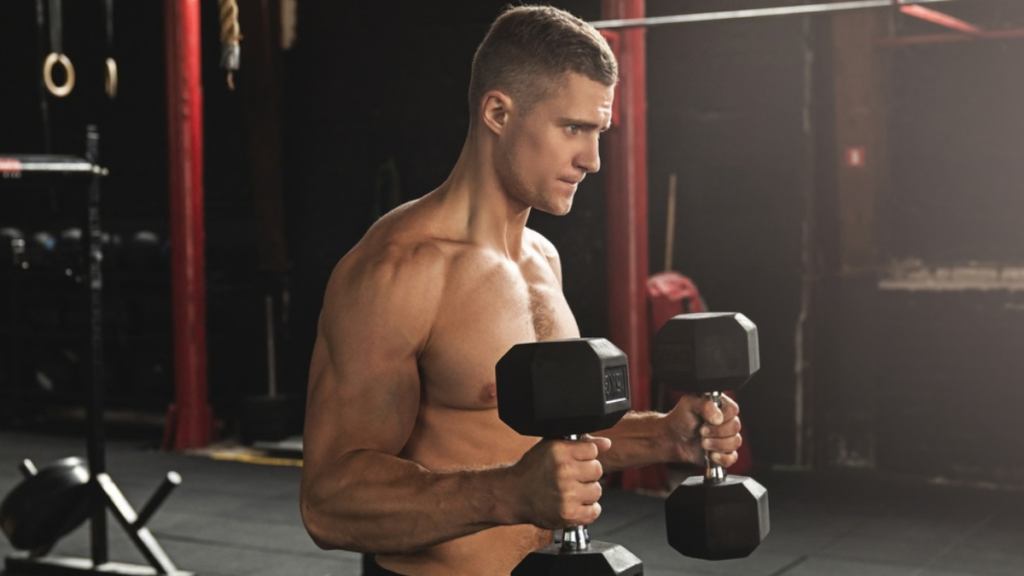
Slow tempo hammer curls
Cable triceps extensions with neutral grip
Hammer curls are particularly effective because they reduce forearm supination stress, lowering strain on the common flexor tendon (Oliveira et al., 2009).
Programming Considerations for Elbow Pain
Choosing the right exercises is only part of the solution. How you program them matters just as much.
Manage Volume and Frequency
Research consistently shows that sudden spikes in training volume increase injury risk (Gabbett, 2016). Reducing weekly sets for elbow-intensive movements while maintaining intensity is often more effective than reducing load alone.
Use Pain as a Guide, Not a Dictator
Pain during exercise does not always indicate tissue damage. Studies on pain-guided rehabilitation show that working within a tolerable pain range can improve outcomes compared to complete avoidance (Silbernagel et al., 2007).
Don’t Neglect the Shoulder and Wrist
Elbow load is strongly influenced by shoulder and wrist function. Improving shoulder stability and wrist mobility can significantly reduce elbow strain (Lucado et al., 2014).
Long-Term Outlook: Training Through, Not Around, Elbow Pain
Elbow pain does not have to derail your training. The key is respecting the biology of tendons. Tendons adapt more slowly than muscles, but they do adapt when load is applied intelligently. Research on progressive tendon loading shows that appropriately dosed resistance training improves tendon structure and pain over time (Bohm et al., 2015).
By choosing arm-friendly alternatives, managing volume, and maintaining overall training consistency, most athletes can continue making progress while symptoms resolve.
References
- Bohm, S., Mersmann, F. and Arampatzis, A. (2015). Human tendon adaptation in response to mechanical loading: a systematic review and meta-analysis of exercise intervention studies on healthy adults. Sports Medicine, 45(9), 1333–1353.
- Cook, J.L. and Purdam, C.R. (2009). Is tendon pathology a continuum? A pathology model to explain the clinical presentation of load-induced tendinopathy. British Journal of Sports Medicine, 43(6), 409–416.
- Coombes, B.K., Bisset, L. and Vicenzino, B. (2015). Management of lateral elbow tendinopathy: one size does not fit all. Journal of Orthopaedic & Sports Physical Therapy, 45(11), 938–949.