

If you want a bigger chest, broader shoulders, thicker arms, and a back that fills out your T-shirt, you don’t need a fancy machine circuit or a barbell loaded to the ceiling. You need tension, volume, progression, and recovery. Calisthenics delivers all four.
Bodyweight training has built powerful physiques for decades — from gymnasts to military athletes — and modern research on hypertrophy, motor unit recruitment, and muscle activation explains exactly why it works. When programmed correctly, calisthenics can produce muscle growth comparable to traditional weight training, especially in the upper body.
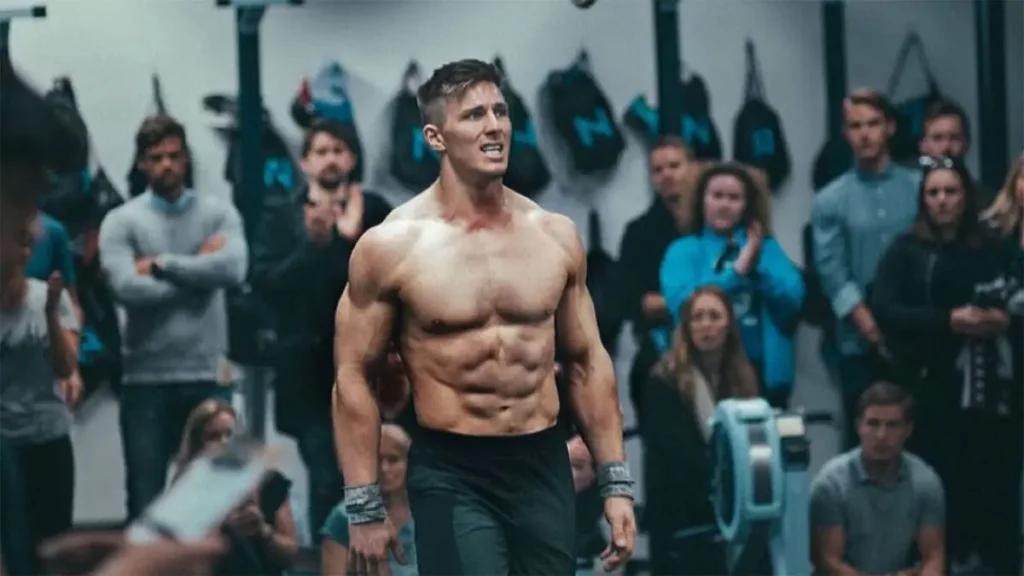
Here are three science-backed reasons why calisthenics will give you a jacked upper body — and how to use it properly.
1. Calisthenics Creates High Mechanical Tension — the Primary Driver of Muscle Growth
Mechanical Tension Is the Key to Hypertrophy
Muscle growth, or hypertrophy, is primarily driven by mechanical tension placed on muscle fibers. When fibers experience sufficient tension — especially under load near failure — they trigger molecular signaling pathways that stimulate muscle protein synthesis and growth.
Brad Schoenfeld’s foundational review on hypertrophy mechanisms concluded that mechanical tension is the most critical stimulus for muscle growth (Schoenfeld, 2010). When tension is high enough and sustained long enough, muscle fibers adapt by increasing in size.
Here is the important point: your muscles do not know whether the tension comes from a barbell or your bodyweight. They respond to force.
Bodyweight Exercises Can Produce Comparable Muscle Growth to Weights
One common myth is that you must lift heavy external weights to grow. That is not supported by research.
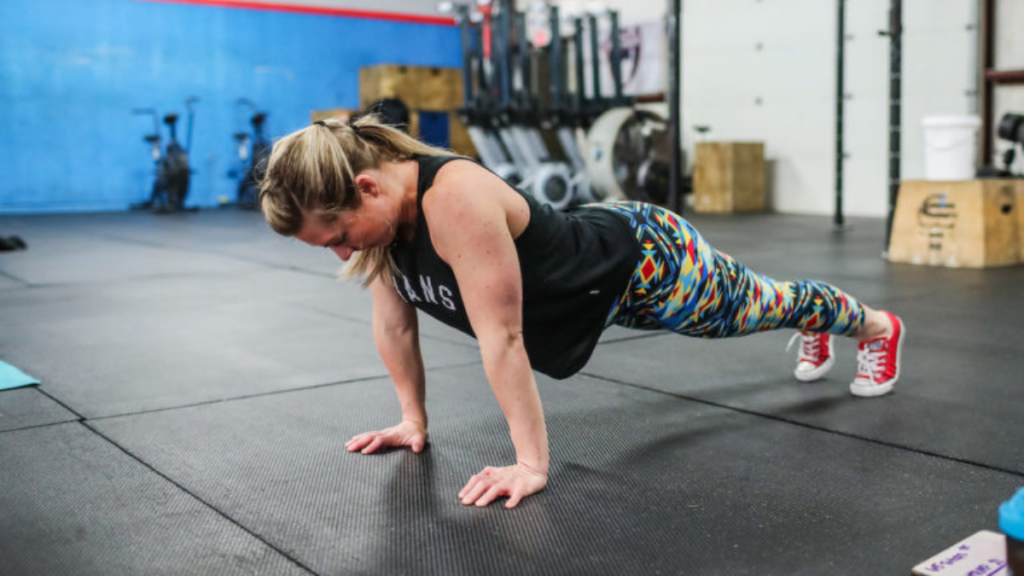
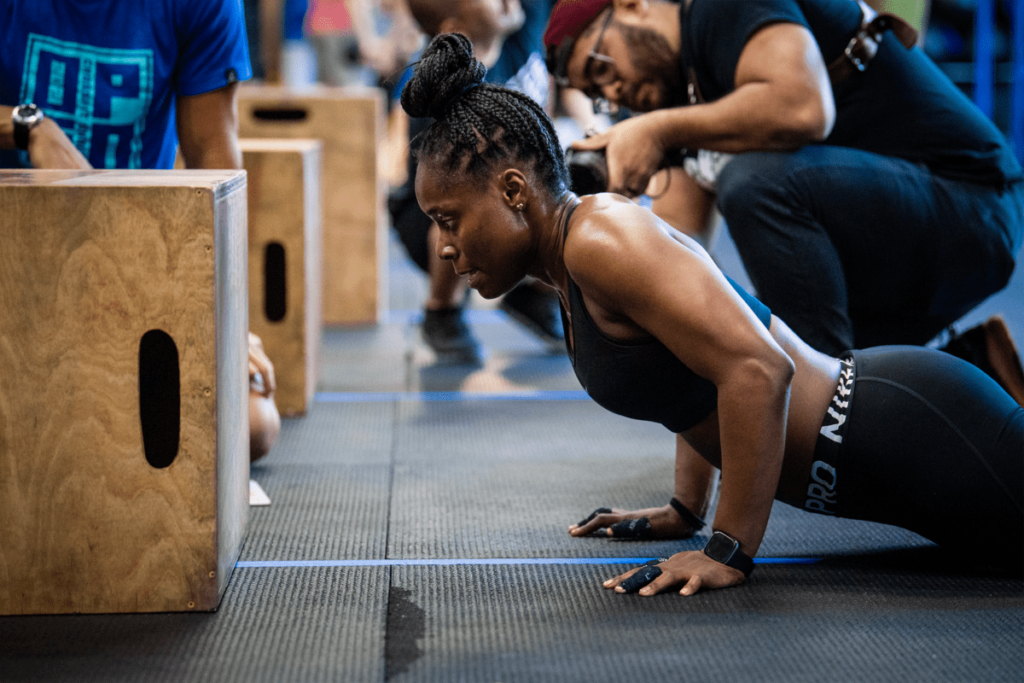
A randomized controlled trial by Kikuchi and Nakazato (2017) compared push-ups performed with elastic band resistance to bench press training at 40% of one-rep max. After eight weeks, both groups showed similar increases in muscle thickness and strength in the chest and triceps. The push-up group gained muscle comparable to the bench press group.
Another study by Calatayud et al. (2015) demonstrated that push-ups performed with additional resistance can elicit muscle activation levels in the pectoralis major and triceps comparable to bench press at 40% and 80% of one-rep max.
Even more importantly, research shows that lifting lighter loads to failure can produce similar hypertrophy to lifting heavy loads. Morton et al. (2016) compared low-load (30% 1RM) versus high-load (80% 1RM) resistance training performed to failure. Both groups experienced similar increases in muscle size.

This is crucial for calisthenics. If a bodyweight movement is challenging enough and taken close to muscular failure, it can stimulate comparable hypertrophy to traditional resistance training.
Progressive Overload Is Built Into Calisthenics
Muscle grows when it is forced to handle progressively greater demands. That principle is called progressive overload.
In calisthenics, overload is achieved by:
- Increasing repetitions
- Slowing tempo
- Increasing range of motion
- Changing leverage (e.g., from incline push-up to standard push-up to decline push-up to archer push-up)
- Adding external load (weighted vest or plates)
- Moving to unilateral variations (e.g., one-arm push-up progressions)
Each progression increases mechanical tension on the working muscles.
Gymnasts are a real-world example of this principle. Elite male gymnasts display significant upper body hypertrophy and strength due to high-intensity bodyweight training that involves advanced leverage positions and long time under tension. Research shows that gymnasts possess exceptional relative and absolute upper body strength due to their training demands (Jemni et al., 2000).
If calisthenics can build that level of muscle and strength, it can build yours too.
2. Calisthenics Maximizes Motor Unit Recruitment and Muscle Activation

You Must Recruit High-Threshold Motor Units to Grow
Muscle fibers are organized into motor units. The largest and strongest fibers — type II fibers — have the greatest growth potential. To stimulate them, you must recruit high-threshold motor units.
According to the size principle described by Henneman, motor units are recruited from smallest to largest as force demands increase. When an exercise becomes difficult — especially near failure — the body recruits larger, growth-prone motor units.
Research by Burd et al. (2012) showed that low-load resistance exercise performed to failure results in significant activation and stimulation of muscle protein synthesis, largely because high-threshold motor units are eventually recruited.
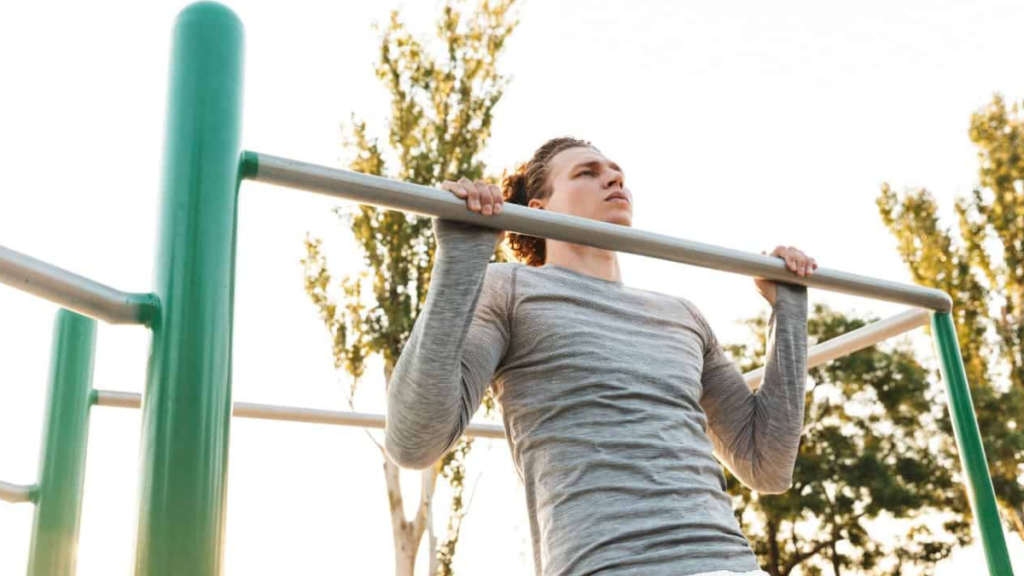
When you perform push-ups, dips, pull-ups, or handstand push-ups to near failure, you are not “just doing bodyweight.” You are forcing the nervous system to recruit more muscle fibers to complete the task.
Pull-Ups and Dips Produce High Muscle Activation
Electromyography (EMG) research demonstrates that classic calisthenics movements produce high levels of muscle activation.
Pull-ups generate substantial activation in the latissimus dorsi, biceps brachii, and lower trapezius. Dips strongly activate the pectoralis major, anterior deltoid, and triceps brachii.
High muscle activation is not the only factor for growth, but it is a strong indicator that the muscle is working hard enough to receive a hypertrophy stimulus.
Push-up variations can also significantly increase activation. Calatayud et al. (2015) found that unstable or weighted push-up variations can elevate pectoralis and triceps activation to levels comparable with moderate to heavy bench pressing.
Closed-Chain Exercises Enhance Stability and Co-Activation
Most calisthenics movements are closed-chain exercises. In closed-chain movements, the hands are fixed (for example, on the floor or bar), and the body moves around them. Bench presses and machine presses are open-chain movements, where the hands move the load.
Closed-chain exercises typically require greater joint stability and co-activation of surrounding musculature. This means more total muscle mass is working simultaneously.
Greater overall muscle recruitment increases systemic training stress. This contributes to both strength and hypertrophy adaptations.
For example, performing strict pull-ups requires engagement from:
- Lats
- Biceps
- Forearms
- Rear delts
- Rhomboids
- Core musculature
You are not isolating muscles. You are integrating them. That integration leads to greater strength carryover and often better long-term shoulder health.
3. Calisthenics Creates High Time Under Tension and Metabolic Stress
Time Under Tension Matters
Time under tension refers to how long a muscle is actively working during a set. Longer durations under load can increase metabolic stress and muscle fiber fatigue.

Schoenfeld (2010) identified metabolic stress as one of the key contributors to hypertrophy, alongside mechanical tension and muscle damage.
In calisthenics, especially during higher-rep sets or controlled tempo training, muscles often remain under tension for extended periods. Slow eccentrics, pauses, and extended sets all increase time under tension.
Research shows that training across a wide rep range — from moderate to high repetitions — can produce hypertrophy when sets are taken near failure (Schoenfeld et al., 2017). This aligns perfectly with calisthenics training, where repetition ranges may vary from 5 to 25 reps depending on the movement.
Bodyweight Training Can Elevate Muscle Protein Synthesis
Muscle growth occurs when muscle protein synthesis exceeds muscle protein breakdown over time.
Burd et al. (2010) demonstrated that resistance exercise performed with lighter loads but higher volume can stimulate significant increases in muscle protein synthesis, particularly when sets are carried close to failure.
This supports the effectiveness of high-rep calisthenics training. If you perform challenging sets of dips, push-ups, or pull-ups close to muscular failure, you stimulate the same anabolic processes as traditional resistance training.
Advanced Leverage Positions Dramatically Increase Intensity
Calisthenics is not limited to basic push-ups and sit-ups. Advanced movements dramatically increase loading demands.
Examples include:
- Archer push-ups
- One-arm push-up progressions
- Front lever progressions
- Planche progressions
- Handstand push-ups
These movements increase torque and leverage demands, dramatically increasing force production requirements.
Torque around the shoulder and elbow joints increases as lever arms lengthen. This effectively increases the resistance your muscles must overcome — without adding external weight.
As intensity rises, motor unit recruitment increases. As motor unit recruitment increases, hypertrophy potential increases.
Upper Body Muscles That Thrive With Calisthenics
Chest
Push-ups, dips, and advanced variations load the pectoralis major through horizontal and vertical pressing angles. Studies show push-ups can produce high pectoral activation comparable to bench press under certain conditions (Calatayud et al., 2015).
Back
Pull-ups and chin-ups heavily activate the lats and biceps. Closed-chain pulling builds both width and thickness when progressively overloaded.
Shoulders
Handstand push-ups and pike push-ups create high anterior deltoid activation. Dips and push-ups also significantly engage the front delts.
Arms
Dips heavily load the triceps, while chin-ups strongly activate the biceps brachii. Over time, progressive overload in these movements builds measurable arm size.
Programming Calisthenics for Maximum Upper Body Growth
To build a jacked upper body with calisthenics:
- Train close to failure on most working sets.
- Use progressive overload via leverage, tempo, range of motion, or added weight.
- Train each muscle group 2–3 times per week.
- Accumulate sufficient weekly volume (10–20 hard sets per muscle group, as supported by hypertrophy research).
- Prioritize recovery, sleep, and adequate protein intake.
Research by Schoenfeld et al. (2016) suggests that higher training volumes are associated with greater muscle growth, up to a point. Calisthenics makes accumulating volume accessible and joint-friendly.
Protein intake should generally fall within 1.6–2.2 grams per kilogram of bodyweight per day to maximize hypertrophy (Morton et al., 2018).
Final Thoughts
Calisthenics builds a jacked upper body because it satisfies the fundamental principles of muscle growth:
- It creates high mechanical tension.
- It recruits high-threshold motor units.
- It produces sufficient time under tension and metabolic stress.
Your muscles do not care if resistance comes from plates or gravity acting on your body.
If the stimulus is strong enough and progressively increases over time, growth follows.
Calisthenics is not a shortcut. It requires effort, progression, and consistency. But when properly programmed and taken seriously, it is more than capable of building serious upper body muscle — backed by science.
References
- Burd, N.A., West, D.W., Staples, A.W., Atherton, P.J., Baker, J.M., Moore, D.R., Holwerda, A.M., Parise, G., Rennie, M.J. and Phillips, S.M., 2010. Low-load high volume resistance exercise stimulates muscle protein synthesis more than high-load low volume resistance exercise in young men. PLoS One, 5(8), e12033.
- Burd, N.A., Andrews, R.J., West, D.W., Little, J.P., Cochran, A.J., Hector, A.J., Cashaback, J.G., Gibala, M.J., Potvin, J.R., Baker, S.K. and Phillips, S.M., 2012. Muscle time under tension during resistance exercise stimulates differential muscle protein sub-fractional synthetic responses in men. The Journal of Physiology, 590(2), pp.351–362.
- Calatayud, J., Borreani, S., Colado, J.C., Martin, F., Rogers, M.E., Behm, D.G. and Andersen, L.L., 2015. Bench press and push-up at comparable levels of muscle activity results in similar strength gains. Journal of Strength and Conditioning Research, 29(1), pp.246–253.
- Jemni, M., Sands, W.A., Friemel, F., Stone, M.H. and Cooke, C.B., 2000. Any effect of gymnastics training on upper-body and lower-body aerobic and power components in national and international male gymnasts? Journal of Strength and Conditioning Research, 14(3), pp.347–352.
- Kikuchi, N. and Nakazato, K., 2017. Low-load bench press and push-up induce similar muscle hypertrophy and strength gain. Journal of Exercise Science and Fitness, 15(1), pp.37–42.