

If you want an upper body that looks wider when viewed from the front, the lateral deltoid deserves more attention than almost any other muscle. Your chest can be well developed and your arms can be large, but the visual width of your shoulders depends heavily on the muscle that sits along the outer edge of each shoulder.
That muscle is the lateral deltoid, often called the side delt. Building it adds roundness to the shoulders and increases the horizontal distance between the torso and upper arms. This can make the waist appear relatively smaller, creating a stronger shoulder to waist contrast. Genetics, skeletal structure, body fat level, and posture all influence this look, but adding muscle to the lateral deltoid is one of the few trainable ways to improve it.


The important part is that lateral deltoid growth requires more than simply doing plenty of pressing. Presses are valuable compound movements, but they do not appear to challenge the lateral deltoid as directly as lateral raise variations. A focused plan built around sound technique, enough productive sets, and progressive training can make this muscle a meaningful contributor to a wider looking physique.
Why the Lateral Deltoid Changes Your Front View
The deltoid is a large shoulder muscle with anterior, lateral, and posterior regions. The anterior portion sits toward the front of the shoulder, the lateral portion covers the outer shoulder, and the posterior portion sits toward the back. All three matter for shoulder development, but the lateral portion is particularly important for the front view because it creates the outward curve between the neck, shoulder, and upper arm.
When the lateral deltoid gains size, it does not literally widen the clavicles or change bone structure. Instead, it adds tissue to the outside of the shoulder joint. That added mass changes the outline of the upper body. The effect can be especially noticeable when the waist is comparatively lean or when the upper back and chest are also developed.

This does not mean that you should ignore the rest of your physique. A broad looking upper body is still a visual combination of shoulder size, lat development, chest mass, waist circumference, and posture. However, the lateral deltoid is the muscle that directly adds width at the shoulder itself. For that reason, it is a high value target when appearance from the front is the main goal.
Why Pressing Alone Is Usually Not Enough
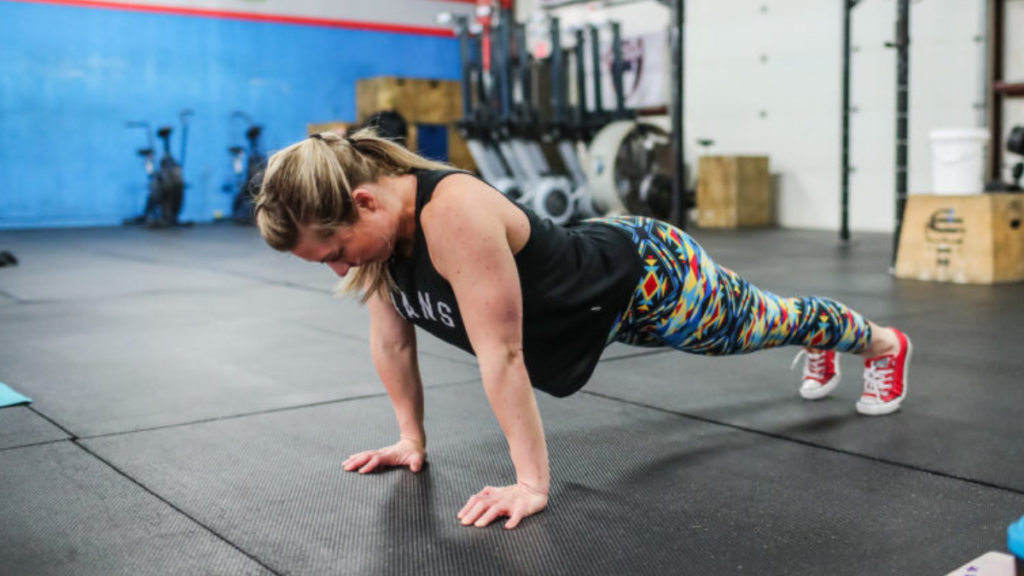
Overhead presses, incline presses, bench presses, and push ups can all train the shoulders to some extent. They are excellent movements for general upper body strength and muscle growth. However, the front deltoid and triceps often make larger contributions during pressing than the lateral deltoid.
Research comparing shoulder exercises has found that lateral raise variations produce greater lateral deltoid activation than shoulder pressing. Muscle activation is not a direct measurement of long term muscle growth, so it should not be treated as a guarantee. Still, it supports the practical idea that movements involving shoulder abduction are a more direct way to train the side delts.
Before You Bench 100kg, You Should Be Able to Do These 3 Things
The result is simple. If you only press, your shoulders may grow, particularly if you are new to resistance training. Yet your development may become biased toward the front of the shoulder. Direct lateral raise work gives the lateral deltoid a clearer reason to adapt and grow.
This matters for both appearance and shoulder balance. Excessive emphasis on pressing without enough pulling and direct lateral shoulder work can leave some lifters with a shoulder look that is strong from the side but less rounded and broad from the front. A more complete plan should include pressing, pulling, rear delt work, and specific lateral deltoid training.
The Best Exercise Pattern for the Job
The Lateral Raise
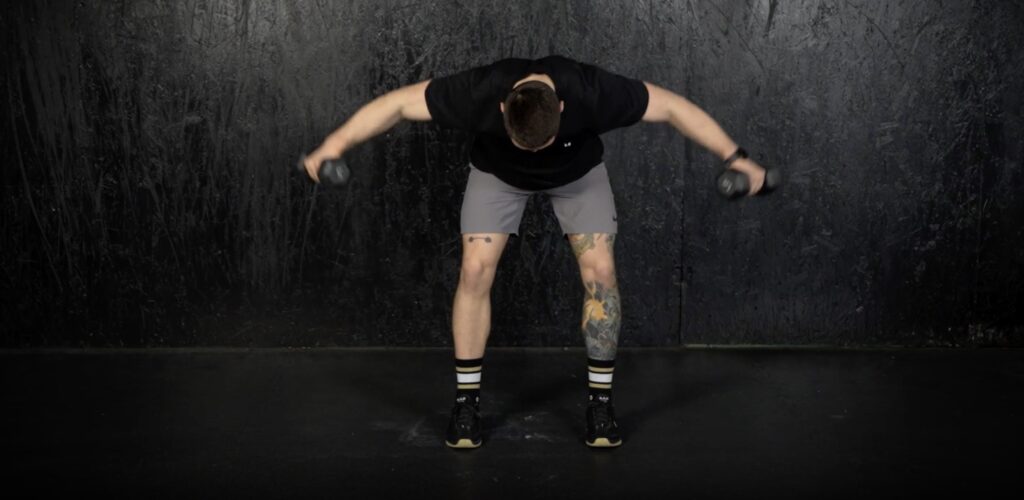
The lateral raise is the most direct exercise pattern for the lateral deltoid. You lift the arm away from the side of the body in a controlled arc, then lower it under control. This movement closely matches the main action of the lateral deltoid, which is helping raise the upper arm out to the side.
Dumbbell lateral raises are practical, easy to set up, and effective. Cable lateral raises are also useful because the cable can provide resistance through more of the range of motion. A recent trial in trained men and women found that both dumbbell and cable lateral raises increased lateral deltoid thickness after eight weeks of training. Neither option produced clearly superior growth when the training was otherwise matched.
That finding is useful because it removes a common distraction. You do not need to hunt for a perfect variation. Choose the version you can perform comfortably, load gradually, and repeat consistently. Dumbbells, cables, machines, and supported variations can all be productive when they allow hard, stable, pain free training.
How to Perform Productive Repetitions
The goal of a lateral raise is not to move the heaviest possible weight. The goal is to place meaningful tension on the lateral deltoid while minimizing help from the legs, lower back, traps, and momentum.
Begin with the arms at your sides and maintain a slight bend in the elbows. Raise the arms out and slightly forward in a comfortable path. Many people find that lifting in the scapular plane, which is a little forward of directly out to the side, feels smoother than forcing the arms into a perfectly straight line.

Lift only as high as you can control without pain or dramatic shrugging. Your upper arms do not need to travel far above shoulder height for the exercise to be effective. Lower the weight with control, avoid swinging at the bottom, and repeat with a steady tempo.
A small amount of torso movement can occur during difficult sets, especially near the end, but large swings usually shift too much work away from the target muscle. If you have to launch every repetition with the legs, the load is probably too heavy for the purpose of the exercise.
How Much Training Does It Take?
Muscle growth depends partly on training volume, meaning the number of hard sets performed over time. Research reviews show a dose response relationship between weekly resistance training volume and muscle gain, although the best amount varies between people. More sets can help, but only when recovery, exercise quality, and effort remain adequate.
For many lifters, six to ten challenging direct sets for the lateral deltoid per week is a sensible starting range. This can be divided across two or three sessions. Someone already doing significant pressing may start at the lower end, while a more advanced lifter with strong recovery and a specific shoulder goal may gradually benefit from more.
The word challenging matters. A set should finish close enough to muscular failure that the lateral deltoid has to work hard. You do not need to reach absolute failure on every set, especially if technique falls apart. Ending most sets with roughly one to three repetitions left in reserve is a practical approach that allows high effort while maintaining control.
Training the lateral deltoids twice per week is often convenient because it spreads the work across the week. Research suggests that when total volume is equated, frequency itself is less important for hypertrophy than the overall amount of quality work completed. Therefore, choose the schedule that helps you perform well and recover.
Rep Ranges and Progressive Overload
The lateral deltoid responds well to moderate and higher repetition work because raises can become awkward with very heavy loading. Sets of roughly ten to twenty repetitions are often practical, although somewhat higher repetitions can also work if the set is hard and technique stays controlled.
Resistance training studies show that a wide range of loads can build muscle when sets are performed with sufficient effort. Heavy loads are not automatically better for hypertrophy, especially for an isolation movement where joint comfort and execution are important. For lateral raises, a load that allows a smooth, deliberate set is generally more useful than a load that forces you to swing.
Progressive overload does not only mean adding weight. You can progress by adding repetitions with the same load, improving your control, adding a set when recovery is good, or gradually using a slightly heavier dumbbell or machine setting. Small increases matter because the lateral deltoid is a relatively small muscle, and even a minor weight increase can be substantial.
Keep a simple log of the load, repetitions, and sets. Once you can complete the top of your chosen repetition range with clean form, increase the resistance slightly. This approach makes progress measurable without turning a shoulder isolation exercise into a test of ego.
A Simple Side Delt Focus Plan
A straightforward plan can include lateral raises twice each week. On the first session, perform three to four sets of dumbbell lateral raises for ten to fifteen controlled repetitions. On the second session, perform three to four sets of cable or machine lateral raises for twelve to twenty repetitions.
Place the exercise after heavier compound lifts if strength on presses is your main priority. Place it earlier if shoulder width is your primary objective and you want your freshest effort to go toward the lateral deltoids. Both approaches can work, but the latter may help you perform higher quality direct work.
If your shoulders feel good and progress has stalled for several weeks, add one or two weekly sets rather than making a dramatic jump. Then monitor soreness, performance, and joint comfort. The best program is not the one with the greatest number of sets on paper. It is the one that gives you a repeatable stimulus that you can recover from and progressively improve.
Nutrition and Recovery Still Matter
Training creates the stimulus for muscle growth, but it does not complete the process by itself. Adequate protein supports resistance training adaptations, and research suggests that total daily protein intake around 1.6 grams per kilogram of body mass is sufficient to maximize average gains in fat free mass for many people who lift weights.
Calories also matter. Building muscle is generally easier when energy intake is adequate. You can still improve shoulder development while maintaining or losing body fat, particularly if you are a beginner, returning to training, or carrying more body fat. However, gains may be slower than during a well managed calorie surplus.
Sleep, stress, and recovery between sessions affect training quality. If your shoulders are constantly sore, your performance is dropping, or your elbows and shoulder joints hurt, adding more lateral raises is unlikely to solve the problem. Reduce unnecessary fatigue, check technique, and use a variation that feels comfortable.
The Bottom Line
The lateral deltoid is the muscle that most directly makes your upper body look wider from the front. It adds visible shoulder width, improves the rounded shoulder outline, and can strengthen the contrast between your shoulders and waist.
Pressing is useful, but direct lateral raise work is usually needed if you want to maximize this area. Train the movement with control, use enough hard weekly sets, progress gradually, and give the muscle time to adapt. Consistent training will matter far more than whether you use a cable, dumbbell, or machine.
Key Takeaways
| Focus | What to do | Why it matters |
|---|---|---|
| Target muscle | Prioritize the lateral deltoid | It directly adds muscle to the outer shoulder and enhances apparent upper body width |
| Main exercise | Use lateral raise variations | They target shoulder abduction more directly than pressing movements |
| Weekly volume | Start with six to ten hard direct sets | This provides a practical amount of work for many lifters while allowing recovery |
| Repetition range | Use controlled sets of about ten to twenty repetitions | Moderate to higher repetitions make it easier to train the muscle without excessive momentum |
| Progression | Add repetitions, load, or sets gradually | Progressive overload gives the muscle a continuing reason to adapt |
| Exercise selection | Choose dumbbells, cables, machines, or supported options that feel good | Current evidence suggests both dumbbell and cable raises can effectively build the lateral deltoid |
References
- Ackland, D.C. and Pandy, M.G. (2009) ‘Lines of action and stabilizing potential of the shoulder musculature’, Journal of Anatomy, 215(2), pp. 184–197.
- Botton, C.E. et al. (2013) ‘Electromyographical analysis of the deltoid muscle between different strength training exercises’, Journal of Strength and Conditioning Research, 27(10), pp. 2786–2792.
- Grgic, J. et al. (2018) ‘Effect of resistance training frequency on gains in muscular strength: A systematic review and meta analysis’, Sports Medicine, 48(5), pp. 1207–1220.
- Larsen, S. et al. (2025) ‘Dumbbell versus cable lateral raises for lateral deltoid hypertrophy: An experimental study’, Frontiers in Physiology, 16, 1611468.
- Morton, R.W. et al. (2018) ‘A systematic review, meta analysis and meta regression of the effect of protein supplementation on resistance training induced gains in muscle mass and strength in healthy adults’, British Journal of Sports Medicine, 52(6), pp. 376–384.
- Schoenfeld, B.J. et al. (2017) ‘Dose response relationship between weekly resistance training volume and increases in muscle mass: A systematic review and meta analysis’, Journal of Sports Sciences, 35(11), pp. 1073–1082.
- Schoenfeld, B.J. et al. (2017) ‘Strength and hypertrophy adaptations between low versus high load resistance training: A systematic review and meta analysis’, Journal of Strength and Conditioning Research, 31(12), pp. 3508–3523.
- Vieira, A.F. et al. (2020) ‘Effects of resistance training performed to failure or not to failure on muscle strength, hypertrophy, and power output: A systematic review with meta analysis’, Journal of Strength and Conditioning Research, 35(4), pp. 1165–1175.