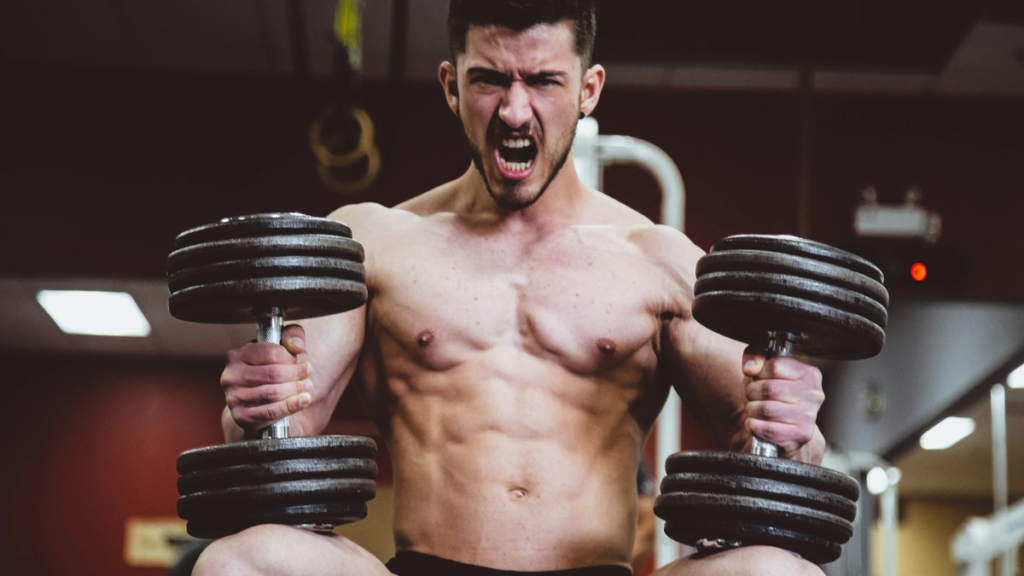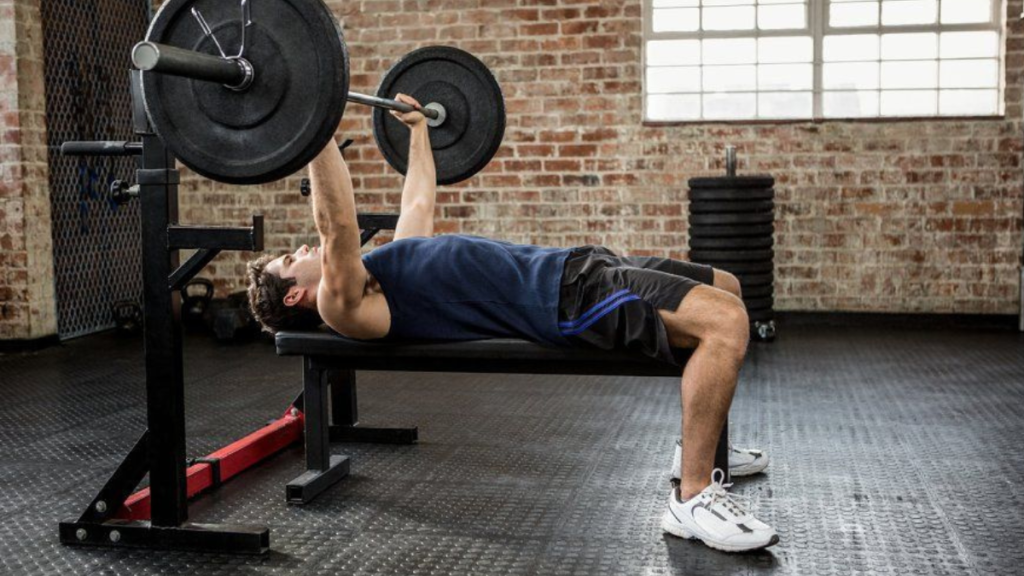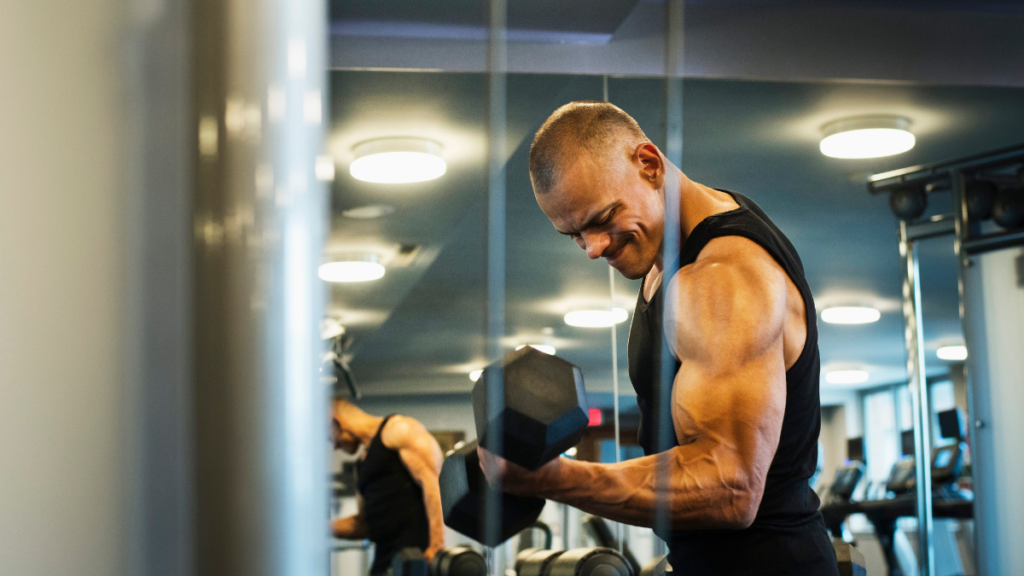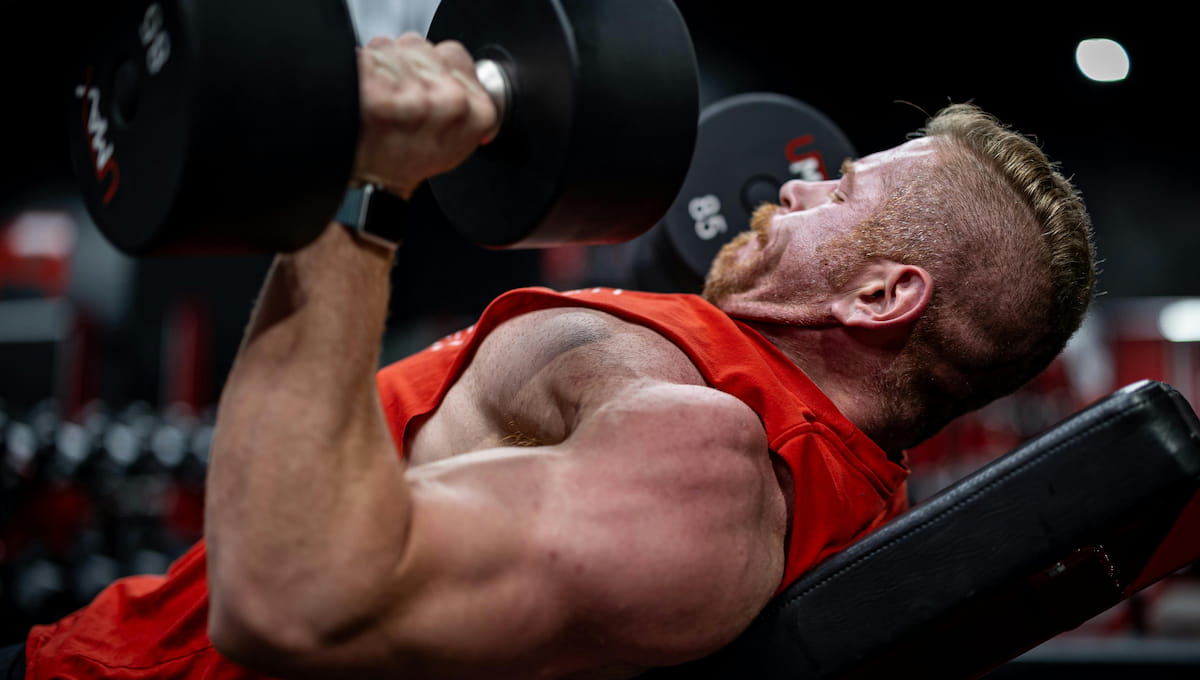


A well developed chest makes the upper body look stronger, more balanced, and more athletic. It also contributes to pressing strength for sports, daily tasks, and gym training. Dumbbells are an excellent place for beginners to start because each arm works independently, the hands can follow a natural path, and the load can be adjusted in small, manageable increases.
The chest is primarily made up of the pectoralis major. This large muscle has fibers that run from the collarbone and breastbone to the upper arm. People commonly describe these regions as the upper and lower chest, but the pec is still one muscle. You cannot completely isolate one area while switching off another. What you can do is choose pressing angles and movement paths that place more emphasis on different fibers.


For beginners, the best approach is not to chase complicated exercises or constantly change workouts. Build a foundation with a few movements that train the chest through a controlled range of motion. Get stronger over time, use solid technique, and give your body enough food and recovery to adapt. Research consistently shows that resistance training builds muscle, while training volume, effort, progressive overload, and consistency are major factors in long term hypertrophy.
These three dumbbell exercises cover the job well. The flat dumbbell press builds overall chest mass, the incline dumbbell press gives extra attention to the fibers closer to the collarbone, and the decline dumbbell press is a useful option for emphasizing the lower portion of the chest. Together, they can help beginners develop fuller and more muscular pecs without needing a crowded gym full of machines.
Why Dumbbells Are So Useful for Beginner Chest Training
Dumbbells allow each side of the body to contribute independently. This can make it easier to notice whether one arm is stronger or more coordinated than the other. Unlike a barbell, where the stronger side can subtly compensate, each dumbbell must be lowered and pressed under control.
Dumbbell pressing also allows more freedom at the shoulder and wrist. Your hands are not fixed to one straight bar, so you can use a grip and elbow position that feels comfortable while still keeping the chest as the main target. For most beginners, a neutral or slightly angled grip can feel more natural than forcing the palms to face directly forward throughout every repetition.
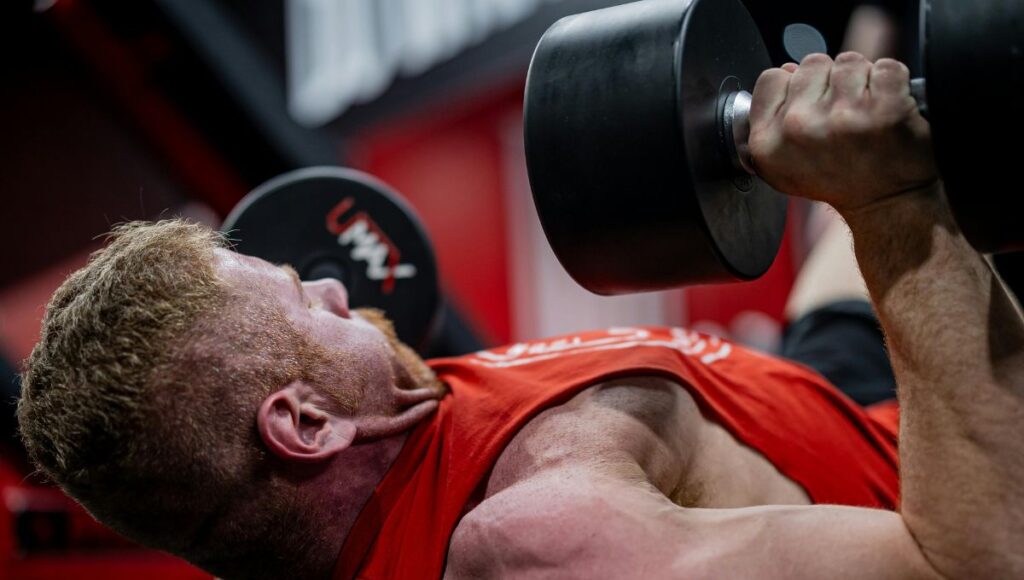
The goal is not to make the exercise unstable for its own sake. You still want to use a stable bench, a controlled tempo, and loads that you can manage safely. However, free weight pressing requires you to control each dumbbell, which can make the movement feel more athletic and can develop coordination alongside strength.
Dumbbells are also practical for progressive overload. You can begin with light weights, practice the movement, and slowly increase the load as your strength improves. Muscle growth can occur across a broad range of loads when sets are performed with sufficient effort. For beginners, moderate weights that allow controlled sets of roughly eight to fifteen repetitions are usually a sensible starting point.
1. Flat Dumbbell Bench Press for Overall Chest Mass
The flat dumbbell bench press should be the foundation of a beginner dumbbell chest workout. It trains the pectoralis major through a large range of motion while also involving the triceps and front of the shoulders. This makes it an efficient compound exercise for building upper body pressing strength and chest size.
A flat pressing position gives substantial work to the large sternocostal portion of the pectoralis major, which makes up much of the visible chest. It is not only a lower chest exercise, but it is a highly effective movement for adding overall thickness and mass across the pecs.
How to Perform the Flat Dumbbell Bench Press
Sit on the end of a flat bench with a dumbbell resting on each thigh. Lie back in a controlled motion and use your thighs to guide the dumbbells into the starting position above your chest. Keep your feet firmly on the floor and your upper back in contact with the bench.
Begin with the dumbbells above the mid chest, with your arms straight but not aggressively locked. Lower the weights under control until your elbows are slightly below the level of your torso or until you reach a comfortable stretch in the chest. Your elbows should usually travel at an angle rather than pointing directly out to the sides.
Before You Chase Bigger Arms, Build These 3 Foundations
Press the dumbbells back up by bringing your upper arms toward the center of the body. Think about pushing yourself into the bench while squeezing the chest. The dumbbells do not need to crash together at the top. Keep the movement smooth and controlled.
Why It Works
The bench press pattern recruits the pectoralis major, triceps brachii, and anterior deltoid. The chest is especially important because its main actions include bringing the upper arm across the body and moving it forward. The dumbbell press trains these actions under resistance while allowing a deeper lowering position than many people can achieve comfortably with a barbell.
Electromyography research on pressing variations shows that the pectoralis major is heavily involved during horizontal pressing. Although muscle activation measurements do not directly prove long term hypertrophy, they can help explain why pressing exercises are logical choices for chest training.
For beginners, the flat dumbbell press is also valuable because it teaches the basic skill of pressing under load. As your technique improves, you can gradually add repetitions or weight. This progressive challenge is one of the clearest drivers of strength and muscle gain.
Common Beginner Mistakes
Avoid lowering the dumbbells too quickly. The lowering phase is part of the repetition and should be controlled. Do not let the shoulders roll forward at the bottom, because this can reduce chest tension and make the position less comfortable.
Another common issue is choosing dumbbells that are too heavy. If the weights force you to shorten the range of motion, flare your elbows excessively, or bounce the dumbbells upward, reduce the load. A clean set with lighter dumbbells will do more for long term progress than a messy set with weights you cannot control.
2. Incline Dumbbell Press for More Muscular Upper Pecs
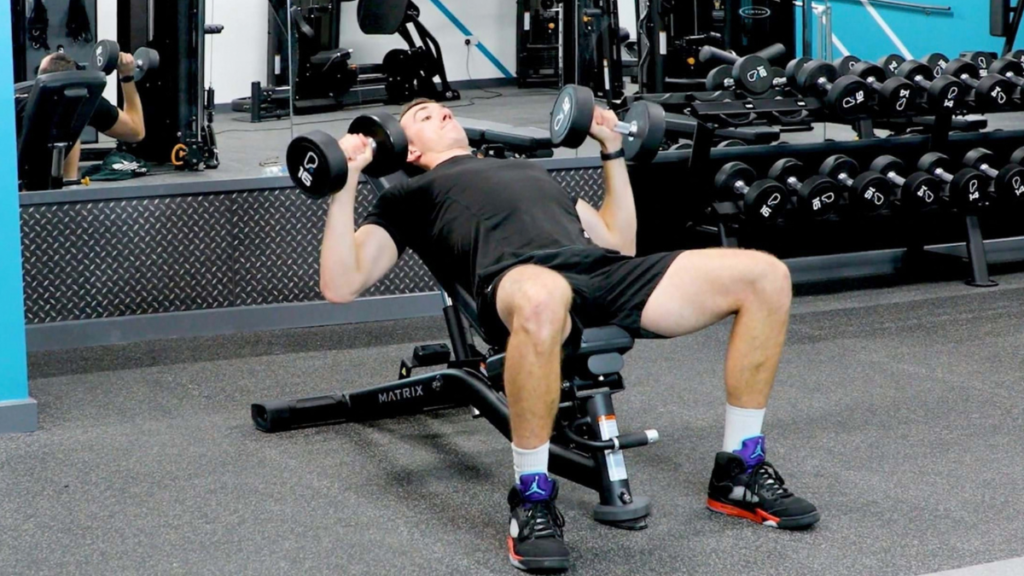
The incline dumbbell press is the best dumbbell choice for beginners who want to place more emphasis on the upper portion of the chest. This area refers to the clavicular fibers of the pectoralis major, which sit closer to the collarbone.
Changing the bench angle changes the relationship between the upper arm and the torso. Research comparing pressing angles has found that incline pressing can increase activation of the clavicular portion of the pectoralis major compared with flat pressing. However, a very steep incline tends to shift more work toward the front deltoids. For chest focused training, a low to moderate incline is generally more useful than setting the bench nearly upright.
How to Perform the Incline Dumbbell Press
Set the bench to a low incline, usually around 15 to 30 degrees. Sit down with the dumbbells on your thighs, then lean back and bring them into position above the upper chest. Keep your feet planted and your upper back firmly supported by the bench.
Lower the dumbbells slowly toward the area between your upper chest and shoulders. Keep your elbows slightly tucked rather than flared wide. Descend only as far as you can while maintaining a stable shoulder position and a comfortable stretch through the chest.
Press upward and slightly inward until the dumbbells return above the upper chest. Keep your rib cage comfortably lifted, but avoid overextending your lower back to turn the movement into a standing style press.
Why It Works
The clavicular fibers of the pectoralis major are positioned to contribute strongly when the upper arm moves upward and across the body. A modest incline changes the pressing line to better suit those fibers. This is why incline pressing is useful for lifters who want a fuller look closer to the collarbones.
The exercise also trains the front deltoids and triceps, which is normal for any pressing movement. You do not need to eliminate shoulder involvement entirely. Instead, use a bench angle that lets you feel the chest doing meaningful work without making the exercise feel like a shoulder press.
Dumbbells add another advantage here. They allow you to keep your wrists, elbows, and shoulders in a path that suits your individual build. If a palms forward grip feels uncomfortable, turn the dumbbells slightly inward. Small grip adjustments can make the movement feel more stable while preserving the chest focused pressing pattern.
Common Beginner Mistakes
The biggest mistake is using too much incline. Once the bench becomes steep, the front deltoids can dominate the exercise. Start with a low setting and only increase it if you can still feel a strong chest contraction without discomfort.
Do not press the dumbbells directly over your face. Keep the line of motion above the upper chest. Also avoid allowing your head to push forward off the bench. Keep your neck relaxed and let the upper back provide a stable base.
3. Decline Dumbbell Press for Lower Chest Emphasis
The decline dumbbell press is a valuable option for beginners who want extra work for the lower portion of the chest. In anatomical terms, this means giving more attention to the sternocostal fibers of the pectoralis major. These fibers are large and contribute significantly to the chest’s overall size, especially its lower and middle areas.
A slight decline alters the direction of resistance and can make pressing feel more chest focused for some people. Research comparing bench angles has found that pressing position can change muscular activation patterns across the chest and shoulder muscles. The decline press should not replace the flat press, but it can be a useful third movement when performed safely.
How to Perform the Decline Dumbbell Press
Use a decline bench with secure leg support. Start with a mild decline rather than an aggressive angle. Getting into position with dumbbells can be awkward, so ask for a spotter when learning or use a weight that you can set up safely.
Hold the dumbbells above the lower chest with a stable grip. Lower them slowly toward the lower chest while keeping the elbows at a comfortable angle from the torso. Maintain contact between your upper back and the bench, and do not rush the descent.
Press the dumbbells upward until your arms are straight. Focus on bringing the upper arms toward the center of the body rather than simply pushing the weights away. Finish each repetition under control, then sit up carefully after the set instead of trying to throw the dumbbells aside.
Why It Works
The decline angle changes the line of force so that the pressing action can place greater emphasis on the sternocostal region of the pectoralis major. For some lifters, it also feels more comfortable on the shoulders than a flat or steep incline press. Individual comfort matters because an exercise only works well when you can train it consistently with good technique.
The decline dumbbell press can also add variety without abandoning the core pressing pattern. Beginners do not need endless exercise variety, but using different sensible angles can help distribute training across the chest and prevent every session from feeling identical.
This exercise is particularly useful when the goal is balanced chest development. The upper pecs receive attention from the incline press, while the flat and decline press provide strong work for the middle and lower areas. Over time, the combination can create a fuller chest rather than a physique that looks developed only near the collarbones.
Common Beginner Mistakes
Do not use a deep decline just because it looks more advanced. A mild angle is enough. Extreme declines can make setup more difficult and may not provide extra benefits for a beginner.
Avoid training this exercise without a safe way to get in and out of position. If your gym does not have a stable decline bench or you do not have a spotter, keep the flat dumbbell press as your main movement and use a low incline press as the second exercise. Consistent, safe training is more important than forcing every variation into your program.
How to Build Your Chest With These Exercises
A beginner can perform these exercises one or two times each week. Start with the flat dumbbell bench press, because it is the most important overall mass builder. Follow it with the incline dumbbell press, then add the decline dumbbell press if you have the equipment and can perform it safely.

A practical starting point is two or three challenging sets per exercise. Choose a load that lets you perform roughly eight to fifteen controlled repetitions while leaving one to three repetitions in reserve. This means the set feels demanding, but you could still complete a small number of additional reps with good form.
As you become stronger, aim to add a repetition, improve your control, or increase the dumbbell weight slightly. This is progressive overload. You do not need to add weight every workout, but your training should gradually become more challenging over weeks and months.
Muscle growth also depends on recovery. Eat enough total calories and protein, sleep consistently, and give your chest at least a day or two of recovery before training it hard again. Beginners often progress quickly when they combine regular training with patient, repeatable habits.
The Bottom Line
The best dumbbell chest exercises for beginners do not need to be complicated. The flat dumbbell bench press builds overall chest mass, the incline dumbbell press adds more emphasis to the upper pecs, and the decline dumbbell press can help develop the lower chest.
Train each movement with controlled form, use a comfortable range of motion, and focus on getting gradually stronger. You cannot completely isolate upper and lower pecs, but different pressing angles can shift emphasis across the pectoralis major. Build the entire muscle consistently, and your chest will become stronger, fuller, and more muscular.
References
- Barnett, C., Kippers, V. and Turner, P., 1995. Effects of variations of the bench press exercise on the EMG activity of five shoulder muscles. Journal of Strength and Conditioning Research, 9(4), pp.222–227.
- Lauver, J.D., Cayot, T.E. and Rotarius, T., 2016. The effect of bench press angle on upper extremity muscular activation. European Journal of Sport Science, 16(3), pp.309–316.
- Schoenfeld, B.J., Ogborn, D. and Krieger, J.W., 2017. Dose response relationship between weekly resistance training volume and increases in muscle mass: A systematic review and meta analysis. Journal of Sports Sciences, 35(11), pp.1073–1082.
- Schoenfeld, B.J., Grgic, J., Ogborn, D. and Krieger, J.W., 2017. Strength and hypertrophy adaptations between low versus high load resistance training: A systematic review and meta analysis. Journal of Strength and Conditioning Research, 31(12), pp.3508–3523.
- Trebs, A.A., Brandenburg, J.P. and Pitney, W.A., 2010. An electromyography analysis of three muscles surrounding the shoulder joint during the performance of a chest press exercise at several angles. Journal of Strength and Conditioning Research, 24(7), pp.1925–1930.
- Wernbom, M., Augustsson, J. and Thomee, R., 2007. The influence of frequency, intensity, volume and mode of strength training on whole muscle cross sectional area in humans. Sports Medicine, 37(3), pp.225–264.
Key Takeaways
| Exercise | Primary purpose | Best beginner focus |
|---|---|---|
| Flat dumbbell bench press | Builds overall chest mass and pressing strength | Use it as the main chest exercise |
| Incline dumbbell press | Adds more emphasis to the upper chest near the collarbones | Keep the bench at a low to moderate incline |
| Decline dumbbell press | Adds lower chest emphasis and training variety | Use a mild decline and prioritize safe setup |
| Progression | Drives ongoing strength and muscle development | Add reps, control, or small weight increases over time |