

A muscular chest is built through consistent pressing, enough challenging training volume, good technique, and gradual progression. You do not need a barbell to start building it. Press ups and dips can both train the chest, triceps, and front of the shoulders effectively, but they are not equally suitable for every beginner.
Press ups are easier to scale, easier to learn, and generally more forgiving on the shoulders. Dips can be an excellent chest and triceps exercise, but the full movement requires more upper body strength, shoulder control, and tolerance for a deep shoulder position. For most people beginning bodyweight training, press ups are the better starting choice.


That does not mean dips are a bad exercise. It means they should usually be earned through solid pressing strength and careful progression. If your goal is to build a bigger chest while staying healthy and making steady progress, the best exercise is the one you can perform with control, load progressively, and repeat consistently.
What Builds a Muscular Chest?
The pectoralis major is the largest chest muscle and has a major role in bringing the upper arm toward the body and across the torso. It works strongly during horizontal and angled pressing movements, including press ups, bench presses, and dips. The triceps and front deltoids also contribute heavily, which is why both exercises can build a more muscular upper body rather than isolating the chest alone.
Research shows that muscle growth can occur across a broad range of resistance loads when sets are performed with sufficient effort. This matters for bodyweight training because you do not need to begin with difficult exercises or external weight. You need a movement that makes your muscles work hard enough, with good technique, over enough productive sets.
Weekly training volume is also important for hypertrophy. Performing several challenging sets for a muscle group across the week tends to produce more growth than doing very little work, provided recovery is adequate. A beginner therefore benefits more from an exercise they can practice regularly than one that is so demanding it causes poor form, shoulder discomfort, or inconsistent training.
Why Progressive Overload Still Matters
Progressive overload means gradually making your training more demanding as your body adapts. With press ups, this can mean moving from wall press ups to incline press ups, then knee press ups, standard press ups, feet elevated press ups, and eventually weighted variations. You can also add repetitions, slow the lowering phase, pause near the bottom, or perform more sets.
Dips can also be progressed, but the full version starts at a much higher difficulty. You may need to lift a large percentage of your body weight while controlling your shoulders through a deep range of motion. Assisted dips, banded dips, and supported dip variations can make the movement more approachable, but they still require good control around the shoulder joint.
Press Ups: The Better Starting Point for Most Beginners
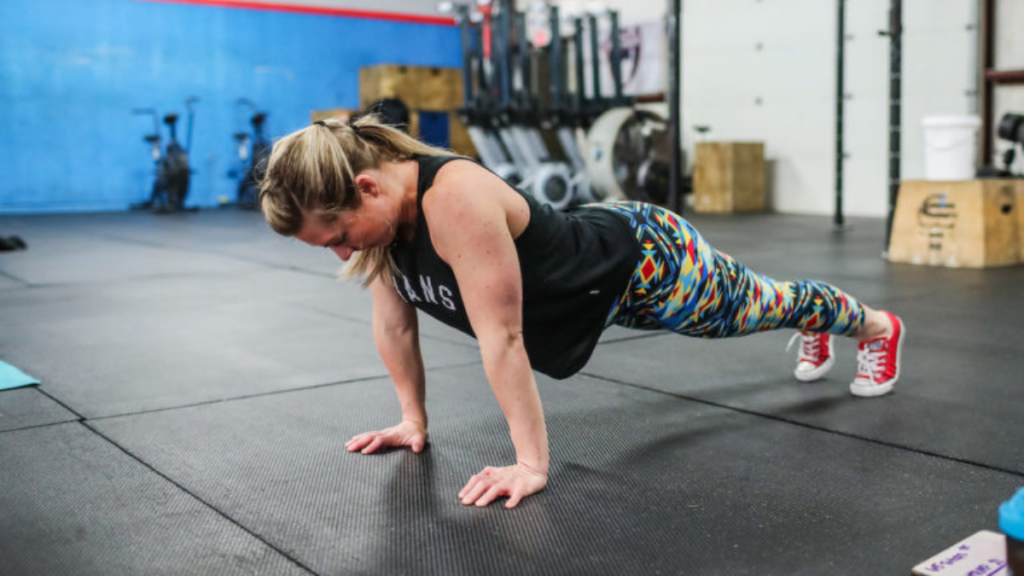
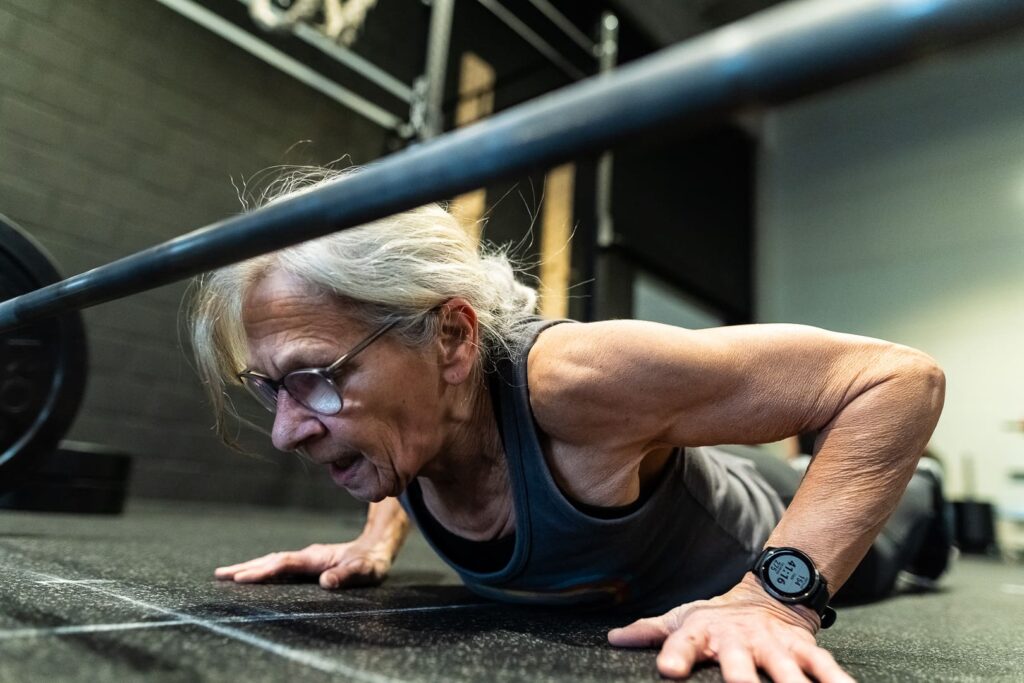
A standard press up trains the chest, triceps, and front deltoids while also requiring the trunk to stay rigid. The body moves as one unit, which means the exercise develops pressing strength alongside core control and body awareness.
Research comparing press ups with bench pressing has found similar muscle activation patterns in several major upper body muscles when the loading demand is matched. Muscle activation research does not directly prove that two exercises create identical muscle growth, but it does show that a well performed press up can challenge the chest and triceps meaningfully.

For beginners, the greatest advantage of press ups is scalability. You can change the angle of your body to adjust the load immediately. A wall press up is much easier than a standard floor press up, while placing your hands on a bench or sturdy box provides an excellent middle step. As the hands move lower and the body becomes more horizontal, the exercise becomes more demanding.
Why Press Ups Are Effective for Chest Growth
Press ups allow you to use a full and controlled range of motion. Lowering the chest toward the floor places the chest under tension, while pressing away from the floor trains the muscle through its shortening phase. The movement can be made harder without changing equipment, which makes it ideal for beginners training at home or in a busy gym.
Hand position can alter how the movement feels and how much the triceps contribute, but there is no need to chase complicated variations early on. A hand position slightly wider than shoulder width, with the hands placed around chest level, is usually a practical starting point. Keep the elbows angled diagonally from the torso rather than forcing them directly outward or tightly against the ribs.
3 Best Dumbbell Exercises for Ripped and Powerful Lower Abs
A controlled tempo is valuable because it prevents momentum from doing the work. Lower yourself in roughly two to three seconds, pause briefly near the bottom if you can maintain position, and press up with intent. Your chest, triceps, and shoulders should work together while your ribs, hips, and head remain aligned.
How Beginners Should Progress Press Ups
If you cannot yet perform clean floor press ups, start with incline press ups. Use a secure bench, bar in a rack, or other stable surface. Choose a height that allows you to complete multiple controlled repetitions while stopping before form falls apart. As you get stronger, gradually lower the height of the surface.
When standard press ups become manageable, progress by building toward more total repetitions, adding sets, slowing the eccentric phase, elevating the feet, or wearing a weighted vest. You do not need to train every set to absolute failure, but your working sets should feel challenging and finish with only a small number of clean repetitions left.
Dips: A Powerful Exercise With Higher Demands
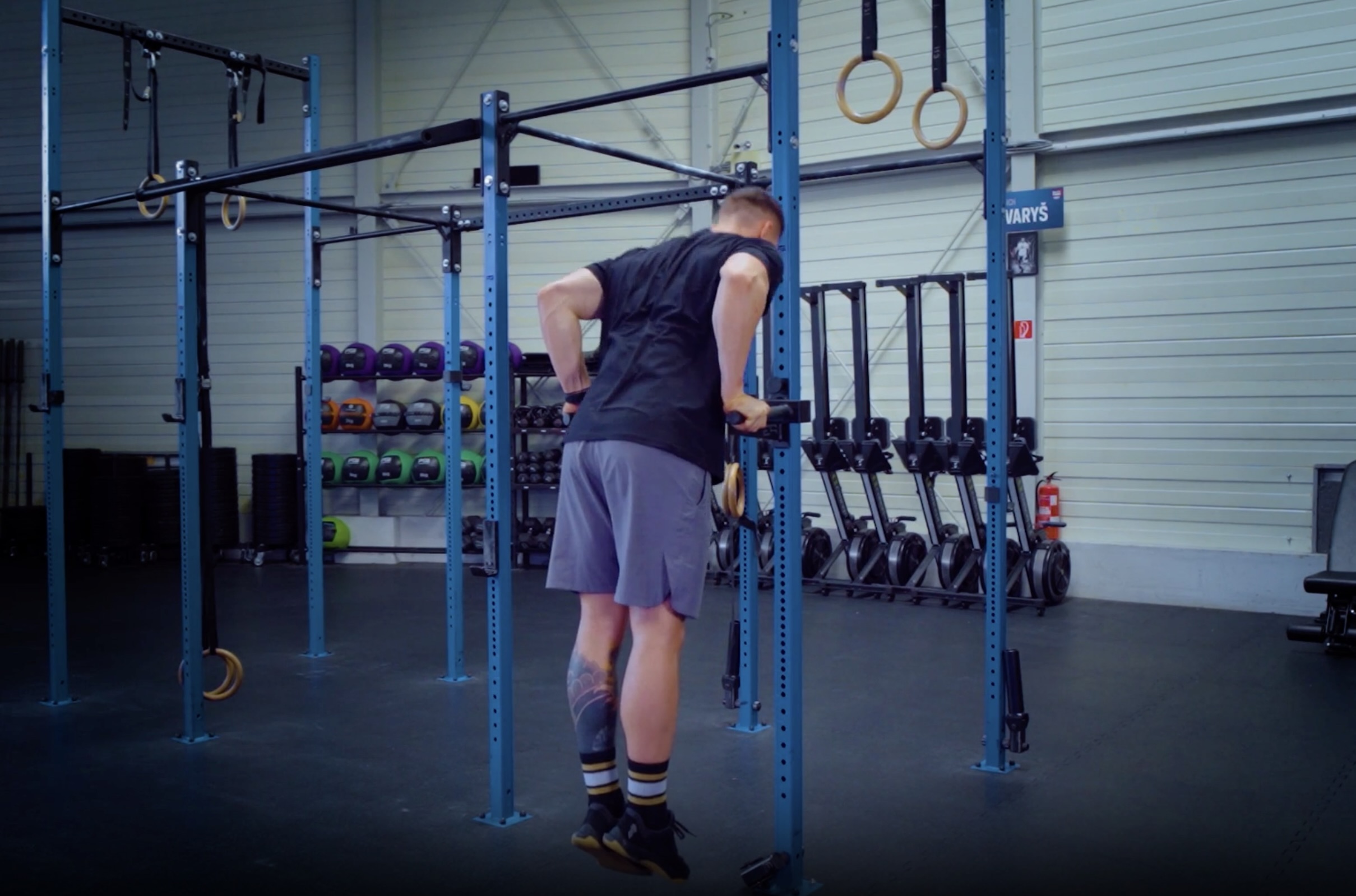
Parallel bar dips are a compound upper body exercise that involve lowering and raising the body between two bars. They train the triceps strongly and can train the chest effectively, particularly when the torso is inclined slightly forward. The front deltoids also work hard to control the shoulder.
Dips are often treated as a simple bodyweight exercise, but they are demanding. They require the shoulders to move into substantial extension as the body lowers. This position may feel fine for experienced lifters with sufficient control and tolerance, but it can be uncomfortable for beginners, especially those with a history of shoulder pain, instability, or poor pressing mechanics.
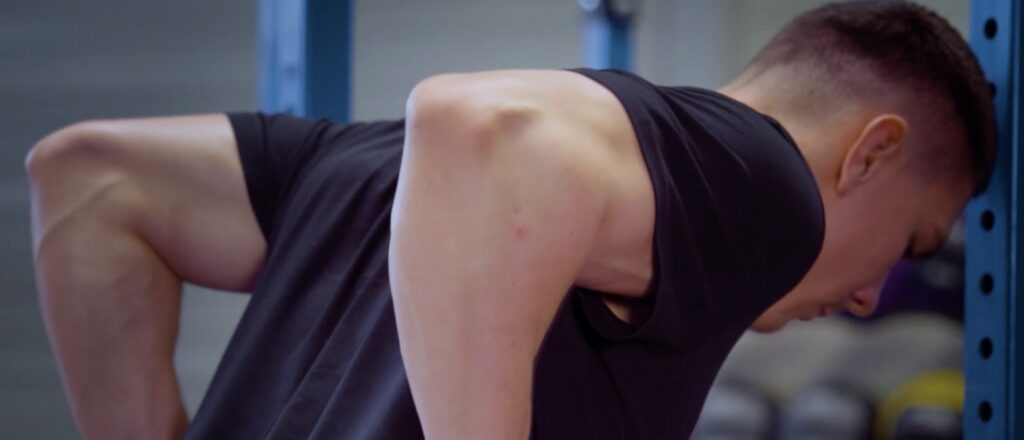
Research comparing bench dips, parallel bar dips, and ring dips found that parallel bar dips produced high triceps activation and involved less shoulder extension than bench dips. This is an important distinction. Bench dips are sometimes presented as an easy beginner alternative, yet they can place the shoulder in a deep extended position behind the torso. They are not automatically the safest route to a full dip.
Are Dips Better for the Chest?
Dips can be an excellent addition to chest training, but they are not automatically better than press ups for chest growth. The best chest exercise depends on your ability to load it effectively, use a comfortable range of motion, and accumulate enough quality sets over time.
Leaning the torso slightly forward during a parallel bar dip generally shifts the exercise toward a more chest focused pressing pattern. Staying very upright tends to place greater emphasis on the triceps. However, this does not mean you should force an exaggerated forward lean or sink deeply below a comfortable shoulder position in pursuit of chest activation.
For a beginner, a deep dip performed with poor shoulder position is less useful than a strong, controlled press up performed consistently. Muscle growth does not reward ego. It rewards repeated exposure to challenging, technically sound training.
Who Should Wait Before Doing Full Dips?
You should probably delay full parallel bar dips if you cannot perform controlled incline or floor press ups, if your shoulders feel painful during pressing, or if you cannot support yourself steadily at the top of the bars. The top position should look stable, with the shoulders controlled rather than shrugged aggressively toward the ears.
A useful prerequisite is being able to complete several sets of clean press ups with your chest moving through a consistent range of motion. You should also be able to hold the top of a dip with straight arms, a stable torso, and no shoulder pain. These are practical readiness markers, not universal rules, but they help prevent rushing into a demanding exercise.
If you want to work toward dips, use assisted dip equipment or resistance bands. Keep the range of motion shallow at first, lower under control, and stop well before discomfort. Over time, reduce assistance and gradually increase depth only if your shoulders feel stable and pain free.
Technique Matters More Than Exercise Hype
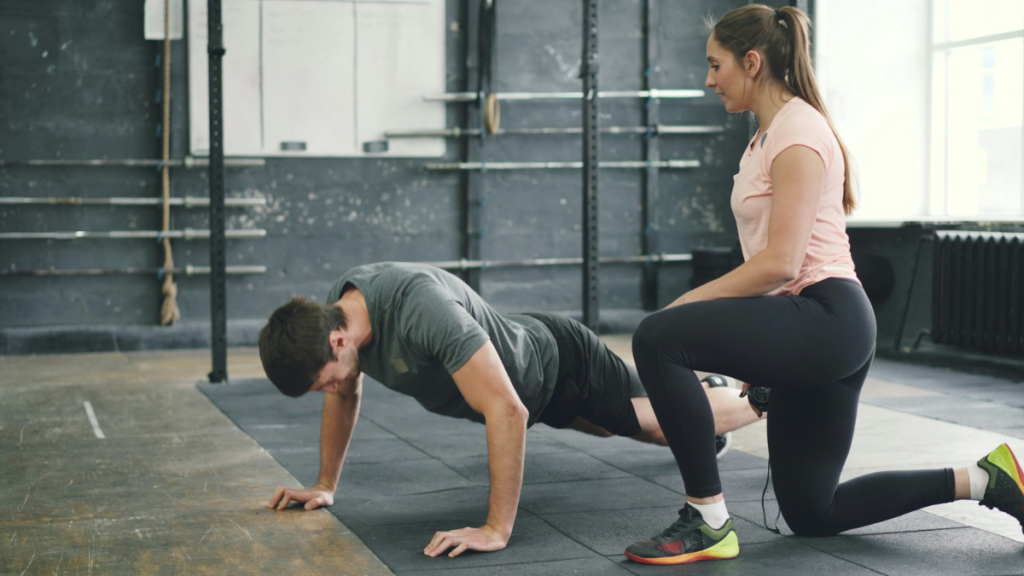
Both exercises can become less effective when technique breaks down. During press ups, common issues include sagging hips, flared ribs, incomplete range of motion, and leading with the head. Set your body in a straight line, brace your midsection, lower the chest toward the floor, and press through the hands until the elbows are straight without losing control.
During dips, common mistakes include dropping too quickly, allowing the shoulders to collapse forward, bouncing from the bottom, and forcing depth beyond your available control. Start each repetition from a steady support position. Lower under control, keep your torso position consistent, and press back to the top without using momentum.
No single range of motion is right for every body. A deep range can be productive when it is controlled and comfortable, but pain is not proof of a productive stretch. Persistent shoulder pain, sharp pain, numbness, or a feeling of instability are reasons to stop and seek advice from a qualified health professional.
A Simple Beginner Chest Plan
For most beginners, train press ups two or three times per week, leaving at least one day between hard sessions. Start with a variation that allows you to perform controlled sets of roughly six to 15 repetitions. Complete two to four working sets, then build repetitions over time before making the exercise harder.
When you can complete multiple sets of strong standard press ups, begin adding an assisted dip progression once or twice per week. Keep press ups in your program while learning the dip. This gives you plenty of chest training volume without relying entirely on a movement that may still be technically demanding.
A beginner who trains press ups well can build a stronger and more muscular chest. Dips can later become a valuable second exercise, particularly for people who enjoy them and can perform them without shoulder discomfort. There is no prize for choosing the harder movement too soon.
The Verdict
Press ups are the best beginner bodyweight exercise for building a jacked and muscular chest. They train the chest effectively, can be scaled to almost any strength level, and allow beginners to progress gradually with less complexity than full dips.
Dips are a highly effective upper body exercise for people who have built the required strength, control, and shoulder tolerance. They can help develop the chest and triceps, but they are usually better viewed as a progression rather than a starting point.
Build your press up first. Train it consistently, use a full controlled range of motion, and make it harder over time. Once you can do that confidently, dips can become a powerful tool in your chest training.
References
- American College of Sports Medicine (2009) ‘American College of Sports Medicine position stand: Progression models in resistance training for healthy adults’, Medicine & Science in Sports & Exercise, 41(3), pp. 687–708.
- Cogley, R.M., Archambault, T.A., Fibeger, J.F., Koverman, M.M., Youdas, J.W. and Hollman, J.H. (2005) ‘Comparison of muscle activation using various hand positions during the push up exercise’, Journal of Strength and Conditioning Research, 19(3), pp. 628–633.
- Gouvali, M.K. and Boudolos, K. (2005) ‘Dynamic and electromyographical analysis in variants of push up exercise’, Journal of Strength and Conditioning Research, 19(1), pp. 146–151.
- Grgic, J., Schoenfeld, B.J., Orazem, J., Sabol, F., Suman, O.E., Mcllvenna, L.C. and Pedisic, Z. (2022) ‘Effects of resistance training performed to repetition failure or non failure on muscular strength and hypertrophy: A systematic review and meta analysis’, Journal of Sport and Health Science, 11(2), pp. 202–211.
- Kikuchi, N. and Nakazato, K. (2017) ‘Low load bench press and push up induce similar muscle hypertrophy and strength gain’, Journal of Exercise Science & Fitness, 15(1), pp. 37–42.
- McKenzie, A., Crowley McHattan, Z., Meir, R., Whitting, J. and Volschenk, W. (2022) ‘Bench, bar, and ring dips: Do kinematics and muscle activity differ?’, International Journal of Environmental Research and Public Health, 19(20), 13211.
- Schoenfeld, B.J., Ogborn, D. and Krieger, J.W. (2017) ‘Dose response relationship between weekly resistance training volume and increases in muscle mass: A systematic review and meta analysis’, Journal of Sports Sciences, 35(11), pp. 1073–1082.
- Suprak, D.N., Dawes, J. and Stephenson, M.D. (2011) ‘The effect of position on the percentage of body mass supported during traditional and modified push up variants’, Journal of Strength and Conditioning Research, 25(2), pp. 497–503.
Key Takeaways
| Exercise | Best use | Main advantage | Main limitation |
|---|---|---|---|
| Press ups | Most beginners | Easy to scale, learn, and progressively overload | Standard floor press ups may still be too difficult at first |
| Incline press ups | Beginners building strength | Reduces load while preserving the pressing pattern | Requires a stable raised surface |
| Parallel bar dips | Stronger, more experienced trainees | Effective compound chest and triceps exercise | Greater shoulder control and strength demands |
| Assisted dips | Beginners progressing toward dips | Lets you practice the movement with reduced load | Still requires careful technique and shoulder comfort |