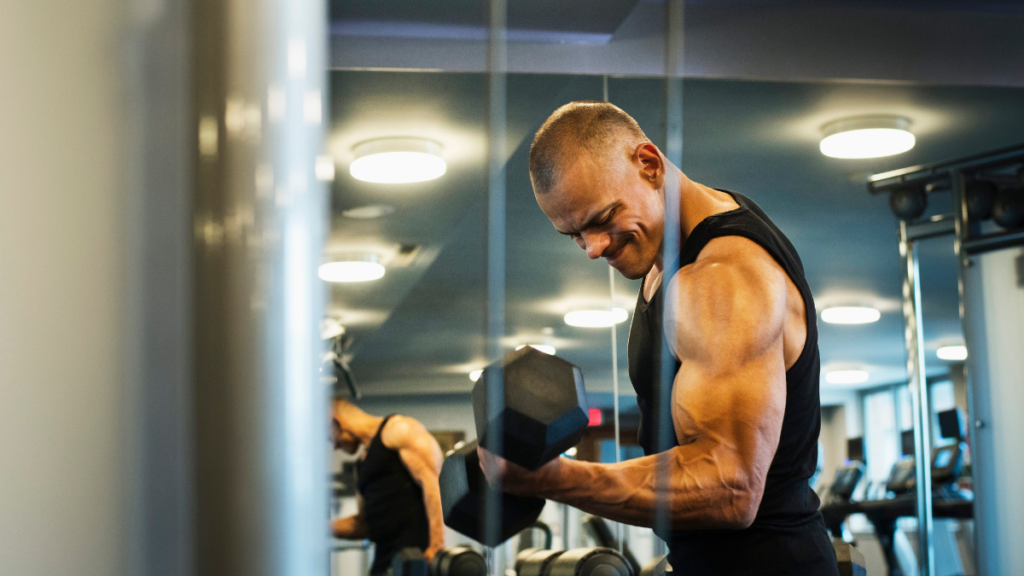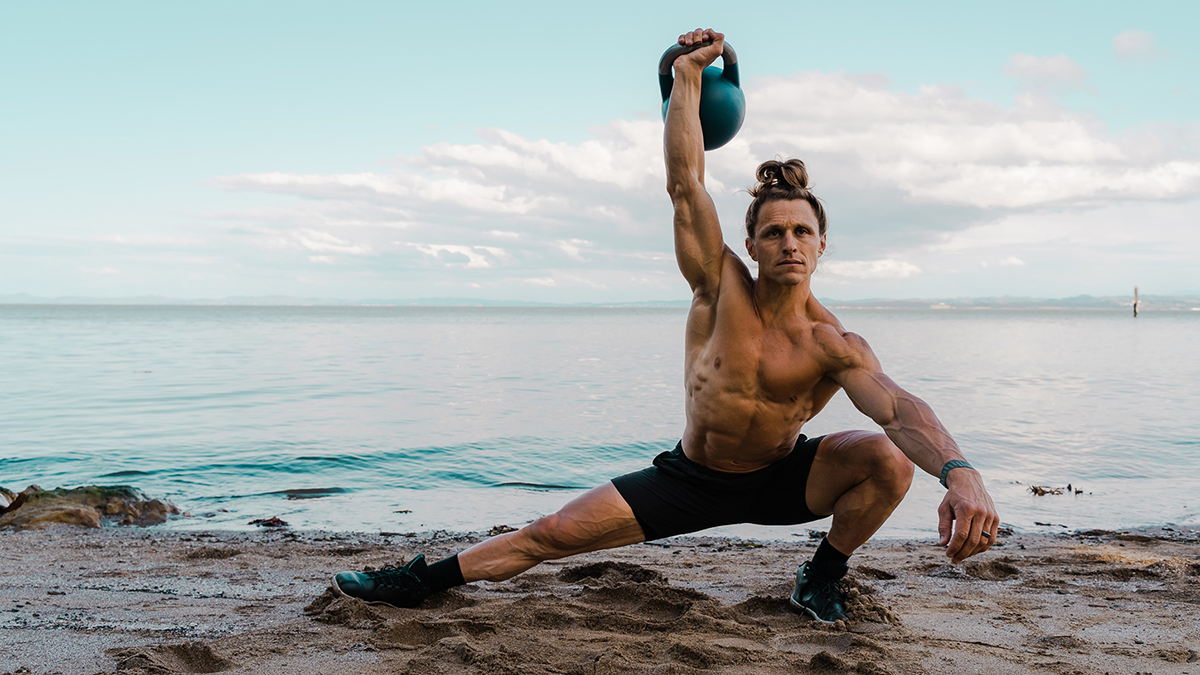


Kettlebells are one of the most useful tools a beginner can use to build muscle, strength, athleticism, and confidence in the gym. They are compact, versatile, and effective for training the major movement patterns your body needs. A single kettlebell can train your legs, glutes, back, chest, shoulders, arms, and core while also improving coordination and work capacity.
The most effective beginner routine is not built around complicated drills or endless exercise variety. It is built around a small number of movements that you can learn safely, load progressively, and repeat consistently. That approach matters because muscle growth requires sufficient mechanical tension, repeated training exposure, and gradual increases in training demand over time. Resistance training can increase muscle size and strength across a wide range of equipment choices when the training is performed consistently and progresses appropriately.



The three exercises below are especially valuable because they cover the lower body, upper body, and trunk while teaching strong movement habits. The kettlebell deadlift develops your hips, glutes, and back. The goblet squat builds powerful legs and a muscular lower body. The standing press trains your shoulders, triceps, upper chest, and core.
Together, they provide a simple foundation for developing a stronger and more attractive physique.
Why Kettlebells Work So Well for Beginners
A kettlebell has a handle positioned above its center of mass. This changes how the weight feels compared with a dumbbell and often encourages you to use your grip, shoulders, and trunk muscles more actively. It can also make simple exercises feel challenging without needing a very heavy load.
The most important benefit is not that kettlebells are magical. It is that they make compound exercises easy to perform in a small space. Compound exercises involve several joints and muscle groups at once, making them an efficient option for beginners who want to train their whole body without spending hours in the gym.
Research on resistance training consistently shows that progressive loading is central to long term improvements in muscular strength and size. Your muscles need a reason to adapt, which means that the sets must gradually become more demanding through additional repetitions, better control, more sets, or a heavier kettlebell.
Beginners should focus first on movement quality. A controlled repetition teaches the body how to create tension in the right muscles and makes it easier to add load safely later. You do not need to train to complete failure on every set. Stopping with one or two good repetitions still possible can provide a productive training stimulus while helping you maintain sound technique.
1. Kettlebell Deadlift
The kettlebell deadlift is one of the best starting exercises for building a stronger, more muscular body. It teaches the hip hinge, which is the movement pattern used when you bend at the hips while keeping your spine stable. Learning this pattern is essential before progressing to more explosive exercises such as kettlebell swings.
Muscles Worked
The kettlebell deadlift primarily trains the glutes, hamstrings, and muscles of the lower back. Your upper back, forearms, and abdominal muscles also work to keep the kettlebell close to your body and your torso steady.
Strong glutes and hamstrings contribute substantially to the shape and function of the lower body. The glutes are major hip extensors, meaning they help you stand up, run, jump, climb, and lift objects from the floor. Training hip extension with resistance can improve lower body strength and support broader athletic performance.
The deadlift also helps develop a thicker, more capable looking back because the upper back must resist rounding as you lift. This does not mean you should force your shoulders backward or exaggerate your posture. Instead, think about keeping your chest comfortably proud and your shoulders controlled.
How to Perform It
Place the kettlebell on the floor between your feet. Stand with your feet around hip width apart and allow your toes to point slightly outward if that feels natural. The handle should sit roughly below the middle of your body.
Push your hips backward and bend your knees slightly until you can reach the handle. Keep your arms long and your spine neutral. Your shins should remain fairly upright rather than moving far forward.
Grip the handle firmly, tighten your stomach, and press your feet into the floor. Stand up by driving your hips forward until you are tall. The kettlebell should travel close to your body throughout the lift.
Lower it under control by moving your hips backward first. Once the kettlebell reaches the floor, pause briefly, reset your position, and begin the next repetition.
Common Beginner Mistakes
The most common error is turning the movement into a squat by allowing the knees to travel forward too much. A little knee bend is normal, but the deadlift should feel driven by the hips. You should feel your glutes and hamstrings working as you stand.
Another common mistake is rounding the lower back to reach the kettlebell. If you cannot reach the handle while maintaining a comfortable neutral spine, place the kettlebell on a low stable platform or use a lighter kettlebell with a taller base.
Avoid pulling the kettlebell upward with your arms. Your arms should act like strong straps. The power should come from your legs and hips.
How to Program It
Begin with three sets of six to ten controlled repetitions. Rest for around one to two minutes between sets. Choose a load that feels challenging near the end of each set without causing your form to break down.
As you improve, add repetitions until you can perform ten to twelve clean repetitions on every set. Then move up to a heavier kettlebell and return to six to eight repetitions.
2. Kettlebell Goblet Squat
The goblet squat is a beginner friendly lower body exercise that can help develop muscular quads, glutes, and core strength. Holding the kettlebell close to your chest provides a counterbalance that often helps beginners reach a comfortable squat depth while staying upright.
Squatting is a foundational movement pattern. It is used in daily activities such as getting up from a chair, climbing stairs, and lifting from a low position. In training, it is a direct way to challenge the large muscles of the thighs and hips.
Muscles Worked
The goblet squat primarily works the quadriceps and glutes. The hamstrings, calves, spinal muscles, and abdominal muscles contribute to stability and control.
The quadriceps form much of the visible size at the front of the thigh. Developing them can make the legs look stronger and more athletic while also improving knee extension strength. The glutes work hardest as you stand from the bottom of the squat, particularly when you use a controlled depth that your mobility allows.
Holding the kettlebell in front of your chest also places a demand on the upper back and core. Your torso must resist folding forward, which gives the exercise a whole body quality even though the legs do most of the moving.
How to Perform It
Hold the kettlebell by the horns, which are the sides of the handle, and keep it close to your chest. Stand with your feet around shoulder width apart. Your toes can point slightly outward if needed.
Take a breath and brace your abdominal muscles as if preparing to absorb a gentle punch. Sit down between your hips by bending your knees and hips together. Keep your chest tall without leaning excessively backward.
Lower yourself as far as you can while maintaining control and keeping your feet flat on the floor. Your knees should move in the same general direction as your toes. Pause briefly at the bottom, then push the floor away and stand tall.
Exhale after you pass the hardest point of the ascent, then reset before the next repetition.
Common Beginner Mistakes
Do not let the kettlebell drift away from your chest. Keeping it close makes the movement easier to control and reduces unnecessary strain on the arms.
Some beginners allow their knees to collapse inward as they rise. Focus on keeping your knees tracking over your toes and press evenly through the whole foot. You should feel pressure through the heel, the base of the big toe, and the base of the little toe.
Another mistake is rushing through the bottom position. A short pause at the lowest controlled point can help you avoid bouncing and improve awareness of your position.
How to Program It
Perform three sets of eight to twelve repetitions. Use a weight that lets you keep the kettlebell close to your chest and complete each repetition with the same depth and control.
When twelve repetitions become comfortable across all sets, either choose a heavier kettlebell or add an additional set. Beginners often make excellent progress simply by improving depth, control, and consistency before making large jumps in weight.
3. Kettlebell Standing Press
The standing kettlebell press is a highly effective exercise for building stronger, more defined shoulders and triceps. It also trains the upper chest, upper back, grip, and core because your body must stabilize the kettlebell overhead.
Shoulder development can have a major effect on the appearance of the upper body. Stronger deltoid muscles can create a broader looking frame, while stronger triceps contribute significantly to arm size. The standing press also teaches you to create full body tension, which carries over to many other resistance exercises.
Muscles Worked
The main muscles involved are the deltoids and triceps. The upper chest assists the press, while the muscles around the shoulder blade help keep the shoulder stable. Your obliques, abdominal muscles, glutes, and legs also contribute by preventing your torso from leaning or twisting.
3 Best Beginner Cable Exercises for Building a More Muscular Back
Unilateral training, where one side works at a time, can reveal differences in strength and control between the left and right sides. Pressing one kettlebell at a time also creates a useful anti rotation challenge for the trunk. You do not need to force your body to remain perfectly rigid, but you should be able to press without leaning sharply to one side.
How to Perform It
Clean the kettlebell into the rack position, or begin with it already supported at shoulder height. In the rack position, the kettlebell rests close to the outside of your forearm with your wrist straight and your elbow tucked near your ribs.
Stand tall with your feet about hip width apart. Tighten your glutes and stomach, then press the kettlebell upward in a smooth path. As the kettlebell moves overhead, allow your head to move slightly forward so that your biceps finish near your ear.
At the top, your arm should be straight but not aggressively locked out. Keep your ribs down rather than leaning backward to finish the repetition. Lower the kettlebell slowly back to the rack position and repeat.
If cleaning the kettlebell into position feels awkward, use both hands to bring it to the rack position before starting your set. There is no benefit to forcing a more advanced setup before you are ready.
Common Beginner Mistakes
The most common issue is arching the lower back to press the weight overhead. This usually happens when the kettlebell is too heavy or when the core is not braced. Squeeze your glutes, keep your ribs down, and use a lighter kettlebell if necessary.
Avoid allowing the wrist to bend backward under the kettlebell. Keep the handle settled deep in the palm and maintain a stacked wrist position.
Do not rush the lowering phase. Controlled lowering creates more time under tension for the shoulder and triceps muscles while helping you maintain a stable shoulder position.
How to Program It
Start with three sets of six to ten repetitions on each side. Rest for around one minute after completing both sides. Because one arm works at a time, pressing can feel more demanding than expected even with a modest kettlebell.
When you can complete ten controlled repetitions per side, increase the kettlebell weight if you can do so without losing position. If heavier weight is not available, slow the lowering phase to around three seconds or add one additional set.
How to Build a Simple Beginner Kettlebell Workout
A simple full body session can use all three exercises. Start with the deadlift, then move to the goblet squat, and finish with the standing press. Perform the workout two or three times per week on nonconsecutive days.
Begin with three sets of six to ten deadlifts, three sets of eight to twelve goblet squats, and three sets of six to ten presses on each side. This provides enough weekly practice to improve technique while allowing recovery between sessions.
Muscle growth does not require constantly changing exercises. It requires consistent exposure to challenging training. Track the kettlebell weight, repetitions, and sets that you complete. When your technique is solid and the current workout becomes easier, add a repetition, a set, or a small amount of load.

Nutrition also matters. Resistance training supports muscle development most effectively when combined with adequate total energy intake and sufficient dietary protein. Sleep and recovery are equally important because muscular adaptation occurs between training sessions, not only during them.
The best kettlebell routine is the one you can perform consistently. Master these three exercises, train them with patience, and make small progress over time. That approach can build muscular legs, stronger shoulders, a more capable core, and a body that looks as athletic as it feels.
References
- American College of Sports Medicine (2009) ‘Progression models in resistance training for healthy adults’, Medicine and Science in Sports and Exercise, 41(3), pp. 687 to 708.
- Farrar, R.E., Mayhew, J.L. and Koch, A.J. (2010) ‘Oxygen cost of kettlebell swings’, Journal of Strength and Conditioning Research, 24(4), pp. 1034 to 1036.
- Grgic, J., Schoenfeld, B.J., Skrepnik, M., Davies, T.B. and Mikulic, P. (2021) ‘Effects of rest interval duration in resistance training on measures of muscular strength: A systematic review’, Sports Medicine, 51(11), pp. 2301 to 2317.
- Krieger, J.W. (2010) ‘Single versus multiple sets of resistance exercise for muscle hypertrophy: A meta analysis’, Journal of Strength and Conditioning Research, 24(4), pp. 1150 to 1159.
- Lake, J.P. and Lauder, M.A. (2012) ‘Kettlebell swing training improves maximal and explosive strength’, Journal of Strength and Conditioning Research, 26(8), pp. 2228 to 2233.
- McGill, S.M. and Marshall, L.W. (2012) ‘Kettlebell swing, snatch, and bottoms up carry: Back and hip muscle activation, motion, and low back loads’, Journal of Strength and Conditioning Research, 26(1), pp. 16 to 27.
Key Takeaways
| Exercise | Main muscles trained | Beginner focus | Recommended starting volume |
|---|---|---|---|
| Kettlebell deadlift | Glutes, hamstrings, back, core | Learn a controlled hip hinge and keep the kettlebell close | Three sets of six to ten repetitions |
| Kettlebell goblet squat | Quadriceps, glutes, core, upper back | Keep feet flat, knees tracking with toes, and chest tall | Three sets of eight to twelve repetitions |
| Kettlebell standing press | Shoulders, triceps, upper chest, core | Keep ribs down and avoid leaning backward | Three sets of six to ten repetitions per side |