

Building a stronger, more muscular chest after 30 does not require complicated training or a gym full of machines. A pair of dumbbells, a stable bench, and a sensible plan can cover the essentials very effectively. Dumbbells are especially useful because each arm works independently, allowing you to train through a comfortable range of motion while addressing strength differences from side to side.
The goal is not to chase exhaustion or copy the most advanced workout in the gym. The goal is to apply enough challenging, repeatable training to stimulate the pectoral muscles, build pressing strength, and protect your ability to train consistently. Research consistently shows that muscle growth responds well to adequate weekly training volume, progressive overload, and sets performed with a high level of effort. These principles matter far more than finding a secret exercise.



For guys over 30, good exercise selection also needs to respect recovery, shoulder comfort, work demands, and previous training history. That does not mean training needs to become cautious or easy. It means choosing movements you can load progressively, perform with sound technique, and keep in your program long enough to improve.
These are the best three dumbbell chest exercises to build size and strength while keeping your training practical and sustainable.
Why Dumbbells Work So Well for Chest Training
The pectoralis major is the main muscle of the chest. Its job includes bringing the upper arm across the body and assisting with pressing movements. The anterior deltoid and triceps also contribute strongly during chest presses, which is why improving your pressing strength can help you add muscle to the whole upper body.
Dumbbells allow each side of the body to move separately. This can make it easier to establish a comfortable pressing path than with a fixed barbell. You can also use a neutral grip, where the palms face each other, or a slightly angled grip if that feels better on the shoulders. There is no single hand position that every lifter must use. The most productive position is one that lets you feel the chest working, maintain control, and train hard without joint irritation.
Dumbbell training has another practical advantage. The weight used by each arm is visible and independent. If one side is weaker, it cannot quietly rely on the stronger side to complete the repetition. Over time, this can help you build more even control and strength.
Dumbbells are not automatically superior to barbells, and barbells remain excellent tools for getting stronger. However, research comparing different pressing modalities shows that dumbbell pressing is a legitimate way to train the chest and pressing muscles. The best option is usually the one you can perform consistently and progressively.
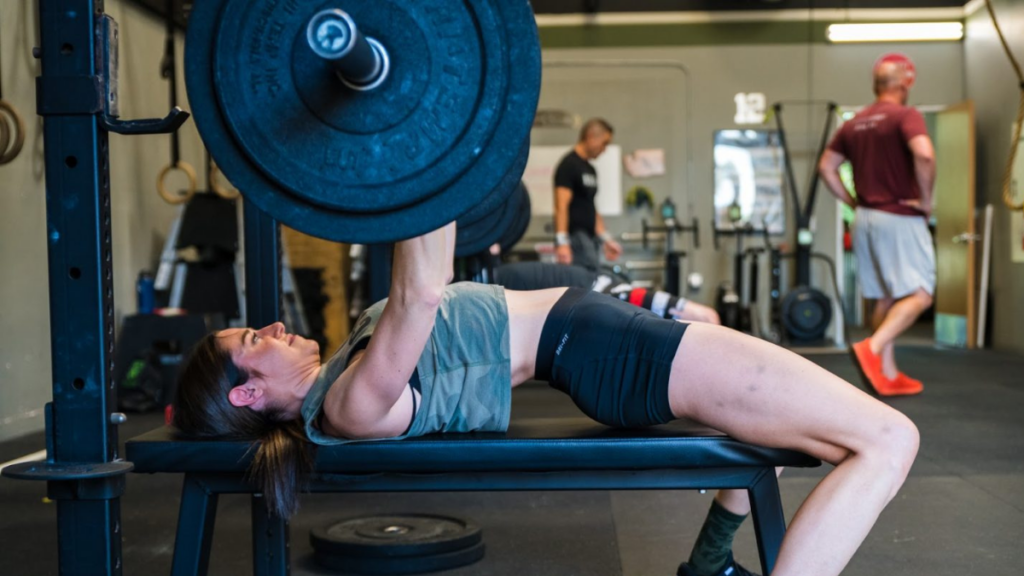
1. Dumbbell Flat Bench Press
The dumbbell flat bench press is the foundation movement of this article. It lets you use meaningful load, train the chest through a large range of motion, and develop the triceps and front delts alongside the pecs. If you can only choose one dumbbell chest exercise, this should be the one.
How to Perform It
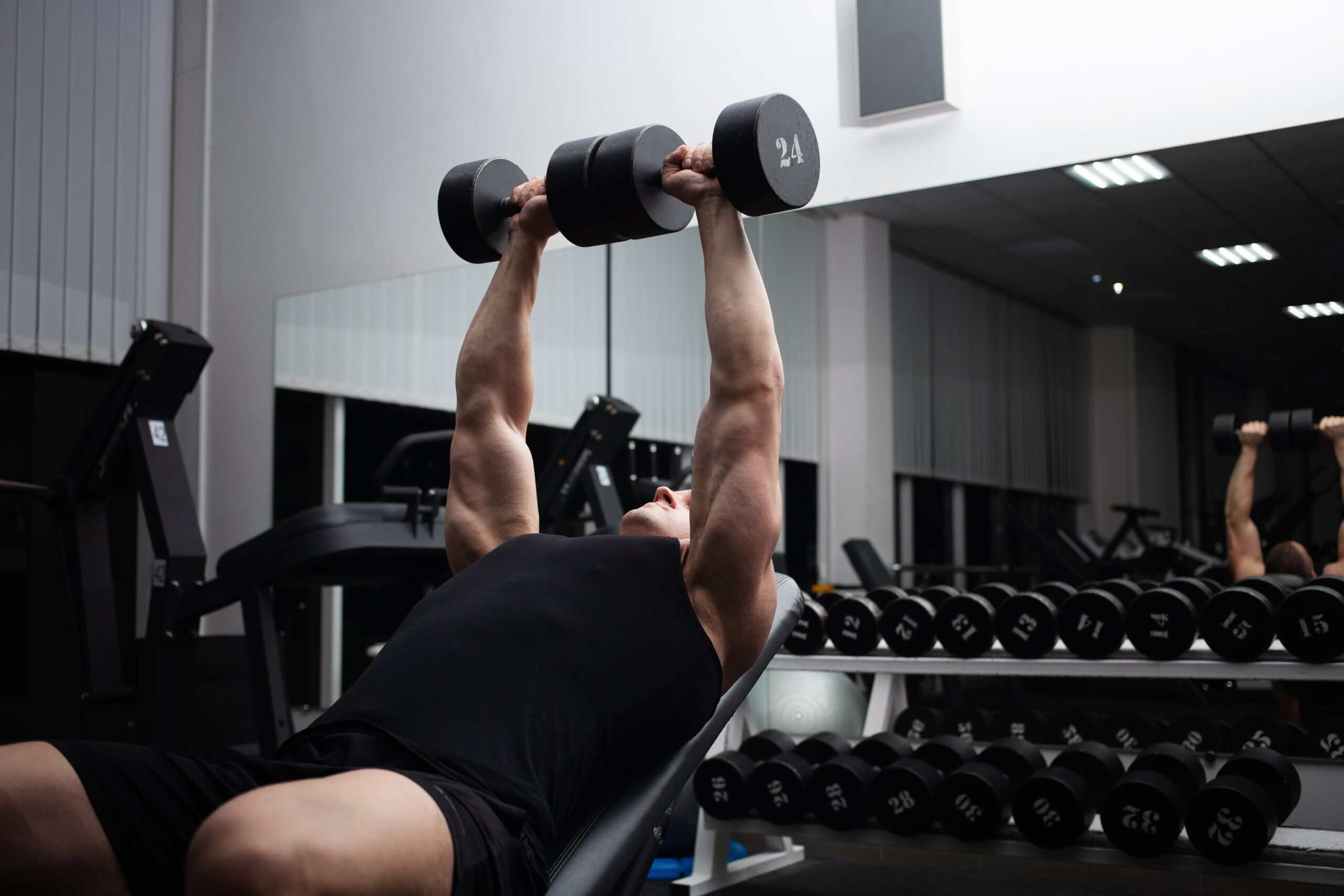
Set a bench flat and sit with a dumbbell resting on each thigh. Use your thighs to help guide the dumbbells into position as you lie back. Plant both feet firmly on the floor and keep your upper back in contact with the bench.
Start with the dumbbells above the middle of your chest. Your wrists should be stacked over your elbows, with your forearms close to vertical. Lower the weights with control until your upper arms are slightly below parallel with the floor, or until you reach the deepest position you can control comfortably. Press the dumbbells back up by driving your upper arms toward the midline of your body.
Keep your shoulder blades gently pulled back and down against the bench. Do not force an exaggerated arch in your lower back, but do not flatten yourself rigidly either. A natural, stable position is usually best.
Why It Belongs in Your Program
The flat press gives you a strong balance between load and range of motion. It is easy to track over time, which matters because progressive overload is a major driver of resistance training adaptation. You can progress by adding a small amount of weight, completing more repetitions with the same weight, or improving your control at the same load.
Use a controlled lowering phase and avoid bouncing the dumbbells out of the bottom position. A smooth descent helps you maintain tension and makes each repetition more repeatable. You do not need to lower the weights painfully deep. The right range of motion is the deepest one you can use while maintaining shoulder comfort and control.
For most people, sets of six to 12 repetitions work very well for this exercise. Heavier sets can improve maximal strength, while lighter sets can also support muscle growth when performed close enough to muscular failure. The important point is that the final repetitions should feel genuinely challenging without technique breaking down.
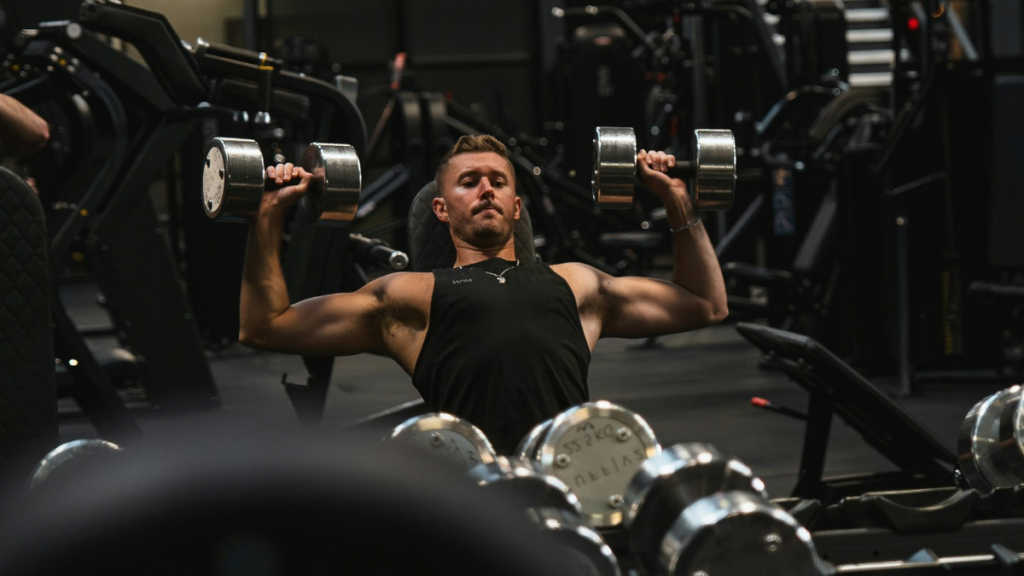
2. Incline Dumbbell Bench Press
The incline dumbbell bench press is the best second choice because it emphasizes the upper portion of the chest while still allowing you to use substantial loads. It also adds useful variety to your chest training without requiring an entirely different movement pattern.
How to Perform It
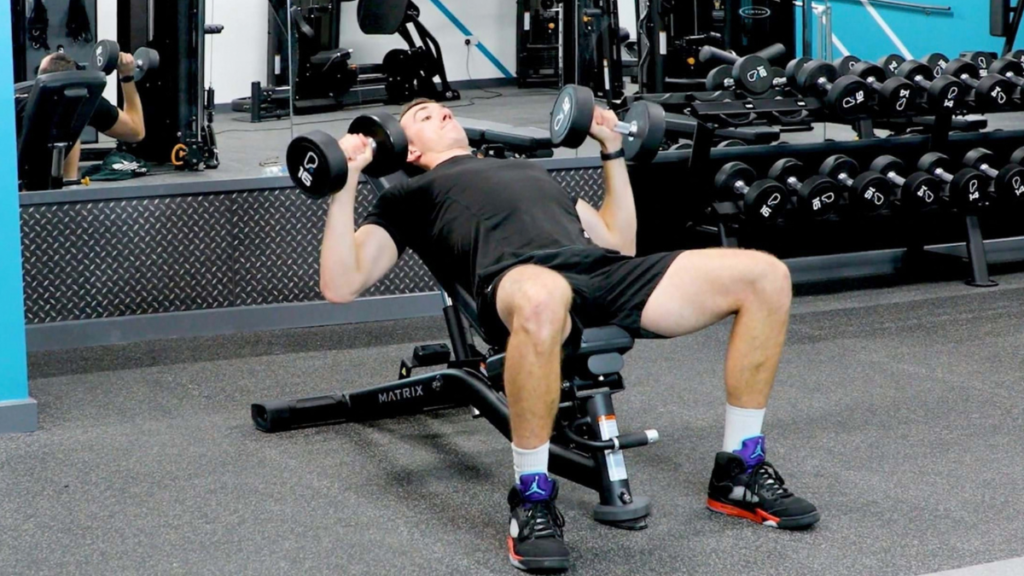
Set the bench to a modest incline. Around 30 to 45 degrees is a practical starting point. If the bench is too upright, the exercise shifts more heavily toward the front delts and can become more uncomfortable for some lifters.
Set up in the same way as the flat bench press. Start with the dumbbells over the upper chest, lower them under control, and press them upward in a slight arc until they return above the upper chest and shoulders. Keep your elbows at a moderate angle from your torso rather than flaring them straight outward.
The dumbbells should not crash together at the top. Bring them close enough to complete the press, then begin the next repetition with control. This keeps the movement focused and prevents you from losing tension by resting at the top.
Why It Belongs in Your Program
Your chest is not divided into completely separate muscles, but the angle of the arm changes how different fibers of the pectoralis major contribute to a press. An incline press is a useful way to include another pressing angle and build a fuller looking chest while improving upper body strength.
Research examining bench press variations indicates that exercise angle can influence muscle activation patterns. That does not mean a single incline angle is magic, nor does it mean you must use several presses in every workout. It simply supports the practical idea that a flat press and a modest incline press can work well together.
For guys over 30, the incline press can also be a valuable option if flat pressing does not feel ideal. Some lifters find that a modest incline allows a more comfortable shoulder position. Others prefer the flat press. Both choices are valid, and comfort should guide the decision.
Aim for eight to 15 repetitions per set. Because the incline dumbbell press demands stability, there is little benefit in using a weight that forces you to rush, wobble, or shorten every repetition. Choose a load that lets you lower the dumbbells deliberately and press them with strong, consistent form.
3. Dumbbell Fly
The dumbbell fly is the isolation movement of the group. Unlike pressing, where the triceps and shoulders make a large contribution, the fly focuses on the main function of the chest: bringing the upper arms toward the center of the body.
It should not replace pressing, but it can complement presses extremely well. This is particularly useful when you already have solid pressing strength but want more direct chest work without adding several more heavy sets.
How to Perform It
Lie on a flat bench with the dumbbells held above your chest. Turn your palms so they face each other. Begin with a slight bend in the elbows and keep that bend consistent throughout the set.
Lower the dumbbells outward in a wide arc. Imagine opening your arms around a large barrel rather than dropping the weights toward the floor. Descend only as far as your shoulders remain comfortable and you can keep tension in the chest. Reverse the movement by bringing your upper arms back toward each other.
At the top, squeeze the chest without aggressively smashing the dumbbells together. Keep the tempo controlled, especially on the way down. This is not an exercise for heavy, low repetition lifting. The shoulder is in a more vulnerable position at the bottom of a fly, so control and load selection are essential.
Why It Belongs in Your Program
The dumbbell fly allows you to train the chest in a position where the arms move across the body with minimal elbow extension. Research comparing the bench press and dumbbell fly shows that both exercises substantially involve the pectoralis major, while the pressing movement produces greater triceps involvement. That makes the fly a sensible complement to pressing rather than a duplicate of it.
3 Best Cable Machine Exercises for a Jacked and More Attractive Upper Body
The fly is also a useful way to add weekly chest training volume without turning every set into another demanding press. Training volume has a dose response relationship with muscle growth, although more is not always better. Adding a few well performed fly sets can be productive. Adding so many that your shoulders ache and your presses stall is not.
Use the fly for 10 to 20 repetitions per set. Stop the set if you lose control at the bottom, feel a sharp shoulder sensation, or need to bend and straighten the elbows to force the dumbbells up. A lighter dumbbell performed with excellent control will do more for your chest than a heavy dumbbell performed recklessly.
How to Program These Exercises
A simple approach is to train your chest twice per week. Research suggests that training a muscle more than once weekly can be useful, particularly when it helps distribute your total volume into higher quality sets. Your weekly number of hard sets matters more than trying to destroy the chest in one huge session.
Start with eight to 12 challenging chest sets each week. A newer lifter can begin at the lower end. A more experienced lifter who recovers well can gradually build toward the higher end. Split the sets across two workouts so each session remains focused and your performance stays high.
A practical weekly structure could include the dumbbell flat bench press and dumbbell fly in the first workout, followed by the incline dumbbell bench press and another fly variation in the second. You do not need to train to complete failure on every set. Leaving one to three repetitions in reserve is often enough to provide a strong stimulus while making it easier to recover and maintain good technique.
Protein intake, sleep, and overall energy intake also influence results. Resistance training provides the stimulus, but adequate dietary protein supports muscle protein synthesis and helps the body adapt to training. A consistent routine built around training, nutrition, and recovery will outperform a perfect workout done sporadically.
Common Mistakes That Limit Chest Growth
The first mistake is treating every set as a test of strength. Chest exercises should be challenging, but constantly forcing maximum loads can make technique worse and irritate the shoulders or elbows. Progress comes from repeated quality work, not from a single impressive set.

The second mistake is letting the shoulders take over. If you feel every press mainly in the front of the shoulders, reduce the load slightly, set your shoulder blades against the bench, and use a controlled range of motion. Check that your elbows are not flared excessively and that your wrists remain aligned over your elbows.
The third mistake is changing exercises every week. The chest responds to progressive tension, and progression requires familiarity. Keep these movements in your plan for several weeks, track your repetitions and weights, and make gradual improvements.
The Bottom Line
The dumbbell flat bench press, incline dumbbell bench press, and dumbbell fly provide a complete and efficient chest training toolkit for guys over 30. The first two exercises build strength and muscle through progressive pressing, while the fly adds direct chest work through a complementary movement pattern.
Train consistently, use challenging but controlled sets, and gradually improve your performance. You do not need a complicated chest day to get results. You need a few well chosen exercises, enough weekly work, and the patience to repeat the basics long enough for them to work.
References
- American College of Sports Medicine (2009) ‘American College of Sports Medicine position stand: Progression models in resistance training for healthy adults’, Medicine and Science in Sports and Exercise, 41(3), pp. 687 to 708.
- Grgic, J., Schoenfeld, B.J., Skrepnik, M. and Davies, T.B. (2018) ‘Effects of rest interval duration in resistance training on measures of muscular strength: A systematic review’, Sports Medicine, 48(1), pp. 137 to 151.
- Krieger, J.W. (2010) ‘Single versus multiple sets of resistance exercise for muscle hypertrophy: A meta analysis’, Journal of Strength and Conditioning Research, 24(4), pp. 1150 to 1159.
- Schoenfeld, B.J., Grgic, J., Ogborn, D. and Krieger, J.W. (2017) ‘Strength and hypertrophy adaptations between low versus high load resistance training: A systematic review and meta analysis’, Journal of Strength and Conditioning Research, 31(12), pp. 3508 to 3523.
- Schoenfeld, B.J., Ogborn, D. and Krieger, J.W. (2016) ‘Effects of resistance training frequency on measures of muscle hypertrophy: A systematic review and meta analysis’, Sports Medicine, 46(11), pp. 1689 to 1697.
- Schoenfeld, B.J., Ogborn, D. and Krieger, J.W. (2017) ‘Dose response relationship between weekly resistance training volume and increases in muscle mass: A systematic review and meta analysis’, Journal of Sports Sciences, 35(11), pp. 1073 to 1082.
- Trebs, A.A., Brandenburg, J.P. and Pitney, W.A. (2010) ‘An electromyography analysis of three muscles surrounding the shoulder joint during the performance of a chest press exercise at several angles’, Journal of Strength and Conditioning Research, 24(7), pp. 1925 to 1930.
- van den Tillaar, R. and Saeterbakken, A.H. (2020) ‘A comparison of muscle activation between barbell bench press and dumbbell flyes in resistance trained males’, Journal of Sports Science and Medicine, 19(4), pp. 645 to 651.
- Vieira, A.F., Umpierre, D., Teodoro, J.L., Lisboa, S.C., Baroni, B.M., Izquierdo, M. and Cadore, E.L. (2021) ‘Effects of resistance training performed to failure or not to failure on muscle strength, hypertrophy, and power output: A systematic review with meta analysis’, Journal of Strength and Conditioning Research, 35(4), pp. 1165 to 1175.
Key Takeaways
| Exercise | Main purpose | Recommended repetition range | Key technical focus |
|---|---|---|---|
| Dumbbell flat bench press | Build overall chest size and pressing strength | 6 to 12 | Keep the upper back stable, lower with control, and press through a comfortable range |
| Incline dumbbell bench press | Add upper chest focused pressing volume | 8 to 15 | Use a modest incline and avoid turning the movement into a shoulder press |
| Dumbbell fly | Add direct chest focused work after pressing | 10 to 20 | Use a slight elbow bend, control the bottom position, and avoid excessive load |
| Weekly training target | Build muscle with manageable recovery demands | 8 to 12 hard chest sets | Spread the work across two weekly sessions when possible |
| Progression | Keep muscle growth moving forward | Gradual increases over time | Add repetitions, load, or better control while keeping technique consistent |