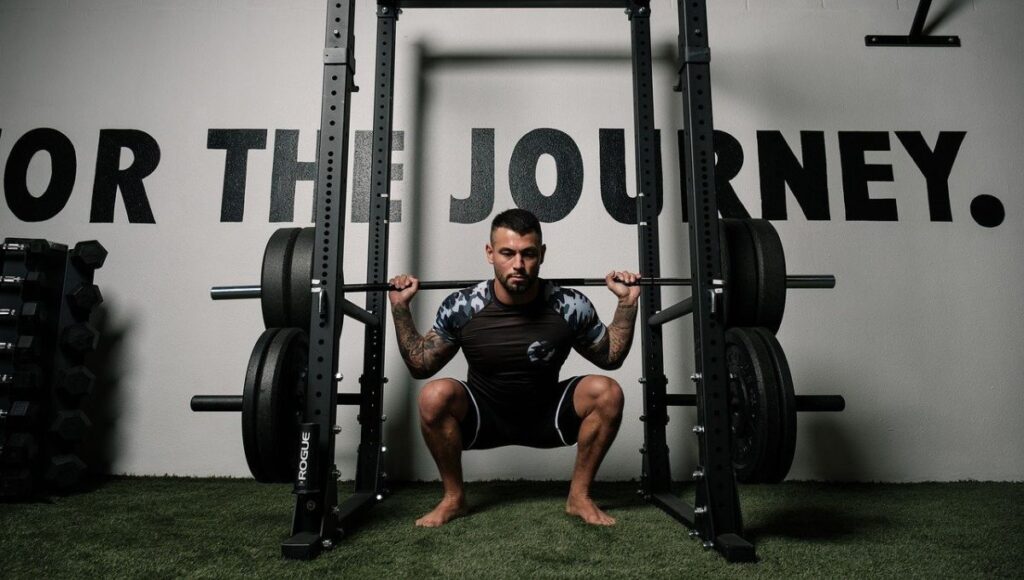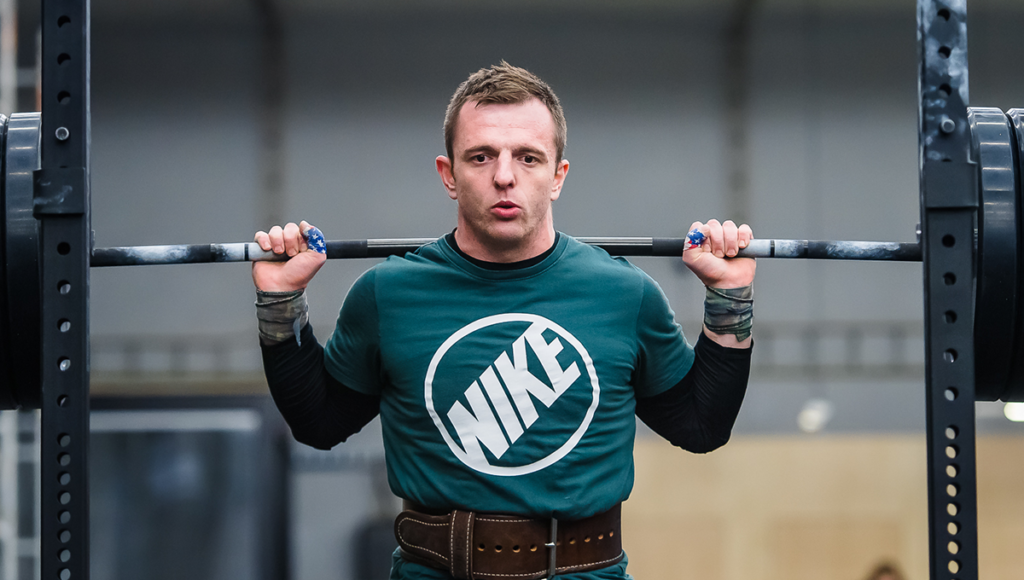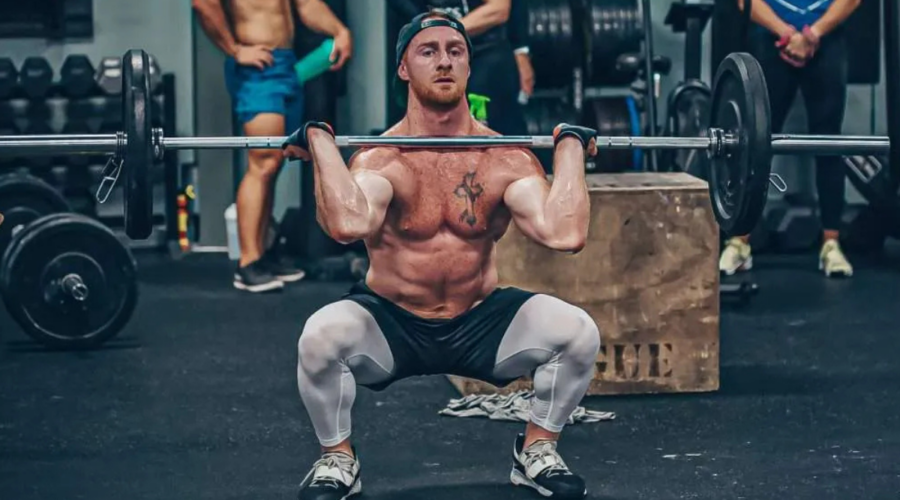


Both the back squat and front squat can help you build stronger, more muscular legs. The main difference is where you hold the bar. In a back squat, the bar rests across your upper back. In a front squat, it sits across the front of your shoulders. That change affects how you position your torso, how much weight you can lift, and how comfortable each exercise feels.
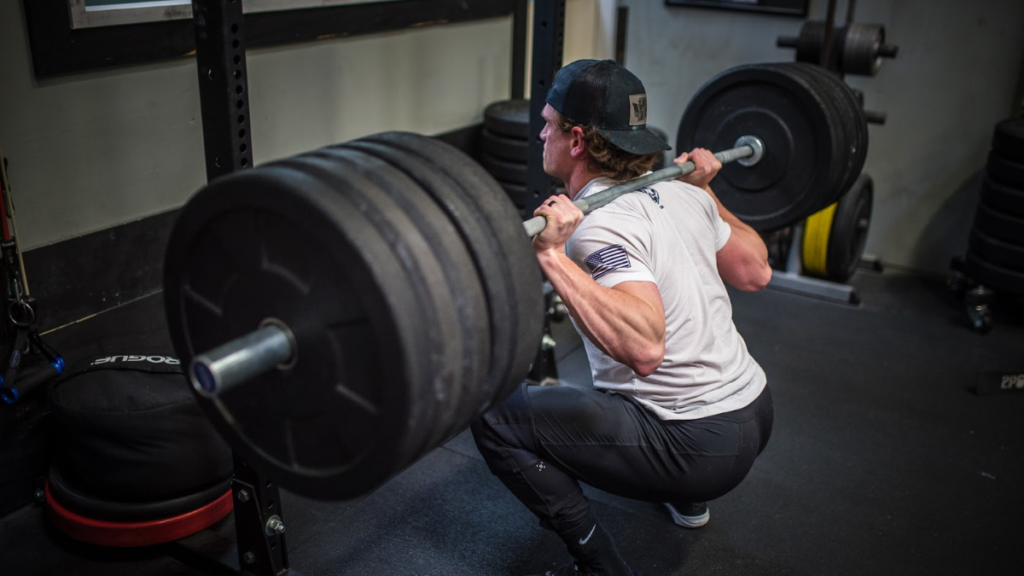
So which one is better for lower body muscle gains? The evidence does not point to a clear winner for muscle growth. A 12-week study comparing the two found similar increases in lateral thigh muscle thickness, although the back squat group improved more on a leg press strength test. That result suggests that either squat can work well for muscle growth, while your goals, technique, and ability to train the movement consistently can help you decide which to prioritize.


What the Back Squat and Front Squat Have in Common
Both exercises train the lower body through a similar basic pattern. You bend at the hips and knees to lower your body, then extend them to stand up. The quadriceps help straighten your knees, while the gluteal muscles and other hip muscles contribute to bringing your hips forward. Your trunk muscles also work to keep your body stable as you move under the bar.
The amount each muscle contributes depends on factors such as your depth, stance, body proportions, bar position, and technique. The back squat and front squat are both compound exercises, but neither works every lower body muscle equally. Squats also do not train the hamstrings in the same way as exercises that involve more direct hip extension or knee flexion, so they are usually just one part of a balanced lower body program.
The bar position influences how you organize your body around the load. With the front squat, the bar is held in front of your body, which generally requires a more upright torso to keep the bar over your base of support. The back squat places the bar behind your body, allowing a wider range of torso positions. In practice, individual anatomy and technique mean that squat mechanics vary from person to person.
What the Research Says About Muscle Growth
The most direct long-term comparison tested 24 recreationally trained women over 12 weeks. Participants trained with either front squats or back squats twice per week. Both groups increased muscle thickness in the measured parts of the lateral thigh, and the researchers found no meaningful difference between the groups in those muscle growth measurements.
The same study found a greater improvement in 45-degree leg press strength among the back squat group. This does not prove that back squats build more muscle. The leg press test was a measure of strength, not muscle size, and strength improvements are influenced by how well training transfers to the test. The researchers also studied a relatively small group of women, so the findings should not be treated as a final answer for every lifter.
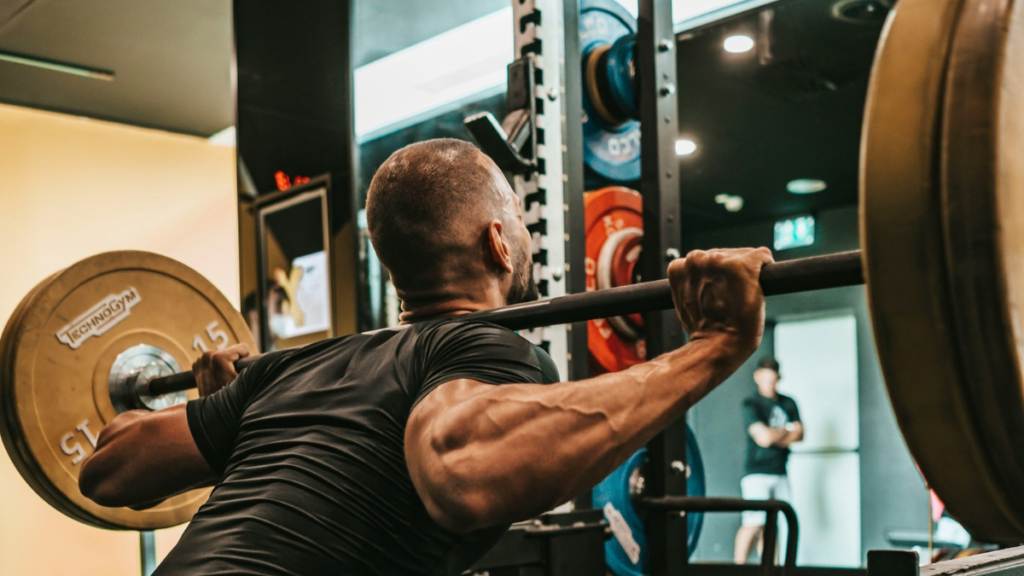
Short-term studies have compared muscle activity during front and back squats, but muscle activity readings are not the same as measuring long-term muscle growth. One study found similar overall muscle recruitment between the variations, while another reported higher activity in one quadriceps muscle during the front squat. These findings can help describe what happens during a specific test, but they cannot establish that one lift will produce more muscle over months of training.
A broader body of resistance training research also suggests that muscle growth can occur with a range of loads when sets are challenging and training is performed consistently. That matters here because most people can lift less weight in the front squat than in the back squat. A lower number on the bar does not automatically mean the front squat is a weaker choice for building muscle. The load must be considered alongside effort, repetitions, range of motion, and the quality of each set.
Which Squat Is Better for Quadriceps Growth?
The front squat is often described as a more quad focused exercise because it encourages an upright torso and typically places the knees farther forward. That may make it a useful choice if you want to emphasize knee extension or if you find the front loaded position more comfortable. However, the research does not show that front squats reliably produce more quadriceps growth than back squats.
The back squat can also train the quadriceps effectively, especially when you use a depth and stance that allow you to bend your knees through a comfortable range of motion. It may let you use more weight, which can be helpful for progressive training. Still, loading more weight only helps if you can maintain a controlled technique and train the target muscles with sufficient effort.
For quad development, choose the variation that lets you perform challenging, repeatable sets through a comfortable range of motion. If you can front squat with good control and your quads are the limiting factor, front squats may be a good main lift. If front rack position, wrist comfort, or upper back fatigue cuts your sets short, the back squat may be more practical.
Which Squat Is Better for Glute Growth?
Both variations can involve the gluteal muscles, but the actual demand depends on how you squat. Depth, hip movement, torso angle, stance, and load all influence the work required at the hip. It is too simple to say that one variation always builds better glutes because one involves more forward lean or allows a heavier bar.
The back squat often allows lifters to use more weight, and some lifters find it easier to reach a deep position in that variation. The front squat may limit the load because the upper body and front rack position become challenging before the legs are fully fatigued. These differences can affect how a person experiences each lift, but they do not prove a universal glute growth advantage.
If glute growth is a priority, use a squat variation that lets you train hard with consistent depth and control. You can also pair squats with exercises that train hip extension more directly, such as Romanian deadlifts or hip thrusts. These exercises offer a different stimulus, so your lower body program does not need to rely on one squat variation to train every muscle.
Comfort, Technique, and Training Consistency
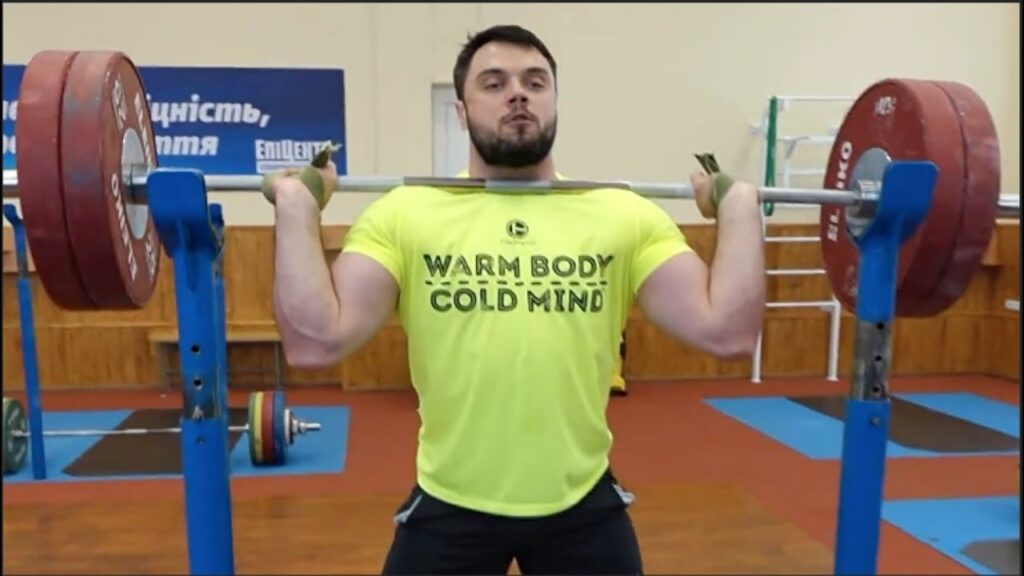
A good exercise is one you can perform well and progress over time. The front squat can be difficult if you lack the shoulder, wrist, or upper back mobility to hold the bar securely. Some lifters use a cross arm grip or lifting straps to make the front rack position more manageable, but the setup still needs to feel stable.
The back squat also has technical demands. Lifters need to position the bar securely, brace their trunk, and control the descent without losing balance. The bar position can vary, and a higher or lower placement may change the movement. No single setup works perfectly for everyone, so technique should be adjusted to the lifter’s comfort, proportions, and training goals.
A biomechanics study found greater knee compressive forces and knee extensor moments in the back squat than the front squat under the conditions tested. This is a specific finding from a controlled study, not a claim that back squats are inherently unsafe or that front squats prevent injury. If either variation causes pain, consider changing the range of motion, load, setup, or exercise, and seek guidance from a qualified professional when needed.
How to Choose Between Them
Choose the back squat if it feels stable, suits your goals, and allows you to train your legs hard with consistent technique. It can be a strong main lift for general lower body strength and muscle development, and it may be easier for many lifters to load progressively.
Choose the front squat if you prefer the upright position, want to include more front loaded squatting, or find the back squat uncomfortable. It can build muscle even when the load is lighter, provided your sets are challenging and your technique remains controlled.
3 Best Exercises for Building the Upper Body Beginners Often Ignore
You can also train both. For example, you could make one variation your main squat and use the other for lighter work on another training day. This gives you exposure to both movement patterns without needing to decide that one is universally superior. If you use both, manage your total training volume and recovery so that the extra work supports your progress rather than making your sessions harder to sustain.
For muscle growth, pay attention to the factors you can control. Use a range of motion you can perform safely, add repetitions or load gradually, and bring your working sets close enough to failure to challenge the muscles. Training to the point where you cannot complete another repetition is not required every time. Research on proximity to failure suggests that reaching absolute failure is not clearly superior for hypertrophy, so leave a small number of good repetitions in reserve when that helps you maintain strong technique and recover for your next session.
The Verdict
Neither the back squat nor the front squat is clearly better for lower body muscle gains. The direct comparison available found similar increases in measured thigh muscle thickness after training with either variation. The back squat produced a larger improvement in a leg press strength test, but that does not mean it produced more muscle.
Your best choice is the squat that lets you train consistently, use a comfortable range of motion, and challenge your legs without technique breaking down. If both variations feel good, you can use both across your training week. For most lifters, choosing one as the main squat and progressing it steadily is a practical way to build lower body muscle.
Key Takeaways
| Takeaway | What it means |
|---|---|
| Both variations can build muscle | The direct 12-week comparison found similar lateral thigh growth with front and back squats. |
| Back squat strength results were higher in one study | The back squat group improved more on a leg press test, which measures strength rather than muscle growth. |
| Front squats use a lighter load for many lifters | A lighter bar does not automatically mean a less effective muscle building set. |
| Technique and comfort matter | Use the variation that allows controlled, challenging sets through a comfortable range of motion. |
| You can train both | Use one as your main squat and add the other if it fits your recovery and program. |
References
- Enes, A., Oneda, G., Leonel, D.F., Lemos, L., Alves, F., Ferreira, L.H.B., Escalante, G., Schoenfeld, B.J. and Souza-Junior, T.P. (2024) ‘The effects of squat variations on strength and quadriceps hypertrophy adaptations in recreationally trained females’, European Journal of Sport Science, 24(1), pp. 6–15. doi: 10.1002/ejsc.12042.
- Gullett, J.C., Tillman, M.D., Gutierrez, G.M. and Chow, J.W. (2009) ‘A biomechanical comparison of back and front squats in healthy trained individuals’, Journal of Strength and Conditioning Research, 23(1), pp. 284–292. doi: 10.1519/JSC.0b013e31818546bb.
- Refalo, M.C., Helms, E.R., Trexler, E.T., Hamilton, D.L. and Fyfe, J.J. (2023) ‘Influence of resistance training proximity-to-failure on skeletal muscle hypertrophy: a systematic review with meta-analysis’, Sports Medicine, 53(3), pp. 649–665. doi: 10.1007/s40279-022-01784-y.
- Schoenfeld, B.J., Grgic, J., Ogborn, D. and Krieger, J.W. (2017) ‘Strength and hypertrophy adaptations between low- vs. high-load resistance training: a systematic review and meta-analysis’, Journal of Strength and Conditioning Research, 31(12), pp. 3508–3523.
- Yavuz, H.U., Erdağ, D., Amca, A.M. and Aritan, S. (2015) ‘Kinematic and EMG activities during front and back squat variations in maximum loads’, Journal of Sports Sciences, 33(10), pp. 1058–1066. doi: 10.1080/02640414.2014.984240.