

A lot of beginner shoulder workouts focus on pressing, and that’s it. Overhead presses and bench presses can build strong shoulders, but they do not place equal emphasis on every part of the deltoid. If you have been training for a while and your shoulders still do not look as broad as you would like, the missing piece may be a simple isolation exercise you can add into your pre-existing training.
Dumbbell lateral raises are easy to recognize, but they are also easy to rush, swing, and load too heavily. Done with control, they will give you a practical way to train the sides of your shoulders and build a more balanced upper body.
What Dumbbell Lateral Raises Train
The deltoid is the rounded muscle covering the shoulder. It has three main portions: the anterior, or front, deltoid; the medial, or side, deltoid; and the posterior, or rear, deltoid. These portions contribute to different shoulder movements, and they do not all receive the same emphasis from every exercise.
A lateral raise involves lifting your arms out to the sides. This shoulder abduction movement recruits the medial deltoid, making the exercise a useful choice when your goal is to give the side of your shoulders more direct work. The movement also involves other shoulder muscles, so it is not a perfectly isolated exercise. Still, it gives the deltoids a different challenge from pressing or chest exercises.
In a small study of resistance-trained men, lateral raises produced more activity in the medial deltoid than bench presses or dumbbell flyes. The study measured muscle activity during one set, so it cannot prove that lateral raises will build more muscle over time. It does offer a useful clue about why they can complement pressing exercises.
Benefit 1: They Give the Side Deltoids Direct Attention
The first benefit is that lateral raises let you train the part of the shoulder that helps create a broader outline. Chest presses and overhead presses involve the deltoids, but they also involve other muscles and use different movement patterns. Lateral raises add shoulder abduction to your routine, allowing you to give the side deltoids focused work without making your entire session depend on heavier pressing.
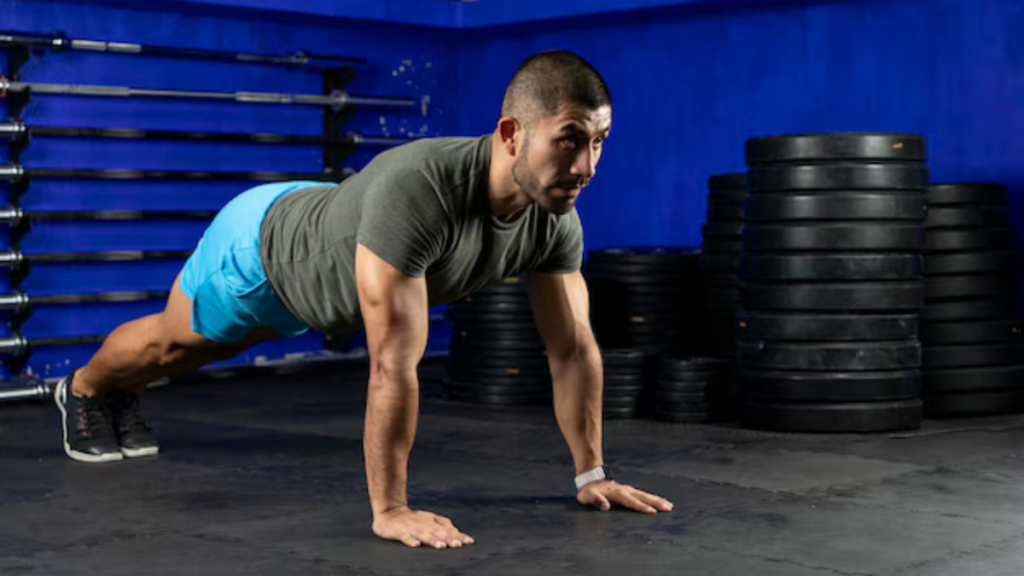
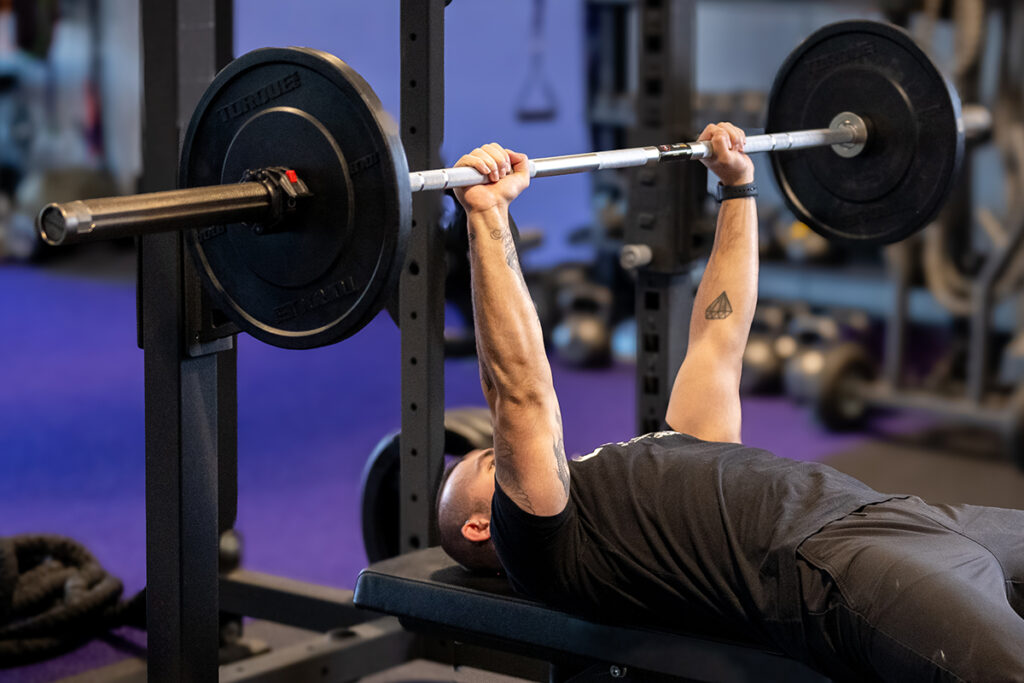
This can be especially useful if you already bench press or do pushups. Those movements train the chest, triceps, and front of the shoulders. They may involve the side deltoids too, but a lateral raise gives you a more direct way to challenge them. In research comparing several upper body exercises, the lateral raise showed greater medial deltoid activity than the bench press and dumbbell fly.
That does not mean you should remove pressing exercises. A well rounded shoulder routine can include both compound movements and exercises that target a particular area. For a beginner, the advantage is simple: lateral raises make it easier to add a clear, manageable amount of side shoulder work to a workout.
Building muscle takes time, and the result varies from person to person. Shoulder width is also influenced by your frame, including your collarbone structure, as well as your overall muscle development and body composition. Lateral raises can help grow the shoulder muscle, but they cannot change your skeletal structure or guarantee a specific silhouette.
Benefit 2: They Can Help Balance a Pressing Heavy Routine
Beginners often build their upper body workouts around exercises that are easy to measure, such as bench presses and overhead presses. These are useful movements, but relying on pressing alone can leave gaps in how you train the different deltoid portions.
Lateral raises give your training another movement pattern. Instead of pressing a weight away from your body, you raise your arms out to the sides. This helps you add targeted shoulder work without simply repeating another press. The aim is not to make every part of the shoulder perform the same amount of work in every exercise. It is to choose movements that fit the muscles you want to train.
What Is a Normal Blood Oxygen Level (SpO2) for Your Age?
Muscle activity research supports this distinction. In one study, the lateral raise and shoulder press both produced more medial deltoid activity than bench presses and dumbbell flyes. The study tested only 13 trained men and measured activity during a single session, so its results should not be treated as a complete ranking of exercises. Muscle activity measurements also do not directly predict how much muscle an exercise will build over the long term.
A separate eight week study compared dumbbell and cable lateral raises in resistance trained adults. Both variations increased lateral deltoid thickness, with similar results between the two exercise types. This supports the practical idea that dumbbells can be a useful option when they suit your equipment, preference, and training setup.
Lateral raises are not a substitute for a full shoulder program. They do not train every shoulder movement equally, and they should not be treated as a cure for shoulder pain or as a guarantee against injury. Think of them as one focused exercise that can sit alongside pressing, pulling, and other upper body work.
Benefit 3: They Make It Easier to Practice Control and Progress
A lateral raise is a relatively simple movement, but learning to control it is valuable for a beginner. You can choose a light pair of dumbbells, work through a comfortable range of motion, and focus on repeating the same movement from one workout to the next. The exercise gives you a clear way to track progress through the load, number of repetitions, and quality of each set.
For shoulder growth, adding weight is not the only way to progress. You can first aim to perform more controlled repetitions with the same weight. Once you can complete your target repetitions without swinging or shortening the movement, you can try the next available dumbbell size. The increase may be small because lateral raises usually use lighter weights than presses.
Resistance training research supports using multiple sets and progressive training to improve muscle size and strength. The best plan for a beginner is one you can perform consistently and recover from. You do not need to take every set to the point where you cannot complete another repetition. Ending a set when you have only a few good repetitions left can help keep your technique steady while still making the set challenging.
How to Perform a Dumbbell Lateral Raise
Stand with a dumbbell in each hand and your arms by your sides. Keep your torso steady, brace your midsection, and let your elbows remain slightly bent. Raise your arms out to the sides in a smooth motion, stopping around shoulder height or earlier if that is the range you can control comfortably. Lower the weights slowly instead of letting them drop.

Think about moving your upper arms rather than shrugging the dumbbells upward. Keep your shoulders relaxed and avoid leaning back to create momentum. Your hands do not need to reach a perfectly exact position; a comfortable path that lets you control the movement is more useful than forcing an uncomfortable range.
If standing makes it difficult to stay steady, try sitting on a bench or using lighter weights. If the movement causes sharp pain, stop and seek guidance from a qualified health professional. Normal effort and muscle fatigue are different from pain that feels sudden or concerning.
A Simple Beginner Starting Point
Start with two sets of 10 to 15 repetitions once or twice per week, using a weight that allows you to keep control from the first repetition to the last. Rest long enough between sets that you can perform the next one with similar technique. If you already do several pressing exercises, begin at the lower end of that amount and see how you recover.
When you can complete the upper end of the repetition range with consistent form, increase the weight slightly and build your repetitions again. Keep a record of the dumbbell weight and repetitions so you can tell whether you are progressing. You do not need to change the exercise every week; repeatable training makes progress easier to judge.
Wrapping Everything Up
Dumbbell lateral raises are a straightforward way for beginners to give their side deltoids direct attention, complement pressing exercises, and practice controlled, measurable shoulder training. They are not a shortcut to wider bones or a replacement for a complete workout, but they can be a useful part of a consistent routine.
References
- Campos, Y.A.C., Vianna, J.M., Guimarães, M.P., Oliveira, J.L.D., Hernández-Mosqueira, C., da Silva, S.F. and Marchetti, P.H. (2020). Different shoulder exercises affect the activation of deltoid portions in resistance-trained individuals. Journal of Human Kinetics, 75, pp. 5–14.
- Currier, B.S., McLeod, J.C., Banfield, L., Zembroski, A., MacDonald, H.V., Marsland, R., Rozenek, R., D’Souza, A.C., Chilibeck, P.D., Costa, E.C., Steele, J., Vedam, H., MacDougall, J.D. and Phillips, S.M. (2023). Resistance training prescription for muscle strength and hypertrophy in healthy adults: a systematic review and Bayesian network meta-analysis. British Journal of Sports Medicine, 57(18), pp. 1211–1220.
- Larsen, S., Wolf, M., Schoenfeld, B.J., Sandberg, N.Ø., Fredriksen, A.B., Kristiansen, B.S., van den Tillaar, R., Swinton, P.A. and Falch, H.N. (2025). Dumbbell versus cable lateral raises for lateral deltoid hypertrophy: an experimental study. Frontiers in Physiology, 16, 1611468.
Key Takeaways
| Benefit | Why it matters for beginners |
|---|---|
| Direct side deltoid work | Adds focused shoulder abduction to a routine that may emphasize pressing |
| A complement to pressing | Provides a different movement pattern alongside bench presses and shoulder presses |
| Simple progression | Lets you track controlled repetitions and gradually increase the load |