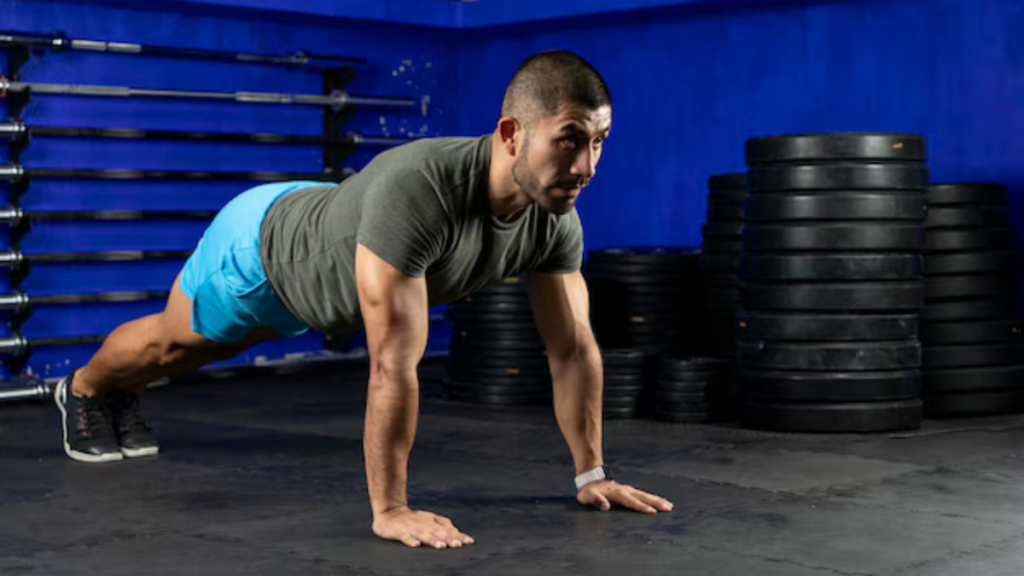
It’s a simple test of core strength, so how many reps can you score?
Biomechanics and Physiology of the One Minute Sit Up
Executing a timed sit up test relies on a delicate balance between core strength, hip flexor drive, and metabolic capacity within your muscular tissues. When you initiate the movement from the floor, your rectus abdominis contracts dynamically during the first thirty degrees of spinal flexion to lift your shoulder blades off the mat. Once your upper back clears the floor, your abdominal wall transitions into an intense isometric contract while your hip flexors, primarily the iliopsoas muscle, take over to pull your entire torso up toward your knees.
| Biomechanical Phase | Primary Muscle Drivers | Movement Action | Technical Focus |
| Initial Trunk Flexion | Rectus Abdominis, Obliques | Curling shoulder blades off floor | Exhale while curling spine |
| Hip Flexion Drive | Iliopsoas, Rectus Femoris | Pulling torso upward to knees | Maintain smooth forward momentum |
| Eccentric Reentry | Whole Core, Hip Flexors | Lowering back to starting position | Control descent to avoid spine impact |
Sports science literature evaluating field fitness tests demonstrates that movement velocity and technique stability significantly impact your total repetition score. Beginners who start too fast often burn out within twenty seconds because they drain their immediate phosphagen and glycolytic energy reserves. Learning to pace your movement while maintaining crisp, repeatable form allows you to sustain energy throughout the full sixty seconds without experiencing early biomechanical breakdown.
What the Scientific Data Says for Beginners
To establish a clear target for beginners, exercise scientists analyze percentile distribution charts collected from massive population studies, including data from the Cooper Institute and military readiness evaluations. In these standardized fitness assessments, a score falling between the twentieth and fortieth percentiles represents a classic beginner baseline. This range identifies individuals who are healthy and ambulatory but lack recent experience with high intensity abdominal training.
For young adult men between eighteen and twenty nine years old, scientific norms classify twenty five to thirty three clean sit ups in one minute as a realistic beginner baseline. For women in the exact same age bracket, the beginner baseline target sits between twenty and twenty eight repetitions in sixty seconds. As age increases, muscular endurance capacity naturally declines due to age related changes in muscle mass and metabolic rate, shifting the normative target downward across each decade of life.
| Age Category | Male Beginner Baseline | Male Average Norm | Female Beginner Baseline | Female Average Norm |
| 18 to 29 Years | 25 to 33 reps | 34 to 41 reps | 20 to 28 reps | 29 to 35 reps |
| 30 to 39 Years | 21 to 28 reps | 29 to 36 reps | 15 to 22 reps | 23 to 29 reps |
| 40 to 49 Years | 17 to 23 reps | 24 to 30 reps | 11 to 17 reps | 18 to 24 reps |
| 50 to 59 Years | 12 to 18 reps | 19 to 25 reps | 7 to 13 reps | 14 to 19 reps |
Evaluating your baseline performance using these demographic categories allows you to set achievable goals rooted in real world human performance data rather than arbitrary expectations. If your current score sits slightly below the beginner range, there is zero cause for concern. Muscular endurance adapts remarkably fast when you introduce consistent, structured core training into your weekly routine.
Technical Execution and Common Test Errors
Place your hands behind your neck with fingers interlocked, or cross your arms over your chest with fingertips touching your shoulders depending on the specific testing standard you choose to follow. On the command to start, curl your torso upward until your elbows touch your thighs or knees, then lower your body back down under control until your shoulder blades touch the floor. Repeating this motion smoothly without resting at the bottom ensures every rep counts toward your final score.
| Technical Variable | Correct Standard Technique | Common Mechanical Flaw | Injury Risk Profile |
| Arm Placement | Crossed over chest or light head contact | Pulling aggressively on back of neck | High risk for cervical spine strain |
| Lowering Phase | Controlled eccentric descent to mat | Bouncing upper back violently off floor | Increased lumbar hyperextension stress |
| Torso Ascent | Smooth flexion through whole spine | Flaring elbows and arching lower back | Excessive shear stress on hip flexors |
Avoiding the pitfall of pulling hard on your head with your hands is vital for long term spinal health. Pulling on your neck creates severe cervical flexion under load without offering any mechanical advantage to your abdominal muscles. Keeping your focus on flexing your ribs toward your pelvis keeps the tension squarely on your core while protecting your spinal column.
3 Best Cable Exercises for Building a Muscular Chest for Beginners
How to Improve Your 1 Minute Sit Up Score
If you want to rapidly improve your one minute sit up performance, relying solely on daily max effort test attempts is an inefficient strategy. Neuromuscular adaptations and local metabolic endurance develop faster when you combine direct abdominal strengthening with structured pacing drills and isometric core stability work.

Incorporate two to three core focused training sessions per week into your routine, taking at least forty eight hours of rest between workouts to allow muscle tissue repair. Use a combination of timed intervals, weighted core movements, and anti extension exercises to build a resilient midsection capable of handling sustained metabolic fatigue.
| Training Method | Sample Workout Protocol | Primary Adaptation Targeted |
| Interval Pacing Drills | 4 sets of 20 seconds work, 10 seconds rest | High velocity pacing and glycolytic buffering |
| Weighted Core Resistance | 3 sets of 10 to 12 reps of Weighted Crunches | Abdominal fiber hypertrophy and absolute strength |
| Isometric Stabilization | 3 sets of 45 second Forearm Planks | Deep transverse abdominis and pelvic stability |
Tracking your progress every three to four weeks using the standardized one minute test allows you to measure your physical adaptations accurately. As your local muscular endurance improves, you will notice that your rep speed stays smooth throughout the final twenty seconds of the test, allowing you to breeze past your initial beginner baseline.
Key Takeaways
| Concept | Summary |
| Test Mechanics | Measures local muscular endurance involving the abdominal wall and hip flexors. |
| Young Male Norms | Ages 18 to 29 should aim for 25 to 33 clean repetitions in one minute as a baseline. |
| Young Female Norms | Ages 18 to 29 should aim for 20 to 28 clean repetitions in one minute as a baseline. |
| Technical Safety | Avoid pulling on your neck or bouncing off the floor to protect your spine. |
| Training Strategy | Combine pacing intervals, weighted strength work, and planks for rapid progress. |
References
- American College of Sports Medicine. (2021). ACSM’s guidelines for exercise testing and prescription. 11th ed. Philadelphia: Lippincott Williams & Wilkins.
- Cooper, K. H. (2013). Physical fitness norms and testing standards monograph. Dallas: The Cooper Institute.
- Dejanovic, A., Harvey, A. L., & McGill, S. M. (2014). Changes in core muscle endurance and spine posture following structured core conditioning. Journal of Strength and Conditioning Research, 28(7), 1892-1899.
- Knapik, J. J., Sharp, M. A., Canham-Chervak, M., Hauret, K., Patton, J. F., & Jones, B. H. (2001). Risk factors for training-related injuries among men and women in basic combat training. Medicine and Science in Sports and Exercise, 33(6), 946-954.
- McGill, S. M. (2010). Core training: Evidence-based endurance and strength performance. Current Sports Medicine Reports, 9(3), 127-131.