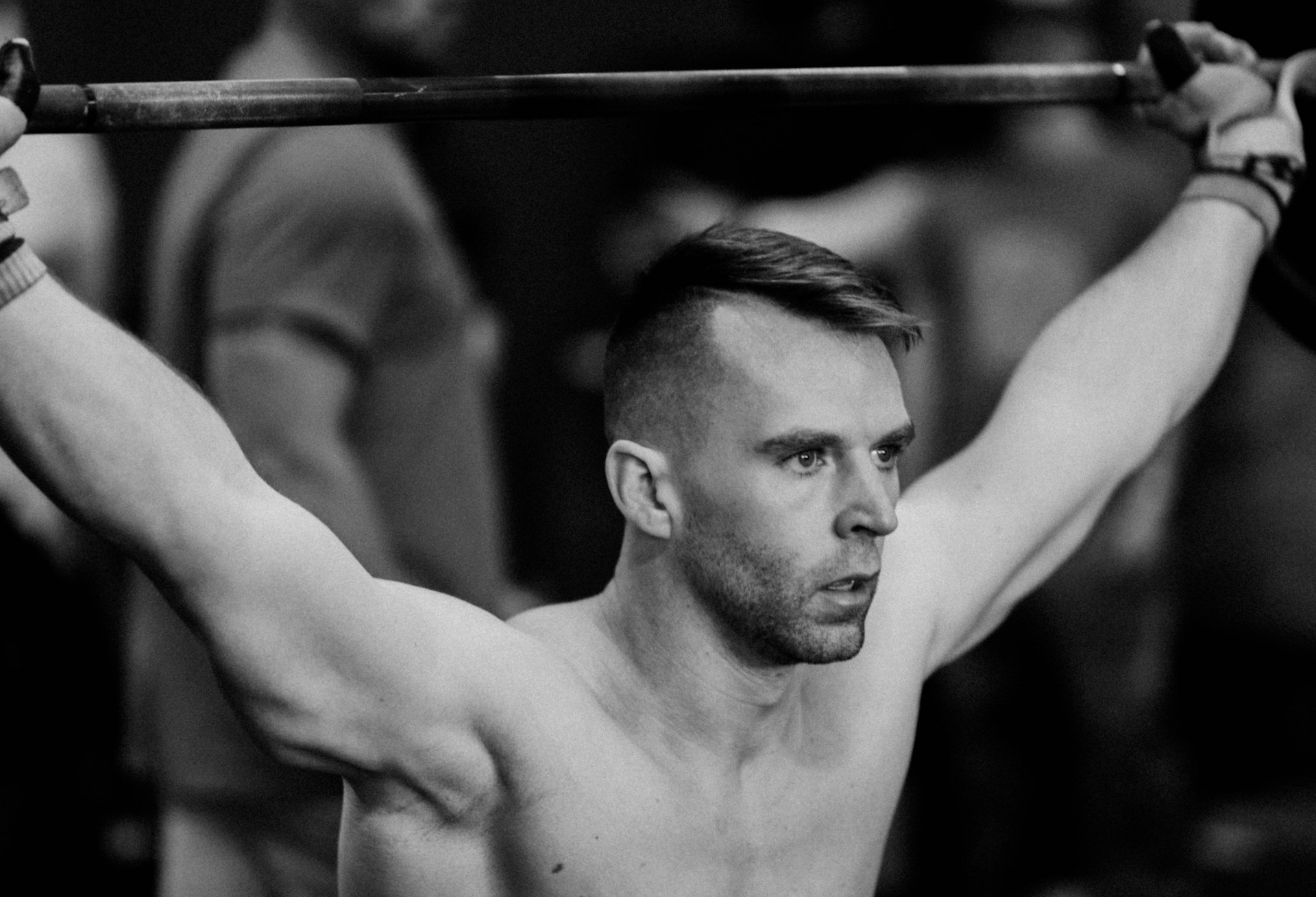


A jacked upper body is not built by collecting endless exercises. It is built by training the major muscle groups hard, using movements that allow progressive overload, and repeating that work consistently for months and years.
Chest, shoulders, upper back, lats, arms, and traps all contribute to the broad, muscular upper body look most guys want. The good news is that you do not need a complicated program to make serious progress. Three well chosen exercises can cover the key movement patterns, train a large amount of muscle mass, and give you a clear way to get stronger over time.


The three exercises are the barbell bench press, the pull up, and the standing overhead press. Together, they train horizontal pushing, vertical pulling, and vertical pushing. They also involve the chest, triceps, front shoulders, lats, upper back, biceps, forearms, upper traps, and core.
This does not mean isolation exercises are useless. Curls, lateral raises, triceps extensions, and cable flyes can all be valuable additions when you have the time, experience, and recovery capacity for more training. However, if your goal is to build an impressive upper body with the fewest possible exercises, these three should form the foundation.
Why Three Big Exercises Can Build a Muscular Upper Body
Muscle growth comes from exposing muscle tissue to challenging resistance training, recovering from that training, and gradually increasing the demands placed on the body. Research shows that greater weekly resistance training volume is generally associated with greater muscle growth, although the return from additional sets becomes less dramatic as volume rises.
Compound exercises are useful because they train several muscles at once. A hard bench press set challenges the chest, triceps, and front deltoids. A pull up trains the latissimus dorsi, biceps, forearms, and several muscles around the upper back and shoulder blade. An overhead press develops the shoulders and triceps while requiring the trunk to stabilize the load.
Want a More Attractive Upper Body? Do These 3 Dumbbell Exercises
The aim is not to make every muscle equally sore. The aim is to use controlled repetitions, a suitable range of motion, enough hard sets, and steady progression. When sets are performed with a high level of effort, a range of loads can produce muscle growth. Heavier loads are especially useful for gaining strength, which makes it easier to use more resistance over time.
Good technique also matters because it helps you direct effort toward the intended muscles and train consistently. The best exercise is not the one that looks most impressive on social media. It is the one you can perform safely, load gradually, and repeat with focus.
Exercise 1: Barbell Bench Press
The barbell bench press is one of the most effective exercises for building a bigger chest while also adding size to the triceps and front of the shoulders. It allows you to use substantial loads and provides a simple, measurable target for progressive overload.
A strong bench press is not the only sign of an impressive upper body, but it is a highly useful tool for developing one. The movement challenges the pectoralis major as the bar is pressed away from the chest, while the triceps extend the elbows and the front deltoids help control and drive the press.
How to Perform the Bench Press
Set the barbell in a rack at a height that allows you to unrack it with straight arms. Lie on the bench with your eyes roughly beneath the bar. Place your feet firmly on the floor and create a stable position through your legs, glutes, and upper back.
Grip the bar slightly wider than shoulder width, although the precise grip will depend on your shoulder comfort and limb length. Pull your shoulder blades back and down, keeping your upper back tight against the bench. Unrack the bar and hold it above the lower chest.
Lower the bar under control until it lightly touches your chest. Keep your wrists stacked over your forearms and your elbows in a position that feels strong and comfortable. Press the bar upward until your elbows are straight, while maintaining the tension through your upper back.
A controlled lowering phase and a consistent touch point make your training easier to track. Do not bounce the bar from your chest or let your shoulders roll forward at the bottom position.
How to Progress the Bench Press
Use a load that allows you to complete about six to ten controlled repetitions for most of your working sets. When you can perform all prescribed repetitions with solid technique, add a small amount of weight at the next session.
You can also use slightly higher repetitions, especially if your joints feel better with lighter loads. Research suggests that muscle growth can occur across a broad range of repetition targets when sets are sufficiently challenging. However, moderate and heavier loading can make it more practical to build strength and track progression on a barbell lift.
Train the bench press twice per week if possible. One session can focus on heavier work, while the other can use a lighter load and more repetitions. This gives you more practice without forcing every session to be a maximal effort.
Exercise 2: Pull Up
The pull up is the vertical pulling movement that gives the upper body width. It trains the lats, which are the large muscles that run from the upper arm toward the lower back. Bigger lats help create the visual contrast between a wider upper body and a narrower waist.
The pull up also works the biceps, brachialis, forearms, rear shoulder muscles, and upper back. It is one of the most efficient exercises for building strength relative to body weight and developing a more athletic looking torso.
If you cannot yet perform a full pull up, use an assisted pull up machine, resistance bands, or a lat pulldown. These variations still train the same broad movement pattern and can help you build toward unassisted repetitions.
How to Perform the Pull Up
Use an overhand grip on a stable pull up bar, with your hands around shoulder width or slightly wider. Begin from a controlled hanging position with your arms straight. Keep your ribs down and avoid swinging your legs.
Start each repetition by pulling your shoulders down away from your ears. Then drive your elbows toward your sides and pull your chest toward the bar. Reach a position where your chin clearly passes the bar, provided you can do so without straining your neck or losing control.
Lower yourself slowly until your elbows are straight again. Do not rush the bottom of the movement. The controlled lowering phase gives you more practice, maintains tension through the lats and arms, and makes each repetition consistent.
How to Progress the Pull Up
If you can perform fewer than five strict repetitions, build strength with assisted versions and slow lowering repetitions. Use enough assistance to complete sets of six to ten high quality repetitions, while gradually reducing the assistance as you improve.
Once you can complete eight to twelve strict pull ups, add resistance with a weight belt or dumbbell held between the feet. Weighted pull ups allow continued progressive overload when bodyweight repetitions become too easy.
Avoid turning every set into a swinging, rushed effort. Strict repetitions are more useful for muscle building because they make it easier to apply tension to the target muscles and accurately judge progress.
Exercise 3: Standing Overhead Press
The standing overhead press builds the shoulders that make the upper body look powerful from every angle. It primarily trains the front deltoids and triceps, while the upper chest, upper traps, and core contribute to the movement.
The overhead press is also valuable because it demands full body stability. Pressing a barbell overhead requires the torso to resist excessive leaning and the shoulder blades to rotate upward in a controlled way. This makes it a useful complement to the bench press, which is performed with the upper back supported by a bench.
A bigger shoulder complex helps create the broad frame that many lifters want. Although the overhead press does not isolate the side deltoids, it provides a strong base of pressing strength and shoulder development.
How to Perform the Standing Overhead Press
Set the barbell in a rack around upper chest height. Take a grip just outside shoulder width and rest the bar across the top of your chest. Stand with your feet about hip width apart and brace your stomach as if preparing to take a punch.
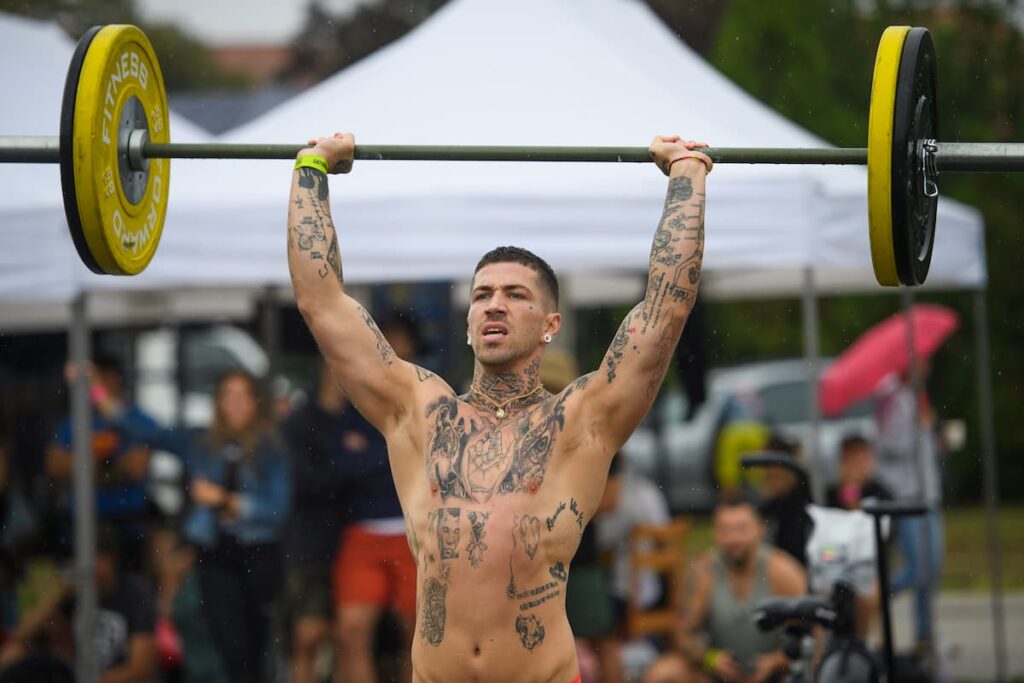
Press the bar upward in a near vertical path. Move your head back slightly to allow the bar to pass, then bring your head through as the bar reaches overhead. Finish with the bar above the middle of your feet, your elbows straight, and your ribs controlled.
Lower the bar back to the upper chest under control. Avoid leaning far backward, as this shifts the movement toward an exaggerated incline press and can place unnecessary stress on the lower back.
If a barbell overhead press is uncomfortable for your shoulders, use dumbbells. Dumbbells allow each arm to move independently and can be a practical option for lifters who need a more individualized pressing path.
How to Progress the Overhead Press
The overhead press typically progresses more slowly than the bench press because the working muscles are smaller and the lift starts from a weaker position. Small increases in load are useful. Even adding one extra repetition with the same weight is meaningful progress.
Use sets of five to ten repetitions and prioritize clean technique. A hard set should be demanding, but you should not have to lean dramatically backward or turn the movement into a partial repetition to complete it.
Training the overhead press once or twice per week works well for most lifters. If you bench press twice weekly, one overhead press session may be enough at first. As your recovery improves, you can add a second lighter session.
How to Build a Program Around These Exercises
A simple upper body plan can be highly effective when you train it consistently. Start with two sessions per week and perform the bench press, pull up, and overhead press in each session. This gives each movement regular practice and provides enough weekly training volume for progress.
For each exercise, begin with three challenging working sets. Aim to finish most sets with one to three repetitions still possible with good technique. This level of effort is hard enough to stimulate adaptation while allowing you to recover and maintain form.
Rest for at least two minutes after demanding compound sets. Longer rest periods can help you maintain repetition quality and total training volume, which is useful when building strength and muscle. You do not need to rush through your workout to make it productive.
Nutrition is also part of the process. Resistance training provides the stimulus, but adequate energy intake and dietary protein support recovery and muscle protein synthesis. A daily protein intake around 1.6 grams per kilogram of body weight is a useful evidence based target for many people trying to gain muscle, although individual needs can vary.
Sleep, patience, and consistency matter just as much as exercise selection. A jacked upper body is the result of hundreds of solid sessions, not one perfect workout.
The Bottom Line
The barbell bench press, pull up, and standing overhead press give you a simple and effective route toward a bigger, stronger upper body. The bench press develops chest, triceps, and front shoulders. The pull up adds width through the lats while training the arms and upper back. The overhead press builds stronger shoulders, triceps, traps, and trunk stability.
Train these movements with good technique, use a challenging level of effort, and gradually increase repetitions or load. Add isolation work later if you enjoy it or want to bring up a specific weak point, but do not overlook the value of getting genuinely strong at the basics.
References
- Grgic, J., Schoenfeld, B.J., Skrepnik, M. and Davies, T.B., 2018. Effects of rest interval duration in resistance training on measures of muscular strength: A systematic review. Sports Medicine, 48(1), pp.137–151.
- Lopez, P., Radaelli, R., Taaffe, D.R., Newton, R.U., Galvão, D.A., Trajano, G.S., Teodoro, J.L., Kraemer, W.J., Häkkinen, K. and Pinto, R.S., 2021. Resistance training load effects on muscle hypertrophy and strength gain: Systematic review and network meta analysis. Medicine and Science in Sports and Exercise, 53(6), pp.1206–1216.
- Morton, R.W., Murphy, K.T., McKellar, S.R., Schoenfeld, B.J., Henselmans, M., Helms, E., Aragon, A.A., Devries, M.C., Banfield, L., Krieger, J.W. and Phillips, S.M., 2018. A systematic review, meta analysis and meta regression of the effect of protein supplementation on resistance training induced gains in muscle mass and strength in healthy adults. British Journal of Sports Medicine, 52(6), pp.376–384.
- Schoenfeld, B.J., Grgic, J., Ogborn, D. and Krieger, J.W., 2017. Strength and hypertrophy adaptations between low and high load resistance training: A systematic review and meta analysis. Journal of Strength and Conditioning Research, 31(12), pp.3508–3523.
- Schoenfeld, B.J., Ogborn, D. and Krieger, J.W., 2016. Dose response relationship between weekly resistance training volume and increases in muscle mass: A systematic review and meta analysis. Journal of Sports Sciences, 35(11), pp.1073–1082.
- Schoenfeld, B.J., Ogborn, D. and Krieger, J.W., 2019. Effects of resistance training frequency on measures of muscle hypertrophy: A systematic review and meta analysis. Sports Medicine, 49(6), pp.863–878.
Key Takeaways
| Focus | What to do | Why it matters |
|---|---|---|
| Chest and triceps | Barbell bench press for three challenging sets | Builds pressing strength and trains the chest, triceps, and front shoulders |
| Back width and arms | Pull ups or assisted pull ups for three challenging sets | Develops the lats, upper back, biceps, and forearms |
| Shoulders and pressing strength | Standing overhead press for three challenging sets | Trains the shoulders, triceps, upper traps, and trunk stability |
| Progression | Add repetitions or small amounts of load over time | Progressive overload provides the long term stimulus for strength and muscle growth |
| Weekly structure | Train the three movements twice per week when recovery allows | Regular practice and sufficient weekly volume support muscle growth |