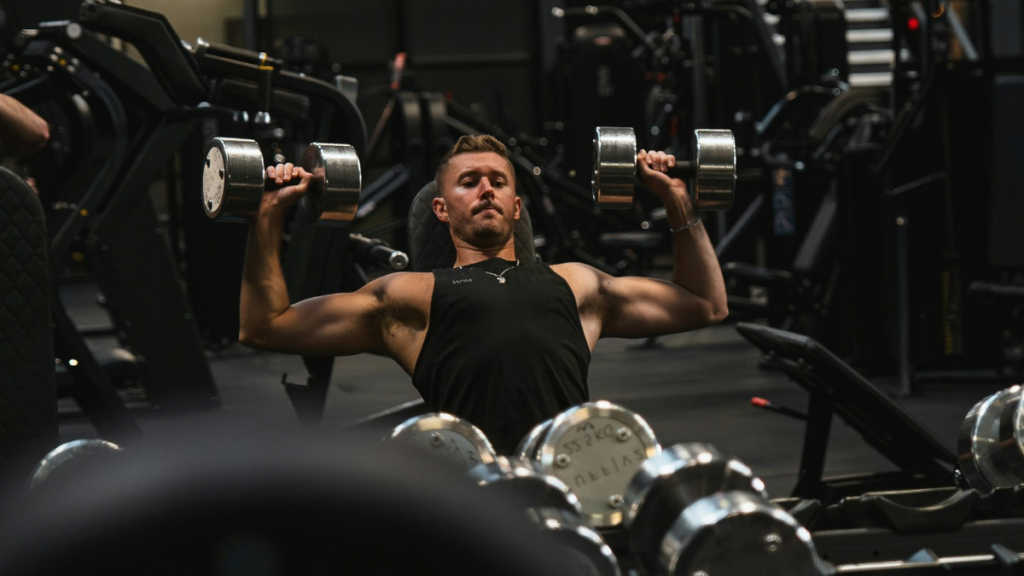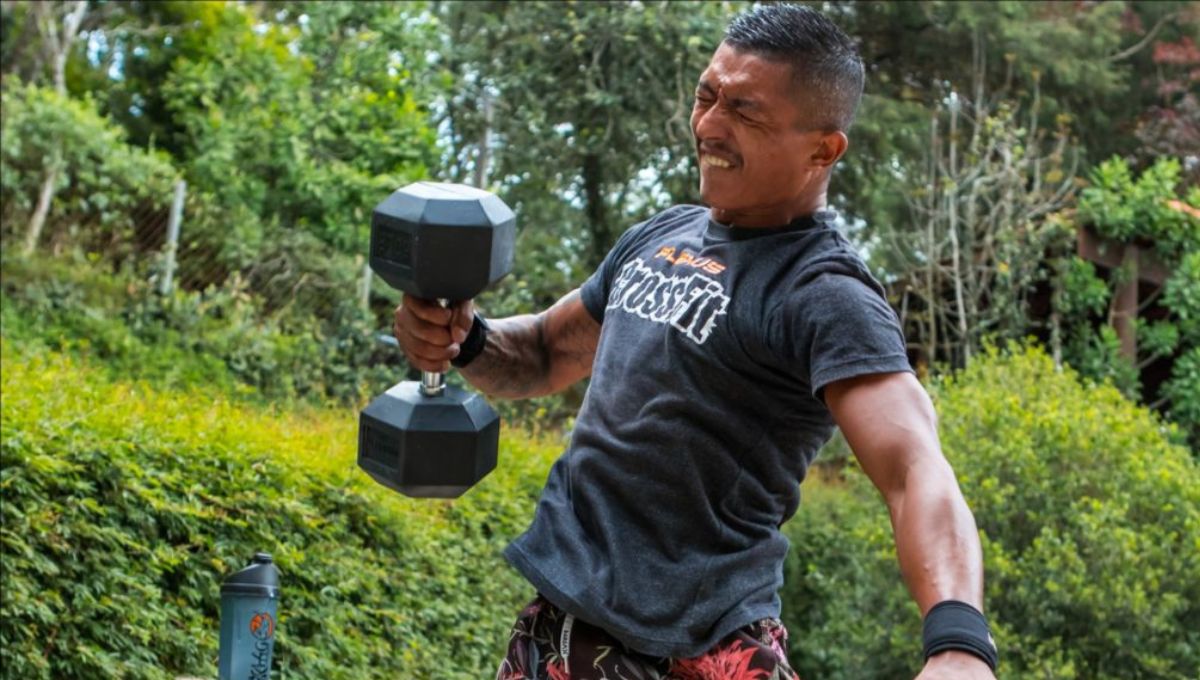


A muscular upper body is built by developing the chest, back, shoulders, and arms in a balanced way. Dumbbells are one of the most useful tools for doing that because they allow each side of the body to work independently, give you freedom to use a comfortable range of motion, and make it easier to train around individual differences in limb length and shoulder structure.
You do not need a huge menu of exercises to make visible progress. What matters most is choosing movements that train the major upper body muscles effectively, performing enough hard sets each week, and gradually increasing the challenge as you get stronger. Research consistently shows that resistance training increases muscle size and strength when it is performed with sufficient effort and volume, regardless of whether you train with machines, barbells, or dumbbells.


The three dumbbell exercises below give you an efficient foundation for a wider, fuller, and more athletic looking upper body. Together, they train the chest, upper back, lats, shoulders, triceps, biceps, and forearms while giving you a practical way to build muscle at home or in a commercial gym.
Why Dumbbells Are So Effective for Building Your Upper Body
Dumbbells allow a large degree of movement freedom compared with a fixed barbell. This can make exercises feel more natural, particularly at the shoulders, where small changes in hand position can improve comfort. Unlike a barbell, dumbbells also stop one stronger side from taking over too much of the work. Each arm has to produce force independently, which can help expose and gradually reduce side to side strength differences.
Muscle growth is primarily driven by mechanical tension, meaning the force experienced by muscle fibers when they work hard through a useful range of motion. You can create that tension with a wide range of loads. Research suggests that both lighter and heavier resistance can build similar amounts of muscle when sets are performed close enough to muscular failure, although heavier loads are generally more effective for maximizing one repetition strength.
What Happens If You Only Use Dumbbells for Your Chest?
For a more attractive upper body, proportion matters. Well developed shoulders can create a broader appearance through the upper torso. A muscular chest contributes to front facing thickness, while a strong back adds width and density. Training these areas also supports better posture and shoulder function when your program includes balanced pushing and pulling work.
1. Incline Dumbbell Bench Press
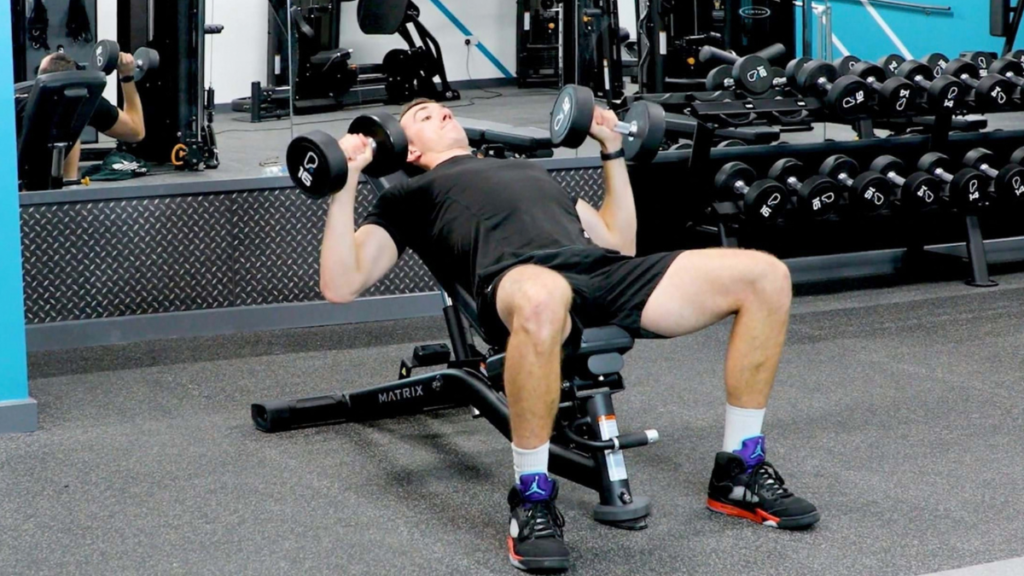
The incline dumbbell bench press is one of the best ways to build the upper chest, front shoulders, and triceps. It gives you an effective pressing movement while allowing each arm to follow its own natural path. This can be especially helpful for people who find straight bar pressing uncomfortable on their shoulders.
Why It Builds an Impressive Chest
The chest is made up primarily of the pectoralis major, a broad muscle that helps bring the upper arm toward the body and across the chest. Pressing movements train this muscle alongside the triceps and anterior deltoids. An incline angle shifts more emphasis toward the upper portion of the chest and increases the contribution of the front deltoids compared with a flat bench press.
Research examining muscle activity during pressing variations has found that a moderate incline can increase activation in the clavicular portion of the pectoralis major, often called the upper chest. You do not need an extreme bench angle. A moderate incline is usually enough to target the upper chest while keeping the movement focused on pressing rather than turning it into a shoulder exercise.
Dumbbells also let you use a deeper and more individually comfortable range of motion than many people achieve with a barbell. A larger range of motion can be useful for hypertrophy because it challenges the muscles in lengthened positions. Studies have increasingly suggested that training muscles at longer lengths can enhance muscle growth, although the overall quality and consistency of training remain more important than chasing one exact position.
How to Perform It
Set a bench to a moderate incline. Lie back with the dumbbells positioned above your upper chest and your feet planted firmly on the floor. Start with your palms facing forward or slightly inward, depending on what feels best for your shoulders.
Lower the dumbbells with control until your upper arms are close to parallel with the floor or slightly below it if you can do so comfortably. Keep your shoulder blades pulled back against the bench and avoid letting the weights drift too far toward your face. Press the dumbbells upward and slightly inward until your arms are extended, without aggressively smashing the weights together at the top.
Keep your wrists stacked over your elbows and avoid turning the movement into a fast bounce from the bottom. Smooth, controlled repetitions allow you to maintain tension in the chest and reduce unnecessary stress on the joints.
How to Program It
Perform three to five hard sets of six to 12 repetitions. Choose a load that leaves you with roughly one to three repetitions in reserve for most sets. Over time, aim to add repetitions, small amounts of weight, or an additional hard set when recovery allows.
Training each muscle group with multiple weekly sets is strongly associated with greater hypertrophy than performing very little work. For most people, spreading chest training across two weekly sessions is an effective and manageable approach.
2. One Arm Dumbbell Row
The one arm dumbbell row is a foundational upper back exercise. It trains the latissimus dorsi, middle back, rear shoulders, biceps, and grip while allowing you to use a substantial load. A stronger and more muscular back creates more width from the front and rear, contributing to the classic taper between the shoulders and waist.
Why It Builds Width and Thickness
Your back is not one single muscle. The lats contribute heavily to upper body width, while the rhomboids, middle trapezius, rear deltoids, and other upper back muscles help create thickness and support shoulder positioning. Horizontal pulling exercises such as rows train these muscles by drawing the arm backward and bringing the shoulder blade toward the spine.
Balanced pulling volume is important for long term shoulder health and performance. Pressing exercises are valuable, but a program dominated by chest and shoulder work without enough rowing can leave your upper back underdeveloped. A regular rowing movement gives the posterior side of the upper body the attention it needs.
The one arm format has an additional advantage. It allows you to focus on one side at a time, use the nonworking arm for support, and train each side through a full controlled range. This can be particularly useful when building confidence with heavier dumbbells or learning to feel the lats working.
How to Perform It
Place one knee and the same side hand on a bench, with the opposite foot firmly on the floor. Hold the dumbbell in your free hand and let it hang directly below your shoulder. Keep your spine neutral and brace your trunk as if preparing for a light punch to the stomach.
Begin the row by pulling your elbow toward your hip rather than simply curling the weight toward your chest. This cue can help you involve the lats more effectively. Allow your shoulder blade to move naturally as you lower the dumbbell, then pull the elbow back with control until the upper arm is close to your torso.
Avoid twisting the torso dramatically to lift a weight that is too heavy. A small amount of natural body movement can occur during challenging sets, but the main work should come from the back muscles rather than momentum. Use a load that allows you to feel a strong contraction without sacrificing position.
How to Program It
Perform three to four sets of eight to 15 repetitions per side. Start with the weaker side and match the same number of repetitions on the stronger side. This prevents the dominant arm from accumulating extra work over time.
Rows respond well to moderate and moderately high repetitions because they allow you to accumulate quality volume while practicing consistent technique. Use a controlled lowering phase and avoid rushing through the stretched position at the bottom. Your grip may become a limiting factor, but this is often beneficial because stronger forearms and hands support almost every other dumbbell exercise.
3. Seated Dumbbell Lateral Raise
The seated dumbbell lateral raise is one of the most direct ways to build the side deltoids. These muscles are located on the outside of the shoulders, and developing them can make the upper body appear wider even without changing your waist measurement. For visual impact, few exercises provide as much return for such a simple movement.
Why It Builds Broader Shoulders
The deltoid has three main regions: anterior, lateral, and posterior. Pressing exercises already provide substantial work for the anterior deltoid, while rows contribute to the posterior deltoid. The lateral deltoid often needs more direct training because its main function is raising the arm outward from the body.
A larger shoulder to waist ratio is often associated with a more athletic male physique. Research on body shape preferences has found that upper body proportions, particularly a visibly broad torso relative to the waist, influence perceived physical attractiveness. Building the side deltoids is one practical way to improve that proportion while also improving shoulder strength and resilience.
Seated lateral raises reduce the temptation to use leg drive or excessive body swing. They force you to use a lighter load, but light loads can still produce meaningful muscle growth when sets are taken close to failure with good form.
How to Perform It
Sit upright on a bench with a dumbbell in each hand. Start with the weights beside your thighs and keep a slight bend in your elbows. Raise your arms outward and slightly forward until they reach about shoulder height.
Think about moving your elbows out to the sides rather than lifting the dumbbells with your hands. This helps keep the tension focused on the side deltoids. Your palms can face the floor or angle slightly downward, but avoid aggressively rotating the shoulders inward at the top.
Lower the weights slowly and maintain tension instead of resting completely at the bottom. You do not need to lift very heavy dumbbells for this exercise to work. In fact, trying to use excessive weight often shifts the stress toward the upper trapezius and makes the movement less effective for the side deltoids.
How to Program It
Perform three to five sets of 10 to 20 repetitions. Lateral raises are usually best performed after heavier pressing and rowing work because the loads are lighter and the movement requires less whole body stability.
Aim to finish most sets when you feel you could complete only one to three additional repetitions with clean technique. If you cannot raise the dumbbells without leaning backward or shrugging strongly, reduce the load. Consistent tension and a full controlled range matter more than using impressive numbers.
How to Combine These Exercises for Muscle Growth
These three exercises can form the core of an upper body dumbbell workout. The incline press provides heavy chest and triceps work. The one arm row builds the back and biceps. The lateral raise brings direct attention to the side deltoids and helps develop shoulder width.
Perform this workout once or twice per week, depending on your experience level, overall schedule, and recovery. If you train it twice weekly, vary the repetition range slightly across sessions. For example, use a somewhat heavier incline press and row on one day, then use more moderate loads and higher repetitions on the second day.
Progressive overload should guide your training. When you can complete the top end of your target repetition range with solid form, increase the dumbbell weight at the next session. Small improvements performed consistently over months matter far more than constantly switching exercises or chasing exhaustion.

Nutrition also determines how much muscle you can build. Resistance training provides the stimulus, but sufficient energy intake and protein help support recovery and adaptation. Research indicates that protein supplementation can further improve resistance training related gains in muscle mass and strength, particularly when total daily protein intake is adequate.
Final Thoughts
The best dumbbell exercises are not necessarily the most complicated. The incline dumbbell bench press, one arm dumbbell row, and seated dumbbell lateral raise cover the major areas that make an upper body look strong, balanced, and athletic.
Train them with controlled technique, challenge yourself with progressively harder sets, and give the process enough time. A more muscular upper body is the result of repeated quality training sessions, not one perfect workout.
References
- Grgic, J., Schoenfeld, B.J., Davies, T.B., Lazinica, B., Krieger, J.W. and Pedisic, Z. (2018) ‘Effect of resistance training frequency on gains in muscular strength: A systematic review and meta analysis’, Sports Medicine, 48(5), pp. 1207 to 1220.
- Krieger, J.W. (2010) ‘Single versus multiple sets of resistance exercise for muscle hypertrophy: A meta analysis’, Journal of Strength and Conditioning Research, 24(4), pp. 1150 to 1159.
- Lasevicius, T., Ugrinowitsch, C., Schoenfeld, B.J., Roschel, H., Tavares, L.D., De Souza, E.O., Tricoli, V. and Teixeira, E.L. (2018) ‘Effects of different intensities of resistance training with equated volume load on muscle strength and hypertrophy’, European Journal of Sport Science, 18(6), pp. 772 to 780.
- Morton, R.W., Murphy, K.T., McKellar, S.R., Schoch, R.D., Henselmans, M., Helms, E., Aragon, A.A., Devries, M.C., Banfield, L., Krieger, J.W. and Phillips, S.M. (2018) ‘A systematic review, meta analysis and meta regression of the effect of protein supplementation on resistance training induced gains in muscle mass and strength in healthy adults’, British Journal of Sports Medicine, 52(6), pp. 376 to 384.
- Schoenfeld, B.J., Ogborn, D. and Krieger, J.W. (2017) ‘Dose response relationship between weekly resistance training volume and increases in muscle mass: A systematic review and meta analysis’, Journal of Sports Sciences, 35(11), pp. 1073 to 1082.
- Schoenfeld, B.J., Grgic, J., Ogborn, D. and Krieger, J.W. (2017) ‘Strength and hypertrophy adaptations between low versus high load resistance training: A systematic review and meta analysis’, Journal of Strength and Conditioning Research, 31(12), pp. 3508 to 3523.
- Trebs, A.A., Brandenburg, J.P. and Pitney, W.A. (2010) ‘An electromyography analysis of three muscles surrounding the shoulder joint during the performance of a chest press exercise at several angles’, Journal of Strength and Conditioning Research, 24(7), pp. 1925 to 1930.
- Valentova, J.V., Třebický, V., Fialová, J., Kleisner, K. and Varella, M.A.C. (2016) ‘The association between dark triad traits and sociosexuality with mating and parenting efforts: A cross cultural investigation’, Personality and Individual Differences, 101, pp. 111 to 116.
Key takeaways
| Exercise | Main muscles trained | Best repetition range | Main upper body benefit |
|---|---|---|---|
| Incline dumbbell bench press | Upper chest, front shoulders, triceps | 6 to 12 | Builds pressing strength and upper chest thickness |
| One arm dumbbell row | Lats, upper back, rear shoulders, biceps | 8 to 15 | Adds back width, density, and balanced pulling strength |
| Seated dumbbell lateral raise | Side deltoids | 10 to 20 | Builds broader looking shoulders and a stronger upper torso shape |