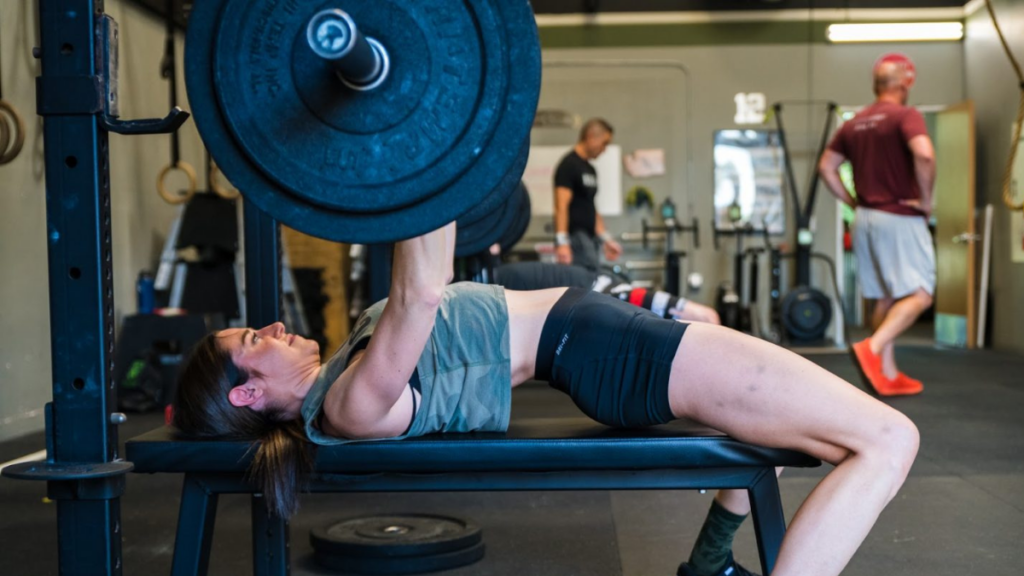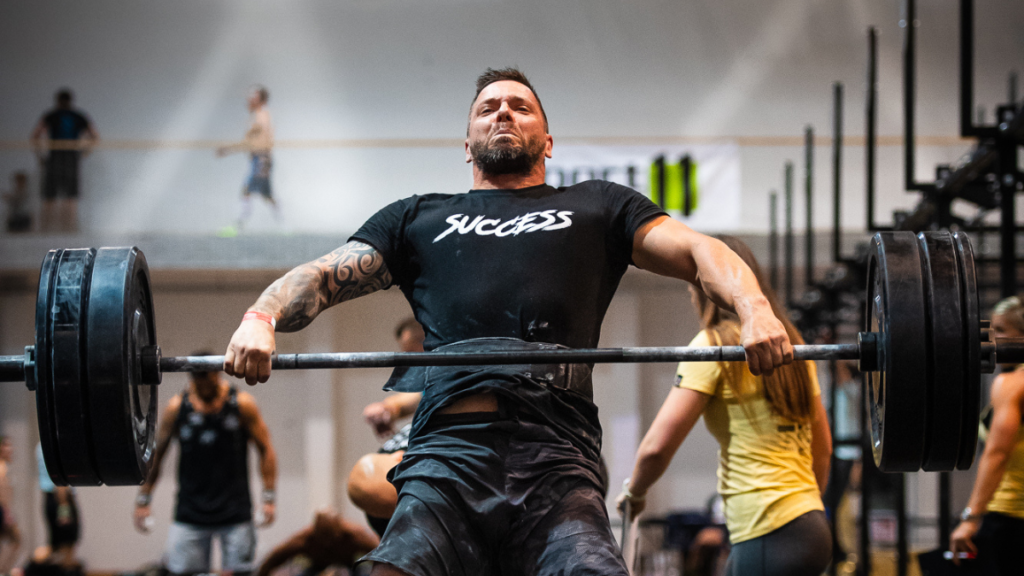


If you want bigger, stronger legs, dead stop exercises are an excellent place to start. They keep you honest, completely strip away any chance of using momentum and show you exactly how strong you truly are.
Let’s first examine the physiological mechanics of concentric heavy lifting, before unveiling three specific setups that build massive and powerful legs.
The Hidden Power of Zero Momentum
When you lower a weight during a standard squat, your muscle tendon complex stores kinetic energy. This physiological phenomenon, known as the stretch shortening cycle, helps propel the barbell back up toward the ceiling. While this reflex is crucial for dynamic athletic power like sprinting and jumping, it can easily turn into a crutch during pure strength and hypertrophy training.
By allowing a loaded barbell to come to a total rest on safety pins or wooden blocks for two full seconds, you dissipate stored kinetic energy completely. This mechanical reset forces your nervous system to rely strictly on concentric rate of force development. Without momentum to carry the barbell past sticking points, your brain must send an immediate electrical signal to recruit your largest fast twitch motor units right from the very first millimeter of movement.
Neuromuscular research comparing continuous rep speed to static start movements demonstrates distinct physiological adaptations. When you eliminate the elastic rebound at the bottom of a rep, electromyographic activity in the primary driving muscles increases significantly during the initial upward motion. This sudden recruitment of high threshold motor units provides the exact mechanical tension required to spark new muscle growth across your legs.
| Squat Execution Factor | Stretch Shortening Repetition | Dead Stop Repetition |
|---|---|---|
| Primary Force Producer | Elastic Tendon Recoil and Muscle Drive | Pure Concentric Muscle Drive |
| Initial Motor Unit Recruitment | Gradual Build Throughout Ascent | Immediate Maximal Recruitment Peak |
| Bottom Joint Strain | Dynamic Strain at Lowest Point | Controlled Static Position Load |
| Kinetic Energy Storage | Fully Retained in Tendon Complex | Fully Dissipated During Rest Pause |
1. Dead Stop Front Squat
The dead stop front squat is an exceptional movement for overloading the anterior chain while keeping your torso completely upright. By letting the barbell settle on safety pins set at parallel depth, you force your quadriceps to lift the entire load without relying on a rebound out of the bottom position.
Because the front rack position keeps your center of mass forward, your quads take on an overwhelming percentage of the mechanical workload. The vastus lateralis, vastus medialis, and rectus femoris must work together to drive the weight up from zero momentum. Furthermore, starting the movement from a resting position builds incredible upper back rigidity, ensuring your thoracic spine does not collapse when moving heavy loads.
To execute this movement cleanly, adjust the rack safety pins so the bar sits exactly at your parallel squat depth. Walk into the rack, slide under the bar into a solid front rack position, set your feet, and brace your abdomen tightly. Drive straight up through your mid foot until you stand fully erect. Lower the bar smoothly back to the pins, pause completely for two full seconds until all movement stops, and then drive up for your next repetition.
| Movement Profile | Technical Standard |
|---|---|
| Primary Muscle Focus | Quadriceps (Rectus Femoris, Vastii Group) |
| Secondary Stabilizers | Upper Back (Rhomboids, Upper Trapezius), Abdominals |
| Safety Pin Setup | Set at parallel hip depth |
| Recommended Pause Time | 2 full seconds resting motionless on pins |
2. Dead Stop Back Squat
The standard barbell back squat is rightfully considered the king of lower body exercises, but adding a dead stop elevates its strength building capacity to a whole new level. Rested on safety pins at the bottom of your range of motion, the dead stop back squat forces your glutes, quadriceps, and adductors to initiate maximum force from a deep hip position.
Because the barbell sits across your upper back, this exercise allows you to handle heavier absolute loads than the front squat variation. Eliminating the bottom bounce removes hip bounce and momentum, forcing your gluteus maximus and adductor magnus to work continuously alongside your quads to accelerate the load. It serves as an unmatched tool for shattering sticking points that usually stall heavy back squats.
Set the safety pins at or slightly below parallel. Step inside the rack, unrack the barbell, set your normal squat stance, and lower yourself under full control until the bar rests squarely on the safety pins. Stop all body motion and maintain a tight abdominal brace. Without letting your hips shoot up early, drive your shoulders back into the bar and explode upward off the pins. Lower the bar back down under control and let it come to a complete stop before repeating.
| Movement Profile | Technical Standard |
|---|---|
| Primary Muscle Focus | Quadriceps, Gluteus Maximus, Adductor Magnus |
| Secondary Stabilizers | Spinal Erectors, Core Musculature |
| Safety Pin Setup | Set at or slightly below parallel hip fold |
| Key Execution Cue | Drive shoulders back into the bar while pushing the floor away |
3. Anderson Squat
Named after the legendary strongman Paul Anderson, the Anderson squat takes the dead stop concept a step further by removing the eccentric lowering phase entirely on the first rep. Instead of starting from the top and descending to the pins, you begin the set at the bottom position underneath a dead-weighted barbell resting on the safety pins.
Starting a squat from a concentric only position requires immense central nervous system activation and absolute positional awareness. You cannot use any downward momentum to set your hip position or feel out the lift. You must wedge yourself underneath the stationary bar, establish total structural tightness, and drive out of the bottom hole from a completely static stance. This variation builds unmatched starting strength that translates directly into heavy powerlifting and dynamic athletic performance.
Position the barbell on the safety pins in your rack at your desired depth. Crawl under the bar, positioning it securely across your upper traps while setting your feet into your standard squat stance. Take a deep breath, brace your core against your belt, and explode upward to a full standing position. You can either lower the bar back to the pins under control for subsequent reps or reset completely at the bottom for single attempts.
| Movement Profile | Technical Standard |
|---|---|
| Primary Muscle Focus | Entire Lower Body (Quadriceps, Glutes, Hamstrings) |
| Systemic Adaptation | Maximal Central Nervous System Motor Drive |
| Set Starting Point | Begins at the bottom position resting on pins |
| Training Application | Sticking point elimination and maximal starting strength |
Key Takeaways
| Exercise Name | Target Muscle Groups | Primary Strength Benefit |
|---|---|---|
| Dead Stop Front Squat | Quadriceps and Upper Back | Builds quad mass and thoracic spine rigidity without hip bounce |
| Dead Stop Back Squat | Quadriceps, Glutes, Adductors | Overloads absolute leg strength and eliminates sticking points |
| Anderson Squat | Quadriceps, Glutes, Core | Develops maximal starting strength from a static posture |
References
Aagaard, P., Simonsen, E.B., Andersen, J.L., Magnusson, P. and Dyhre-Poulsen, P., 2002. Increased rate of force development and neural drive of human skeletal muscle induced by resistance training. Journal of Applied Physiology, 93(4), pp.1318-1326.
Cormie, P., McGuigan, M.R. and Newton, R.U., 2011. Developing maximal neuromuscular power: Part 1 biological bases of maximal power production. Sports Medicine, 41(1), pp.17-38.
Escamilla, R.F., 2001. Knee biomechanics of the dynamic squat exercise. Medicine and Science in Sports and Exercise, 33(1), pp.127-141.
Kubo, K., Ikebukuro, T. and Yata, H., 2019. Effects of squat training with different depths on lower limb muscle volumes. European Journal of Applied Physiology, 119(9), pp.1933-1942.
Sale, D.G., 2002. Neural adaptation to strength training. Strength and Conditioning in Sports, 8(1), pp.280-314.
Schoenfeld, B.J., 2010. The mechanisms of muscle hypertrophy and their application to resistance training. Journal of Strength and Conditioning Research, 24(10), pp.2857-2872.