


If you enjoy running and know the benefits of adding cardio to your training sessions but have not included hill sprint workouts, then you are missing on a lot of gains your body could be getting. Hill sprints are often neglected, but BOXROX is here to shine a light on it and tell you why you should give space to this exercise next time you decide to run outside.
Hill sprint workouts are very demanding, although relatively shorter than what most CrossFitters are used to. While on normal WODs you would run for 400 meters, sometimes 800m, hill sprints are usually based on time, not distance. The name is self-explanatory: you sprint as fast as you can uphill, not on a flat surface, for a short period of time.



Benefits of Hill Sprint Workouts
Running uphill has similar benefits as running on a flat surface, with a few extra ones. As with regular running, hill sprint workouts will increase your lung capacity and burn huge amounts of calories. Check out some other benefits:
- Less injury prone when running
- Improved communication between your muscles and brain
- Strengthens muscles and connective tissues
- Increases your stride power
- Overall improvement of running efficiency
With each step going uphill, you shorten the length of the stride, but requires more effort to keep running as you need the extra strength to propel your body upwards, against gravity. By going uphill, you will cause less shock on your body, compared to running on a flat surface.

Uphill running will help improve your aerobic conditioning, decrease your resting heart rate, subsequently making your engine more efficient for any cardio activity.
How Much Inclination?
How inclined should the terrain be? That is the million dollar question that, frankly, most people should not worry about.
In general terms, a hill with inclination between 5% and 10% will prove a good workout to most athletes.
The Versatility of Hill Sprinting
The major setback of hill sprint workouts is the difficulty to control the variants in the exercise. To be fair, all you need is a hill to start running, but for advanced athletes who like to keep track of performance and see their evolution in a specific exercise, hill sprint workouts might be difficult.
First, it is recommended to do hill sprint workouts outside and it is not everyone who will drive to a specific hill because the inclination there is steeper. Let’s face it, most of us will probably go to the nearest one and just start running uphill, be it in a park, or the street where you live.
Looking past the inclination of a hill, everything else is adjustable to make the exercise easier, or more difficult, depending on your fitness level and what your goals are.
For example, you may add an extra sprinting at the end of the workout if you feel like you still have gas in the tank. You could choose to run downhill, instead of a light jog or walk, as this will also engage different muscles on your legs.
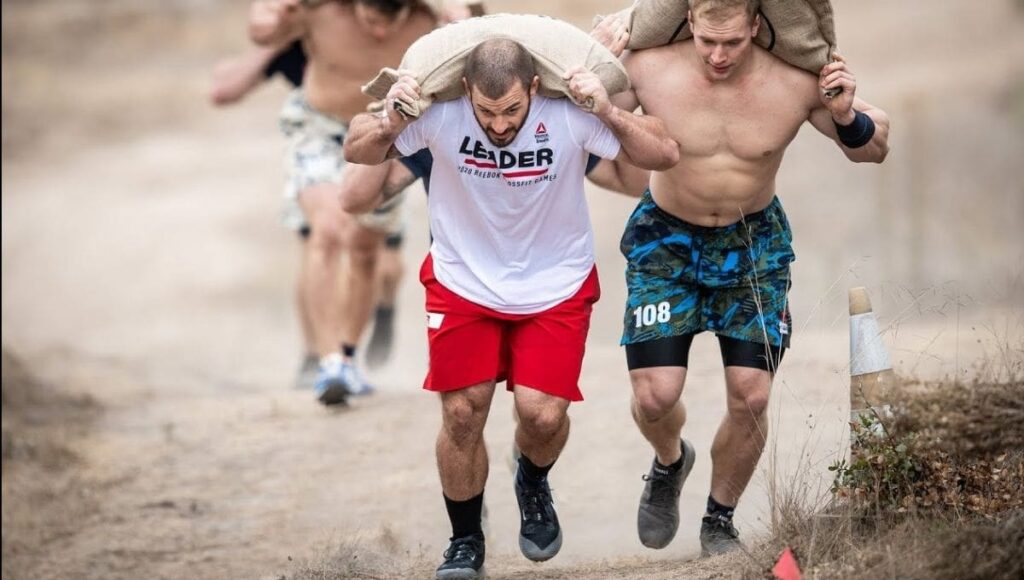
You may also add weight to engage even more your lower body muscles – a weighted vest, a sack or even a backpack are good options.
Preparing for Hill Sprint Workouts
Just like any other workout, you must warm-up your body properly to get it fully prepared for the exercise. Pay special attention to your hamstrings and calves, but also stretch your arms and shoulders, as their muscles will be used during the workouts.
It is also advisable that the first set of hill sprinting should not be done at 100% effort, but rather around 60%. This is the best way to fully warm-up your body so it understands what you will be asking of it in the next few sets.
Rest is also incredibly important when doing hill sprint workouts. Between 60 to 90 seconds is a good starting point to rest before running the hill once more. This can be done by a light jog or walk downhill to the starting point.
Avoid These Mistakes
It might sound like a simple exercise, but there are a few mistakes that are common and you should avoid them at all cost.
First and foremost, run at full capacity. Do not walk, jog, or take it easy in any way. This is hill sprinting, not hill lapping.
Make sure you take full recovery after each sprint set. The first run uphill might not be as demanding on your body and you might feel like you are ready to go another round straight away, but you should not do it. Take a full minute to recover, or however long the workout instructs you to.

When running uphill, do not lean forward or backward. Stay vertical at all times, or else you will spend energy that will not translate into power going up.
Hill Sprint Workouts
1. “Uphill 1”
6 rounds for time:
- Run for 10 seconds uphill
- Walk back to starting point (minimum 60 second recover)
Score is the time it took to finish the last run uphill.
This is a simple WOD for those who are just starting to incorporate hill sprint workouts into their training sessions.
2. “The Stacker”
2 sets:
- 20 second max effort sprint
- Rest 40 seconds
- 20 second max effort sprint
- Rest 40 seconds
- 20 second max effort sprint
- Rest 40 seconds
- 20 second max effort sprint
- Rest 40 seconds
- 20 second max effort sprint
- Rest 40 seconds
- 20 second max effort sprint
- Rest 40 seconds
- 20 second max effort sprint
- Rest 40 seconds
- 30 second controlled sprint
- 30 seconds easy recovery
Rest 4 minutes between sets.
This is a classic lactate tolerance workout. The recovery is intentionally short to create the targeted stimulus and force your body to use the lactate as fuel.
Workout by Aerobic Capacity
3. Workout 2
5 sets:
- 15 second sprint
- 90 seconds active recovery
There is no rest between reps or sets.
Active recovery means you are not allowed to stop at any time. A light jog or medium-to-fast walk is accepted.
Workout by Aerobic Capacity