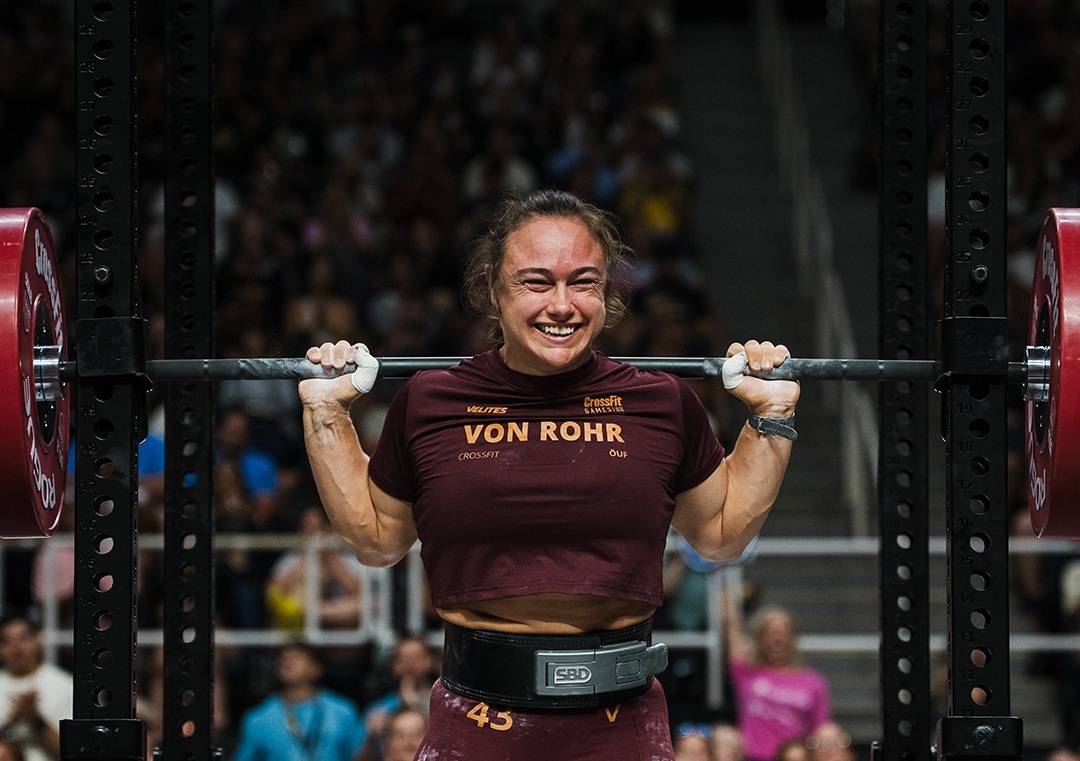


Explosive power is the ability to produce force quickly. It matters when you jump, sprint, change direction, clean a barbell, drive out of the bottom of a squat, or accelerate in almost any sport. Strong legs are useful, but strength alone does not guarantee that you can apply it rapidly. Training must also teach you to generate force with speed and intent.
Pause squats and tempo squats are both valuable tools for building a stronger lower body. They look similar because both change the rhythm of a normal squat, but they challenge your body in different ways. A pause squat stops you at the bottom position before you stand up. A tempo squat controls the speed of one or more phases of the rep, most often the descent.


If your main goal is explosive power, tempo squats usually have the clearer advantage when they include a controlled but not excessively slow descent and a deliberately fast ascent. Pause squats still have an important place, particularly for improving strength and control in the bottom position. The best choice depends on whether your current limitation is producing force from a dead stop or expressing your existing strength quickly.
What Makes a Squat Explosive?
Power combines force and velocity. In simple terms, you need to push hard and you need to push quickly. A very heavy squat can build maximal strength, while jumping with a light load can emphasize velocity. Explosive strength training sits between these extremes by helping you produce meaningful force at a high speed.
The squat is useful because it trains the hips, knees, ankles, trunk, and lower body muscles to work together. However, how you perform each repetition affects the stimulus. A slow squat with no intent to accelerate does not ask your nervous system to do the same job as a squat where you drive upward as hard as possible.
Research on resistance training tempo shows that the concentric phase, which is the upward part of the squat, is especially important for power development. When lifters are instructed to stand up with maximal intent, they can improve their ability to produce force rapidly. The bar may still move slowly when the load is heavy, but the intent to move it fast matters because it changes the neural demand of the rep.
That is why both pause squats and tempo squats should usually finish with an explosive ascent when power is the goal. The difference comes from what happens before the ascent begins.
What Is a Pause Squat?
A pause squat involves lowering into the bottom position, holding still for a planned period, then standing up. Most lifters use a pause of one to three seconds. The pause should be controlled, with the torso braced, feet planted, and knees tracking steadily over the feet.
The pause removes much of the assistance normally created by the stretch shortening cycle. During a regular squat, your muscles and tendons lengthen during the descent and can contribute elastic energy when you reverse direction. This rebound is useful in athletic movement, but it can also disguise weakness at the bottom of the squat.
When you pause, you reduce that rebound and must create force from a near dead stop. That makes the first part of the ascent harder. It can be particularly useful for lifters who fold forward, lose tightness, allow their knees to cave in, or struggle to stand out of the hole.
How Pause Squats Build Strength
Pause squats increase the demand on the quads, glutes, trunk, and stabilizing muscles at a difficult joint angle. Strength gains from isometric and near isometric work tend to be greatest around the trained joint position, although some transfer occurs to nearby positions. This makes pause squats a logical exercise for athletes who are weak at depth.
They can also improve movement quality. Holding the bottom position gives you time to feel whether your balance is centered over the midfoot and whether your torso is staying rigid. For newer lifters, that extra control can build confidence and consistency.
However, a pause squat is not automatically a superior power exercise. A long pause deliberately reduces the elastic contribution that helps many explosive actions. Sprinting, jumping, and weightlifting movements often depend on rapidly reversing from a loaded position. Pause squats can build the strength needed to control that position, but they do not fully replicate the fast transition used in those actions.
The Limits of Pause Squats for Power
Pause squats can become very fatiguing when the pause is long or the load is too heavy. Fatigue can reduce bar speed and make it harder to maintain explosive intent across a session. If every repetition is slow and grinding, the training becomes more specific to strength endurance or maximal strength than explosive power.
A pause also changes the movement rhythm. This is useful if you need to improve control and force production from the bottom, but it is less specific to sports that require a rapid transition from lowering to rising. The key is not to dismiss pause squats, but to use them for the problem they solve best.
What Is a Tempo Squat?
A tempo squat uses a prescribed rhythm for each phase of the repetition. For example, a 3/0/X/0 squat means a three second descent, no pause at the bottom, an explosive ascent, and no pause at the top. The letter X means you should stand up with as much speed and force as possible.
Tempo squats allow you to control how quickly you lower the bar without removing the transition from the bottom. This can make them a useful bridge between strict technique work and more athletic, explosive training.
A controlled descent gives you time to establish position, stay braced, and maintain balance. An explosive ascent then teaches you to apply force rapidly. This combination is particularly useful when a lifter moves too quickly into the bottom of a squat and loses posture before trying to stand up.
Why Moderate Tempo Squats Can Help Power
A recent eight week study in trained university athletes compared squats using a two second descent, a four second descent, and a self selected tempo. All groups were instructed to perform the upward phase explosively. The group using the two second descent produced the most favorable improvements in squat strength, countermovement jump height, squat jump height, and 30 meter sprint performance.
The group using the four second descent improved squat strength but saw poorer changes in explosive performance measures. This is an important lesson. Slowing the eccentric phase is not automatically better. A moderate controlled descent appears to preserve more of the movement speed and elastic qualities that matter for jumping and sprinting, while an excessively slow descent may create fatigue and reduce sport specific transfer.
A two second descent is long enough to improve control and positioning, but short enough to maintain a more natural squat rhythm. It also allows the athlete to retain the fast reversal from descent to ascent that is central to many explosive movements.
Pause Squats vs Tempo Squats for Explosive Power
For the direct question, tempo squats are generally the better choice for building explosive power, provided the tempo is moderate and the upward phase is performed with maximum intent.
The best evidence currently supports a controlled two second descent followed by an explosive ascent. This approach improved jump and sprint outcomes more than a four second descent in trained athletes. It maintains control, reduces the chance of a rushed or unstable descent, and still allows a fast reversal from the bottom.
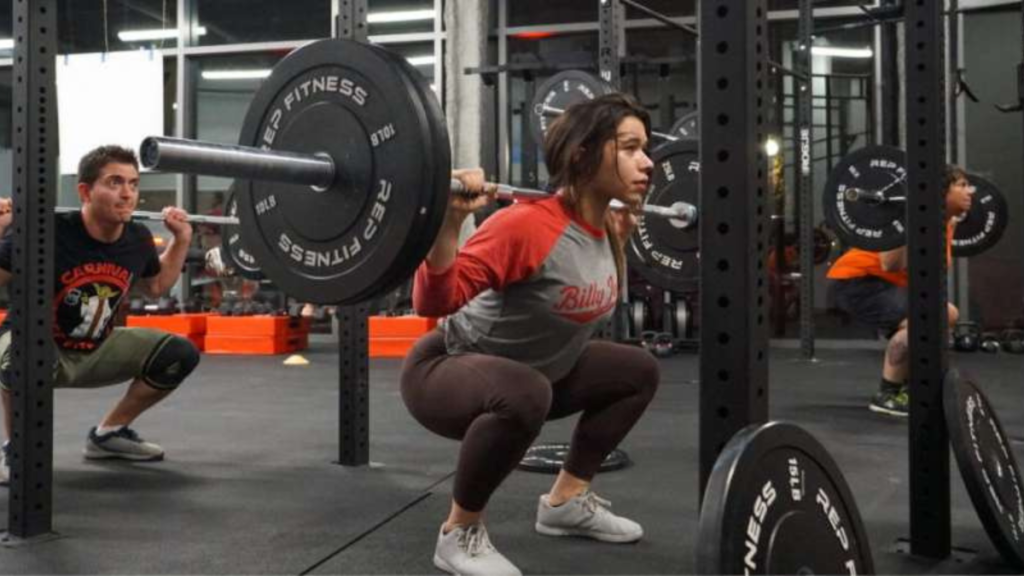
Pause squats are more specialized. They are excellent for building force from the bottom position, improving confidence at depth, and addressing a weakness when you lose tightness or fail near the hole. Those improvements can support explosive performance over time, especially if poor bottom position is currently limiting your squat.
But if you are already stable at depth and want better transfer to jumping, sprinting, Olympic lifting, or athletic acceleration, tempo squats with a controlled descent and explosive ascent are usually more direct.
When Pause Squats May Be the Better Option
Pause squats may be the better option if you have a clear bottom position weakness. If you descend well but cannot maintain posture, knee position, or trunk stiffness when reversing out of the hole, the pause forces you to own that position.
They are also useful during phases focused on maximal strength. Better force production at difficult joint angles can raise the ceiling for future power training. An athlete who cannot produce enough force from a deep squat position will struggle to express high power from that position later.
Use pause squats when you need to improve the quality and strength of the bottom position. Keep the pause purposeful rather than excessively long, and drive up with intent once the hold is complete.
When Tempo Squats Are the Better Option
Tempo squats are the better option when you want to improve explosive power while still sharpening technique. They work particularly well for athletes who drop too quickly into the bottom of the squat, lose balance, or need a more repeatable movement pattern before adding heavier loads.
A two second descent followed by an explosive ascent is a practical starting point. It provides enough control to clean up the movement without turning every rep into a slow strength endurance challenge.
Tempo squats are also easier to integrate into a power focused program because you can maintain a more athletic rhythm. The athlete learns to control the eccentric phase, reverse efficiently, and accelerate hard through the concentric phase.
How to Program Both Variations
You do not need to choose one variation forever. Most athletes can benefit from both, used at different times for different goals.
For tempo squats aimed at power, use a moderate load that allows every ascent to be fast and technically sound. A useful range is often three to six repetitions per set, with two to five quality sets. Use a two second descent, no deliberate pause, and an explosive ascent. Rest long enough that bar speed and technique remain high.
For pause squats, use slightly less load than you would for normal squats, because the pause makes the bottom position much more demanding. Three to five repetitions for three to five sets can work well. Use a one to two second pause at depth, then stand up aggressively without losing your bracing.
3 Best Dumbbell Exercises for Ripped and Powerful Lower Abs
Avoid programming both variations heavily in the same session unless you are highly experienced and your overall training volume is carefully managed. One variation can be the main lift while the other is used in a lighter assistance role, but the total workload should still allow you to recover.
A simple approach is to use tempo squats during a power focused training block and pause squats during a strength focused block. You can also use pause squats early in a training cycle to improve control, then shift toward tempo squats and faster squat work as the goal becomes expressing that strength with speed.
The Verdict
Tempo squats are usually better for building explosive power because they preserve the fast transition from the lowering phase to the ascent while improving control on the way down. The strongest current evidence favors a moderate two second descent followed by an explosive upward phase, rather than an excessively slow eccentric.
Pause squats are still highly valuable. They build strength and confidence in the bottom position, expose technical weaknesses, and help athletes who cannot maintain tension at depth. They are best viewed as a tool to build the foundation for power rather than the most direct route to power itself.
If you only choose one variation for a power focused block, choose tempo squats with a controlled descent and a violent, technically sound ascent. If your squat falls apart at the bottom, spend time with pause squats first. Build strength where you are weak, then learn to express it quickly.
Key Takeaways
| Training method | Main benefit | Best use | Power verdict |
|---|---|---|---|
| Pause squat | Builds strength, control, and stability at the bottom position | Fixing weakness in the hole and improving squat positions | Useful indirectly, but less specific to rapid reversal |
| Tempo squat with a two second descent | Improves control while preserving an explosive ascent | Jumping, sprinting, athletic power, and cleaner squat technique | Usually the better option for explosive power |
| Tempo squat with a very slow descent | Increases time under tension and fatigue | Specific strength or hypertrophy focused work | Less suitable when explosive performance is the priority |
| Explosive concentric intent | Trains rapid force production | Both pause and tempo squats | Essential for power focused squat training |
References
- Bao, W., Chen, S., Zhang, Y. and Zhang, Y., 2023. Effects of resistance training on muscular strength and physical performance in healthy adults: A systematic review and meta analysis. Frontiers in Physiology, 14, 1137230.
- Blazevich, A.J. and Jenkins, D.G., 2002. Effect of the movement speed of resistance training exercises on sprint and strength performance in concurrently training elite junior sprinters. Journal of Sports Sciences, 20(12), pp. 981–990.
- Grgic, J., Schoenfeld, B.J., Skrepnik, M. and Davies, T.B., 2018. Effects of rest interval duration in resistance training on measures of muscular strength: A systematic review. Sports Medicine, 48(1), pp. 137–151.
- Hao, M., Qi, H., Zhao, L. and Han, W., 2026. The effect of squat training with different eccentric contraction tempos on lower limb muscle strength. PLOS One, 21(7), e0354725.
- Meireles, A.S., Silva, G.C.P.S.M., Linhares, D.G., Castro, J.B.P., Novaes, J.S., Figueirêdo, D.L., Mello, D.B. and Vale, R.G.S., 2025. Analysis of time under tension, velocity, and muscular power output in different resistance training methods: A systematic review. Sport Sciences for Health, 21, pp. 1447–1458.
- Oranchuk, D.J., Storey, A.G. and Nelson, A.R., 2019. Isometric training and long term adaptations: Effects of muscle length, intensity, and intent. Scandinavian Journal of Medicine and Science in Sports, 29(4), pp. 484–503.
- Pérez Castilla, A., Janicijevic, D., Akyildiz, Z., Senturk, D. and García Ramos, A., 2021. Assessment of back squat performance at submaximal loads: Is the reliability affected by the variable, exercise technique, or repetition criterion? International Journal of Environmental Research and Public Health, 18(9), 4626.
- Wilk, M., Krzysztofik, M., Petr, M., Zmijewski, P. and Stastny, P., 2021. The influence of movement tempo during resistance training on muscular strength and hypertrophy responses: A review. Sports Medicine, 51(8), pp. 1621–1636.