


Grip strength might seem like a simple measure of how firmly you can squeeze something, but scientists have discovered that it tells us much more than that. Research has consistently shown that grip strength is closely linked with overall muscle strength, physical function, healthy aging, and even long term health outcomes. In fact, many researchers now consider grip strength one of the easiest and most useful indicators of general physical fitness.
Whether you are an athlete trying to improve performance, someone focused on healthy aging, or simply curious about your own strength, knowing where your grip strength ranks compared to others your age can provide valuable insight. The good news is that grip strength is easy to measure and, unlike many aspects of aging, it can be improved through targeted training.


What Is Grip Strength?
Grip strength measures the force generated by the muscles of the hand, wrist, and forearm. It is usually tested with a handheld dynamometer that records the maximum amount of force you can produce during a single squeeze.

Although it sounds like a measure of hand strength alone, grip strength reflects much more than that. Studies have shown that it correlates strongly with total body muscle strength and physical performance across a wide range of populations.
Healthcare professionals often use grip strength as a quick screening tool because it provides information about muscle function, nutritional status, frailty risk, and recovery from illness. In sports, coaches frequently use grip strength to monitor fatigue and athletic development.
Why Grip Strength Matters More Than You Think
Grip strength has become one of the most studied physical performance markers in medicine. Researchers have found associations between stronger grip strength and lower risk of disability, better mobility, healthier aging, and improved quality of life.
One of the largest investigations into grip strength involved almost 140,000 adults from 17 countries. Researchers found that lower grip strength predicted a higher risk of cardiovascular disease, heart attack, stroke, and death from all causes. Surprisingly, grip strength predicted these outcomes better than blood pressure in some cases. This does not mean weak hands cause disease. Instead, grip strength appears to reflect overall muscle health, physical resilience, and biological aging.
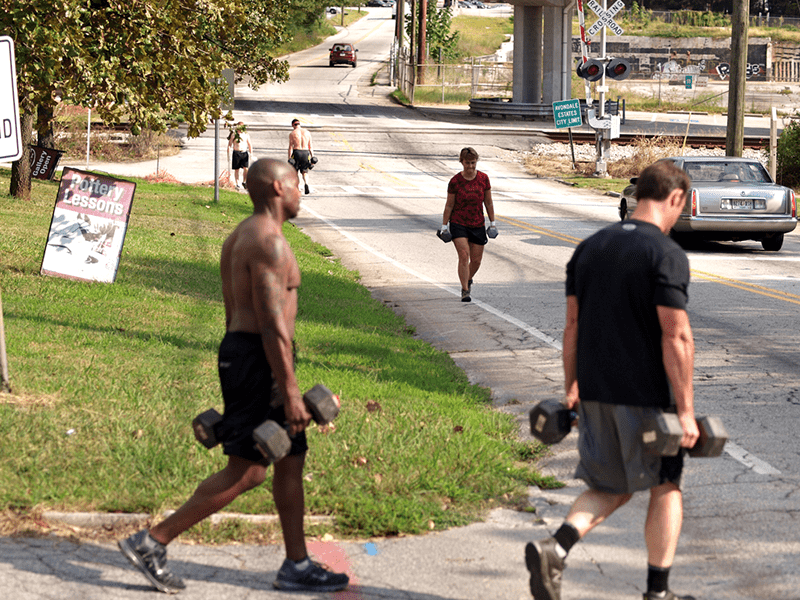
Other research has shown that adults with stronger grip strength tend to remain independent longer as they age because they maintain better mobility, balance, and ability to perform daily tasks.
How Grip Strength Changes Throughout Life
Grip strength follows a predictable pattern throughout adulthood. Strength increases steadily during childhood and adolescence as muscles develop. Most people reach their highest grip strength somewhere between their late twenties and late thirties, although some athletes may continue improving into their forties.
After middle age, grip strength gradually declines. The decrease becomes more noticeable after age 50 because of changes in muscle mass, nervous system function, hormone levels, and physical activity. Regular resistance training can significantly slow this decline. Numerous studies have demonstrated that older adults who perform strength training preserve much more muscle function than inactive individuals.
Lifestyle also plays an important role. Nutrition, sleep quality, chronic disease, smoking, and body composition all influence grip strength.
Where Should Your Grip Strength Rank?
Scientists have collected grip strength data from hundreds of thousands of people worldwide. While different studies report slightly different averages depending on the population tested and the equipment used, the following ranges provide useful benchmarks for healthy adults.
Average Grip Strength for Men
| Age | Average Grip Strength (kg) | Excellent (kg) |
|---|---|---|
| 20 to 29 | 46 to 52 | Over 60 |
| 30 to 39 | 45 to 51 | Over 59 |
| 40 to 49 | 42 to 48 | Over 55 |
| 50 to 59 | 39 to 45 | Over 52 |
| 60 to 69 | 35 to 41 | Over 47 |
| 70 and older | 30 to 36 | Over 42 |
Average Grip Strength for Women
| Age | Average Grip Strength (kg) | Excellent (kg) |
|---|---|---|
| 20 to 29 | 27 to 32 | Over 38 |
| 30 to 39 | 26 to 31 | Over 37 |
| 40 to 49 | 24 to 29 | Over 34 |
| 50 to 59 | 22 to 27 | Over 31 |
| 60 to 69 | 20 to 25 | Over 28 |
| 70 and older | 18 to 23 | Over 25 |
These values should be viewed as general reference points rather than strict cutoffs. Body size, training history, occupation, and genetics all influence grip strength. Researchers often compare grip strength relative to body weight because this provides a better picture of functional strength.
How to Measure Your Grip Strength Correctly
The gold standard is a calibrated hand dynamometer. To obtain an accurate result, stand or sit upright with your elbow bent at about 90 degrees. Squeeze the handle as hard as possible for three to five seconds without using your body for extra leverage.
Most testing protocols involve three attempts with each hand. The highest value is usually recorded. Your dominant hand is typically about 10 percent stronger than your non dominant hand, although the difference may be smaller in people who train regularly. Many gyms, physical therapy clinics, sports performance centers, and medical offices have dynamometers available for testing.
What If Your Grip Strength Is Below Average?
A lower than average score does not necessarily mean something is wrong. Many healthy people simply have not trained their grip directly. Others may work primarily at a desk, reducing the amount of daily hand loading. However, very low grip strength, particularly when combined with unexplained weight loss, fatigue, reduced mobility, or difficulty performing daily activities, may warrant further medical evaluation.
Researchers increasingly use grip strength as one of the diagnostic criteria for sarcopenia, the age related loss of muscle mass and function. Low grip strength can also appear following injury, prolonged illness, surgery, or periods of inactivity.
Fortunately, grip strength usually responds well to consistent training.
Can You Improve Grip Strength?
Absolutely. Research consistently shows that resistance training increases grip strength across virtually every age group. Interestingly, you do not always need to train the hands directly. Compound exercises that require holding heavy weights often improve grip significantly.
5 Best Exercises for Every Beginner Who Wants Stronger Legs
Deadlifts, farmer carries, pull ups, rows, kettlebell swings, and heavy shrugs all challenge the muscles responsible for gripping. Specific grip training can accelerate progress. Hand grippers, thick bar exercises, towel hangs, plate pinches, and dead hangs have all demonstrated benefits for grip endurance and maximal squeezing force.
Older adults also respond remarkably well to strength training. Studies show meaningful improvements even in individuals over age 80 when exercise programs are properly supervised.
Does Grip Strength Affect Athletic Performance?
In many sports, absolutely. Strong grip contributes directly to success in climbing, gymnastics, wrestling, judo, Brazilian Jiu Jitsu, tennis, baseball, golf, and Olympic weightlifting. Even in sports where gripping is less obvious, grip strength helps athletes maintain control over equipment and transfer force more effectively.

Research involving elite athletes consistently finds that higher grip strength often accompanies greater upper body strength and better sport specific performance.
Grip endurance also becomes important during longer competitions where fatigue can reduce technical skill.
For CrossFit athletes, grip frequently becomes the limiting factor during workouts involving pull ups, kettlebell movements, rowing, or barbell cycling. Improving grip strength can therefore improve overall work capacity.
Grip Strength and Healthy Aging
One of the most fascinating aspects of grip strength research is its relationship with aging. Muscle strength naturally declines with age, but the rate of decline varies enormously between individuals. People who remain physically active throughout adulthood generally preserve much higher levels of grip strength than sedentary individuals.
Researchers studying thousands of older adults have found that stronger grip strength predicts better walking speed, lower fall risk, improved cognitive function, and greater independence. Grip strength also appears to reflect overall biological age more accurately than chronological age in many individuals.
This helps explain why healthcare providers increasingly include grip testing during routine assessments for older adults.
The Bottom Line
Grip strength is far more than a measure of hand power. It offers a surprisingly accurate snapshot of overall muscle function, physical fitness, and healthy aging.
While your score naturally changes throughout life, maintaining above average grip strength is associated with better mobility, greater independence, improved athletic performance, and lower risk of many age related health problems.
If your grip strength falls below average, there is no reason to panic. The encouraging news is that strength training remains one of the most effective ways to improve it at almost any age. Compound lifts, grip specific exercises, and an active lifestyle can all lead to measurable improvements within a few months. Knowing where you rank is useful, but taking action to become stronger is what ultimately matters.
Key Takeaways
| Topic | Key Point |
|---|---|
| What grip strength measures | Grip strength reflects overall muscle function, not just hand strength. |
| Peak performance | Most adults reach peak grip strength between their late twenties and late thirties. |
| Aging | Grip strength gradually declines with age but regular resistance training can slow the process. |
| Health | Higher grip strength is associated with better mobility, healthier aging, and lower risk of chronic disease and premature death. |
| Testing | A hand dynamometer provides the most accurate measurement. |
| Improvement | Compound lifting and dedicated grip exercises can significantly increase grip strength at nearly any age. |
| Athletic value | Strong grip improves performance in strength sports, climbing, combat sports, racquet sports, and CrossFit. |
References
- Bohannon, R.W. (2019) ‘Considerations and practical options for measuring muscle strength: A narrative review’, BioMed Research International, 2019, pp. 1 to 10.
- Cooper, R., Kuh, D., Hardy, R. and Mortality Review Group (2010) ‘Objectively measured physical capability levels and mortality: Systematic review and meta analysis’, BMJ, 341, c4467.
- Cruz Jentoft, A.J., Bahat, G., Bauer, J. et al. (2019) ‘Sarcopenia: Revised European consensus on definition and diagnosis’, Age and Ageing, 48(1), pp. 16 to 31.
- Dodds, R.M., Syddall, H.E., Cooper, R., Benzeval, M., Deary, I.J., Dennison, E.M., Der, G., Gale, C.R., Inskip, H.M., Jagger, C., Kirkwood, T.B.L., Lawlor, D.A., Robinson, S.M., Starr, J.M., Steptoe, A., Tilling, K., Kuh, D. and Cooper, C. (2014) ‘Grip strength across the life course: Normative data from twelve British studies’, PLoS ONE, 9(12), e113637.
- Leong, D.P., Teo, K.K., Rangarajan, S. et al. (2015) ‘Prognostic value of grip strength: Findings from the Prospective Urban Rural Epidemiology study’, The Lancet, 386(9990), pp. 266 to 273.
- Rantanen, T., Guralnik, J.M., Foley, D., Masaki, K., Leveille, S., Curb, J.D. and White, L. (1999) ‘Midlife hand grip strength as a predictor of old age disability’, JAMA, 281(6), pp. 558 to 560.
- Roberts, H.C., Denison, H.J., Martin, H.J., Patel, H.P., Syddall, H., Cooper, C. and Sayer, A.A. (2011) ‘A review of the measurement of grip strength in clinical and epidemiological studies’, Age and Ageing, 40(4), pp. 423 to 429.